A longtime renter decided to buy a home. Now, he has a 30-minute commute to Raleigh
READ MORE
Rising home prices, rising rents
Soaring rents versus unaffordable housing costs — in the Triangle, it’s an increasingly urgent dilemma, especially for lower-income buyers. With the median home price in Wake County now around $350,000, here’s how rising prices affect the rental market, plus some solutions for the future. This is The News & Observer’s special report on housing costs.
Expand All
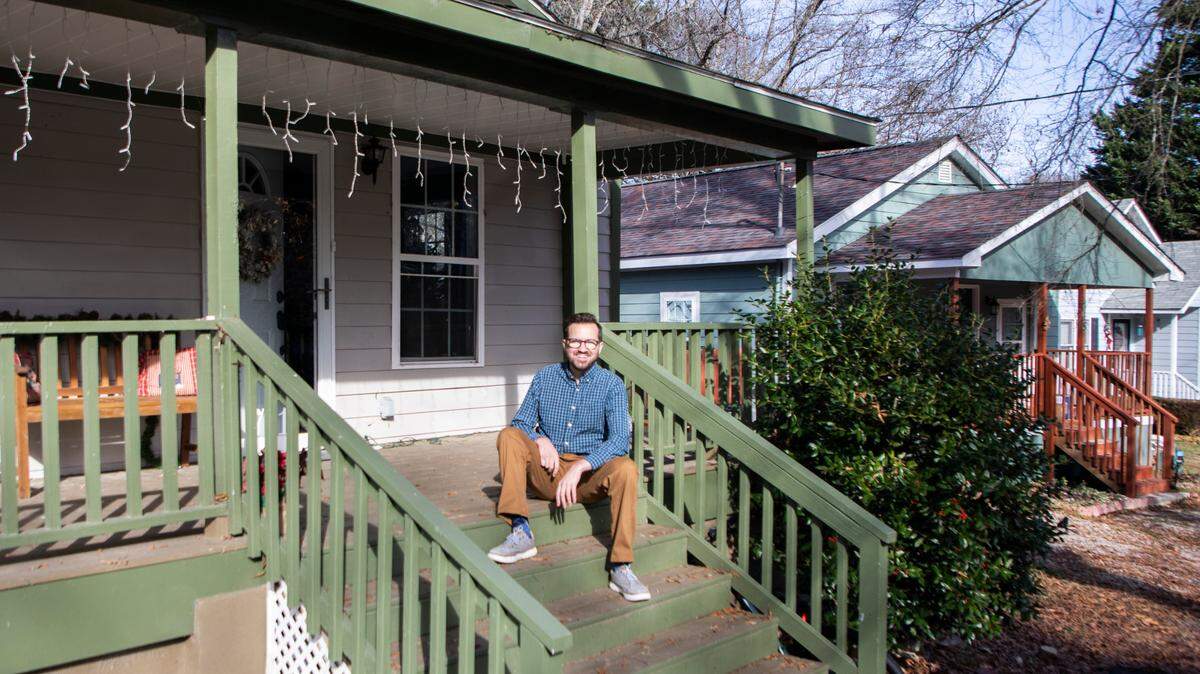
Dustin Ingalls was a tenant his entire adult life, renting close to his downtown Raleigh office where he works as communications director at the North Carolina League of Conservation Voters.
After years of renting, Ingalls, 37, decided to look into buying in February. He said he wasn’t sure how it would go.
“I’m involved in local politics. I’m familiar with the housing crunch,” Ingalls said. “But I’ve never personally experienced what it’s like to buy a house or try to buy a house.”
Due to short supply and high demand for housing, it took Ingalls until September to get an offer accepted.
“And this only happened because I happen to be somewhat familiar with the existence of public housing assistance,” he said.
Ingalls applied with the City of Raleigh’s homebuyer assistance program, which helps potential homebuyers with down payments, closing fees and other upfront costs if their household income is 80% or less of the area median income.
At an income of around $53,600, Ingalls barely made the cut.
“If I made $1 more, I would not have qualified,” he said.
But even with the assistance, finding a home he could afford took time.
Ingalls initially looked at a few subsidized homes in the area, Raleigh’s East College Park among them, but other buyers got to them first. Securing offers for subsidized units is first-come, first-served.
“I had to then start bidding with everyone else in the market,” he said, “ones that were a little bit lower priced and probably been on the market for a little while that hadn’t been snapped up in 24 to 48 hours like everything else.”
The competitive market pushed him out to a $240,000 home in Wendell, a 25-minute drive to work. He has come to like the town.
“It would be nice to have things as close together as possible and that we develop our communities in ways that people can live, work, shop, play,” Ingalls said. “But in terms of my own personal situation, I’m not personally dissatisfied. I do think the larger trend of people having, out of economic necessity, to live further away is not ideal for the way we develop communities for carbon emissions and the economy.”
But even with the commute, it’s better financially than renting. Ingalls had to split his $1,700 apartment with two roommates. His monthly mortgage in Wendell is about $600 less.
It’s the upfront costs that are a barrier to many who want to buy a home, he said.
“I needed that help. I had just about no savings. I work in the nonprofit world,” Ingalls said. “You don’t generally make a killing doing that line of work.”
He said this struggle to build enough capital to buy a home is common in his generation.
“Older generations were able to afford homes much more easily and their standard of living was higher,” Ingalls said. “Income and benefits and all that have not grown over the years nearly as high as prices of various things and the price of housing has grown much more quickly than inflation of all goods. And that’s a problem … the basic necessities in life, cars and houses and things like that. It is not as attainable now as they were for our parents and grandparents.”
This story was originally published January 5, 2022 at 6:00 AM with the headline "A longtime renter decided to buy a home. Now, he has a 30-minute commute to Raleigh."