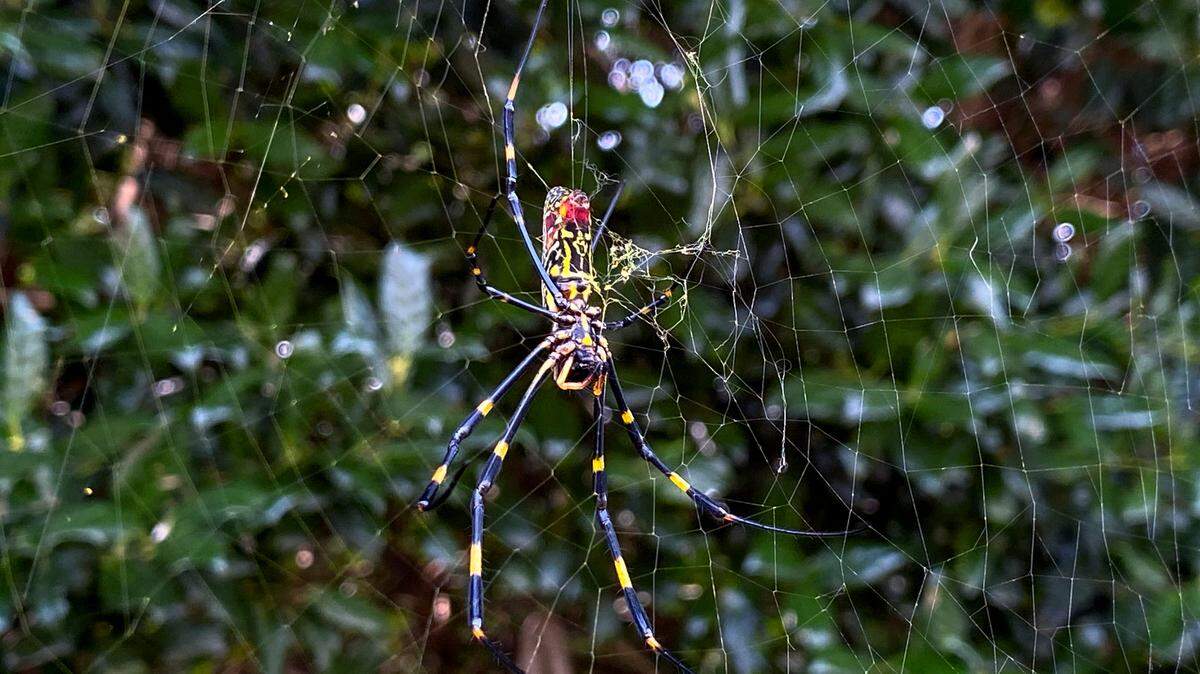
This invasive pest could travel to NC on Christmas trees. What to do if you see one
READ MORE
Flying and crawling pests in NC
More stories about creepy-crawly (or buzzing) pests and what to do about them.
Expand All
If you’re getting ready to start your Christmas decorating with a live tree, beware the spotted lanternfly.
The invasive pest is encroaching on North Carolina, and while the insects are “indiscriminate egg layers” with a wide variety of host vegetation, experts say they could travel to the state on Christmas trees from nearby Virginia, where a small infestation was recently detected.
The spotted lanternfly generally doesn’t kill the trees they prey on, but they can cause significant damage to agricultural crops and reduce yields.
Officials with the North Carolina Forest Service are encouraging the public to keep an eye out for the spotted lanternfly on their Christmas trees this year and to report if they see one.
The News & Observer talked with Larry Long, forest health monitoring coordinator with the N.C. Forest Service, and with Kelly Oten, an assistant professor and forest health specialist at N.C. State University, to learn more about the spotted lanternfly, the risks they pose and the proper steps you should take if you see the pest this holiday season.
Here’s what we learned.
What is the spotted lanternfly?
The spotted lanternfly is an invasive pest that is non-native to the United States.
▪ It is native to China, India and Vietnam, and was introduced to Korea in 2004.
▪ It was first found in the U.S. in eastern Pennsylvania in 2014 and has since been spotted in New Jersey, Virginia, Delaware, West Virginia, Maryland, Connecticut, New York, Ohio, Indiana and Massachusetts.
▪ It is a planthopper. Planthoppers are a group of insects that generally bear some resemblance to leaves or other plants. They generally “hop” for quick transportation.
▪ It is a sucking insect. This means the insect has mouthparts intended for piercing and sucking, which they use to feed on nutrients from the plant. This weakens the plant, reducing photosynthesis and making plants more susceptible to other stressors. Note: spotted lanternflies are not known to bite or sting at any life stage.
▪ Spotted lanternflies can attack and prey on a wide variety of hosts, including about 70 species of woody plants. They have a strong preference for tree-of-heaven plants.
Pest activity of spotted lanternflies
The spotted lanternfly is a pest in three main ways:
▪ Agriculturally. Spotted lanternflies pose a risk to agricultural crops, including grapevine, fruit trees and hops. In grapevines, a spotted lanternfly infestation can reduce crop yield by as much as 90%, and the quality of the remaining grape crop will likely be much worse, too.
▪ Targeting ornamental plants. In addition to targeting agricultural crops, the spotted lanternfly can target ornamental plants — those you use for decorative or landscaping purposes. These include tree-of-heaven, sycamore, American beech, dogwood, oak and maple trees.
▪ As a nuisance pest. Spotted lanternflies tend to congregate in large groups, often by the landscape plants of businesses or homes. Oten said the pests have been known to cluster on the main door of restaurants, forcing establishments to only use side doors for days at a time. The insects might also affect tourism, especially at vineyards — if grapevines are infested with spotted lanternflies, they could become less desirable visually, and the taste of grapes could be affected as well.
Because spotted lanternflies consume so many nutrients from trees and plants, they are also known to excrete large amounts of honeydew, a sticky, sugar-rich liquid. This may cause sooty mold to grow at the base of plants, which can prevent photosynthesis and be aesthetically displeasing.
Spotted lanternfly feeding sites may also ooze plant sap and be accompanied by a fermented smell, which can attract other insects, including yellow jackets, bees, ants and flies.
“Everyone’s going to know and loathe the spotted lanternfly if it becomes established in North Carolina,” Oten said.
Is the spotted lanternfly in North Carolina?
Dead adult spotted lanternflies have been spotted in North Carolina, but the pest has not been seen alive in the state and has not been “established” here yet, but forest experts warn that the live pests could be on their way to North Carolina soon.
According to the N.C. Forest Service, a small, isolated infestation of spotted lanternflies has been identified in Hillsville, Virginia, about 15 miles from the North Carolina-Virginia state line and about 20 miles from Mt. Airy.
Long said that forest officials in Virginia are managing the infestation.
Prior to the pest being discovered in Hillsville, the closest established spotted lanternfly population to North Carolina was in northern Virginia, Long said.
Why are Christmas trees a concern?
As Christmas approaches and Christmas trees begin to be shipped across state lines, there could be an increased risk of the pest entering North Carolina from Virginia.
“Spotted lanternflies are indiscriminate egg layers and while Christmas trees are poor hosts for feeding, spotted lanternflies will readily lay their eggs on them,” Long said.
Long said Christmas tree producers are being encouraged to inspect their trees for the pest this holiday season.
The public should also inspect their trees for spotted lanternfly eggs and nymphs, either before purchasing or after the tree is home — especially if you buy one that was grown in Virginia.
“Sometimes those eggs will hatch once the trees are brought inside and begin to warm up,” Long said.
What do spotted lanternflies look like?
Spotted lanternflies have distinct attributes and coloring at each stage of their lives. The insects generally have one generation, or life cycle, per year.
▪ At the beginning of their life cycle, spotted lanternflies can be found in egg masses, which are generally an inch in size. The masses are shiny when newly laid, but they then harden and look like dry mud. Each mass contains between 30 to 50 eggs. Egg masses can generally be observed from June to October.
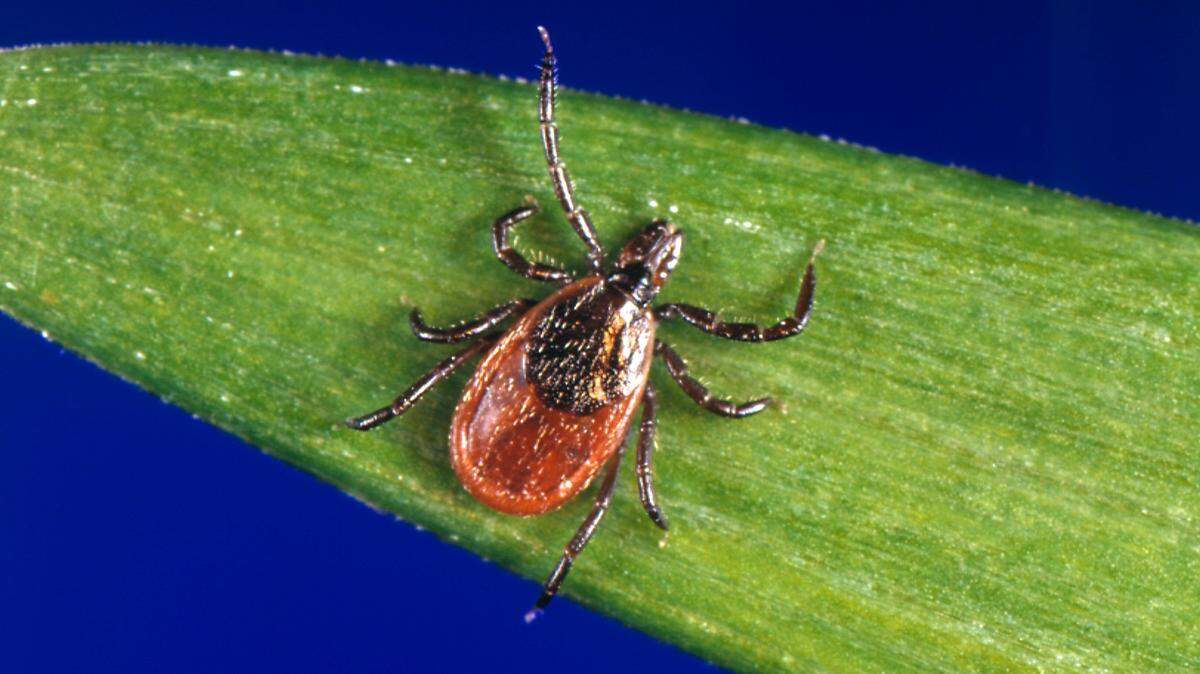
▪ Young nymphs emerge in late spring and early summer, or roughly from April to June. In this stage, they are roughly the size of a tick and have black bodies with white spots.
▪ In the late nymph stage — roughly from mid-June to September — the pests grow to be about half an inch in size, and have bright red spots all over their bodies.
▪ Spotted lanternflies generally reach adulthood between July and December. In this stage, they are about an inch long and half an inch wide. They have wings, which are held folded over their bodies and are light brown-gray with black spots and black speckles at the tips. Their head and legs are black. If the topmost wings are pried up, bright red hindwings with black spots and black banded tips are visible. Their body is typically concealed by the wings, but is yellow on the outer edges with a broad black band down the center.
Spotted lanternflies are often confused with other insects that are common in North Carolina, including:
▪ Various adult moths, such as giant leopard moths, buck moths and figured tiger moths.
▪ Various stink bug nymphs, such as the Florida predatory, green and the Southern green stink bugs.
▪ Harlequin bugs.
▪ Large milkweed bugs.
A guide to spotted lanternfly look-alikes is available from the N.C. Department of Agriculture and Consumer Services.
How do spotted lanternflies spread?
While spotted lanternflies can move and migrate on their own, natural dispersal of the insect is limited. It’s more likely that the insects will be moved as a result of human activity.
▪ The insects are most likely to be moved in their egg mass state. Spotted lanternflies typically lay their eggs on tree bark and smooth, man-made surfaces, such as metal barrels. Long said egg masses can also be found on cars, boats, campers, trailers, lawn furniture, firewood, masonry, decorative stone and grill covers. Moving these items can lead to the egg masses hatching in their new location, introducing the pest to a new area.
▪ Spotted lanternflies may also be moved as live insects, either as nymphs or adults, when infested plant materials are moved.
How to prevent the spread of spotted lanternflies
Because spotted lanternflies are most likely to spread through human activity, it’s important to be knowledgeable and observant when you are in an area with a possible infestation.
▪ When you are leaving an area with a possible infestation, check your car, firewood and outdoor equipment for the presence of spotted lanternfly at any life stage.
▪ If you are using firewood, only cut and burn it within 50 miles of your destination, or when you arrive — don’t cut it at home and take it with you. If you need to transport firewood instead of cutting it at your destination, use heat-treated or kiln-dried firewood instead.
Remember: the spotted lanternfly hasn’t been detected in North Carolina yet, but these tips are helpful if you are in an area with a recorded infestation.
What should I do if I see a spotted lanternfly in NC?
If you find a spotted lanternfly on your Christmas tree this year or at any other time, or you think you’ve found one but you’re not sure, follow these steps:
▪ Take a picture. Your first instinct might be to kill the pest immediately, but it’s important to record and document it before you do. Try to include a size reference, such as a quarter or a paperclip, so it’s easier to tell how big the bug is.
▪ Collect a specimen. If possible, collect the bug. Long recommends putting it in a plastic sandwich bag and storing it in your freezer until Forest Service experts can take a look.
▪ Report it. Send your photo and any other relevant information, such as when and where you found the insect, to the Plant Industry Division at the N.C. Department of Agriculture & Consumer Services by emailing badbug@ncagr.gov. Use the subject line “Suspected Spotted Lanternfly.”
▪ Kill it. After you’ve photographed and reported your find, it’s best to kill the insect so it doesn’t spread.
Additional resources
▪ The N.C. Department of Agriculture’s spotted lanternfly website can be found at ncagr.gov/plantindustry/Plant/entomology/SLF.htm.
▪ You can visit the N.C. Forest Service online at ncforestservice.gov, or reach them by phone at 919-857-4801.
This story was originally published November 23, 2021 at 8:30 AM with the headline "This invasive pest could travel to NC on Christmas trees. What to do if you see one."