There is still no cure for COVID, but there are treatment options. What’s available in NC?
READ MORE
Living with COVID-19
The coronavirus isn’t going away for good, but an oral treatment could be just around the corner. For the second time since the start of the pandemic, the coronavirus is on the retreat again after the delta variant surged in the summer. Preliminary data suggests Merck’s pill could reduce the chance of hospitalization by 50%. Could it be found in pharmacies sometime soon? This is The N&O’s special report.
Expand All
.JPG)
Living with COVID-19: How a ‘game-changing’ pill might help us manage the pandemic
There is still no cure for COVID, but there are treatment options. What’s available in NC?

COVID-19 treatments are not vaccine replacements. Here’s why
Safe for kids? Duke doctor answers questions about COVID vaccines for children 5 to 11

See which Triangle counties and towns are keeping mask mandates in place, and why
There are more treatments for COVID-19 available now than a year ago, but there is still no cure for the virus, and doctors say we need more options.
A new drug from Merck, known as molnupiravir, has shown through testing at UNC-Chapel Hill that it reduces an infected person’s chances of being hospitalized by half. The drug, which comes in pill form, could get full FDA approval by the end of the year.
But as of now, treatment options are somewhat limited.
There is one drug fully approved by the U.S. Food and Drug Administration. Others available under emergency use authorizations issued by the agency, and some treatments, might be available through “expanded access” uses of existing drugs. Clinical trials and research studies of other potential treatments are also underway.
Dr. David Wohl, an infectious disease specialist at UNC-Chapel Hill, says that’s still a pretty sparse toolbox for treating the virus.
Wohl is on the leadership team for Accelerating COVID-19 Therapeutic Interventions and Vaccines, or ACTIV, a federally funded, public-private partnership that researches potential treatments for COVID-19.
Through the ACTIV initiative, the National Institutes of Health is searching for additional treatment options for the virus — and hopefully, a cure.
“We are searching for a cure for COVID-19, and that’s what we’re talking about here,” Wohl told The News & Observer. “Can we cure it? Can people get infected, take something and knock it out? That, in my book, is called a cure.”
Until a cure is reached, though, here’s some information on the treatments currently available for COVID.
Keep in mind: If you are diagnosed with COVID, your health care team will know which treatment options are best for you, based on your symptoms and medical history.
What’s the difference between FDA approval and emergency use authorization?
Generally, treatment options for COVID fall into two categories: FDA-approved and those issued as emergency use authorization by the agency.
FDA-approved drugs: If a drug is approved by the FDA, it means the agency has determined, using clinical data and substantial evidence, that:
▪ The drug is effective for its intended use.
▪ The benefits of the drug outweigh its risks when used according to the product’s approved labeling.
▪ The product can be made according to federal quality standards.
Emergency use authorization: During public health emergencies, such as the COVID-19 pandemic, the FDA may authorize the use of unapproved drugs or unapproved uses of approved drugs under certain conditions by issuing an emergency use authorization.
▪ These treatments are not fully approved by the FDA, but the agency makes them available after considering the potential risks and benefits of the products based on the data currently available.
▪ The FDA can revoke or revise an EUA at any time as more data and evidence become available.
FDA-approved COVID treatments
Remdesivir, which is sold under the brand name Veklury, is the only COVID treatment option that is fully approved by the FDA.
It is an antiviral drug that prevents the virus from multiplying within your body.
Remdesivir is fully approved for COVID patients who:
▪ Are adults.
▪ Are pediatric patients 12 or older and weigh more than 40 kilograms (about 88 pounds).
Remdesivir also may be available to patients who don’t meet these criteria — such as pediatric patients who weigh less than 40 kilograms — under the FDA’s emergency use authorization for the drug.
Remdesivir is administered through an IV and can be administered only in a hospital or other health care settings capable of providing care comparable to that of a hospital.
Emergency use authorization treatments
COVID treatment options available under EUAs include:
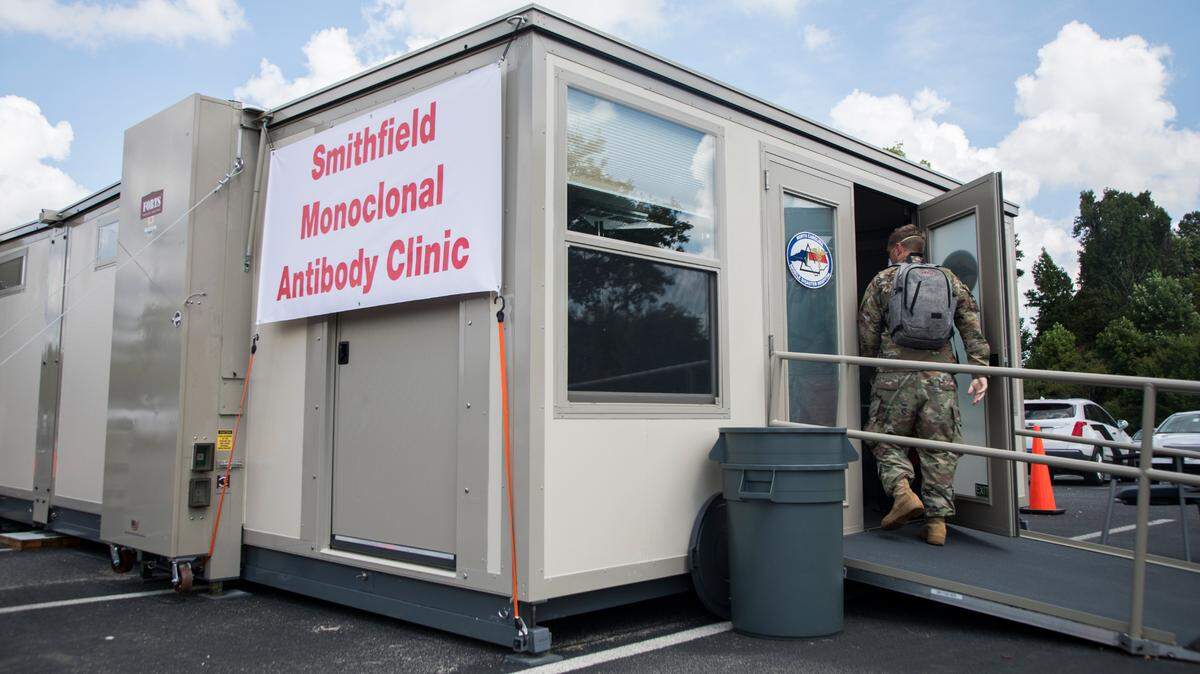
Monoclonal antibodies. Monoclonal antibodies are laboratory-made proteins that mimic the immune system’s ability to fight off the virus. They block the virus’s ability to attach to and enter human cells. These treatments are typically used to treat mild to moderate COVID-19 in people who have a higher risk of developing serious illness due to the virus.
There are several monoclonal antibody treatments available under EUAs, including:
▪ Casirivimab and imdevimab (also known as “REGEN-COV”)
Some monoclonal antibody products also have EUAs for preventive treatment for people who have been exposed to COVID and have an increased risk of becoming hospitalized.
NOTE: These treatments are not a substitute for getting vaccinated against the virus.
Convalescent plasma. Also known as “survivor’s plasma,” convalescent plasma is plasma derived from the blood of patients who have recovered from COVID-19.
The plasma is administered to sick patients in hopes that antibodies from the recovered patient’s blood will promote healing.
As of February, convalescent plasma is authorized to be administered only to hospitalized COVID patients who are early on in the course of the disease. The plasma must be administered at a high titer, which is similar to a high concentration.
Anti-inflammatory therapy. The FDA has issued an EUA for Actemra, a monoclonal antibody that has been approved to treat inflammatory diseases, including rheumatoid arthritis.
Actemra is available only to hospitalized patients — adults and children ages 2 and up — who are receiving mechanical ventilation, extracorporeal membrane oxygenation or systemic corticosteroids and require supplemental oxygen.
Actemra is administered through an IV.
Other COVID treatment options
▪ Expanded access. Sometimes called “compassionate use,” expanded access is a pathway for patients with a serious or immediately life-threatening disease to receive an investigational medical product for treatment outside of clinical trials.
Expanded access is available only when there is no comparable or satisfactory alternative therapy. Convalescent plasma may be available through expanded access to patients who do not otherwise qualify.
▪ “Off-label” prescriptions. Using their medical judgment, health care professionals may prescribe FDA-approved drugs for uses not included in the approved labeling — such as treating COVID — recognizing that the FDA has not assessed the safety or effectiveness of such use.
Always consult with your doctor or health care team to decide which treatment options are best for you.
COVID treatments on the horizon
Through clinical trials and research studies, such as those being conducted through ACTIV, more treatment options could be available in the future.
If you have been diagnosed with COVID-19, you may be eligible to participate in treatment studies. To find a study site near you, you can:
▪ Visit riseabovecovid.org.
▪ Call the ACTIV call line at 877-345-8813. The line is open 24 hours a day.
Participating in these studies is voluntary. You can leave the studies at any time.
This story was originally published November 3, 2021 at 5:00 AM with the headline "There is still no cure for COVID, but there are treatment options. What’s available in NC?."