Swiss pharma giant vows to double spending at future Wake County GLP-1 plant
AI-generated summary reviewed by our newsroom.
- Genentech doubles Holly Springs investment, adds 100 jobs and expands site
- Roche targets Eli Lilly and Novo Nordisk, aims to produce injectable GLP-1s by 2029
- North Carolina and Wake County offered $46.5M in incentives to secure Genentech
The Swiss pharmaceutical company Roche has committed to invest nearly $2 billion in a future North Carolina campus as it seeks to avoid tariffs and disrupt the duopoly Eli Lilly and Novo Nordisk hold over GLP-1 anti-obesity drugs.
“Our intention is to be a challenger to those two big players,” Paul Bezy, Roche’s global head of high-volume supply chain operations, said in an interview Tuesday. “And we’ve got the confidence in the pipeline that we’re building to be that challenger.”
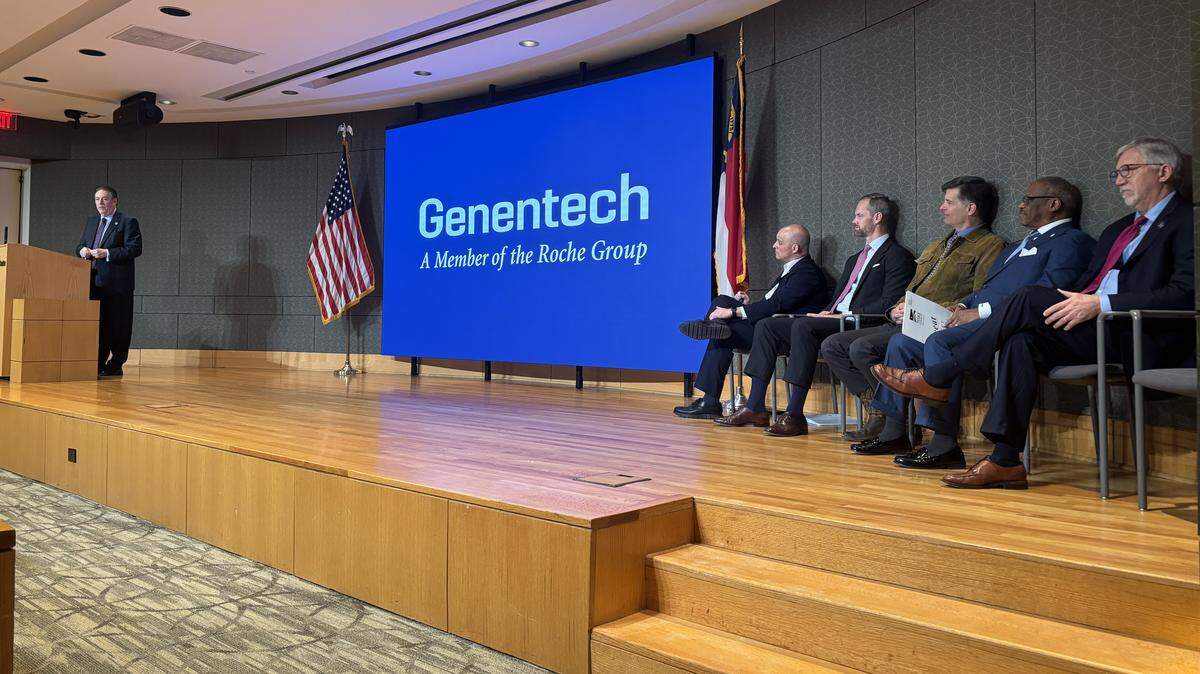
In May, the Roche subsidiary Genentech committed to create 420 jobs and spend $700 million in Holly Springs, a fast-growing southwestern Wake County town that has attracted multiple pharmaceutical facilities in recent years. Then on Tuesday, Genentech upped its Holly Springs plant pledge by 100 jobs while committing to more than double its site spending. This expansion comes a month after Genentech announced a confidential deal with the federal government to be exempt from tariffs for three years.
Propelling its Holly Springs construction, Bezy said, are GLP-1 treatments for obesity. Glucagon-like peptide-1, or GLP-1, lowers appetites by mimicking a natural hormone to prolong feelings of fullness and suppress appetites. Two companies currently dominate their global production, with Novo Nordisk making Ozempic and Wegovy and Eli Lilly producing Zepbound and Mounjaro. Both of these drugmakers have Triangle locations: Novo Nordisk is the largest private employer in Johnson County and Eli Lilly manufactures GLP-1s in Research Triangle Park.
Genentech is still developing its injectable GLP-1 weight-loss treatment, which the company hopes to produce in North Carolina by 2029. While Novo Nordisk made headlines last month for its new GLP-1 obesity pill, Bezy said his team expects demand for injectable weight-loss drugs will persist due to their greater effectiveness. Overall, analysts anticipate GLP-1 demand continuing to surge throughout this decade, with U.S. consumers driving use.
Roche, Eli Lilly and Novo Nordisk are each among the world’s 60 largest publicly traded companies by market capitalization.
North Carolina last year awarded Roche incentives worth up to $13 million if Genentech hits its hiring and investment targets, while Holly Springs and Wake County contributed a $33.5 million performance-based package. The company broke ground at its site in August.
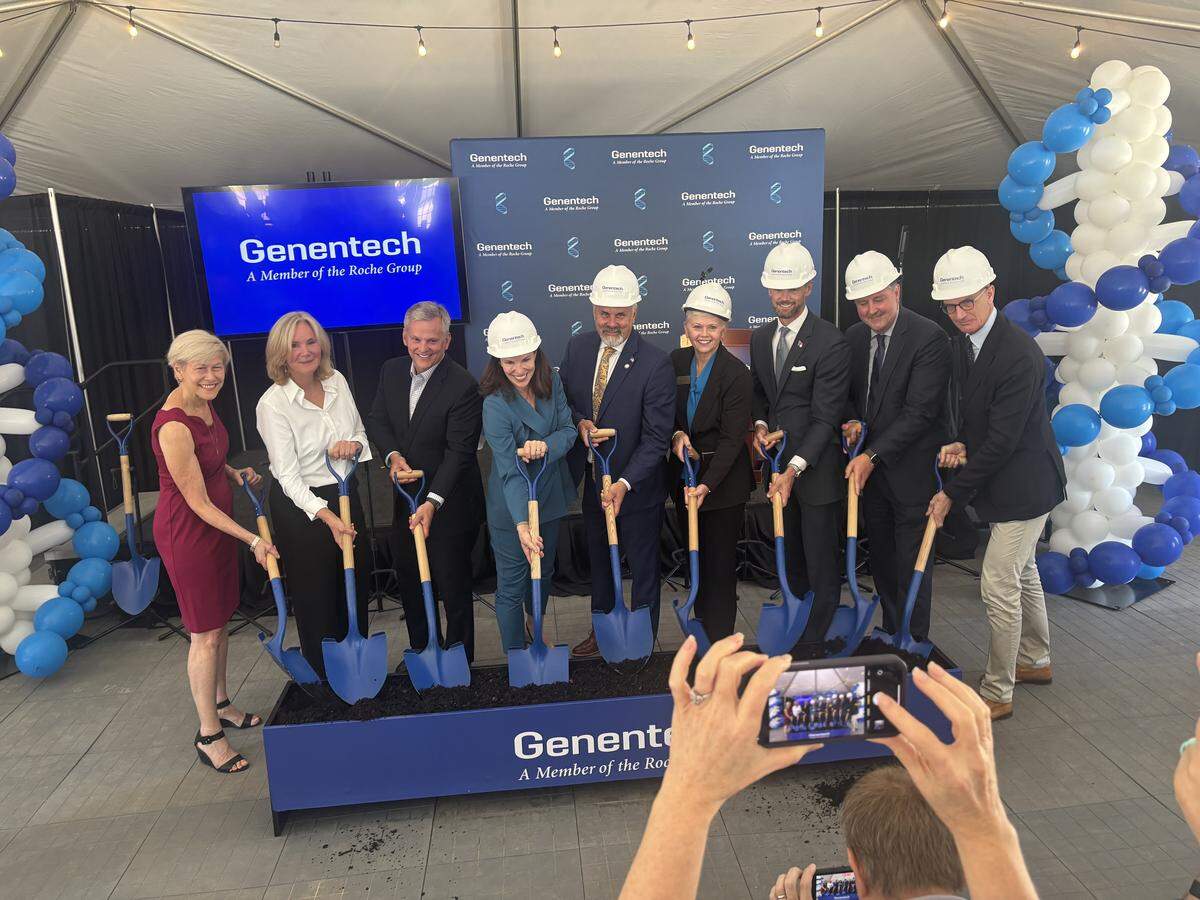
Holly Springs is accustomed to major biotech arrivals and expansions. The town’s pharmaceutical portfolio includes CSL Seqirus, Fujifilm and Amgen, the latter of which has its campus right across the street from where Genentech is building. This has fueled rapid local growth; Holly Springs’ population of 48,000 has doubled over the past 16 years.
“When people talk about the most important biotech hubs across the country, the conversation always starts with Boston and San Francisco,” Holly Springs Mayor Mike Kondratick said during Genentech’s announcement ceremony Tuesday at the North Carolina Biotechnology Center. “But I am proud today to announce Holly Springs’ arrival as another premier destination in the world for this industry.”
North Carolina Commerce Secretary Lee Lilley applauded town leaders for cultivating the kinds of sites manufacturers desire. “Companies want to get to market really fast,” he said in an interview following the ceremony. “So the less they have to do to get the site prepared — get it flat, pad-ready and have utilities ready to go — the better.”
This story was originally published January 20, 2026 at 2:24 PM with the headline "Swiss pharma giant vows to double spending at future Wake County GLP-1 plant."