Pharma giant Roche plans to make obesity treatment at future Wake County plant
AI-generated summary reviewed by our newsroom.
- Genentech plans to produce a GLP-1 obesity drug in Holly Springs by 2029.
- Roche will invest $700M and hire 420 workers for its first East Coast site.
- North Carolina awarded $13M in incentives; local grants total $33.5 million.
The Swiss pharmaceutical company Roche looks to enter the lucrative weight-loss drug market with a future factory in a fast-growing Wake County town.
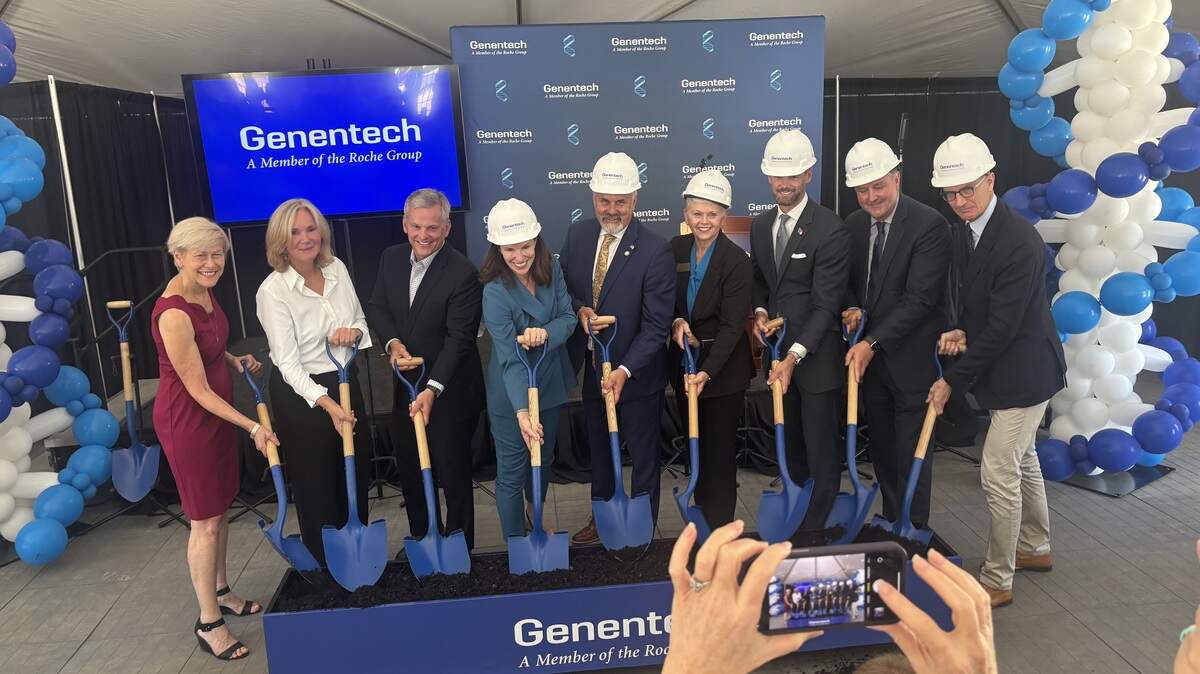
Genentech, a Roche subsidiary, plans to produce a still-under-development GLP-1 obesity treatment in Holly Springs by 2029, company officials said during the plant’s groundbreaking event Monday. In doing so, Genentech would rival pharmaceutical manufacturers Novo Nordisk and Eli Lilly, which already make popular GLP-1 treatments in the Triangle.
“Initially, this plant will be one of the major suppliers for this product for the world,” Genentech senior vice president Fritz Bittenbender told The News & Observer. “And as a product grows, it will be more and more for just American consumption.”
Roche is one of the world’s largest pharmaceutical companies. Its Bay Area-based subsidiary Genentech has a lineup of approved cancer and rare disease medicines while it progresses an injectable GLP-1 treatment through clinical trials.

Analysts foresee the GLP-1 market more than doubling by 2030, with the U.S. continuing to lead demand. In May, Genentech committed to employ 420 workers and spend $700 million in Holly Springs at the company’s first East Coast campus. North Carolina awarded parent Roche incentives worth up to $13 million if Genentech hits its hiring and investment targets, while Holly Springs and Wake County contributed a $33.5 million performance-based package.
Gov. Josh Stein and U.S. Rep. Deborah Ross joined local elected officials at the groundbreaking ceremony.
“One of the most pressing health challenges this country and North Carolina faces today is obesity,” Ross, a Wake County Democrat, said during her remarks. “Obesity and obesity-related metabolic diseases touch nearly every family in some way. The medications manufactured here, including very specific treatments, will help patients in this community and across the country.”
.jpg "IMG_8302 (1).jpg")
The Triangle area already plays a major role in producing GLP-1s, injectables that can treat diabetes and help users lose weight by suppressing appetites. Novo Nordisk manufactures Wegovy and Ozempic at its Johnston County campus while Eli Lilly makes Zepbound and Mounjaro in Research Triangle Park. Amgen, which has a campus directly across the street from Genentech’s Holly Springs site, is also developing an obesity treatment.
Bittenbender said the existence of other GLP-1 production sites helped the Triangle attract Genentech, as the region’s community colleges have already job training programs tailored to this specific kind of manufacturing.
Holly Springs has seen rapid growth in recent decades; its current population of 46,000 is nearly doubled from 2010. The Roche project adds to the town’s existing biotech projects, which include Amgen and Fujifilm, the latter of which is scheduled to open its massive contract pharmaceutical manufacturing plant next month.
“People talk about a biotech cluster in North Carolina,” Gov. Stein said. “I think we need to start talking about the Holly Springs cluster.”
This story was originally published August 25, 2025 at 4:32 PM with the headline "Pharma giant Roche plans to make obesity treatment at future Wake County plant."