View from the edge: Peek inside Raleigh’s newest, nearest data center
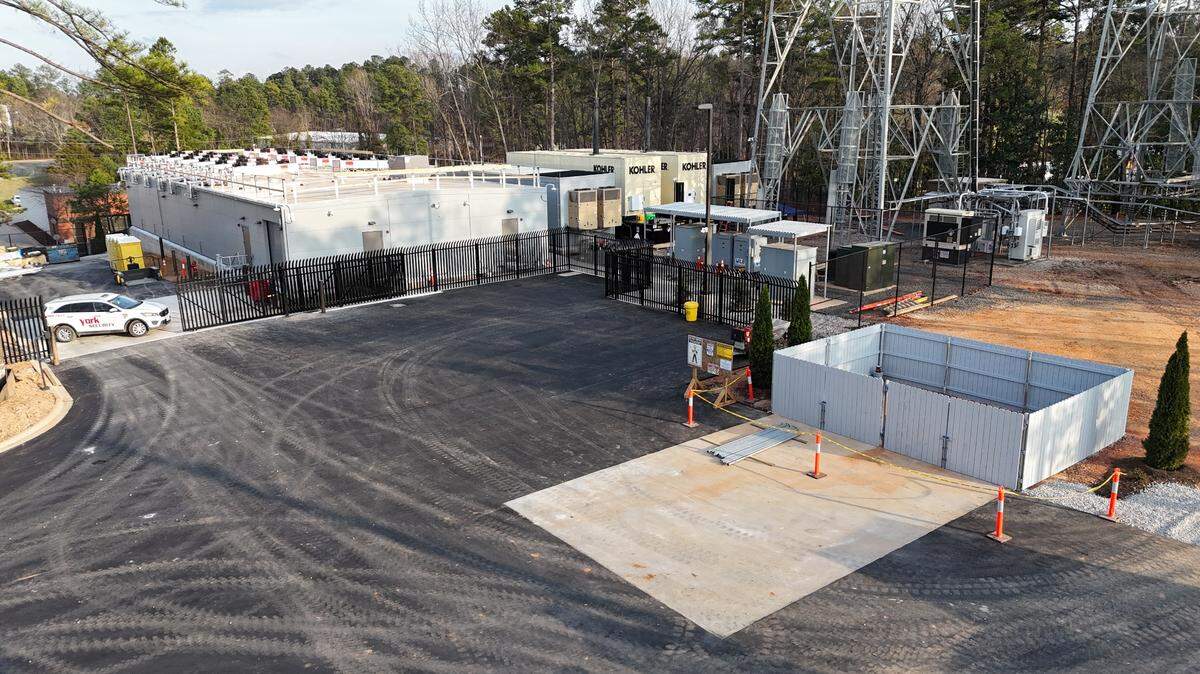
Raleigh’s newest data center is the quietest it’ll ever be.
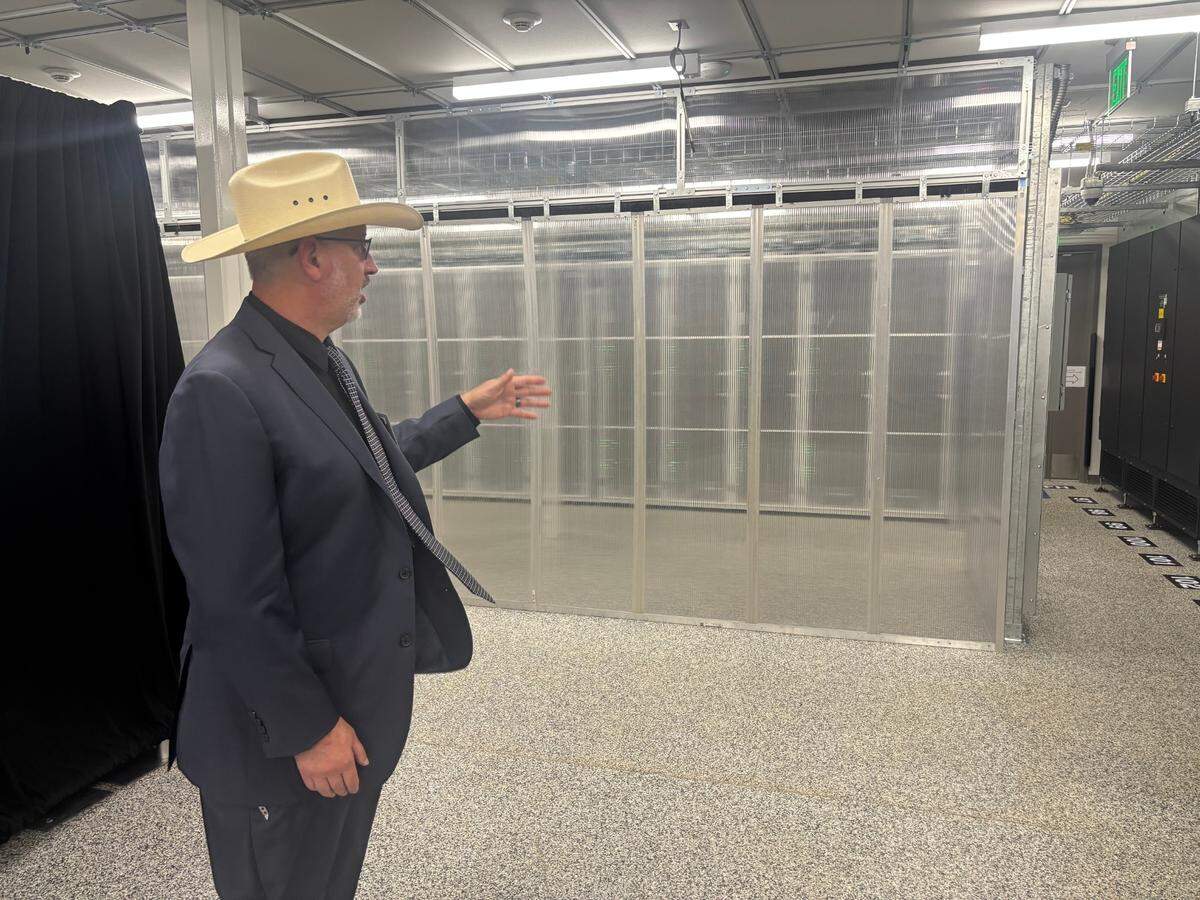
Empty racks and dormant air-conditioning units fill a main room, called the data hall, where modular equipment has been installed on-site like Lego pieces. The floors inside are flat and made with quarter-inch steel so customers can wheel in heavy equipment. No ear protection is needed, though that might change once the computing and cooling begins.
This is the first “edge” data center from the Boston real estate investment firm American Tower, the nation’s largest owner of telecommunication structures that in recent years has expanded into the mushrooming data center market.
Unlike mammoth hyperscale facilities from the likes of Amazon, Microsoft and Apple, edge centers prioritize location over size, positioning servers closer to computing end points to give customers more immediate data processing and storage. Instead of traversing hundreds of miles to Western North Carolina or Northern Virginia, data may never leave the Triangle.
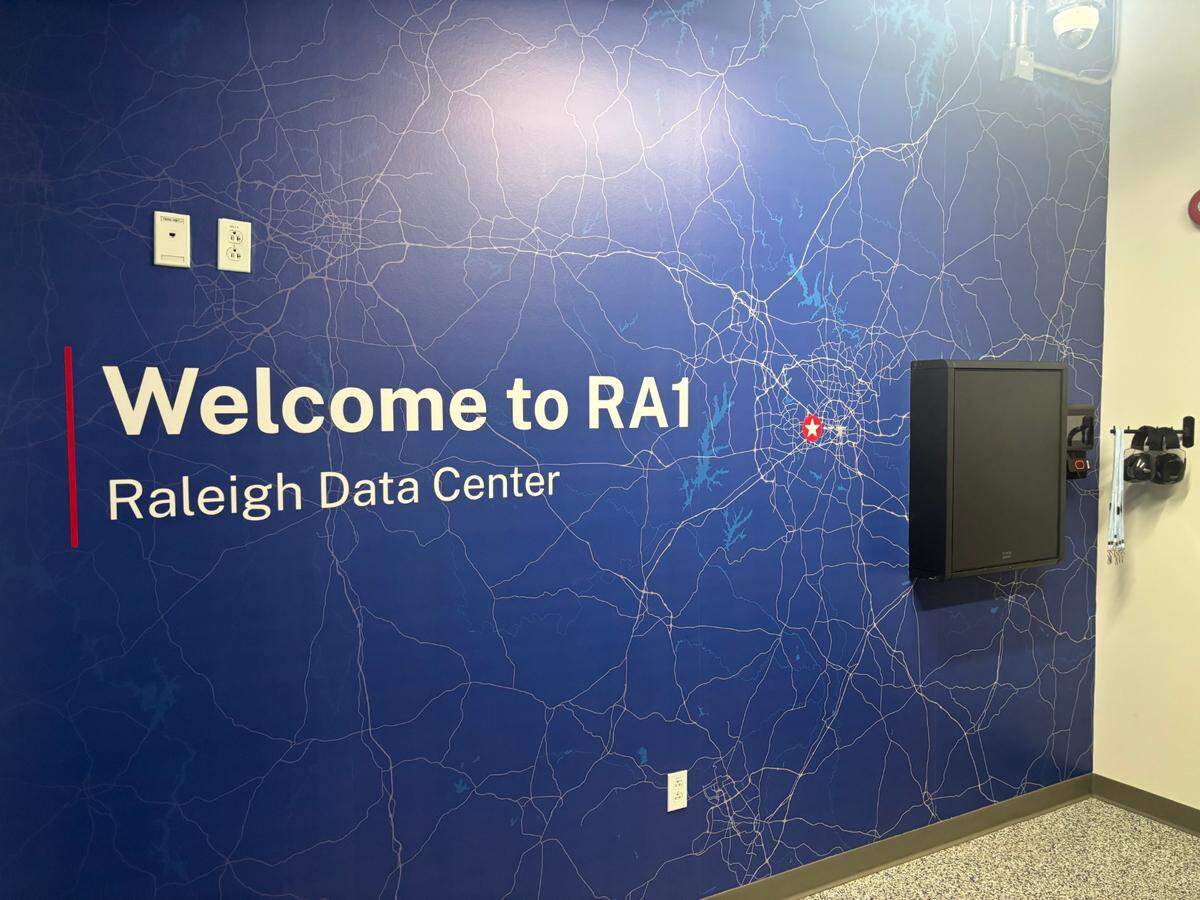
“You can’t beat the speed of light,” Jim Poole, American Tower’s vice president of edge product development, said during a tour this week of the new facility on Chapel Hill Road in West Raleigh.
Last year, spending on edge computing reached an estimated $228 billion, according to the International Data Corporation, a figure projected to exceed $370 billion by 2028.
One reason customers desire closer data centers is to minimize latency, the processing time between a prompt and a response. For tasks like self-driving cars, robotic surgeries or automated warehouses, latency can be disruptive or worse. Others embrace the “edge” for data efficiency, privacy, and legal compliance, says Tom Synder, executive director of RIoT, a Raleigh nonprofit that supports Internet of Things developments.
“I expect we’ll see more and more over time,” he said.
Synder predicted organizations will increasingly seek hybrid solutions that combine centralized cloud computing with closer-to-point data processing. For example, generative artificial intelligence models are trained in big data centers but often perform individual queries on the edge.
‘RTP is right around the corner’
American Tower entered the edge computing sector four years ago when it purchased the data center operator CoreSite.
CoreSite specialized in colocation, or “colo,” data centers where clients rent out rack space to house their servers. They are similar to companies renting office space and then furnishing it themselves.
“RTP is right around the corner,” Poole said. “The colo business is what we call a server hugger business. There’s some reason that somebody has to put their hands on the equipment.”
American Tower has close to 300 area employees and an office in Cary, yet its local data center won’t add much to this total.
“Usually, there will be nobody here at all,” said Michael Bailey, an American Tower systems engineer who lives in Pittsboro. Technicians will periodically enter the facility for maintenance, but data centers ideally operate with little necessary human interaction.
Keeping it cool and CRACing
American Tower expects its first customer, which works with AI inference, to move in within the next few weeks. More than half of the data hall’s 86 racks are still available to be leased, though Bailey said demand from anchor tenants convinced the company to plan a second data hall on site (there’s room for four overall).
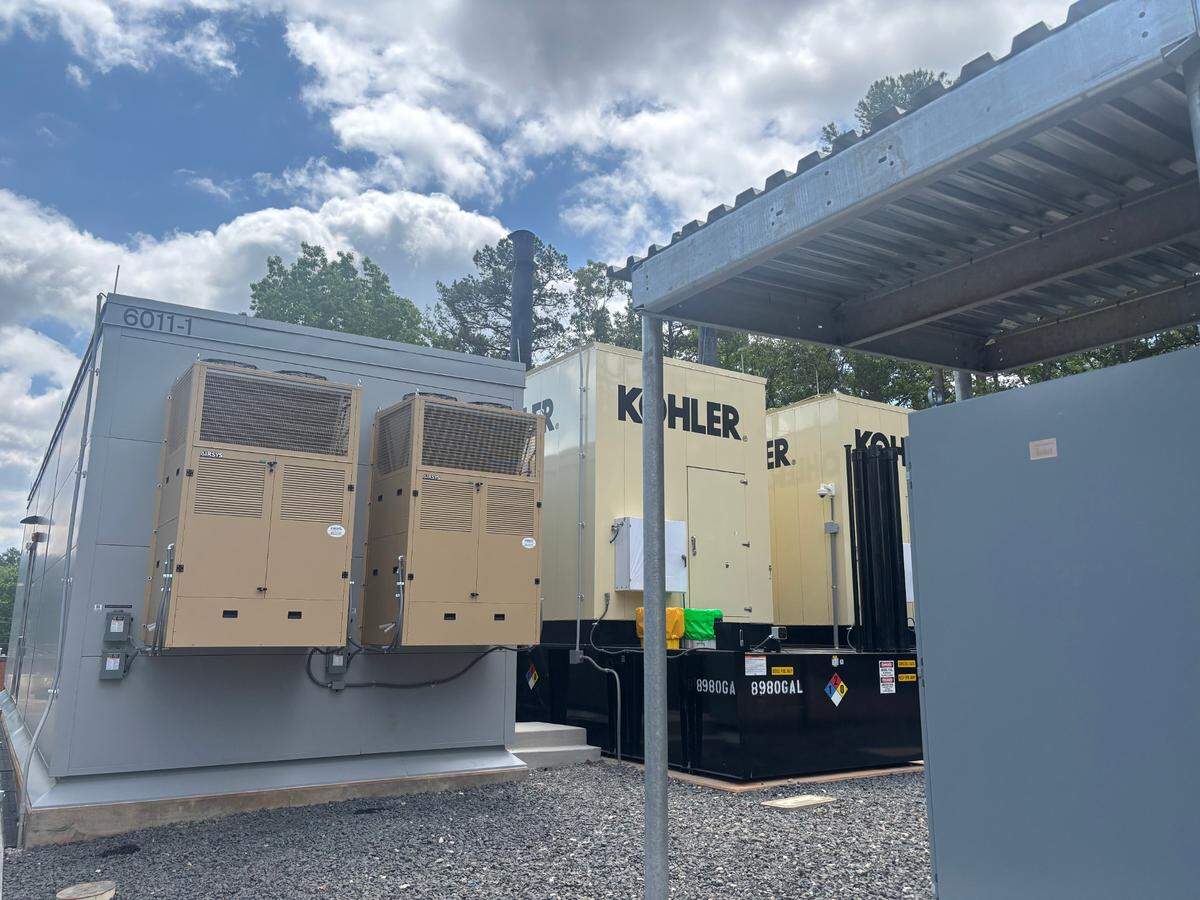
Owning significant sites and knowing local utility providers through its legacy telecommunications have allowed American Tower to build data centers quickly, Bailey said. His team started constructing the Raleigh data center in November. American Tower has so far gotten approval from Duke Energy to supply the site with 1 megawatt of power and seeks a second megawatt for the second hall.
.jpg "IMG_7651 (1).jpg")
“We already have relationships at every one of these 1,000 sites with the power company,” he said. “So it’s really just go back, ask them what they can do, make that happen, and move on. It’s not as hard for us to do that.”
When it comes to data centers, keeping them cool can be just as important as the computing itself. Enormous energy consumption of artificial intelligence creates more heat, which data center operators must address to keep servers from frying.
“We’re starting to get all these (AI) applications rolling out,” Tom Wilson, principal technical executive at the nonprofit Electric Power Research Institute, told The News & Observer earlier this year. “Nvidia is selling more GPUs, and that’s anticipated to keep growing given the current orders.”
American Tower uses a computer room air conditioner, or CRAC, which collects the warm air servers push out. Its data center has a dozen units, ten of which will run when the racks are at full capacity. Controlling this heat gets noisy and earmuffs are available before entering the hall.
The News & Observer’s Inside Look takes readers behind the scenes to illuminate the people and places in our community.
This story was originally published May 23, 2025 at 6:30 AM with the headline "View from the edge: Peek inside Raleigh’s newest, nearest data center."