
NC Republicans say their new bill is not about banning books. Yes, it sure is | Opinion
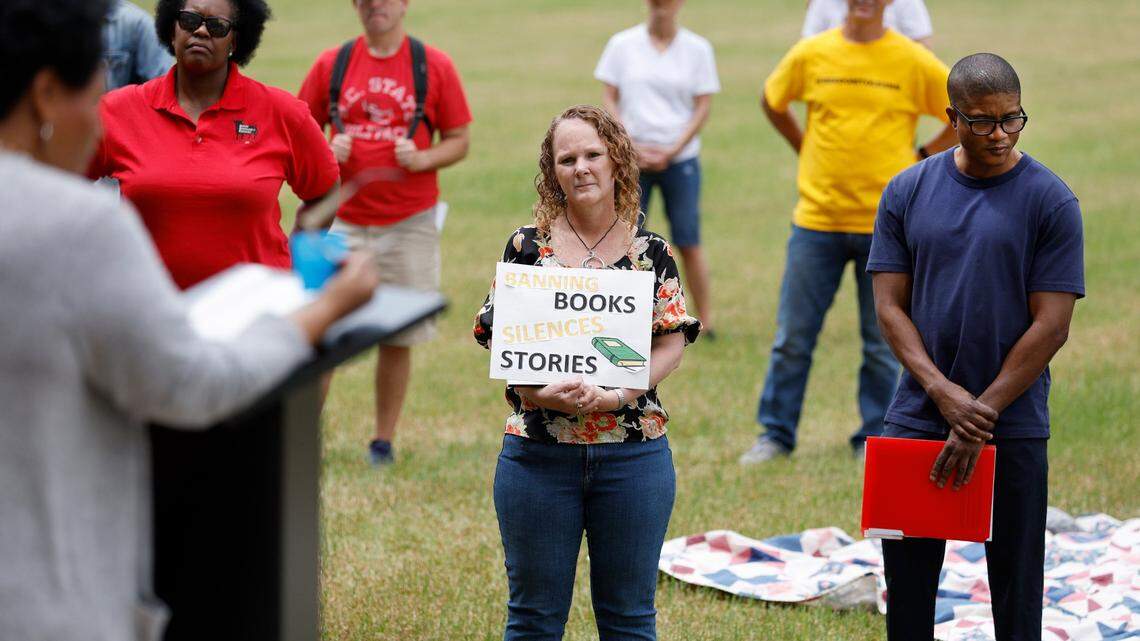
North Carolina House Republicans passed a bill this week that would ban books. So why are they insisting that it is not a book banning bill?
The bill, which passed the House on Wednesday, purports to be about promoting “wholesome” content for students. It would create processes to review and remove books and other media with sexual content from school libraries — and allow the public to sue schools for having library books that they believe to be harmful to minors.
If the bill becomes law, each school district would have to review all of its existing media to ensure its compliance with the law. Each district also would be required to form a “community library advisory committee,” composed of five parents and five school district employees, to make recommendations for future books and review letters of objection for existing ones.
The bill is problematic for a number of reasons. It’s far too vague — while the bill’s sponsors claim they only want to remove “pornographic” material from school libraries, they don’t attempt to define exactly what that is. The bill bans books that are “pervasively vulgar” — a term with no precise definition. But it also goes so far as to place a blanket prohibition on books that contain descriptions or depictions of sexual activity. Such books, the bill says, are not appropriate for any age level.
That could have broad implications. If any description of sexual activity isn’t allowed, that could affect some books with true literary and artistic value that are often taught in schools, such as “The Color Purple.” The authors of the bill may not intend for that to happen, but without clear, objective parameters to define what is and isn’t acceptable, how can they be sure it won’t?
At a news conference Tuesday, legislators displayed some of the books they consider to be “filth” and “pornographic.” It included books with LGBTQ+ and social justice themes as well as books that discuss physical and emotional abuse. It even included “The Handmaid’s Tale” — a critically acclaimed, wildly popular novel that spawned an award-winning TV show of the same name. While some might point out that those books contain “vulgar” references to sex, others would argue those references are outweighed by the educational or artistic value. That’s why the bill is a misguided attempt to apply objectivity to something that’s inherently subjective.
Republican lawmakers say that since the bill does not contain the words “ban” or “censor,” it cannot be characterized as book banning or censorship. Such characterizations, they say, are “personally offensive.” They had no problem accusing Democrats of wanting to expose children to pornography, however.
“If you want children to look at pornography or inappropriate stuff, order it off of Amazon or go to the public library,” Rep. Neal Jackson, the bill’s sponsor, told Democrats during a floor debate Wednesday.
That’s disingenuous. To suggest that anyone, whether it be a parent, school employee or lawmaker, has a vested interest in subjecting children to pornographic content is a ridiculous and tawdry argument that deliberately ignores the very real concerns people have with this bill.
Because the biggest problem with the bill is this: it should be up to parents to decide what is or isn’t appropriate for their children. Yet the bill doesn’t just allow parents to seek relief for potential violations. Anyone living in the school district would be able to sue schools over content they have in their libraries, regardless if they have a child attending public school or not. It sounds like a recipe for disaster.
Shielding children from discussions of sexuality and gender identity does not make them less likely to be gay. Keeping them away from books that discuss rape and abuse does not, sadly, make them less susceptible to being raped and abused. It does, however, prevent them from feeling seen by stories about people like them, or learning something new from stories about people who aren’t. Censoring those things only makes kids feel like they need to censor parts of themselves. That’s more harmful than any of these books could ever be.
This story was originally published April 20, 2025 at 5:00 AM with the headline "NC Republicans say their new bill is not about banning books. Yes, it sure is | Opinion."
