What’s changed in the 50 years since Roe v. Wade? Everything — and nothing | Opinion
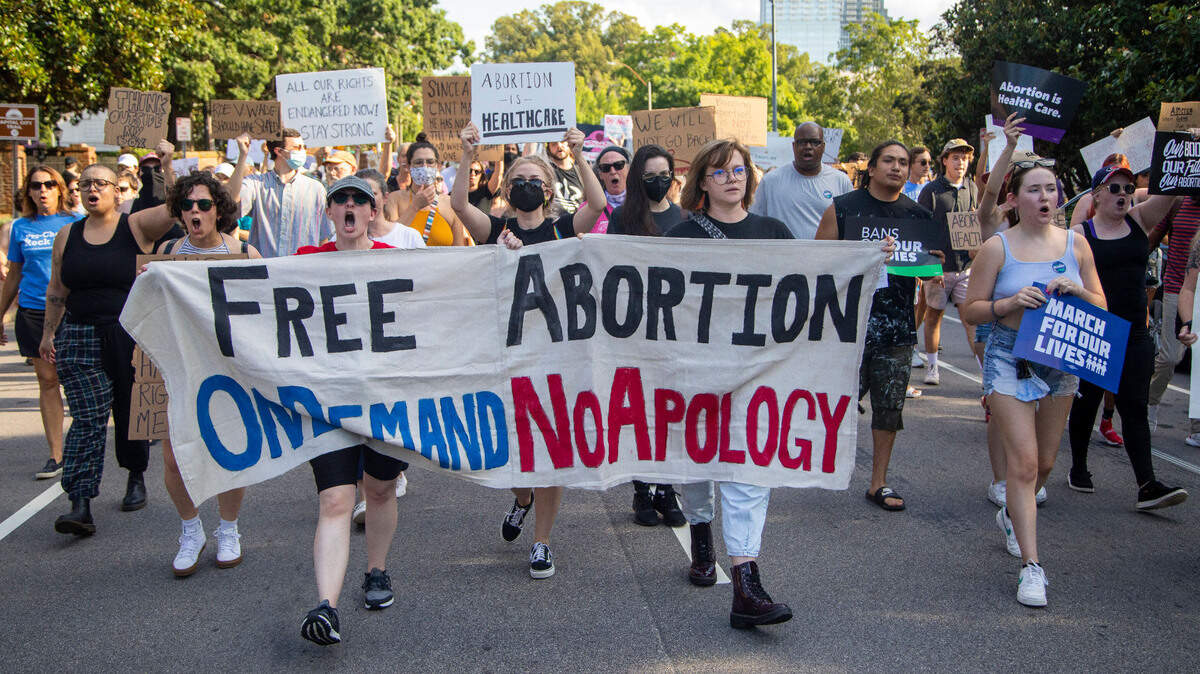
Exactly 50 years ago, in 1973, the U.S. Supreme Court guaranteed the right to an abortion with its decision in Roe v. Wade.
Roe changed our society by giving people a choice. Armed with more control over their bodies — and by extension, their lives — women became more likely to attend college, have a career and earn higher wages. The ruling has also saved lives by providing greater access to a procedure that is often medically necessary.
Half a century later, that right is gone, and the privacy, dignity and opportunity made possible because of it could disappear, too. Progress is never quite linear, but in this case, it almost feels like a circle. Despite all that has changed in the past 50 years, we’re still having the same conversations, stuck in the same place where we cannot decide whether or not it is appropriate to force a person to give birth.
“At the same time, I think everything has changed and also nothing has changed,” Rebecca Kreitzer, an associate professor of public policy at UNC-Chapel Hill who studies reproductive rights, told me.
Abortion today remains the subject of intense political debate, but it has only grown fiercer and more polarized. In the 1970s, abortion had not yet become a partisan issue in the way it is now, Kreitzer said, even as polls suggest that public opinion on abortion policy has not drastically changed with time. The Supreme Court’s decision to overturn Roe last summer was decades in the making, the culmination of an effort that began soon after it was legalized.
“In many ways, Roe v. Wade kind of launched the evangelical Moral Majority movement that really invigorated the influence of conservative evangelical politics in American politics overall,” Kreitzer said.
Even before Roe was overturned last year, abortion was much less accessible than it had been in the decades before, mostly due to more recent efforts to restrict it. Laws introduced at the state level, such as a 72-hour waiting period and telehealth restrictions, have incrementally made abortions difficult to obtain in North Carolina even when they are legal. In 1982, North Carolina had 114 abortion providers; today, there are only 14 clinics statewide.
Currently, abortion is legal in North Carolina for any reason until 20 weeks — the result of a 1973 law that went into effect when Roe was overturned. Republican leaders in the state legislature have made it clear they think 20 weeks is too permissive, and they hope to pass a more restrictive law. House Speaker Tim Moore and Senate leader Phil Berger told reporters this month that they have assembled working groups in both chambers and are attempting to reach a consensus, which could be a ban on abortion after the first trimester. The governor’s veto remains intact — barely — for now, but that could all change after 2024.
“Will abortion laws change in our state? How will they change? I can’t say for sure,” Kreitzer said. “I don’t know, elections really matter.”
So what can we learn from 50 years ago? Frighteningly, maybe very little.
This is not 1973 all over again. Yes, we know far more than we did then. We know what it’s like when abortion is scarce, and we know how abortion access has changed people’s lives for the better. We know being denied an abortion hurts low-income and marginalized people the most. That’s the kind of world we face if and when abortion access is taken away.
But we are in uncharted territory, losing a fight we thought we’d won, and it feels equal parts demoralizing and scary. Fifty years after it was decided that politicians have no business policing people’s bodies, we’re here again, being told that they do.
This story was originally published January 22, 2023 at 5:00 AM with the headline "What’s changed in the 50 years since Roe v. Wade? Everything — and nothing | Opinion."