
Endorsements: Our choices in North Carolina’s U.S. Senate primaries
READ MORE
Endorsements 2022
The Editorial Board’s recommendations for the primary elections on Tuesday, May 17, 2022.
Expand All
Endorsements: We’re asking about 2020 before we recommend for 2022
Endorsements: Our choices in North Carolina’s U.S. Senate primaries
Endorsements: All of the Charlotte Observer’s choices in the 2022 primaries
How to find the Charlotte Observer’s endorsements for 2022 primary races
How to find the News & Observer’s endorsements for 2022 primary races
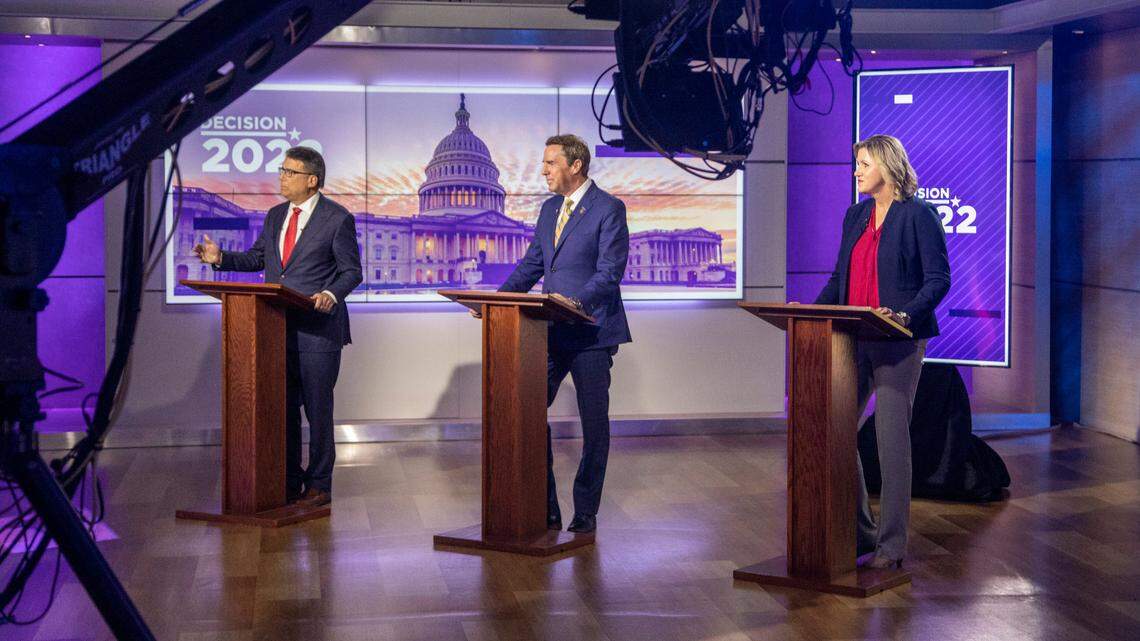
Political observers across the country are monitoring North Carolina’s Republican primary for U.S. Senate. The race to replace retiring Richard Burr is a must-hold for Republicans if they want to capture the Senate in an election that could bring a red wave to Washington. It’s also about something bigger: for Republican voters — and perhaps the country — the race is among a handful that could determine what kind of party the GOP will be.
Recent polls show Donald Trump-backed U.S. Rep. Ted Budd leading former N.C. Gov. Pat McCrory, with former U.S. Rep. Mark Walker and political newcomer Marjorie Eastman trailing. Budd’s lead is big enough that he’s taken to skipping Republican debates, a move that might make some strategic sense given that he has had little impact that he can boast about as a member of Congress.
What Budd does have is a mutual embrace with former president Donald Trump. That should trouble North Carolinians who believe that Trump’s falsehoods about the 2020 election pose a clear threat to our country and democracy. Budd was among the members of Congress who voted not to certify the 2020 election despite saying that he believed Biden legitimately won. Trump’s endorsement has helped propel Budd, and voters can expect that if Budd wins election in November, he won’t forget who got him there.
In contrast, McCrory and Walker have distanced themselves some from Trump. Each told the Editorial Board that they believe Biden is the duly elected president (although Walker signed on to a Texas lawsuit to overturn Trump’s 2020 loss.) Walker courted Trump’s support for this Senate run, but the former pastor also has long been publicly reticent about Trump’s moral shortcomings. He told the Editorial Board that while Trump did some things for the evangelical community, “there are some problems” reconciling Trump’s history and lifestyle.
Pragmatic voters who worry about Trump’s influence might look instead to McCrory, who has a better chance of defeating Budd. McCrory likes to say he’s an “Eisenhower Republican” — a more moderate conservative — but his record as governor includes full-throated support for the discriminatory HB2, as well as unemployment insurance reform that’s resulted in North Carolina now offering among the worst benefits in the country. He was a far different governor after seven terms as a moderate Charlotte mayor. It’s difficult for voters to know exactly what kind of senator McCrory would be.
We have deep concerns with some of Walker’s positions, but we do believe he is principled and focused on real problems. His history of political independence should bring the most comfort in this primary to Republican voters worried about the direction of their party. We recommend him in the GOP primary.
Democratic primary
One thing is certain regardless of the GOP primary winner: Democratic frontrunner Cheri Beasley is in for a fierce and nasty fight in the general election. Is she ready for it? Early returns say no.
Beasley is the clear frontrunner in the Democratic primary, and this board recommends her in the primary. But progressives should be troubled about Beasley’s candidacy. She’s taken a quiet, cautious approach to the race thus far instead of using this critical time to define herself and energize the Democratic base, especially its Black voters, that she’ll need to win a midterm election.
In her interview with the Editorial Board, Beasley similarly struggled to articulate a strong vision or defense of progressive principles and policies. She appeared, at times, to be running against the current administration instead of touting the infrastructure package, increased wages, low unemployment and a booming Triangle supported in large part by funding from the National Institutes of Health and other agencies.
Beasley brings strong experience as a public servant and trailblazer who could be a powerful voice for communities across North Carolina. In many ways, she’s a much stronger candidate than Cal Cunningham was in 2020, but so far, she isn’t campaigning like one. Instead, she’s attempting instead to occupy a tentative and vague middle lane that will neither rally progressives nor stand up against the withering conservative attacks that are coming soon.
BEHIND THE STORY
MOREHow we do our endorsements
Members of the combined Charlotte Observer and Raleigh News & Observer editorial boards are conducting interviews and research of candidates in municipal and state elections. The combined board is led by N.C. Opinion Editor Peter St. Onge, who is joined in Raleigh by deputy Opinion editor Ned Barnett and in Charlotte by deputy Opinion editor Paige Masten. Board members also include Observer editor Rana Cash and News & Observer editor Nicole Stockdale.
The editorial board also talks with others who know the candidates and have worked with them. When we’ve completed our interviews and research, we discuss each race and decide on our endorsements.
This story was originally published May 1, 2022 at 12:00 AM with the headline "Endorsements: Our choices in North Carolina’s U.S. Senate primaries."