
Experts revise forecast, say warmer ocean may mean ‘fast start’ to NC hurricane season
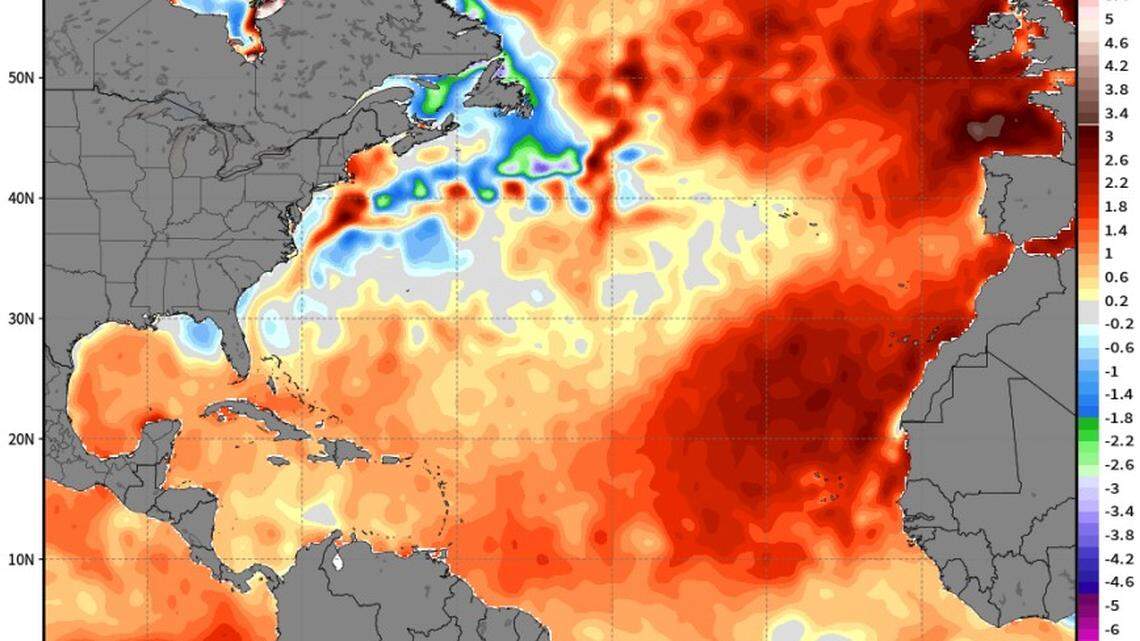
A leading hurricane forecasting service says it now believes the chances of a hurricane season with more storms than average have increased because of record-warm temperatures in the Atlantic Ocean.
Colorado State University’s forecast is now predicting 18 named storms and nine hurricanes, more than the 14.4 storm and 7.2 hurricane average between 1991 and 2020. The school’s previous forecast called for a roughly average hurricane season. Both estimates come with significant uncertainty.
This year is tough to predict because record-high ocean temperatures are grappling with an expected El Niño weather system, with the warmer waters fueling storms and winds from the El Niño tearing them apart. The effect could be that the season effectively flips from what North Carolinians are used to, said Corey Davis, the assistant state climatologist of the North Carolina State Climate Office.
North Carolina residents are used to seeing their largest storms in mid-September through early October, Davis said. But with waters warm right now and El Niño expected to reach its peak strength from August to October, the season could get an early start.
“Conditions at this point in the year are more similar to what we usually see in August so just because the calendar says it’s July, we need to treat it like September because we could really easily see storms this month that are heading in our direction,” Davis said.
Last year, Davis noted, there were no named storms in July or August. This year, June saw three named storms: Arlene, Bret and Cindy. Bret and Cindy formed farther east earlier than any storm ever has at that time of year.
“That’s a good indication that we should be paying attention because it’s looking like this season may get a very fast start,” Davis said.
Hurricane forecasters from Colorado State and elsewhere have been trying to figure out which of the environmental forces will prevail.
For now, it looks like the warmer temperatures could be winning.
“The continued anomalous warming of the tropical and subtropical Atlantic is the primary reason for the increase in our forecast numbers with this update,” the Colorado State team’s forecast says.
North Carolina is slightly more likely than usual to experience impacts from named storms, hurricanes and tropical storms, according to the Colorado State team. They forecast a 75% chance of North Carolina seeing impacts from a named storm, up from a 68% average; a 44% chance of a hurricane, up from a 38% average; and 9% chance of a Category 3 or higher hurricane, up from an 8% average.
If El Niño breaks by October, Davis said, there could be storms later in the hurricane season. If it doesn’t, it could bring wet conditions into the winter.
“Even if you don’t see a hurricane this year, there may be some wetter conditions on the way,” Davis said.
A warm ocean is a hurricane battery
A common threshold for the development of storms is a sea surface temperature of 80 degrees Fahrenheit, Davis said, likening warm water to a kind of battery for potential storm systems coming off of the African coast.
National Oceanic and Atmospheric Administration maps show that almost the entire Atlantic is abnormally warm, with a stretch of ocean from the Caribbean to Africa’s western coast featuring particularly warm temperatures.
Oceans, Davis said, have been found to absorb more heat from global warming than land over the last 15 to 20 years. And the warmer temperatures could play a role in both increased numbers of storms and their intensity.
“There are systems now that may not have had quite enough strength to make it as a tropical storm in the past and now it seems like those systems are developing a little more frequently,” Davis said. “And then also, especially when you get later in the season when you get those stretches of very warm ocean, that’s helping those systems more easily turn from tropical storms to hurricanes and probably more impactfully turn from hurricanes into major hurricanes.”
The Atlantic typically doesn’t reach the 80-degree threshold until late July or early August. This year, parts of the ocean hit that mark by early June, Davis said.
The region is about 82 degrees now.
“You might not feel it if you stuck your toe in the water and couldn’t easily tell the difference there, but that is like just increasing the size of the battery. It’s giving that much more energy to storms that are moving over that warm water,” Davis said.
Preparing for a hurricane
Every hurricane forecast includes some variation of a simple message: “It only takes one hurricane.”
In other words, even if the season is predicted to be less active than normal or impacts appear far off, residents in hurricane-prone states like North Carolina should prepare as if a storm will hit this year.
“Residents across the state should be prepared for any disaster, including tropical storms and hurricanes,” Brian Haines, a spokesman for N.C. Emergency Management, wrote in an email.
That preparation should include an emergency plan that addresses what to do before, during and after the event, Haines wrote. It should also include how people will communicate with their family during an emergency and understanding what day cares or assisted-living centers plan to do during a storm or similar event.
Haines recommended that people create emergency kits with enough food, water and supplies to last each person and pet three to seven days. The kit should also include copies of important documents stored in a waterproof container.
“The time to put a kit together is now, before a disaster strikes,” Haines wrote.
Samples of emergency plans and lists of potential supplies for a kit are available at www.readync.gov.
This story was produced with financial support from the Hartfield Foundation and 1Earth Fund, in partnership with Journalism Funding Partners, as part of an independent journalism fellowship program. The N&O maintains full editorial control of the work.
This story was originally published July 8, 2023 at 6:00 AM with the headline "Experts revise forecast, say warmer ocean may mean ‘fast start’ to NC hurricane season."