
Brunswick County wildfire burned through Venus flytrap’s NC home. Why that’s good news
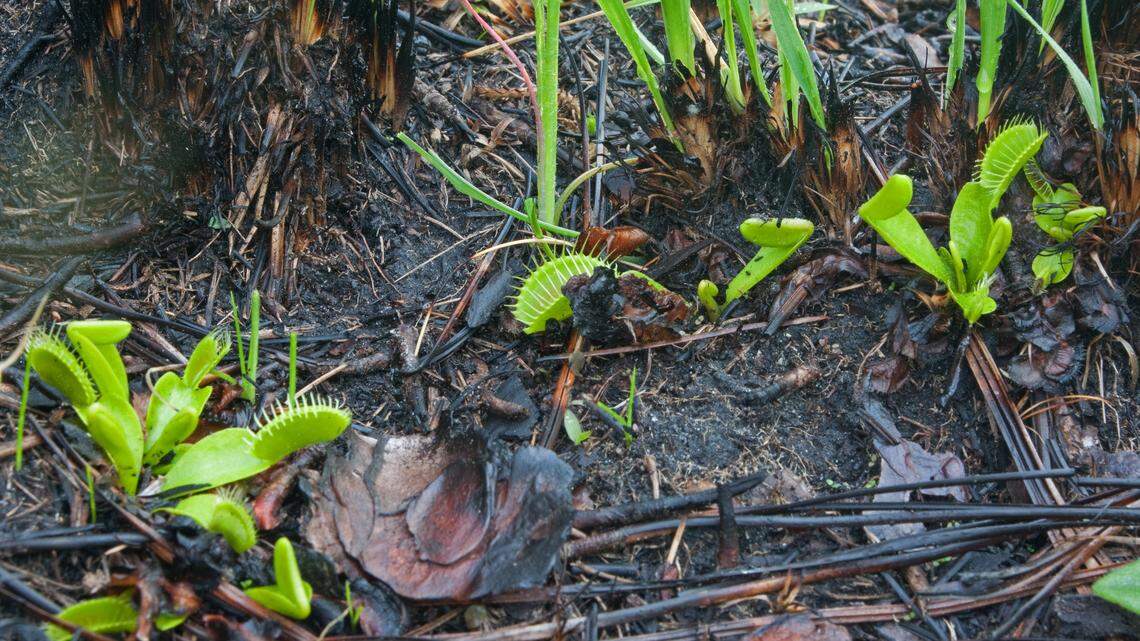
When Deb Maurer visited Green Swamp Preserve this week, she found wiregrass sprouting in ash-covered areas where wildfire was burning just days ago.
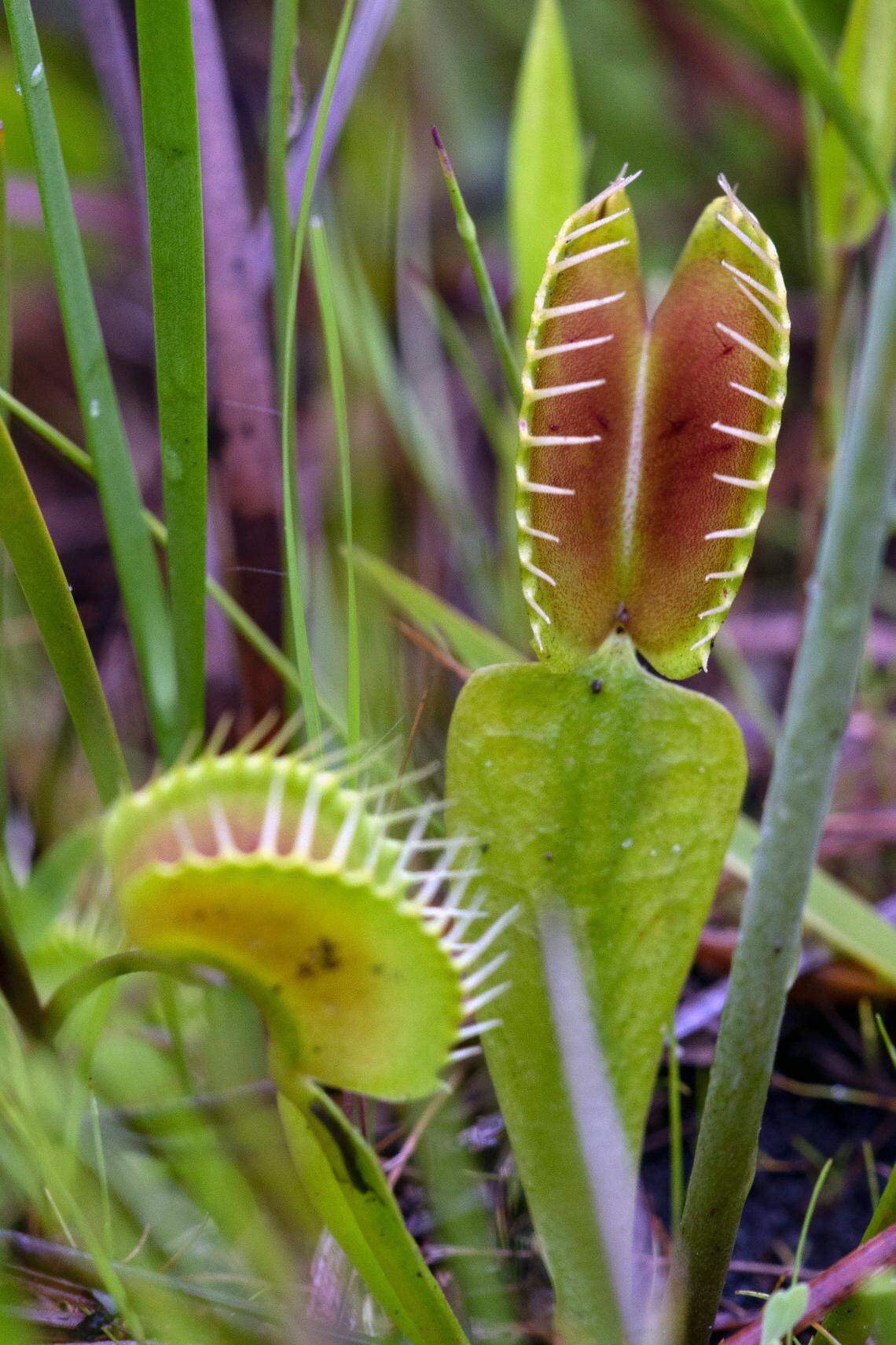
“You’re already seeing things green up, which is incredible so soon after fire,” said Maurer, director of The Nature Conservancy’s Wilmington office. She manages more than 16,000 acres of the preserve, including perhaps its most well-known resident, the Venus flytrap, an insect-eating plant that only lives within a 90-mile radius around Wilmington.
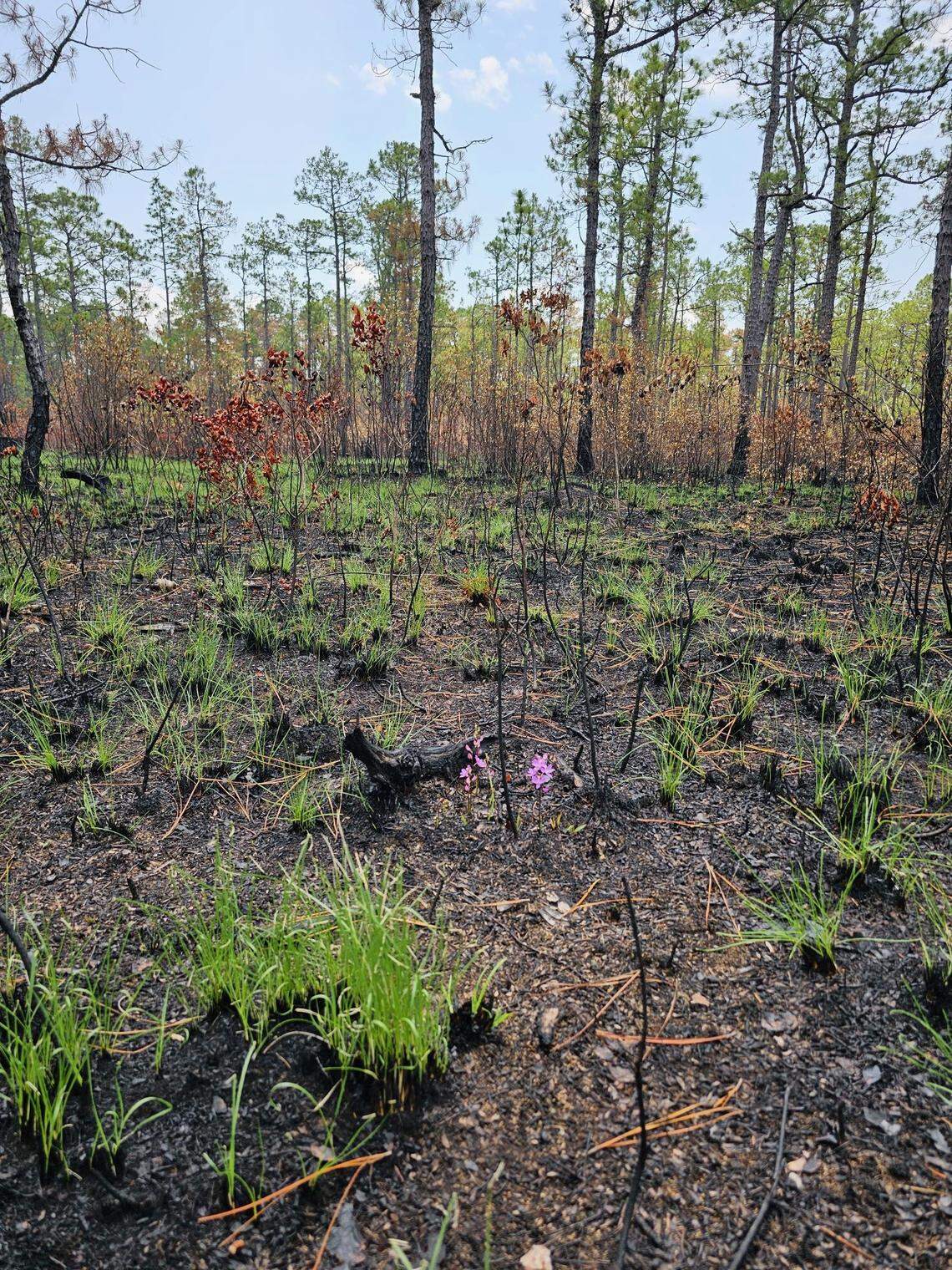
While June’s massive Pulp Road Fire carried irritating smoke into Wilmington and its surrounding areas, Maurer said, it could actually provide some long-term benefits to the rare plant species that live in the preserve.
In addition to the Venus flytrap, the preserve contains 13 other plant species that eat insects, including four pitcher plants. There are also 16 species of native orchids within its limits on the western side of Brunswick County.
The Pulp Road Fire started with an N.C. Wildlife Resources Commission controlled burn on June 13 that escaped its perimeter. At its peak, the fire affected more than 16,000 acres, sending hazy smoke across Brunswick and New Hanover counties.
The N.C. Forest Service deemed the fire fully contained Thursday morning, after heat sensing drone flights overnight Tuesday and Wednesday did not detect any hotspots, spokesman Philip Jackson told The News & Observer. Jackson also confirmed that the Pulp Road Fire remained entirely within the Green Swamp Preserve.
It’s important to note that the fire didn’t burn across the preserve evenly.
“There’s a mosaic and a patterning,” Maurer said. “Some areas burned intensively, some areas didn’t burn at all and in some places just the ground burned.”
Previous controlled burns likely limited the fire’s impact.
“All of those places are little islands and pockets where the fire just lay down because there wasn’t enough fuel,” Maurer said.
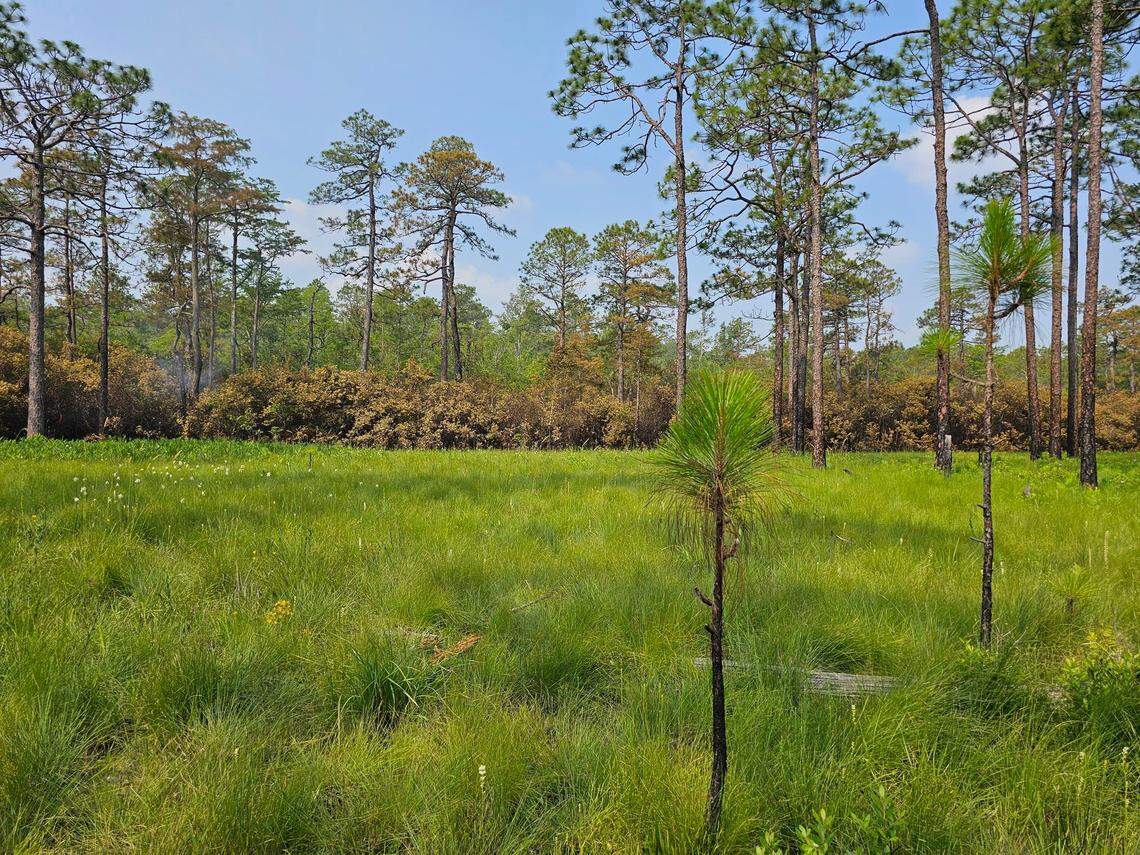
The Nature Conservancy regularly conducts the burns, trying to simulate the natural wildfires that are necessary to clear out undergrowth and allow the long leaf pine and other species to thrive. Fire also benefits plants like Venus fly traps and pitcher plants that sit close to the ground and need the undergrowth cleared in order to reach sunlight.
This year, the conservancy burned about 525 acres of long leaf savanna, including Stringbean Island. The island, which is actually a long leaf savanna, rises slightly out of the swampy pocosin.
When Maurer visited Stringbean this week, she saw hundreds of Venus flytraps in seed, pitcher plants blooming and orchids flowering.
In areas where the Pulp Road Fire did burn, plants are already prepared to recover. Maurer pointed to wiregrass as an example.
Underground, wiregrass maintains a broad root mass with additional buds. That way, the plant doesn’t die when fire burns through the area.
“It’s an adaptation to fire,” Maurer said. “It’s ready to sprout if it has to.”
This story was produced with financial support from the Hartfield Foundation and 1Earth Fund, in partnership with Journalism Funding Partners, as part of an independent journalism fellowship program. The N&O maintains full editorial control of the work.
This story was originally published June 29, 2023 at 1:31 PM with the headline "Brunswick County wildfire burned through Venus flytrap’s NC home. Why that’s good news."