
Dream to save historic ‘eyesore’ became BBQ restaurant owner’s 10-year obsession
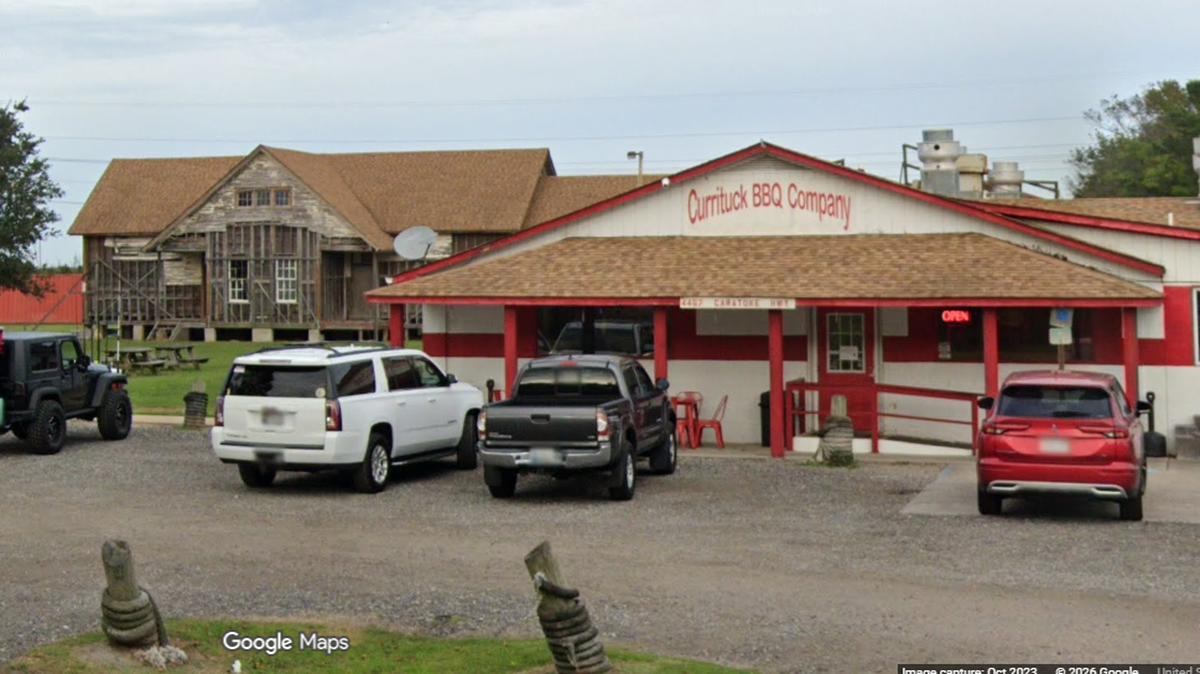
Every small town has at least one person who isn’t afraid of what the neighbors think and in Barco, North Carolina – population 759 – that guy is Paul Robinson, owner of the Currituck BBQ Company.
Robinson says he’s blessed and cursed with a belief that “everything is doable” and an example of this approach is behind his restaurant on Caratoke Highway.
It’s a 1920s school for Black children that Robinson bought and had moved because no one else would step up to save it.
So now, the ramshackle Coinjock School sits in the restaurant’s backyard and his plan for restoration keeps getting more ambitious with each passing year.
“It’s story of my life. It’s like my restaurant. I was 26, with no idea how to run a restaurant and in rural North Carolina. It made no sense to open one, but it worked out,” Robinson told The Charlotte Observer in an interview.
“I felt like the school was an interesting piece of history and I had become semi-obsessed with it. It was about a mile down the road or so, too close to the highway. It was about to fall part, an eyesore, and the county was going to tear it down. I didn’t want to see it knocked down.”
The money pit?
Ten years later, this ambitious pet project is still in progress and the bills are mounting.
Robinson paid $5,000 for the building, paid another $55,000 to have it moved, and has been writing checks ever since. The investment is now well over $155,000, he says.
That includes money to replace a lot of wood that rotted away due to holes in the roof and walls.
As a result, the school no longer qualifies for the National Register of Historic Places, but Robinson is undeterred. He remains dedicated to authenticity, using “reclaimed hardwood” whenever possible and hiring carpenters to salvage or replicate the large bay windows needed due to a lack of electricity.
It has been fun to find remnants of the old school hidden beneath years of renovations, and those details are being saved whenever possible, he says.
“Not qualifying for the historic register means there are fewer restrictions. I can do whatever I want, including moving it where I wanted,” he says.
“I didn’t want to stick it in a field that no one visited. I wanted it to be a centerpiece. I have a restaurant. We have 10,000 visitors a year, including tourists. Those people who come through my door will now learn about that school.”
A controversial school
Even a century later, the school remains a touchy subject, with some seeing it as a reminder of times best forgotten, Robinson says.
Known as a Rosenwald School, it was built as part of a national project initiated in 1917 by Sears and Roebuck President Julius Rosenwald to educate black children descended from enslaved people, according to historians.
“His response was establishment of a fund that provided architectural plans and matching grants that helped build more than 5,300 schools from Maryland to Texas between the late 1910s and 1932. North Carolina had more than 800 projects, more than any other state,” N.C. State Historic Preservation Office reports.
The buildings were abandoned as the public school system grew more welcoming of Black students, and many of the sites have been lost, historians say. It’s believed around 125 survive in North Carolina, according to the N.C. State University Libraries.
Barco’s school served African American students more than 25 years, until it was replaced by a public school in the late 1940s. The building was sold in 1951 for $600 and turned into a home, records show.
A 2013 application for the National Register of Historic Places notes the building is “associated with events that have made significant contribution to the broad patterns of our history.”
“For newly freed African Americans it was as if a door had been kicked wide open,” the application states. “Many grew up in the shadow of slavery where learning to read and write was grounds for stiff and harsh punishment.”
Work nearly done?
Barco is small enough that everyone can’t help but see what Robinson is up to.
Progress updates are posted on his restaurant’s Facebook page, and reactions range from supportive to dubious.
“Bout time they are finally doing something ... rather than letting it sit there and rot!” one woman wrote on the latest status update, while another noted Robinson’s dream has made him “a symbol of hope and healing.”
Robinson says he’ll soon prove the naysayers wrong: The renovation will likely be finished by fall.
A pavilion and courtyard have been added adjacent to the school, and Robinson purchased a 58-acre farm behind the school. (He also owns the gas station next to his restaurant.)
“I’m 10-years removed from my original dream. My original idea was a fun country store with one section dedicated to what the school was originally. Now, I’m thinking of it as a venue space and museum to explain what it was,” he says.
“I bought school and bought the farm with a specific plan to do fun ‘farmy things’ and have a school house being a central part of that. I see the school house as going back to its education roots, and the goal is to help people understand the history of the community and the people who came here to farm.”
The school is an important part of that history, he says, because it shows Barco has always been about neighbors helping neighbors.
Barco is along the Coinjock Bay, about a 180-mile drive northeast from downtown Raleigh.
This story was originally published January 12, 2026 at 7:00 AM with the headline "Dream to save historic ‘eyesore’ became BBQ restaurant owner’s 10-year obsession."