The EPA wants to drop carbon-emissions rules. Here’s how that could play out in NC.
AI-generated summary reviewed by our newsroom.
- EPA proposes repeal of 2009 ruling that links greenhouse gases to public risk.
- Policy rollback could prompt expansion of fossil-fuel plants in North Carolina.
- EPA cites $54 billion in projected annual savings but doesn’t say from where.
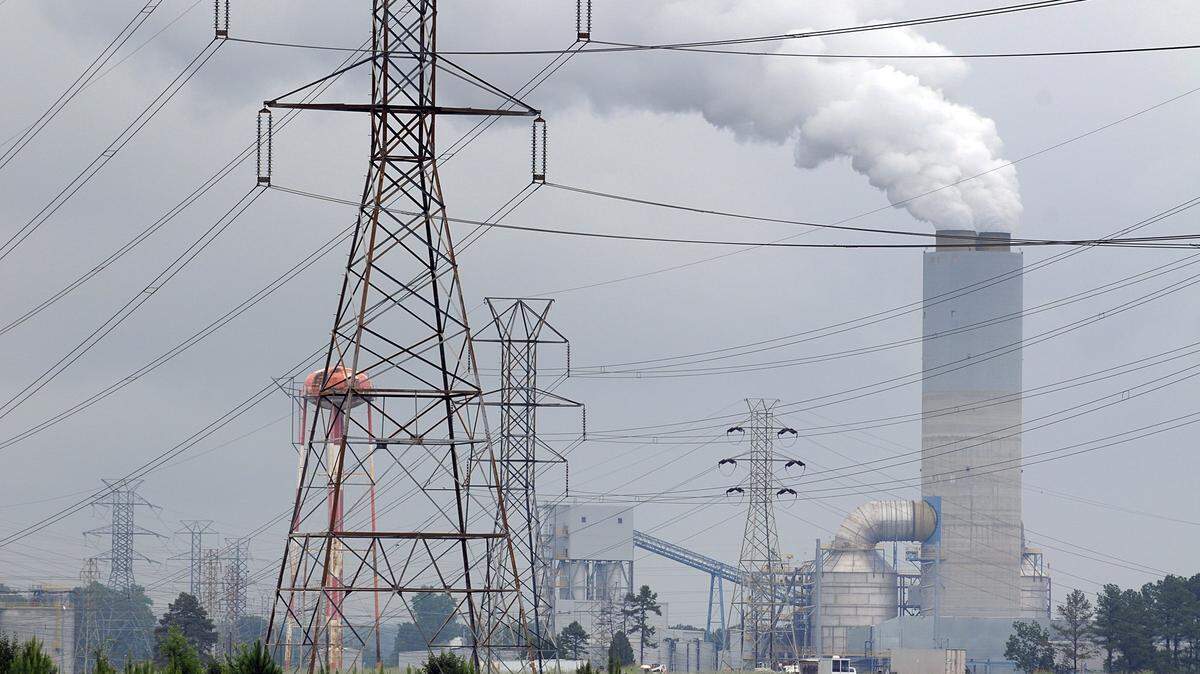
If the Environmental Protection Agency rescinds its regulations on greenhouse gas emissions — as the agency proposed this week — North Carolina could expect to see more fossil-fuel burning power plants, a pair of climate experts say.
President Donald Trump’s EPA administrator, Lee Zeldin, announced Wednesday the agency wants to rescind a 2009 declaration that greenhouse gases contribute to global warming and therefore pose a threat to public health and welfare.
The declaration is the basis for the EPA’s carbon-emissions standards under the Clean Air Act.
Why does the EPA want to drop greenhouse gas rules?
The EPA says the regulations and the Biden administration’s push toward electric vehicles have cost more than $1 trillion, though the agency didn’t break down the costs. Removing the regulations, the agency said, would save Americans $54 billion each year, though it didn’t itemize those savings.
The EPA cited a U.S. Department of Energy report issued this month titled, “A Critical Review of Impacts of Greenhouse Gas Emissions on the U.S. Climate,” whose five authors describe themselves as skeptics of mainstream climate-change science. The writers agree that the climate has warmed, but they say it’s not clear that human activity has been the main cause, that the warming is all bad or that it constitutes a dire situation that requires costly remedies.
The team is made up of John Christy, a professor of atmospheric science and director of the Earth System Science Center at the University of Alabama in Huntsville; Roy Spencer, a meteorologist and climate scientist at UA Huntsville; Judith Curry, a climatologist, meteorologist and former chair of the School of Earth and Atmospheric Sciences at the Georgia Institute of Technology; Steven Koonin, a theoretical physicist at Stanford University’s Hoover Institution; ; and Ross McKitrick, an economics professor at the University of Guelph in Ontario, Canada.
The majority of climate scientists believe that warming temperatures across the globe are largely the result of humans’ burning of fossil fuels, which emit gases that accumulate in the atmosphere and trap heat around the planet.
That heat has contributed to sea-level rise and scientists say it helps account for changes in global rainfall patterns and severe weather events such as droughts, which contribute to fires, and hurricanes and tropical storms, which bring flooding. North Carolina has had it share of all those in the past 20 years.
How would deregulation of greenhouse gases affect NC?
The N.C. Department of Environmental Quality says the two largest sources of greenhouse gases in the state are gas- and diesel-burning cars and trucks traveling the highways, and power plants.
Together, DEQ says those two sectors account for more than 97% of greenhouse gases emitted across the state.
DEQ’s most recent inventory of greenhouse gases, released in January 2024, shows the state achieved a larger percentage reduction in gross greenhouse gas emissions from 2005 to 2020 than the U.S. as a whole, dropping 28% compared to a national drop of 19%.
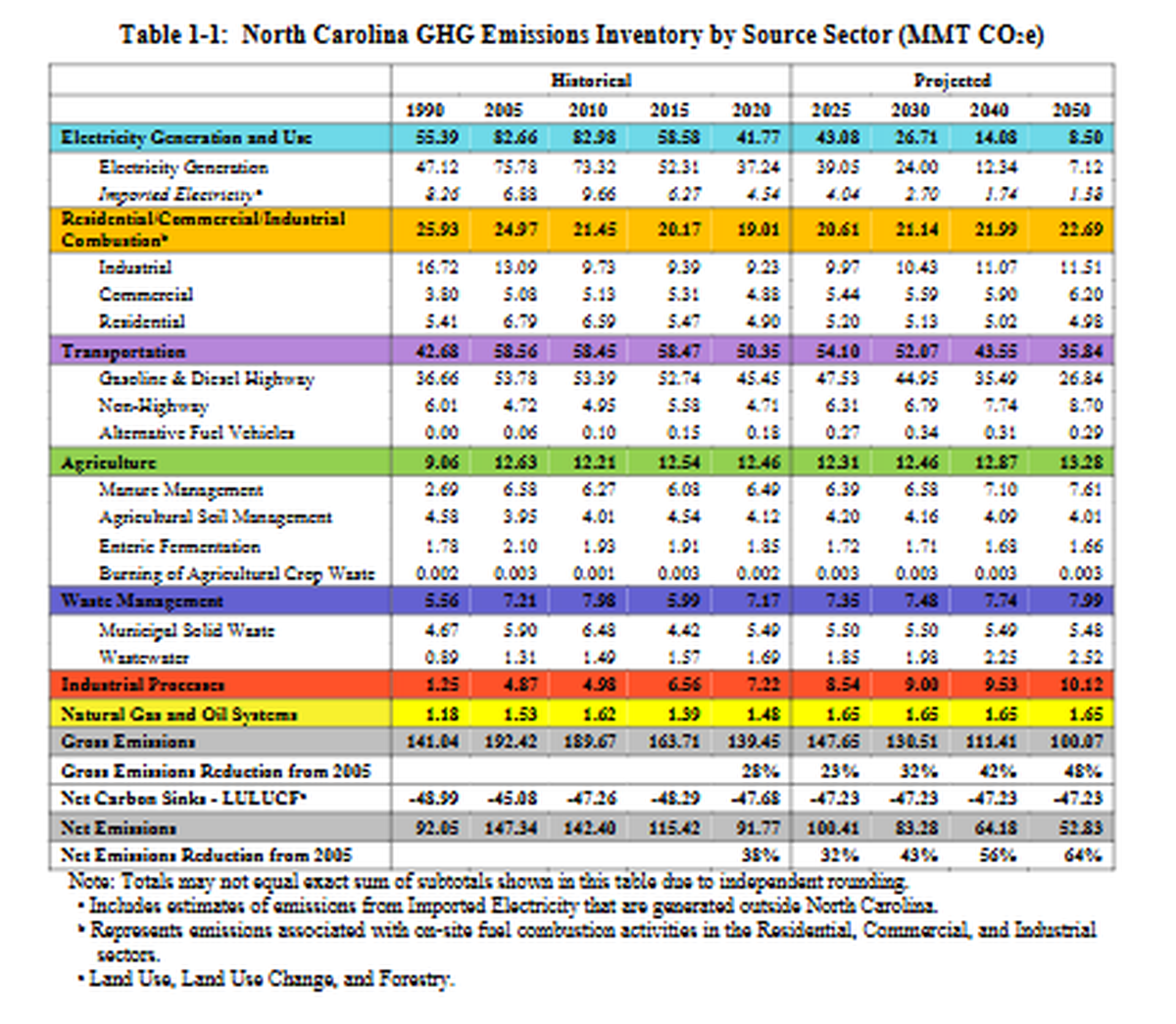
It also shows that forestland in the state offset greenhouse gas emissions more than had been expected.
Drew Shindell, Nicholas Professor of Earth Science at Duke University’s Nicholas School of the Environment, said even if the EPA stops regulating greenhouse gas emissions on cars and trucks, those vehicles emit other pollutants still governed by the Clean Air Act.
The Trump administration is eliminating the federal tax credit of up to $7,500 for new electric vehicles and $4,000 for used EV’s after Sept. 30, 2025, and is pausing Biden-era funding for EV charging infrastructure. Shindell said those actions would be more likely to discourage North Carolinians from buying electric vehicles than the EPA dropping its regulations.

But dropping the rules could have a significant impact on the state’s efforts to move to cleaner power generation, Shindell said.
“I see us kind of failing to transition as rapidly to renewables,” he said. Solar is the least expensive source of power and has been growing in North Carolina with homeowners investing as a way to cut their Duke Energy bills, Shindell said. But Duke Energy itself remains most interested in building gas-powered and nuclear plants to satisfy North Carolina’s growing energy needs.
If the EPA abandons carbon-emission regulations, Shindell said, the monopoly would have little incentive to switch to solar or onshore wind.
“If we build new fossil-fuel-burning plants now, in the 2020s and 2030s, and the lifespan of those is many decades, we’ll still be running these things 50 years from now.”
Wlll Scott, Southeast Climate & Clean Energy Director for the Environmental Defense Fund, based in Raleigh, said he hopes that at some point the lower cost of solar power, the speed at which solar installations can be built and their cleaner operation will become attractive enough that Duke Energy will switch over.
Even if the EPA stops regulating carbon emissions from fossil-fuel powered plants, he said, cleaner sources of energy are a better investment.
“We just need to let economics, not ideology, dictate what is the best deal for people who pay power bills across the state,” he said.

The EPA is accepting public comment on the rules proposal though its website.
NC Reality Check is an N&O series holding those in power accountable and shining a light on public issues that affect the Triangle or North Carolina. Have a suggestion for a future story? Email realitycheck@newsobserver.com
This story was produced with financial support from the Hartfield Foundation and Green South Foundation, in partnership with Journalism Funding Partners, as part of an independent journalism fellowship program. The N&O maintains full editorial control of the work. If you would like to help support local journalism, please consider signing up for a digital subscription, which you can do here.
This story was originally published August 1, 2025 at 11:21 AM with the headline "The EPA wants to drop carbon-emissions rules. Here’s how that could play out in NC.."