Conservation group asks federal judge to order stronger protections for NC red wolves
AI-generated summary reviewed by our newsroom.
- Conservationists urged a federal judge to reclassify red wolves as 'essential.'
- Red wolf population declined from 120 in 2012 to 18 known wild animals in 2025.
- Fish & Wildlife resumed pup releases and plans safe tunnels to protect wolf habitat.
A national conservation group asked a federal judge Wednesday for stronger protections to keep the red wolf population in Eastern North Carolina from becoming extinct.
It’s the latest legal move in a years-long effort to force the U.S. Fish & Wildlife Service, which reintroduced red wolves to North Carolina in 1987 and manages the animals across a five-county area, to do everything it can to help the species survive and recover.
“The red wolf hangs by a thread here in Eastern North Carolina,” Perrin de Jong, senior attorney for the Arizona-based Center for Biological Diversity, said after court Wednesday. If the 18 known animals remaining in the program don’t qualify for the strongest protections at the agency’s disposal, de Jong said, then nothing does.
An attorney for Fish & Wildlife told Chief Judge Terrence W. Boyle of the Eastern District of the U.S. District Court the agency is doing everything it can for the wolves.
They were brought back from extinction once
The N.C. Wildlife Federation has said red wolves once roamed the East Coast from Pennsylvania to Florida and as far west as Texas, but habitat loss, hunting and trapping, and cross-breeding with coyotes had them on the Endangered Species list by 1967.
In 1972, the last group of wild red wolves, found in southeast Texas and southwest Louisiana, was captured and used to begin a captive breeding program to save the species. Four breeding pairs were introduced to the Alligator River National Wildlife Refuge in 1987. More were added later, and wildlife officials sterilized coyotes in the region to keep them from breeding with red wolves.
Not everyone welcomed the wolves back; from the start, some locals said the wolves would roam off the refuge onto private land where they would menace people, pets and livestock, and upset the ecosystem. Many wolves died after being shot or struck by vehicles.
Officials say the wild population peaked around 2010 to 2012 with more than 120 animals. Then, in 2015, the Fish & Wildlife Service stopped reintroducing red wolves to the wild. By 2020, the population was down to seven known wolves.
“Essential” versus “non-essential” species
Wednesday’s hearing had its legal roots in a 2016 petition by several wildlife conservation groups and individuals who asked Fish & Wildlife to reclassify the red wolf population, which roams an area centered around the Alligator River and Pocosin Lakes national wildlife refuges and the U.S. Navy’s Dare County Bombing Range, from “non-essential” to “essential.”
The American red wolves in North Carolina are the only ones known to exist in the wild. More than 250 red wolves are held in captivity at 44 facilities across the country, including at the N.C. Zoo in Asheboro, which houses the second-largest pack in existence, about two dozen animals.
The groups argued that the “essential” classification would provide needed extra protections, including preventing critical habitat loss and stopping private landowners from killing wolves that aren’t a threat to humans or their animals.
The Fish & Wildlife Service declined.
In 2018, Judge Boyle ruled that the Fish & Wildlife Service had violated the rules of the Endangered Species Act by rolling back its protections for the animals. He also said Fish & Wildlife officials and private landowners could not kill a red wolf without demonstrating the animal was a threat.
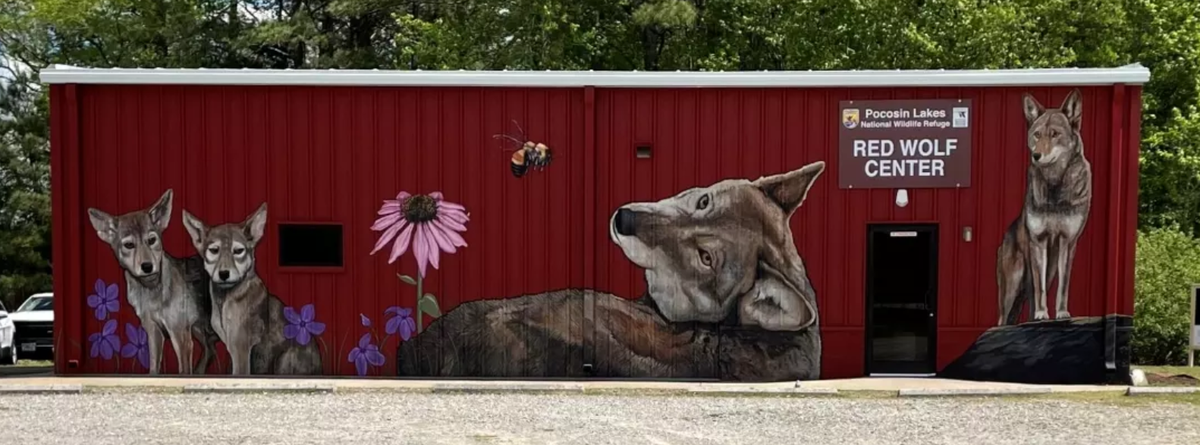
In recent years, many in the region that hosts the wolves seem to have warmed to their presence, even trading off their cachet. At one point, visitors could attend “howling safaris” at the Alligator River National Wildlife Refuge. At the Pocosin Lakes refuge outside Columbia, visitors can pose for photos in front of a mural that covers the Red Wolf Center, see a pair of captive red wolves housed there, or catch a glimpse of the animals via a 24-hour web cam.
Is the government doing all it can to protect the wolves?
With the case back before him, Boyle asked Bonnie Ballard, an attorney with the Environment and Natural Resources Division of the U.S. Department of Justice, why the government wouldn’t want to give the red wolves all the protections it could.
Ballard said it was doing so. She said the Fish & Wildlife Service meets and talks with local residents about the red wolf program, has resumed releasing breeding pairs and has placed pups to be fostered by wild wolf families.
Ballard said there are now 18 radio-collared wolves in the wild population, and possibly another six that have not been collared. She said 16 pups have been born into the wild this year, but that the survival rate is only about 50%.
In answer to a question, Ballard also told Boyle that the N.C. Department of Transportation, using a $25 million grant from the Federal Highway Administration, will begin building tunnels in 2026 under U.S. 64 through the Alligator River refuge to serve as safe crossings for red wolves and other wildlife.
Ballard said the “non-essential” classification of the wolves gives Fish & Wildlife more flexibility in managing the population, including being able to trap animals that wander onto private property and relocate them to the Refuge.
Boyle didn’t say when he would issue a ruling in the case.
Uniquely NC is a News & Observer subscriber collection of moments, landmarks and personalities that define the uniqueness (and pride) of why we live in the Triangle and North Carolina.
This story was produced with financial support from the Hartfield Foundation and Green South Foundation, in partnership with Journalism Funding Partners, as part of an independent journalism fellowship program. The N&O maintains full editorial control of the work. If you would like to help support local journalism, please consider signing up for a digital subscription, which you can do here.
This story was originally published July 24, 2025 at 8:31 AM with the headline "Conservation group asks federal judge to order stronger protections for NC red wolves."