This ant is invading NC, and its bite can be deadly. What to know
AI-generated summary reviewed by our newsroom.
- Asian needle ants thrive in NC's mild climate and nest in wood and mulch areas.
- Stings from Asian needle ants may trigger anaphylaxis in about 2% of cases.
- Prevent infestations by removing debris, applying barriers and using protein baits.
An insect native to Asia is slowly making its way through the U.S. — and it has a deadly sting.
The Asian needle ant, first discovered in the U.S. in 1932, has now been detected in 20 states, The Guardian reported — including North Carolina.
Similar to other insects, Asian needle ants become active during the spring and summer months, but since North Carolina has relatively mild winters, they can be active most of the year, Chris Hayes, an extension associate of structural pest management at NC State University who specializes educating the pest management industry on critter habits, told The Charlotte Observer.
The ants will reach their annual peak numbers in July and August, USA Today reported.
We talked to Hayes more about where the Asian needle ant is found, how to identify them, whether they’ll sting and how to keep them away from your home.
Asian needle ant in NC
North Carolina’s warm and humid climate makes it a “great state” for Asian needle ants to settle down, Hayes said.
“Where people would see the most around their homes, or in nature, is going to be decaying wood, so they could be in logs or underneath bark of trees that are on the ground or trees that are still standing,” said Hayes. “You could also see them around your property or on trails in mulch. They love mulch.”
Asian needle ants can also be found in raised bed gardens and children’s play areas, Hayes said.
“Pretty much anywhere that you have this wood to ground contact, these things can show up,” he added.
They can also be found in man-made structures, such as around sprinkler systems and inside pavement crevices, according to the N.C. State Extension.
What does the Asian needle ant look like?
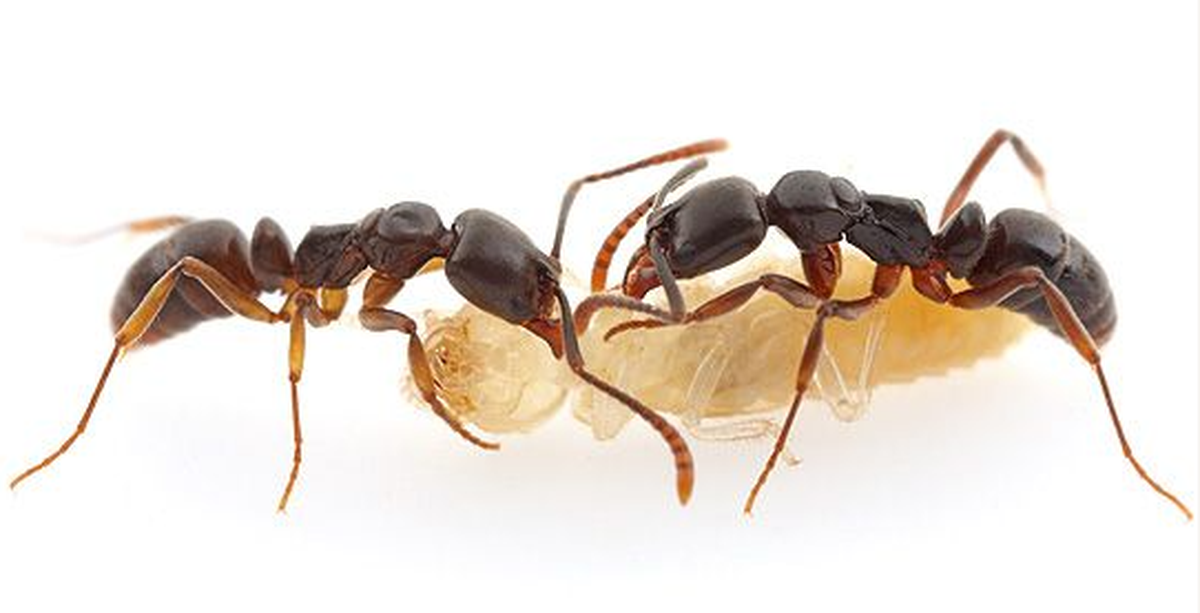
The Asian needle ant is small, with workers and queens measuring 0.2 inches length, according to the N.C. State Extension.
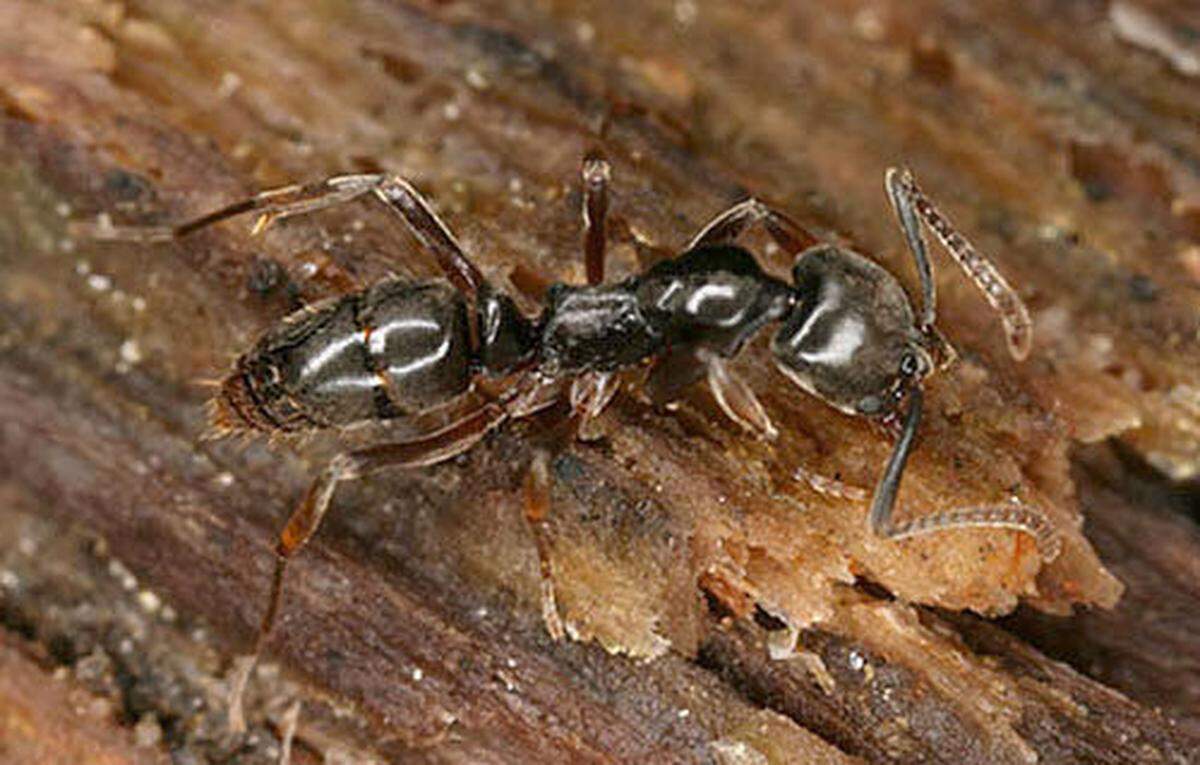
Workers and queens also have very similar appearances, with long, slender bodies that are dark brown or black, and legs and mandibles (jawbones) that are a lighter brown or orange color, the extension says.
Though they resemble other species, Hayes said an easy way to identify the Asian needle ant is to “look at their butts.”
“Carpenter ant abdomens are large. They’re kind of like a sphere. They’re bigger, they’re more rotund,” he explained. “Whereas an Asian needle ant abdomen is skinnier. I like to say it kind of looks like a hot dog.”
Asian needle ant bites
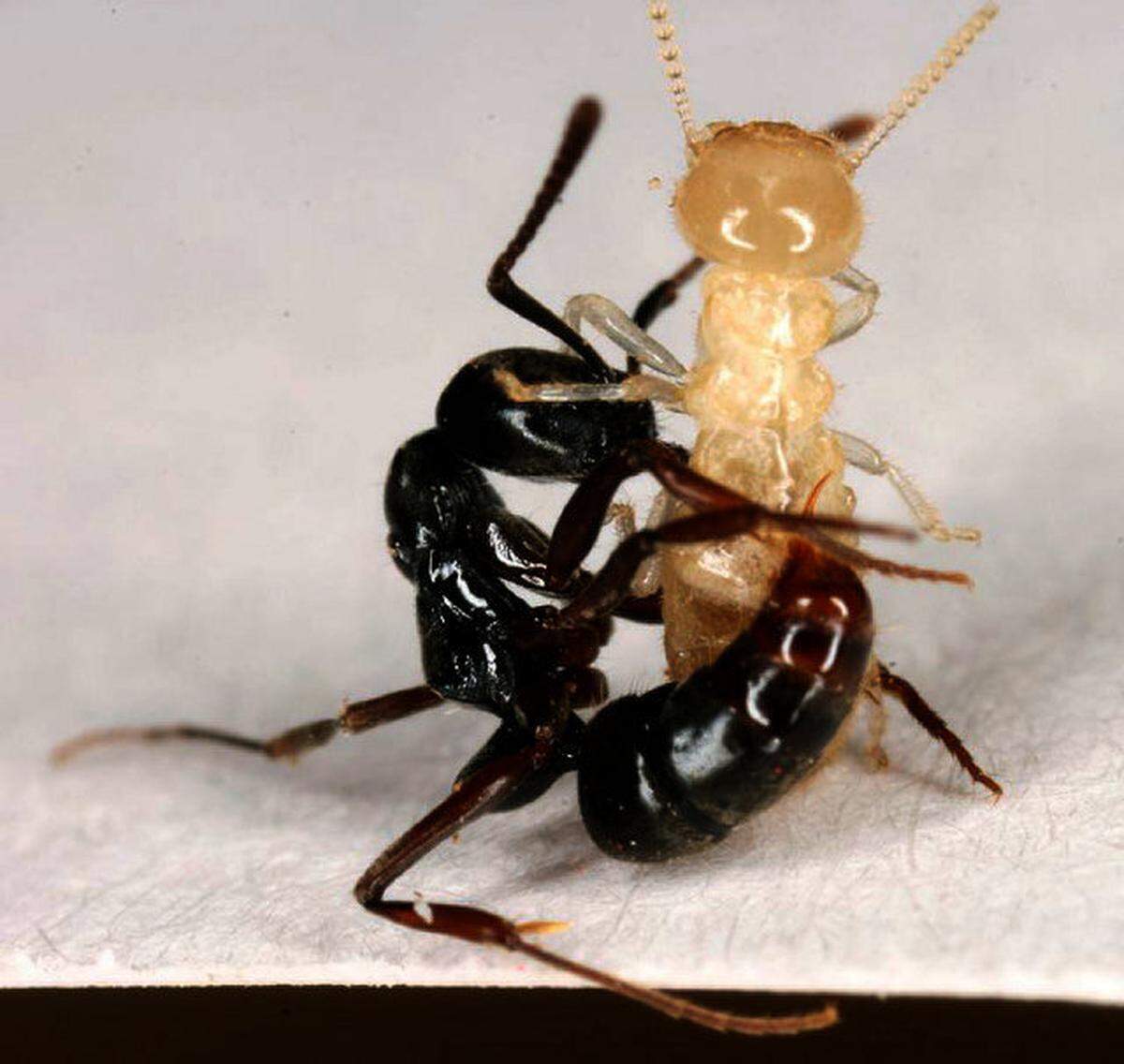
Asian needle ants can sting, but they’re not as aggressive as other ant species, such as fire ants, Hayes said.
“If you disturb a fire ant mound, you’re going to get lit up,” he explained. “They’re going to be all over you. If you disturb an Asian needle ant nest, they’ll crawl on you, but you’re not immediately going to be stung.”
Hayes pointed out that Asian needle ants can attach themselves to you by getting underneath your clothing, in the joints of your fingers or behind your legs, and “as soon as they start being squished or pressed between those clothing or joints, that’s when they start stinging. ... It’s pretty easy to get stung if you’re not aware,” Hayes said.
Benoit Guénard, a professor of ecology and entomology at the University of Hong Kong who studied ants in North Carolina, told USA Today: “Imagine somebody inserting a needle directly into your flesh. ... It’s a very sharp, acute pain but it’s quite local.”
Symptoms of an Asian needle ant sting
Asian needle ant stings can be painful, and they can result in a life-threatening allergic reaction called anaphylaxis, according to the U.S. Department of Agriculture (USDA). Symptoms of anaphylaxis include:
Skin reactions, including hives, itching and flushed or pale skin
Low blood pressure (hypotension)
Constriction of the airway, wheezing, difficulty breathing
Swollen tongue or throat
Weak and rapid pulse
Nausea, vomiting or diarrhea
Dizziness or fainting
Psychological symptoms, such as a feeling of impending doom
While stings can lead to a “whole host” of allergic responses, Hayes said, allergic reactions only happen in about 2% of all stings.
“People who are hypersensitive to other stinging insects may be at increased risk of anaphylaxis from Asian needle ant stings,” the USDA says.
If you think you are suffering from an allergic reaction from an Asian needle ant sting, you should seek medical attention immediately.
Asian needle ant infestation
Identifying an Asian needle ant infestation could be tricky because they don’t behave like other ants, Hayes said.
“Most of the ants you see here in North Carolina are small and black, and they create these really long trails that are easy to follow,” Hayes said. “These ants don’t. Asian needle ants just kind of wander around searching for food and water, so you’re much more likely to see these small, black ants alone.”
The good news is that these ants aren’t likely to go inside your home, but there are some outdoor areas you can check to make sure they aren’t nearby, Hayes said.
“Look at your walkways, look at your pavers and sidewalks, and if you’re seeing a bunch of ant activity, a bunch of ants kind of wandering around on those surfaces, carefully get a closer look. If you notice that they’re not trailing, they’re by themselves, and they’re small, black ants that kind of have this long abdomen look like a hot dog, then you might have Asian needle ants,” said Hayes.
How to avoid Asian needle ant stings
To avoid Asian needle ant stings, the first thing you should do is be aware of your surroundings and know what to look for, Hayes said.
“So, if you’re a gardener, you spend a lot of time outdoors, or if you have kids who are playing outside, or pets, you are more likely to see some stings from them, because they do overlap with us a lot more now,” said Hayes.
Another way to escape stings and keep them away from your home is to use baits, Hayes said.
“We’re still trying to figure out exactly what ant baits work the best on these ants,” Hayes said. “They are a little different than other ants, and that makes a little bit of a challenge. But ant baiting can work, and if you consider doing that, we recommend using a protein bait as opposed to a sugar bait.”
Removing their habitat is also a great way to keep Asian needle ants at bay, Hayes said, adding that taking away any wood piles that are touching your home can be a good start.
Barrier sprays, or residual insecticides applies around the exterior of a structure, can also be helpful in controlling the ant populating around your home, Hayes said.
For more intense control, Hayes advises reaching out to a pest management company.
Inspired by a story from The State in South Carolina.
This story was originally published June 16, 2025 at 1:30 PM with the headline "This ant is invading NC, and its bite can be deadly. What to know."