In Helene and other disasters, these rules govern how NC counts casualties
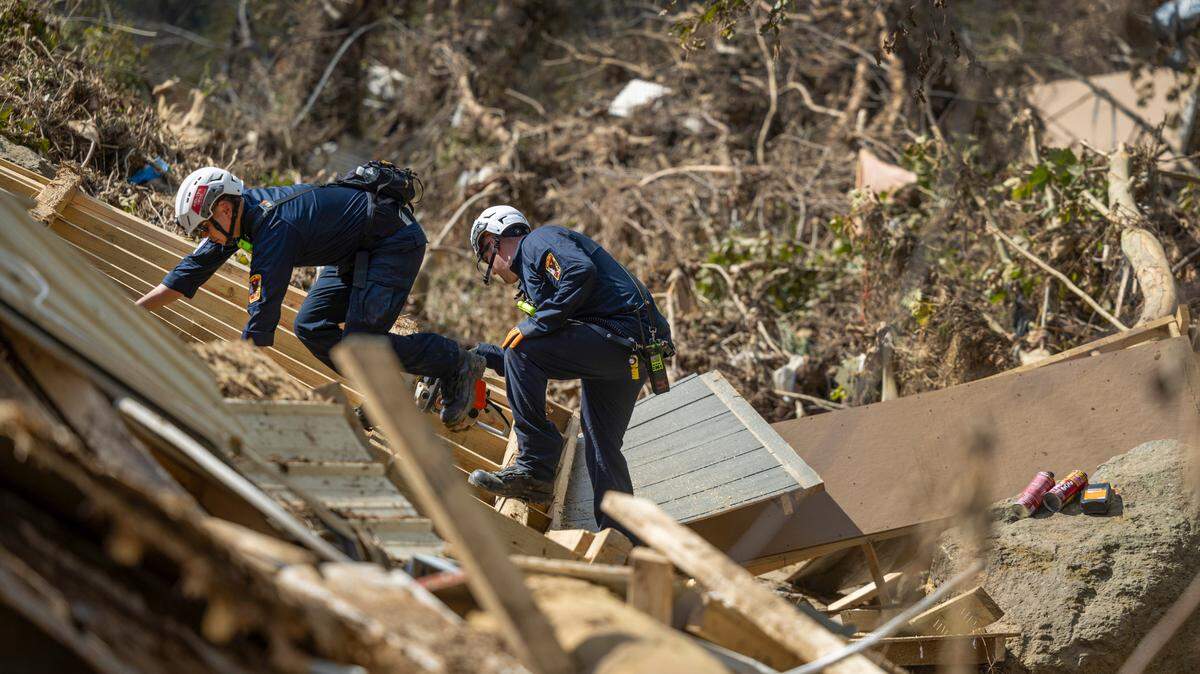
The list of North Carolina’s 104 confirmed casualties from Helene includes a South Carolina woman who was injured near her home but died in a hospital in Gastonia, and it omits a North Carolina woman who likely died here but whose body was found in Tennessee.
Why?
That’s one of several questions we asked the N.C. Department of Health and Human Services, which tracks deaths related to disasters.
How are deaths reported by different states?
Like many Atlantic hurricanes, Helene was a multi-state disaster. It has been blamed for deaths in seven states, including one as far away as Indiana.
To ensure accurate counting, the U.S Centers for Disease Control and Prevention offers guidelines on identifying, tracking and reporting disaster-related deaths, which all states follow.
The rule is that “state and national reports account for deaths where they occurred to avoid duplicate reporting,” DHHS said.
That’s why the list includes only those who were documented to have died in North Carolina or whose bodies were recovered here.
How are the time and place of death determined?
Date of death is the date a person is pronounced dead by an emergency medical worker, hospital staff or other professional. In cases where the death clearly occurred before medical personnel arrived, date of death is when the person was found.
The place of death is listed as the county where the person was found.
When is a death attributed to the storm, and who decides?
The N.C. Medical Examiner System and Office of the Chief Medical Examiner use guidance from the CDC for certifying deaths in the event of a disaster, natural or man-made.
Cases are investigated to determine the cause and manner of death and if the storm-related death was due to a direct cause or indirect cause.
A directly related death happens because of the disaster itself, such as a building collapsing or a person being hit by debris. An indirectly related death happens due to unsafe or unhealthy conditions caused by the disaster — before, during or after it.
Tracking all disaster-related deaths ensures families have access to benefits and services related to disaster recovery.
For some storm-related deaths during Helene, DHHS said, the exact circumstances were not immediately known. Those were initially classified as “unknown” until a team of forensic pathologists could determine the exact cause of death in each. When done, those were reclassified into the appropriate category.
The CDC’s guidance is a public document available online.
Are autopsies done in all disaster-related deaths?
No. Examinations and tests needed for a complete death investigation vary by case, DHHS said. Every storm-related death receives an external physical examination. A full autopsy is performed only if needed to determine cause and manner of death.
Where are autopsies performed?
In the aftermath of Helene, DHHS said, most of those who died were cared for at one of two locations: the Buncombe County Morgue in Asheville or the Office of the Chief Medical Examiner in Raleigh. Any case that could be identified by photographs and/or fingerprints or came in with a known ID was handled at the local morgue, and the state sent extra resources there in October to help.
The more complex cases were sent to Raleigh for additional examination and identification. Fewer than a dozen cases were handled by the Mecklenburg County Medical Examiner in Charlotte and at Atrium Health Wake Forest Baptist medical center in Winston-Salem.
How many people are still missing or unidentified?
As of Jan. 17, seven people are still missing and there are no confirmed Helene-related remains pending identification. Local agencies and volunteers continue to search for those still missing.
When were the last remains found?
The most recent verified storm-related fatality was found on Dec. 7, 2024.
What if a body isn’t found?
Declaring a missing person as deceased is done on a case-by-case basis through the courts as specified in state statutes.
NC Reality Check is an N&O series holding those in power accountable and shining a light on public issues that affect the Triangle or North Carolina. Have a suggestion for a future story? Email realitycheck@newsobserver.com
This story was originally published January 24, 2025 at 5:15 AM with the headline "In Helene and other disasters, these rules govern how NC counts casualties."