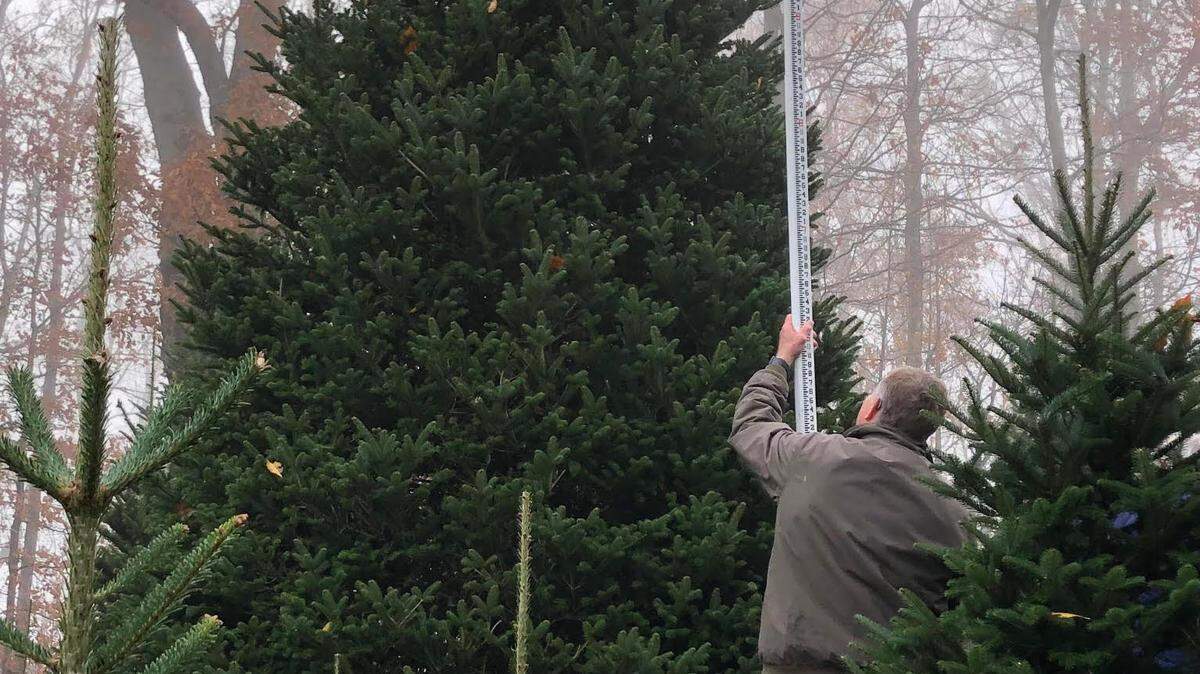
NC Christmas tree farms are ready to bring back the joy that Helene’s rains washed away
READ MORE
Western NC Christmas Trees
Hurricane Helene devastated Western North Carolina and left many Christmas tree farms scrambling or behind on production. Now the region’s tree farmers are ready to tell their stories, with many inviting visitors to make holiday memories at their farms while cutting down their own trees.
Expand All
David Pittman spent much of the first half of his life trying to figure out how to get away from his family’s Christmas tree farm.
He’s spent much of the latter half figuring out how to stay on it.
This Christmas — the first one after the remnants of Hurricane Helene brought historic rainfall and catastrophic flooding, wind and landslides to Western North Carolina — will be a test of the resilience mountain people like Pittman take for granted.
Like hurricanes that have threatened the coast at Labor Day, Helene came to the mountains on Sept. 26 and 27, the worst possible time, days before the fall tourist season was about to begin and a month before the start of Christmas tree season.
In October, workers should have been welcoming leaf-peeping visitors at inns, restaurants and gift shops, or shearing trees and mowing fields so choose-and-cut shoppers could walk the evergreen rows. Instead, they were shoveling mud out of their houses — if they still had houses — and navigating FEMA applications.
In two days, Helene turned the season when so many small business people in the mountains make their money for the year into a natural and financial disaster.
Growing the Cadillac of Christmas trees
On opening day at his choose-and-cut operation in mid-November, Pittman needed a bit of a Christmas miracle.
David Pittman’s Christmas Tree Farm is nestled in a valley 8 miles west of Newland in Avery County, about 5 miles from the Tennessee line. The farm stretches across 70 acres on both sides of two-lane Licklog Road. And the 70,000 trees that stood here when the last satellite photo was taken were so carefully planted, they made a grid of dark green dots visible from 280 miles out in space.
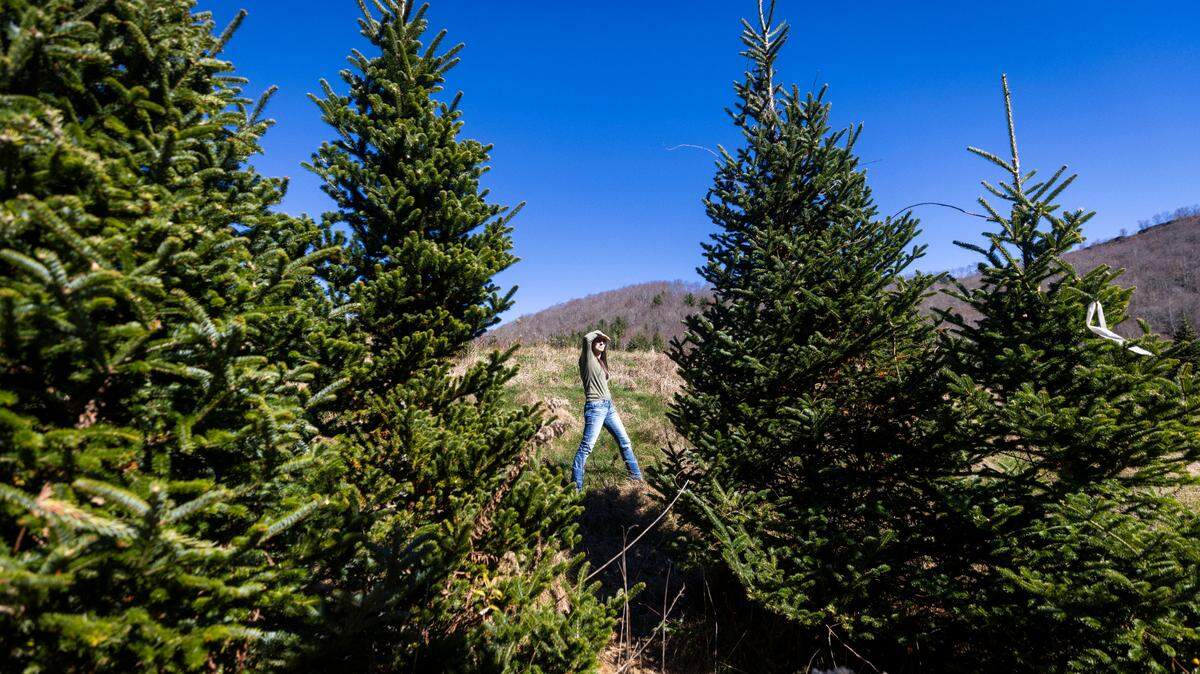
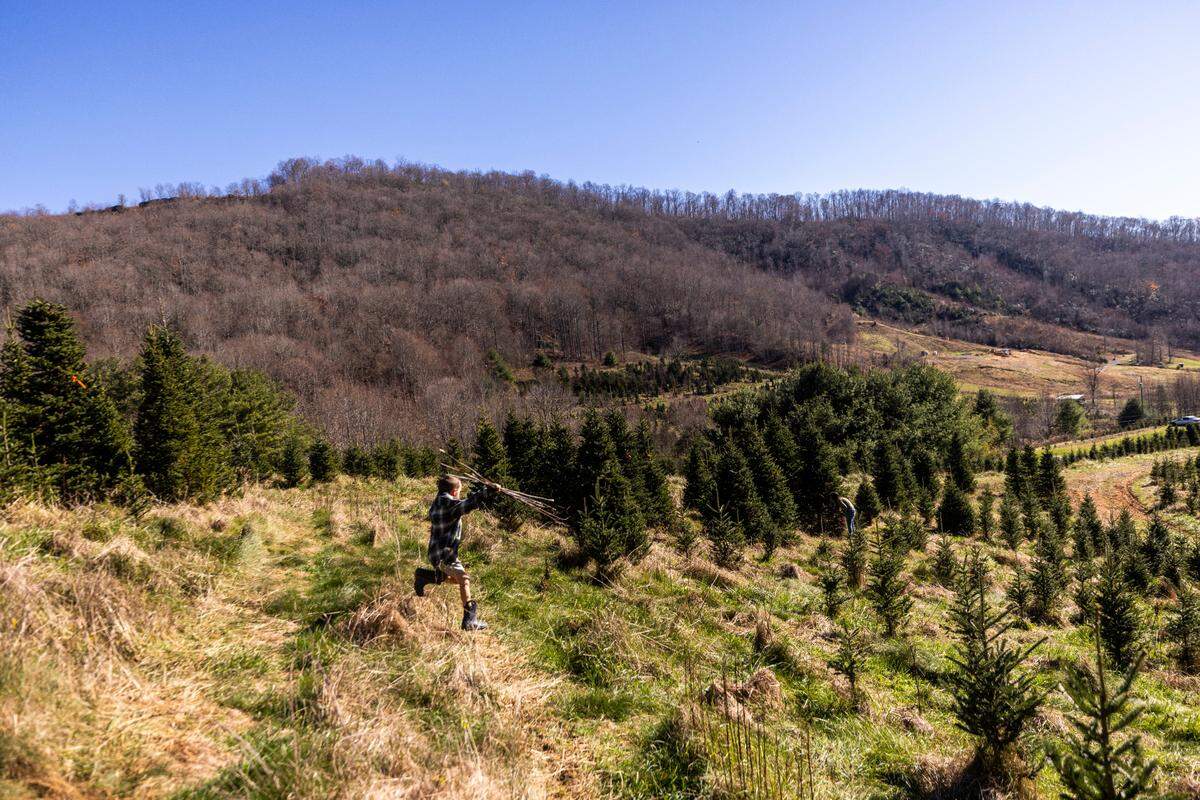
The house where David and his wife, April, have raised their two daughters, Caitlin and Ellie, sits on a flat spot near the center of the farm, with long rows of different heights of Christmas trees climbing the slopes around it. A hike into the tree fields offers stunning views of this forested section of the Blue Ridge Mountains, a landscape so beautiful it’s easy to see why tourism is Avery County’s biggest industry.
The construction of second homes is the next-biggest business.
Agriculture is third, and Avery County’s cash crop is the Fraser fir, often called the Cadillac of Christmas trees. It’s prized for its strong branches and soft needles, which stay on for weeks even after the tree is brought inside, and for the way it can be coaxed through years of pruning into a perfect inverted cone.
Then there’s the aroma. A fresh-cut Fraser fir smells of the North Carolina mountains, of the woods, of cold Decembers, of sweet anticipation.
In the last census by the U.S. Department of Agriculture, in 2022, growers on 940 farms in more than a dozen Western North Carolina counties were growing Fraser firs to sell all over the world. Two-thirds of them were doing it on fewer than 20 acres; 198 of them on just an acre or two, a piece of land too steep for a garden but just right for Fraser firs. Scientists say the evergreen is native to just three places on Earth, thriving in the high elevation and plentiful rain of Western North Carolina, eastern Tennessee and southwestern Virginia.
Some N.C. growers sell a few dozen trees per year, enough to cover a down payment on a car or a year of community college tuition. Others sell hundreds of thousands per year, starting with wholesale trees that get harvested in early November and loaded on trucks for delivery to chain stores across the country.
All told, N.C. growers sold more than $123 million worth of Christmas trees in 2022, the USDA says, and employed thousands of workers at different times during the year.
This is a lot harder than it looks
David Pittman’s grandfather and great uncle were early believers in the potential of Christmas tree farming in Avery County, which had started in the 1950s with a handful of growers frustrated over the unreliable results of more traditional crops. Corn, cabbage and especially beans had been good for local farmers until the end of World War II, when technological advances in farming increased yields across the nation and resulted in a glut of produce that collapsed prices.
The Pittman men planted their first couple of acres of Christmas trees in 1966, the year David was born. They tested several species before settling on the Fraser fir.
“By the time I got to elementary school, I’d come home and there was always something to be done with the trees,” Pittman says, chuckling at how he tired of the chores.
In a farming family, everybody works. Children on tree farms might start out playing in the fields, but soon enough they’re cutting weeds, shearing trees, helping to plant seedlings. Later, they’ll strap on a backpack to apply pesticides. Learn to run a chainsaw.
As his family’s farm grew, so did Pittman’s resolve not to be a part of it.
“I did everything I could to stay out of Christmas-tree farming,” he says. He went away to college for a bachelor’s in physics, then off for a master’s in applied physics. He had a job lined up after grad school with Advanced Micro Devices, a global tech company.
“I was going to be in semi-conductors in Texas,” Pittman says, “and never see another Christmas tree.”
But the grandparents who raised him needed him home for a bit, first to help care for his grandfather and then his grandmother. Just like that, “Here I was, with all these degrees, still having to take care of all these trees.”
Tourists who spot the farms on their way to Boone or Blowing Rock, Waynesville or West Jefferson, probably couldn’t guess how much work goes into growing Christmas trees. It starts with getting the right seed stock, hardy cultivars developed through years of agricultural research, which may take five years to become foot-tall seedlings that can survive in the field.
They’re planted by hand on slopes that are often billy-goat steep, where it will take another five to seven years to grow into a 6- or 7-foot tree.
That’s if phytophthora root rot doesn’t get into the field, there is no infestation of spider mites or balsam twig aphids, weeds don’t steal the nutrients and there’s enough rain at the right times. A successful farmer may have to visit each tree 100 times during the year to keep these threats at bay and maximize the tree’s value when it’s harvested, whether it’s 7 feet or 17 feet tall when it’s finally cut.
Even then, nothing is guaranteed, and the industry in North Carolina has struggled at times. During recessions, families have skipped putting up fresh Christmas trees, opting for artificial trees or none at all. Concerns over risky pesticides turned some customers cold until researchers could find acceptable alternatives. There have been ice storms and tropical storms. Labor shortages have forced farmers to negotiate the complicated H-2A visa program to bring workers from Mexico.
‘Pride cometh before a fall’
Pittman, who decided to stay in the mountains once he met and married April, has had to make adjustments. In 2008, he was working more than 200 acres of trees when the Great Recession hit, and hundreds more farmers who had gotten into the business had trees ready for market.
“People stopped buying Christmas trees, and there was a huge oversupply,” Pittman says. “Twenty-five-dollar trees went for $5 that year. Or $2. If you could sell them.”
To stay in business, Pittman cut back to about 70 acres. He put his degrees to work teaching physics and electronics at Mayland Community College in Spruce Pine, where online reviews still say he was the best instructor his students ever had.
Pittman had the farm looking good this year. He had contracts for his usual 6,000 to 8,000 wholesale trees going to garden centers and churches in North Carolina, Florida and Tennessee. He had set a date to open for choose-and-cut customers: Nov. 16, a week-and-a half before Thanksgiving, because the holiday is so late this year.
“Pride cometh before a fall,” Pittman says, quoting the proverb. “I guess that was me. On Sept. 25, I had just finished bush hogging, and I sat up on the deck and thought how pleased I was with myself.”
The next day, Helene came out of the Gulf of Mexico into Florida’s Big Bend and started a 600-plus-mile trek to North Carolina. Over 48 hours, 12 to 20 inches of rain fell over much of the western part of the state, with a few places recording up to 30 inches. There were sustained winds of 30 to 70 mph and gusts of more than 100 mph. The U.S. Geological Survey, which monitors landslides, counted more than 2,000 as a result of Helene, most of them in North Carolina.
“I don’t really even know how to describe to you how hard it was raining,” Pittman says. He watched from inside the house, moving between windows in the living room and the bedroom. On the morning of the 27th, rivers of water started rolling down the hillsides from above the house. Water was 8 feet deep in a section of Pittman’s driveway and was across the farm road leading to his property on the other side of Licklog Road.
Wind had blown trees across Licklog just north of the house, blocking that route.
Then, around 10 a.m., pieces of the hillsides started coming down.
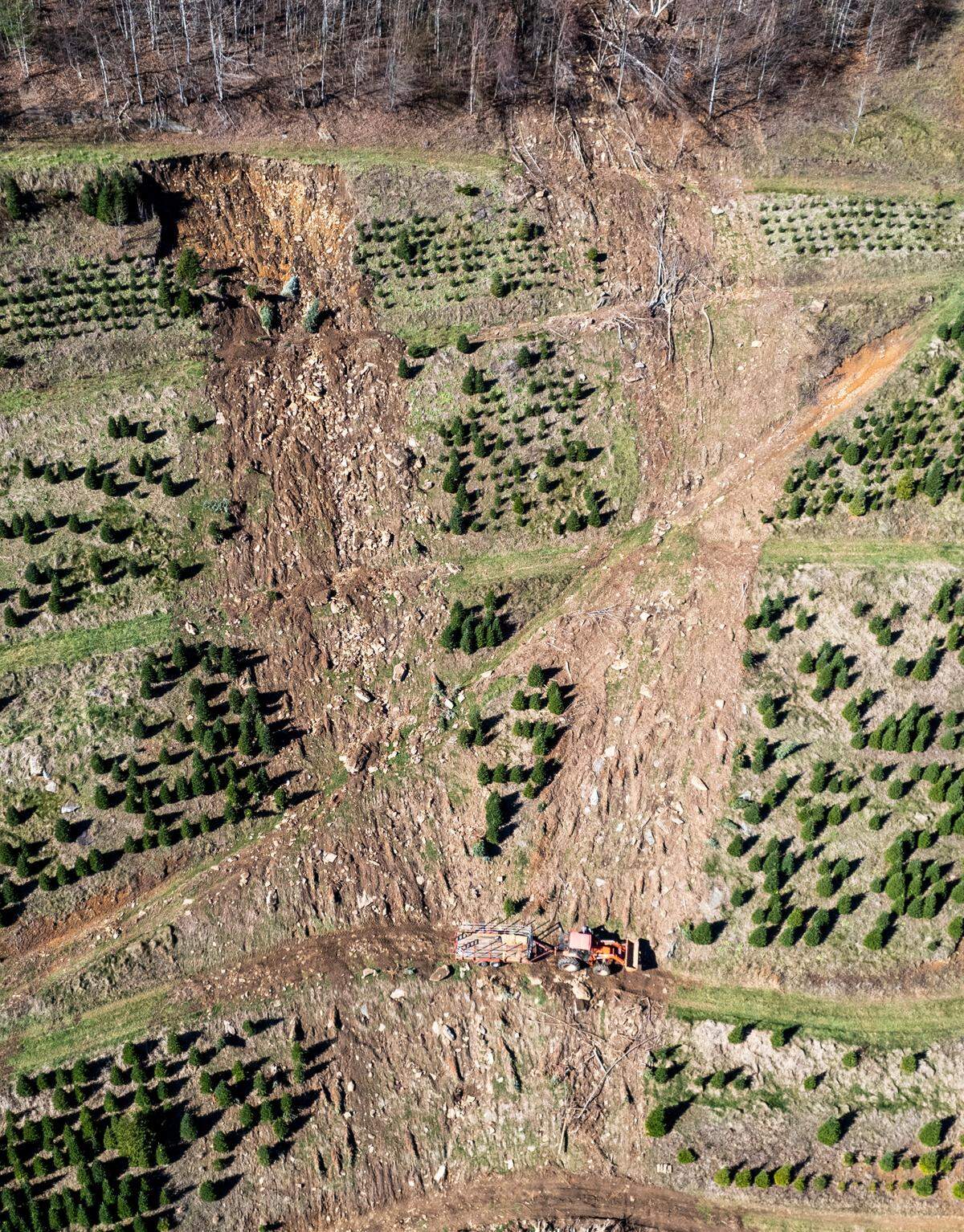
“I saw it happening. But even then I couldn’t tell what I was seeing,” Pittman says, because of the rain and because it was just incomprehensible. It was as if a giant, invisible spoon was scooping pieces out of the mountains and letting them spill, the way you might take a shovel to a sandcastle wall on the beach.
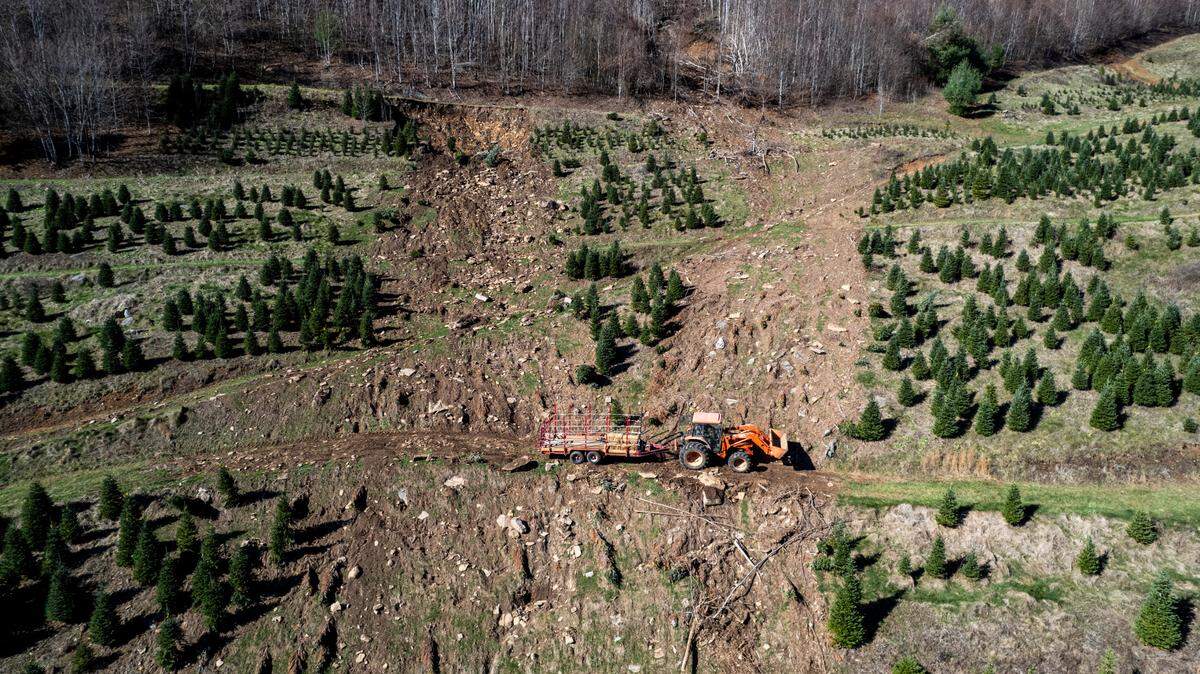
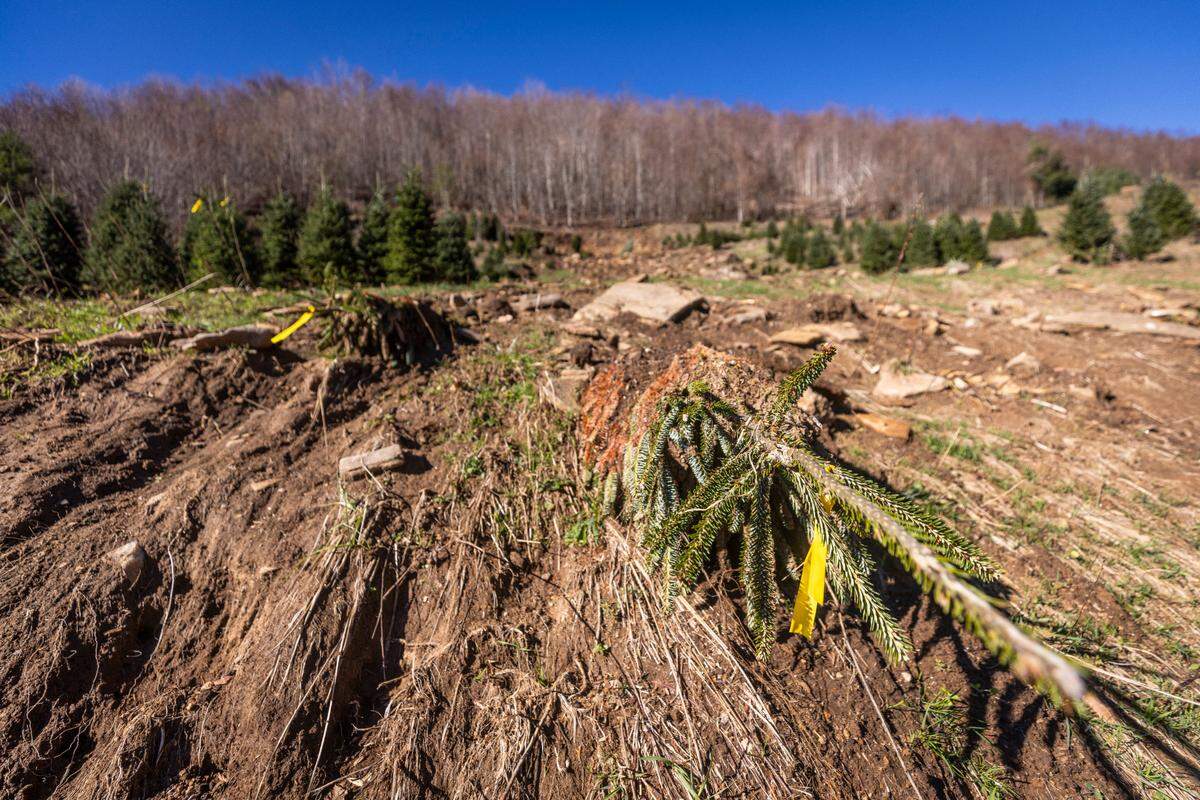
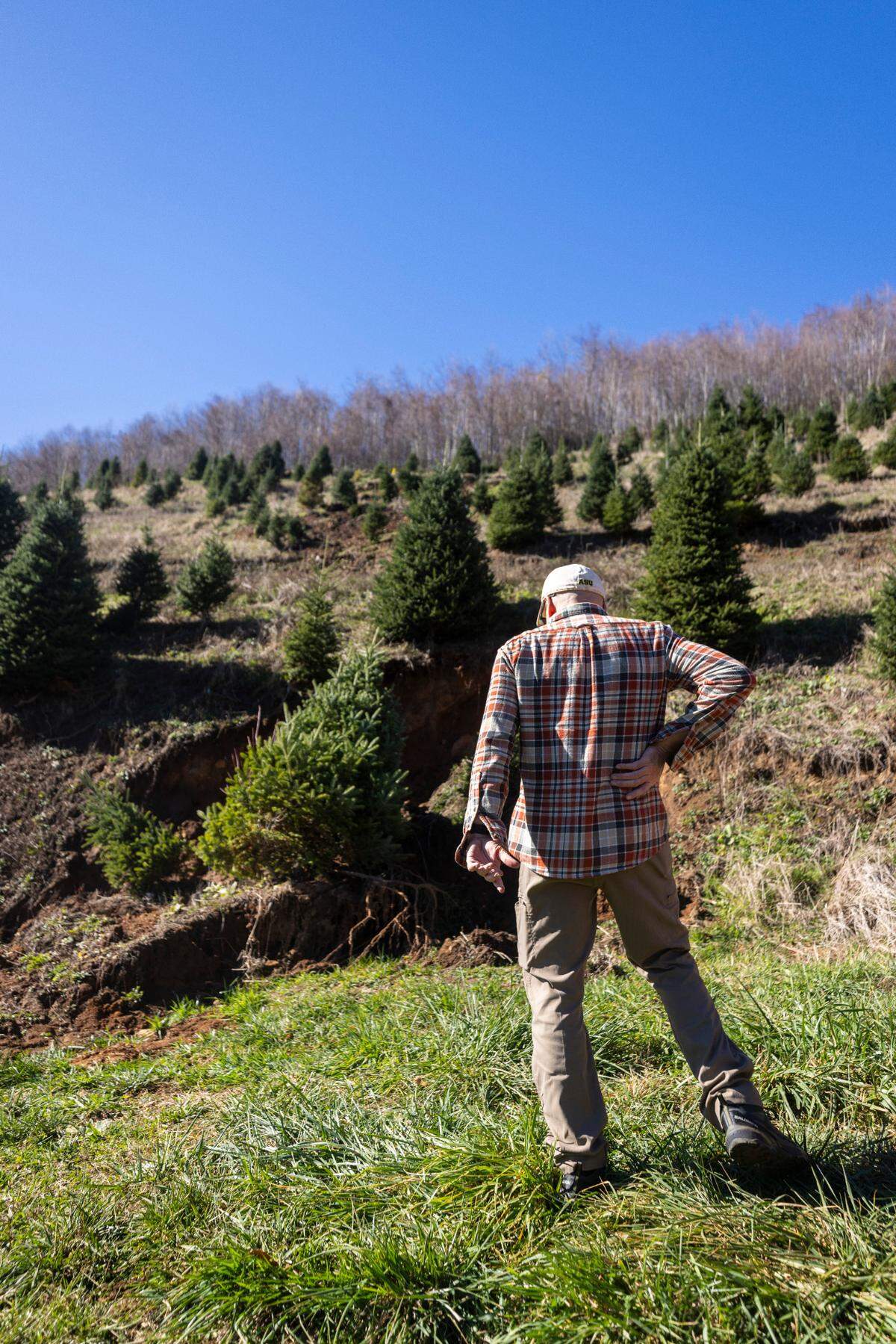
The biggest landslide was just south of the house, starting more than 100 yards up the hill and maybe 20 yards across. As it flowed, it dragged hundreds of Pittman’s oldest and most valuable Christmas trees with it, stopping when it reached the road and depositing a pile of timber and evergreens that blocked the last way out.
Pittman’s wife was at the house with him, along with Caitlin, whom he had fetched from the N.C. School of Science and Mathematics in Morganton before the storm hit. Ellie was at Appalachian State University in Boone because Pittman couldn’t get there to pick her up.
“We were stuck,” he says. “There was nowhere to go.”
For 30 minutes, the rain kept coming and the slopes kept giving way. Pittman worried each one would spread and come toward the house.
“Then it stopped just as suddenly as it started.”
Devastation across the region
Damage was as widespread and varied to Christmas tree farms as it was to everything else. Pittman had lost hundreds of trees worth tens of thousands of dollars, and debris was everywhere. The field where the biggest landslide happened, which had never had rocks in it, was now covered with millions of them, like someone had plowed through a graveyard.
A few miles away, at Trinity Tree Company, the Toe River had jumped its banks, flooded owner Waightstill Avery’s house on one side and a field planted with tens of thousands of trees on the other, laying much of the crop flat on the ground or washing it away. The river left a foot of mud inside tractors and farm trucks and filled the office and workshop with 3 feet of water.
At Joe Freeman’s farm, Mistletoe Meadows in Laurel Springs in Allegheny County, the wind twisted out the tops of a stand of pines whose shade had kept Freeman’s trees cool and damp during the loading process. The rain washed the gravel out of his farm roads.
Sam Cartner and his brothers had to scramble to find gravel for their roads, too, and clear the way to the part of Cartner’s Christmas Tree Farm, where the White House groundskeeper would be picking the official White House Christmas Tree on Oct. 28.
Other farms had little to no damage, like Frosty’s Choose and Cut in Jefferson.
Farms are open, trees are ready, prices are stable
It appears that all the farms on the North Carolina Christmas Tree Association’s website that had planned to sell Christmas trees in 2024 before Helene hit will be operating. Prices are expected to be about the same as last year, and supplies should be plentiful at farms and retail lots, though some farms may not have as many of certain sizes.
Shoppers traveling to the mountains should check routes and be prepared for detours or delays for road repairs.
“The only thing we worry about is people not really being aware that we’re open,” says Cari Carson, who does marketing for Frosty’s.
It’s been nearly two months since Helene essentially shut down Western North Carolina, and while it may be a year or more before many houses and buildings are repaired, water and electricity have been almost fully restored, roads are being patched and repaired, hotels, restaurants and shops have reopened and chambers of commerce are pleading for people to visit the places that can accommodate tourists.
“We’re also trying to be considerate of our neighbors,” Carson says. “We don’t want to be blasting that we’re fine, when all of us are not.”
Pittman’s choose-and-cut operation may be more important than ever this year, he says. He had to cancel about 1,000 of the wholesale trees he promised because of the storm’s destruction, and some of the trees he’ll sell this year are ones he hadn’t planned to offer until next year, when they would be a foot taller and bring a higher price. That means next year, he’ll have fewer of the big ones.
But the real reason he needs the choose-and-cut to do well is emotional.
“Wholesale is fine, but it’s so impersonal,” he says. He loves his trees so much that he won’t sell them to big retail chains, where they might be left in the sun to dry. He loves his customers even more, and considers them friends, whether it’s their first trip to the farm or the 20th.
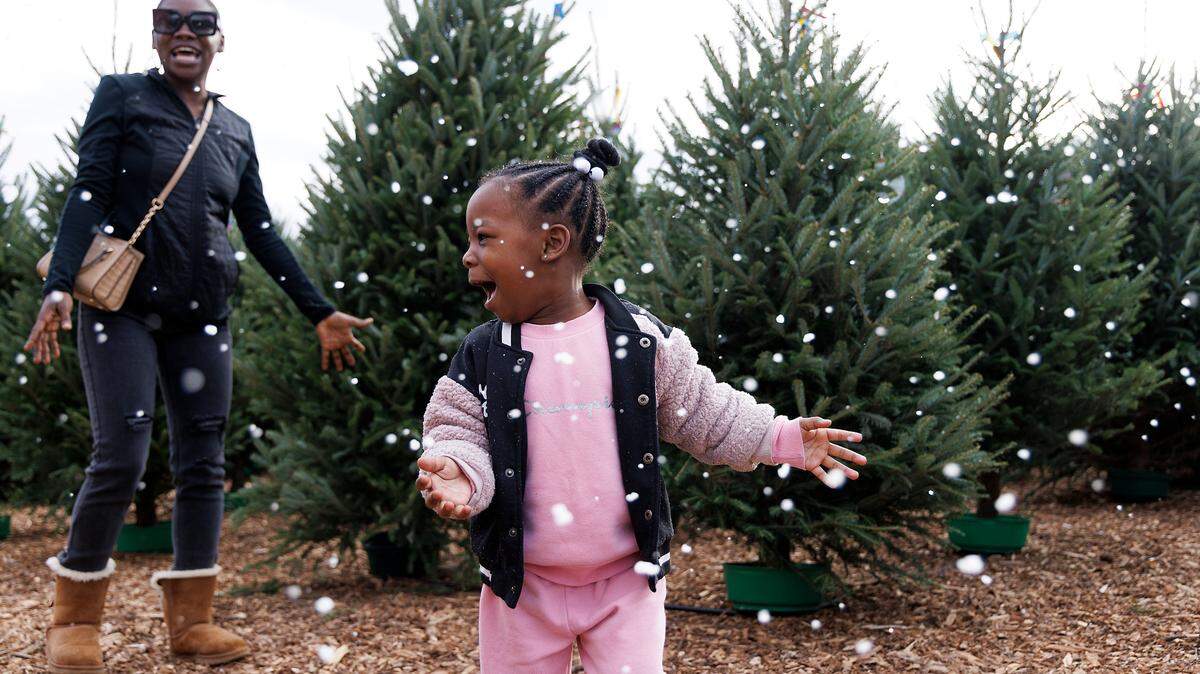
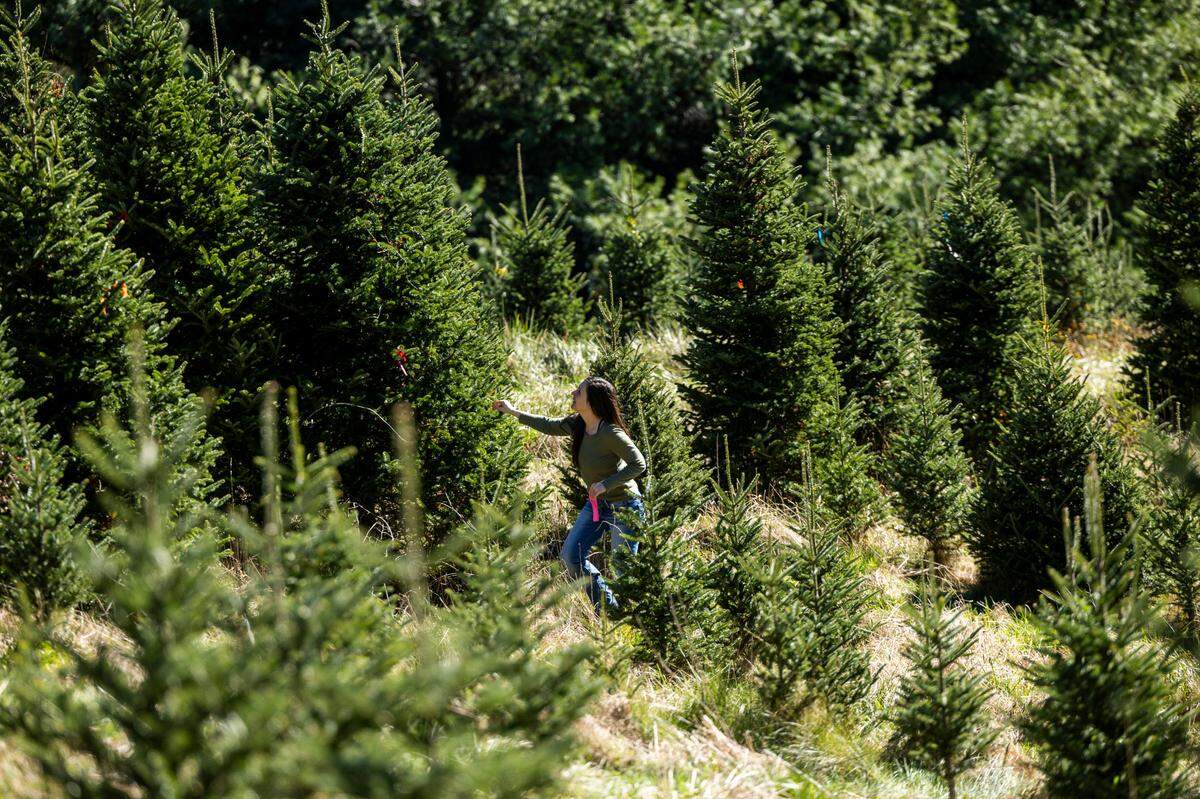
“They’re happy when they’re here,” he says. “They’re outside in the fresh air. They’re walking around. The views are beautiful. They’re making memories together.”
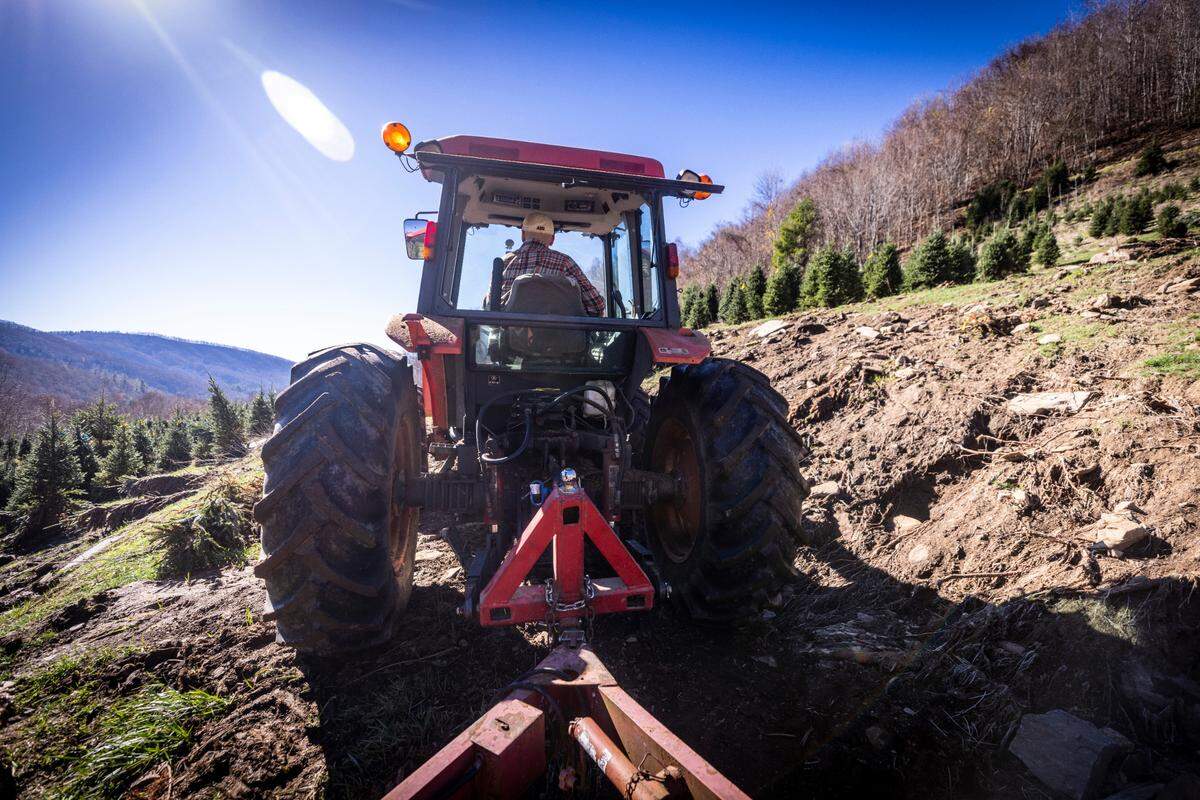
Pittman announced on Facebook that choose-and-cut would open to customers at noon on Nov. 16. That morning, he backed his Kubota tractor out of the barn and hooked up the flatbed trailer he uses to haul shoppers into the fields. Workers added hay bales for seating and white twine around the uprights for safety rails.
April brought hot apple cider and cups to the barn. Strings of colored lights twinkled in the rafters. Wreaths made of Fraser fir branches hung outside for sale.
Pittman took a trial run with the tractor, bouncing the hay bales along the rutted path. He cut the motor in a field above the barn, stepped out and looked down, spotting a family of four walking through a stand of trees. His first customers of the season.
“Look at ‘em,” he said. “They’re right on time.”
This story was originally published November 27, 2024 at 6:00 AM with the headline "NC Christmas tree farms are ready to bring back the joy that Helene’s rains washed away."