Backyard farms seemed fun during the pandemic. Now, many of the animals need new homes.
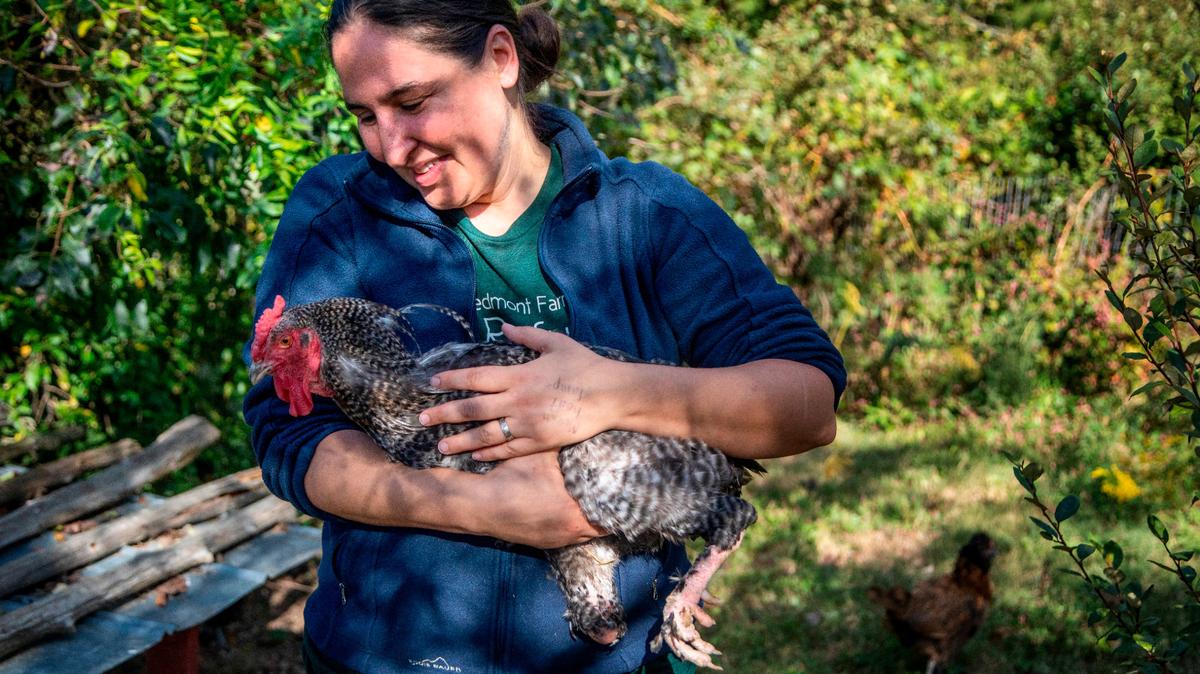
Lenore Braford didn’t have to sort through the CDC’s complicated metrics to know when people thought the pandemic had ended. She could just count her chickens.
“We’re full,” she said last week, peeking into the quarantine coop at a dozen surrendered birds waiting to be introduced to the rest of her flock at Piedmont Farm Animal Refuge in Pittsboro. “We can’t take any more right now. And I get calls almost every day.”
The global scourge of COVID-19 in 2020, which forced people to retreat to their homes and isolate with their families and close communities, resulted in some peculiar consumer behaviors. Some of those have been coming home to roost with people like Braford.
After the initial rush for hand sanitizer and nonexistent face masks, shoppers went looking for items to help sustain them for however long the pandemic might last. Electronics, including gaming systems, were in high demand. There were runs on chest freezers, sewing machines, bicycles, roller skates, yeast for bread-baking.
And chickens.
Bulk chickens, dressed and ready for roasting or packing into those big freezers, yes. But also fluffy, live laying hens, the ones you name and house in a coop in the backyard for a reliable supply of breakfast eggs and clucking companionship.
“A lot of people started backyard flocks during the pandemic,” Braford said. “Some of them really didn’t know exactly what they were getting into,” Braford said.
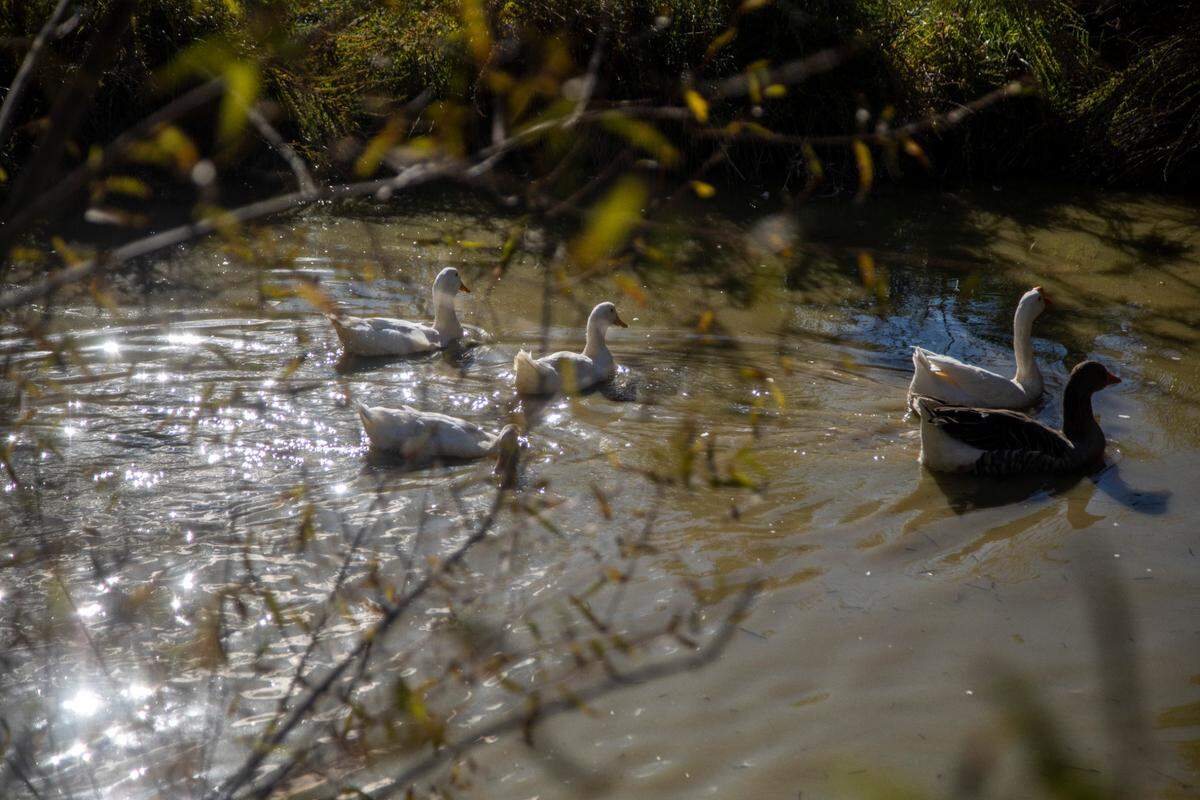
The N.C. Department of Agriculture and Consumer Services tracks commercial poultry production, but no one tracks how many chickens, turkeys, ducks or other small animals normally associated with farm life are pecking around in urban or suburban yards across the state. Counties and municipalities, including Raleigh, Durham, Chapel Hill, Cary and Apex, have ordinances governing the keeping of chickens and other livestock, including what types and how many are allowed, and whether a permit is required.
Emotional, but not always practical
Not everyone consulted those rules before they went on Craigslist or Facebook Marketplace looking for a “small-flock” or hobby poultry farmer with birds to spare, or before waltzing optimistically into a farm-supply store and leaving with baby chicks.
During the pandemic, bringing an animal into the fold — whether it had fur or feathers, two feet or four — often was more an emotional decision than a practical one, said Dr. Edwin B. Fisher, a past president of the Society of Behavioral Medicine and professor in the Gillings School of Global Public Health at UNC-Chapel Hill.
“There were a lot of reports of people feeling isolated and lonely during the pandemic,” Fisher said in a phone interview. Especially for office workers who transitioned to working mostly from home, he said, “We realized that saying hello to the person whose desk is near the entrance of the building may not seem like much, we sort of miss that. These routine social contacts are important to us.
“But more than that, contacts with family and with friends all were reduced for many of us during the pandemic,” Fisher said.

And video calls could only do so much to compensate for that physical absence. For some people, Barred Rocks and Rhode Island Reds became therapy animals.
“The idea that we get social interaction from animals — and it’s not just dogs and cats — makes a lot of sense,” Fisher said.
Getting the birds is just the beginning. Also to account for: housing, feed, a watering system, security, veterinary care, disposal of at least 8 pounds of manure per bird each month, and a six- to eight-year natural life span.
“There’s more to it than a lot of people realize,” said Braford, of the animal refuge.
‘We don’t question’
Rebecca Reynolds found that out when she took in a chicken that fell off a transport truck in front of her and went under her car. After extricating the bird from the engine compartment, she took it back to her home outside Wilson, named it Stella and looked after it until it died a natural death.
Reynolds had always wanted to have chickens, she said, and was glad to be able to convert a shed in her back yard to a coop. She and her husband later expanded the brood by three hens and a rooster.
When the pandemic hit, Reynolds said, she began to hear from others who had backyard flocks they suddenly couldn’t afford to care for, citing job losses or reduced hours in the face of the rising cost of feed. Others said they were moving for a job or lower rent, and couldn’t keep livestock at the new place. Roosters, in particular are banned in certain places, and those who work with animals say it’s not uncommon for people to discover they have a rooster when they were told they had a hen.
“It’s a lot of sad people,” said Reynolds. She doesn’t judge.
“We don’t question the animals or the situation,” she said. “If we have the space, we take them.”

Unless she’s able to buy some adjoining land, Reynolds said, she has only her own half-acre and the grazing/roaming use of her next-door neighbor’s similar-sized lot. On it now are 24 chickens, a goat and a parakeet Reynolds said was brought to her by a lady whose daughter had received it as a gift but was neglecting because she was terrified of it.
Where she lives, about 60 miles east of Raleigh, “The No. 1 issue is pigs,” Reynolds said. “I’ve had 12 emails in the past week alone about pigs.”
Big ‘Teacup’ pigs
These are what Reynolds calls “house pigs,” raised indoors and potty trained. Many of those who seek her help rehoming them say they were promised their “Teacup” pig would remain small. “Teacup” is not a swine breed, just a misleading label for a pot-bellied pig, which is smaller than a market pig but still can reach 150 pounds and root up hardwood floors.
“It’s a common thing, I reckon,” she said.
Reynolds doesn’t have space for pigs or fencing to hold them, though she hopes to raise the money for both through the online thrift store she operates with her husband.
Reynolds’ and Brafords’ animal rescues are unusual in North Carolina in that most shelters in the state take primarily cats and dogs. Those facilities, too, are overcrowded, a fact Rachel Cronmiller, a senior manager at Second Chance Pet Adoptions in Chapel Hill, attributes to the population explosion that resulted from all the spay/neuter operations canceled during the COVID-19 outbreak.
In a phone interview, Cronmiller said several animal shelters in the area that Second Chance works with have resumed euthanizing animals after working for years to reduce the need to do so.
Braford’s Piedmont Farm Animal Refuge doesn’t presently do adoptions; animals fortunate enough to find a home here have one for life. On tours of the property north of Pittsboro, visitors find animals well fed, free to mingle with others in clean, spacious enclosures with indigenous grasses, trees and bushes for cover, and dozens of volunteers tending to their needs.
Braford started her animal sanctuary in 2012, to provide homes for neglected, abused and abandoned farm animals but also to educate the public about the ecological and psychological impact of raising animals for their meat. The non-profit began with 25 acres and Braford recently added more, for which she is now trying to raise money to fence in.
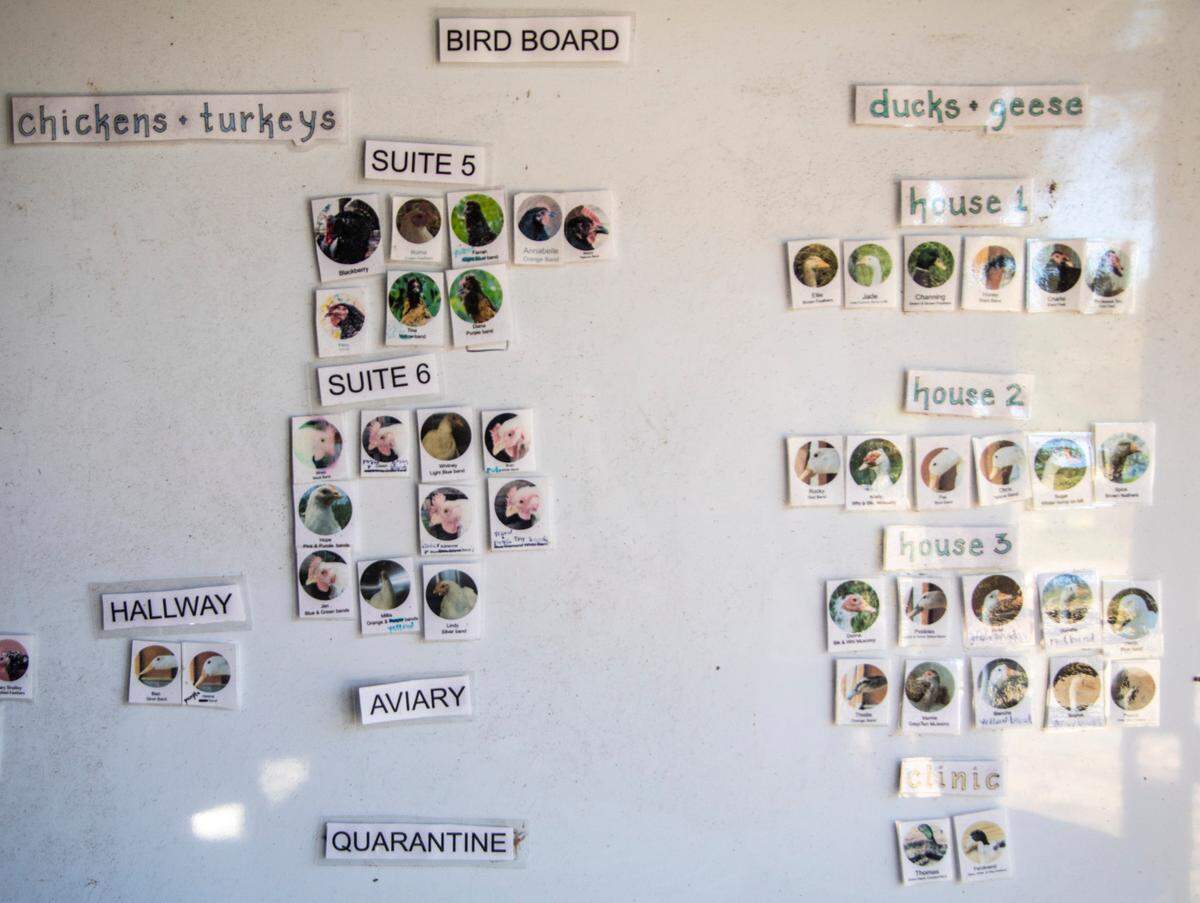
Braford said that some of the people asking her to take over the care of their animals tell her they got them as a distraction from the stress of the pandemic.
“When people get cats and dogs, they see that as a lifetime commitment,” Braford said — or at least, the animal’s lifetime. But somehow, an animal typically seen on a farm is regarded as more or less disposable, she said.
Dexter the duck’s story
Take Dexter, a duck who was dumped at a pond and, maybe because he had never been around one, didn’t know to stay away from a snapping turtle who lived there. The turtle had grabbed onto the duck’s foot and was dragging it around the pond when a woman spotted the fracas and frantically intervened.
Once freed from the turtle’s grasp, Dexter waddled over and sat at the woman’s feet. She took him to a local veterinarian to get his foot treated, and the vet called Braford.
“He’s clearly been someone’s pet,” Braford said, scooping the Jumbo Pekin into her arms and kissing his head. ‘He’s a snuggler. He loves children,” she said, making her believe he was part of a family with kids.
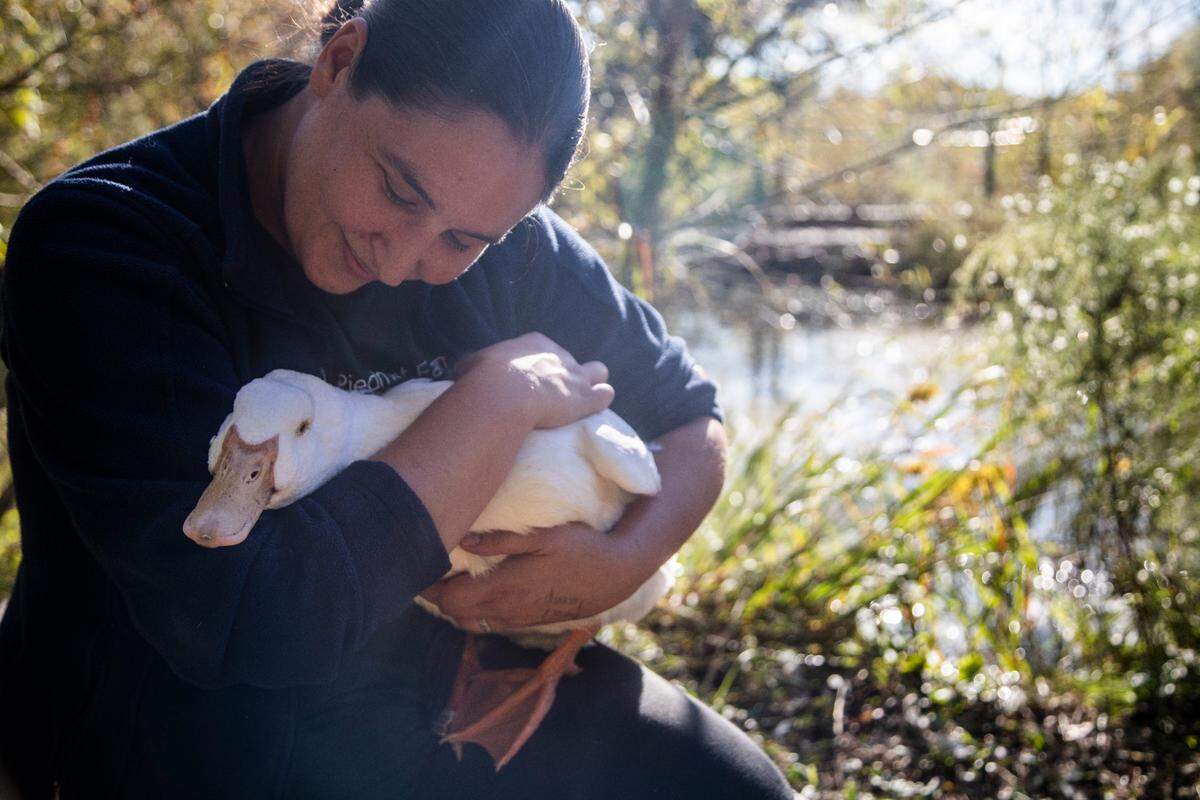
Birds raised as pets don’t do well in the wild, she said. They likely won’t know to migrate and they don’t know how to find food or safe shelter.
Geese are the longest-lived species at the refuge, with a life expectancy of up to 40 years. Those sold as pets actually have been bred as meat animals, Braford said, so their bodies are disproportionately heavy. That makes it difficult for them to fly and creates other health problems.
Dexter the duck has arthritis in both knees.
Until she raises enough money to fence in the rest of the property, and to be assured of being able to properly feed and provide medical care and other necessities, Braford can’t expand much on the 120 or so chickens, turkeys, ducks, sheep, goats and cows now living at the refuge. What happens to the ones people grow tired of that she can’t accept, Braford hates to consider.
Stepping into the refuge’s office, a converted house on the property, she played back the most recent 16 messages left on her answering machine. A lady who has a rooster she can’t keep because she lives in the city. A man who says his son is moving and can’t take his collection of hens and a rooster with him.
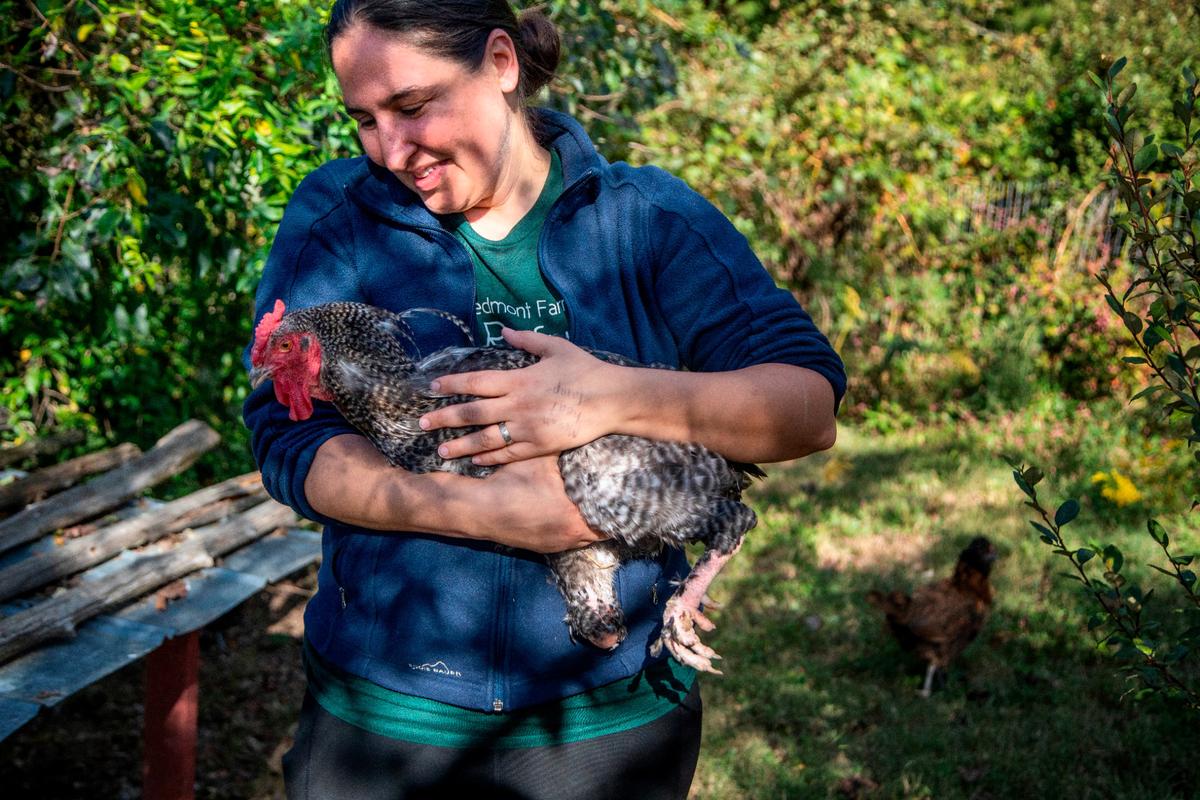
Braford grimaced and shook her head.
“You want to say yes every single time,” she said. “But you can’t do that, or you won’t be able to properly care for the animals you already have.
“It’s hard,” she said. “But I’m able to think with my head and my heart.”
How to help
If you would like to contribute to the cost of fencing in additional land so Piedmont Farm Animal Refuge can take in more animals, go to the website at www.piedmontrefuge.org/fencing-fundraiser.
This story was originally published October 13, 2022 at 6:00 AM with the headline "Backyard farms seemed fun during the pandemic. Now, many of the animals need new homes.."