
The REAL ID is coming back. Will North Carolina’s short-staffed DMV be ready? Will you?
READ MORE
The DMV struggle is real
Getting a license or any other form of identification in North Carolina can be a pain. And with many agencies starting to require a REAL ID, the need to go to the DMV is rising. We answer your questions about getting a REAL ID, explore how staffing shortages may impact your experience, and help you navigate a system that can be overly complicated at times.
Expand All
The REAL ID is coming back. Will North Carolina’s short-staffed DMV be ready? Will you?
Has demand for REAL ID peaked in NC? See how interest has changed in the past 5 years.

New to NC? Getting a driver’s license can be a challenge. How to navigate the system.

Getting a REAL ID in North Carolina? We have answers to your questions
The men who hijacked four airliners on Sept. 11, 2001, carried various state driver’s licenses and ID cards, some of them obtained fraudulently, that made it easier to board the planes.
Now, 21 years later, the N.C. Division of Motor Vehicles and DMVs across the country are preparing for a final push before the federal government begins enforcing new identification standards designed to make ID fraud more difficult.
Congress passed the REAL ID Act in 2005 after the 9/11 Commission recommended setting national standards for state driver’s licenses and IDs. It required states to gather additional documents to verify someone’s identity before issuing a card that can be used to board a domestic flight or visit certain federal facilities.
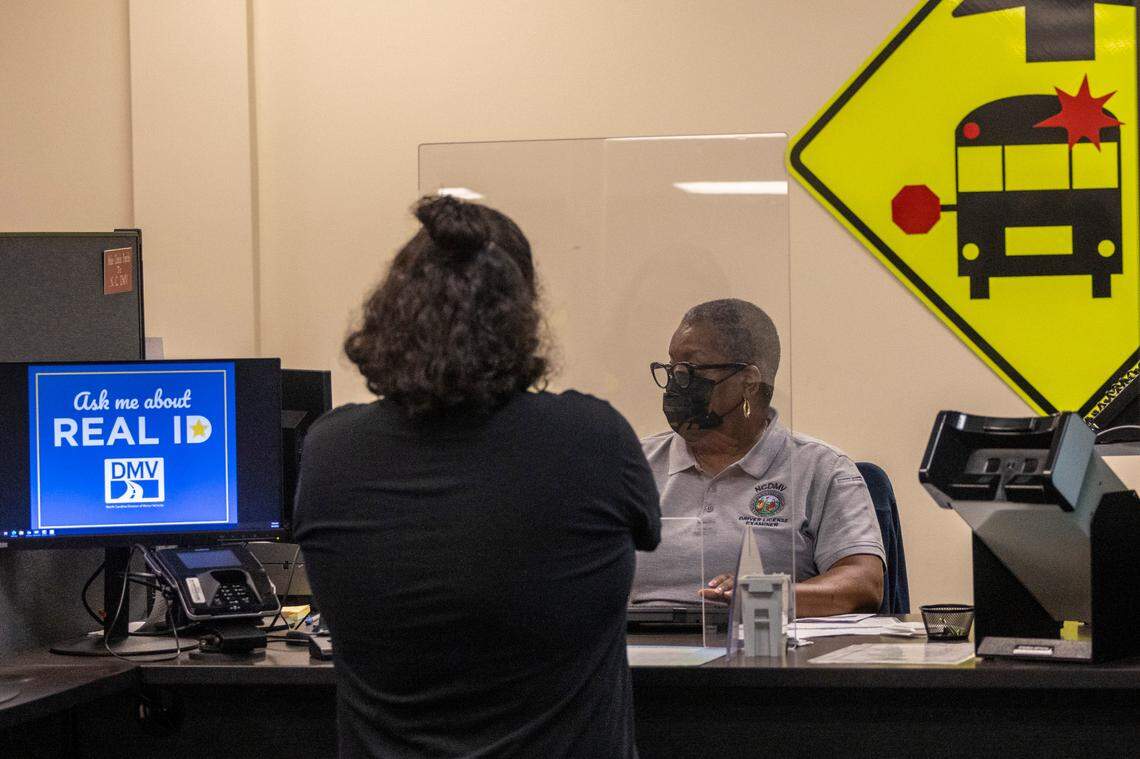
The REAL ID system took years to put together, as state DMVs developed the procedures and software to collect and safely store sensitive documents. Even then, the N.C. DMV wasn’t prepared for the number of people who showed up in the summer of 2018 seeking a REAL ID.
Initially scheduled to go into effect in 2008, full enforcement of the federal ID standards was delayed several times over the years, most recently because of the COVID-19 pandemic.
Now the Department of Homeland Security says that on May 3, 2023, it will begin requiring people to show a REAL ID or other approved identification to board a domestic flight or visit federal facilities that require ID. A standard driver’s license will no longer be enough.
As that date approaches, interest in the REAL ID is expected to rise at a time when the N.C. Division of Motor Vehicles is short-staffed. Statewide, a third of driver’s license examiner jobs are vacant, as the DMV struggles to hire and keep them.
The good news for the DMV is that the run-up to May 3 does not coincide with its busiest season, summer, when schools are on break and demand for new licenses is highest. The agency has deliberately been quiet about REAL ID this summer to try to avoid adding to the workload at its offices.
That will change this month, as DMV begins reminding people about REAL ID. DMV Commissioner Wayne Goodwin, who was named head of the agency in January, will invite the press along when he gets his REAL ID this month.
“Between the pandemic and being a single dad and changing jobs and just life in general, like a lot of North Carolinians, I don’t have mine,” Goodwin said in an interview. “But I am planning, with our team, to make my application for a REAL ID driver license part of a teaching moment.”
More than 3 million North Carolinians already have REAL IDs, which should help alleviate demand in coming months. At one point, the DMV estimated that as many as half of the nearly 8 million people with state licenses or IDs would eventually want a REAL ID but later backed off that prediction.
“That was prior to realizing that a great many North Carolinians will not necessarily need this form of identification,” Goodwin said. “I believe there was a sense prior to the pandemic that the REAL ID was mandatory for everybody, for every purpose, and that is not the case.”
Indeed, making sure that people know REAL ID is optional will be one strategy for easing demand. Those who don’t expect to fly or visit a federal facility that requires an ID may not need one. And the IDs will be available after May 3 for those who decide to get one later.
REAL ID caught DMV off guard in 2018
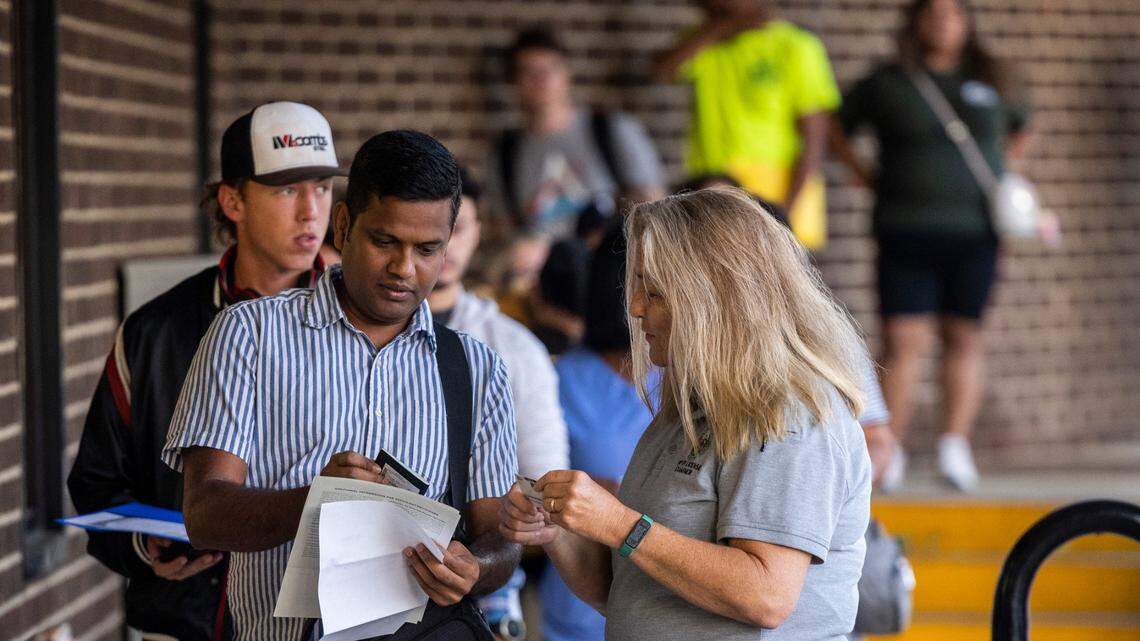
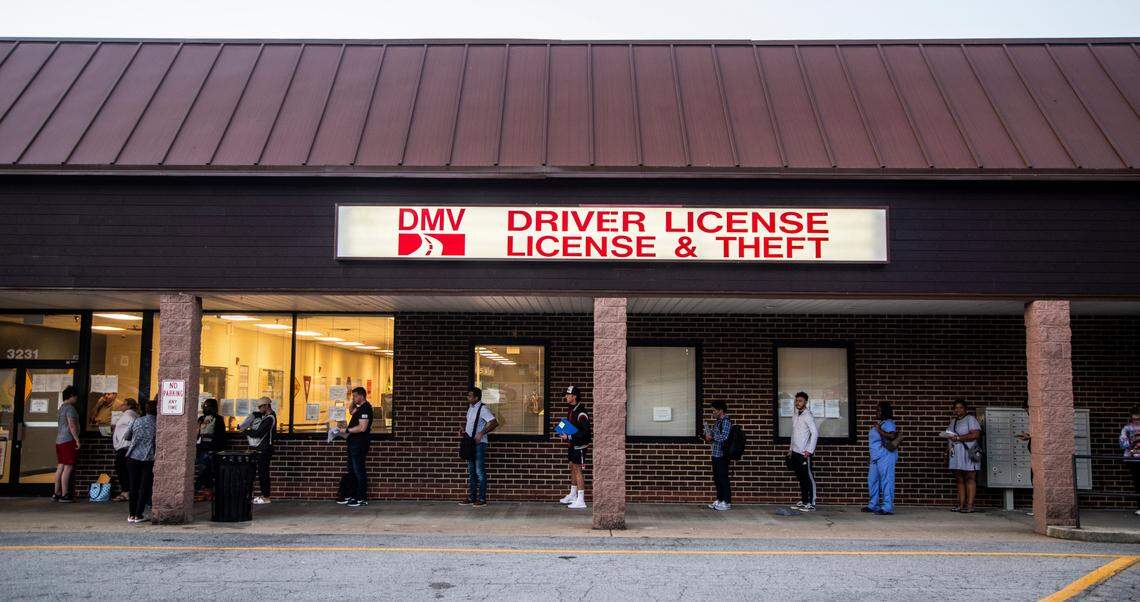
The DMV hopes to avoid a repeat of 2018, when demand for REAL ID overwhelmed driver’s license offices, particularly in the Triangle and other urban areas. Lines formed outside long before offices opened, and average wait times doubled, with some people sitting or standing for hours before being served.
The DMV responded by improving operations and encouraging more customers to make appointments before going to an office or to do their business online when possible. Statewide, DMV customers waited 62 minutes on average to be served in 2018, though waits were far longer at busy urban offices; by last year, that average had declined to 17 minutes, even as demand for REAL IDs topped 2018 levels.
But with so many vacancies at driver’s license offices, wait times have begun to creep up again. And people who call or go online to make an appointment often find they’re hard to get or are not available for weeks or months.
The agency is taking steps to help people navigate the wait. They include:
▪ A new system that allows customers to check in using QR codes on their phones. Q-Anywhere establishes their place in line and allows them to wait elsewhere until they get a text letting them know it’s their turn.
▪ By the end of the year, the DMV website will list the current wait time at each of the 115 driver’s license offices, the way Great Clips and other businesses do. That will help customers decide whether they want to get in line, look for a less busy office or wait for a less busy time.
▪ The DMV is studying whether to install computer kiosks at grocery stores and other public places that would allow customers to do DMV business that doesn’t require an office visit, such as renew a license. The DMV finds that more than half of customers are still visiting offices for transactions they could probably complete online.
A longer-term fix may be to increase the number of offices in the state’s urban areas, which attract the most new residents from out of state who need their first North Carolina license.
“When you move to the state, your first DMV encounter has to be in the office,” spokesman Marty Homan said. “So if you’re in the Triangle, you’re in Asheville or you’re in Charlotte, those areas are seeing more people who need appointments, because they have to come into the office.”
Goodwin said he has asked his staff to review the formulas they use to determine where offices are needed, with an eye toward increasing the numbers in metro areas.
Six DMV employees doing the work of 20
But that won’t solve DMV’s problems anytime soon, because the agency is having trouble finding enough workers for the offices it already has.
Goodwin says he makes unannounced visits to DMV offices and that he recently arrived at a Charlotte office that should have had 20 driver’s license examiners but only had six, because of vacancies and absences.
Goodwin said he went out to the customers waiting in line and explained the situation.
“‘If you know somebody who would like to work for the state or is looking to rejoin the workforce, come with us,’” he said he told them. “‘But just know the lines are predominantly because we have examiners who are doing the work of twice the number of people.’ And the customers I’ve spoken with have by and large appreciated that.”
DMV is authorized to have 710 driver’s license examiners; as of mid-August, it had 467. The openings mean more small offices in rural areas must close for lunch and urban offices are stretched thin. On the Friday before Labor Day weekend, seven examiners were working at the driver’s license office on Avent Ferry Road in Raleigh, instead of the full complement of 15.
DMV goes to job fairs and works with community colleges to try to fill those positions. It recently increased the starting pay for full-time license examiners from $36,750 a year to $40,484 (starting pay for part-time examiners is $17.62 an hour, according to www.governmentjobs.com/).
“We just got that approved,” Mike Newsome, DMV’s director of driver services, told state Board of Transportation members Wednesday. “So we haven’t really seen the impact of that. But we’re hopeful that that’s going to be most impactful in bringing either some of the trained staff back or hiring some new staff off the street.”
The DMV also plans to offer hiring and retention bonuses, though the details haven’t been worked out, Homan said.
Whether the DMV can hire enough people to make the run-up to REAL ID go smoothly remains to be seen.
“We will do the best we can,” Goodwin said. “We’re hiring, and we certainly stress that everywhere we go .... I believe we will do the very best we can with the staffing that we have.”
This story was originally published September 9, 2022 at 6:00 AM with the headline "The REAL ID is coming back. Will North Carolina’s short-staffed DMV be ready? Will you?."
