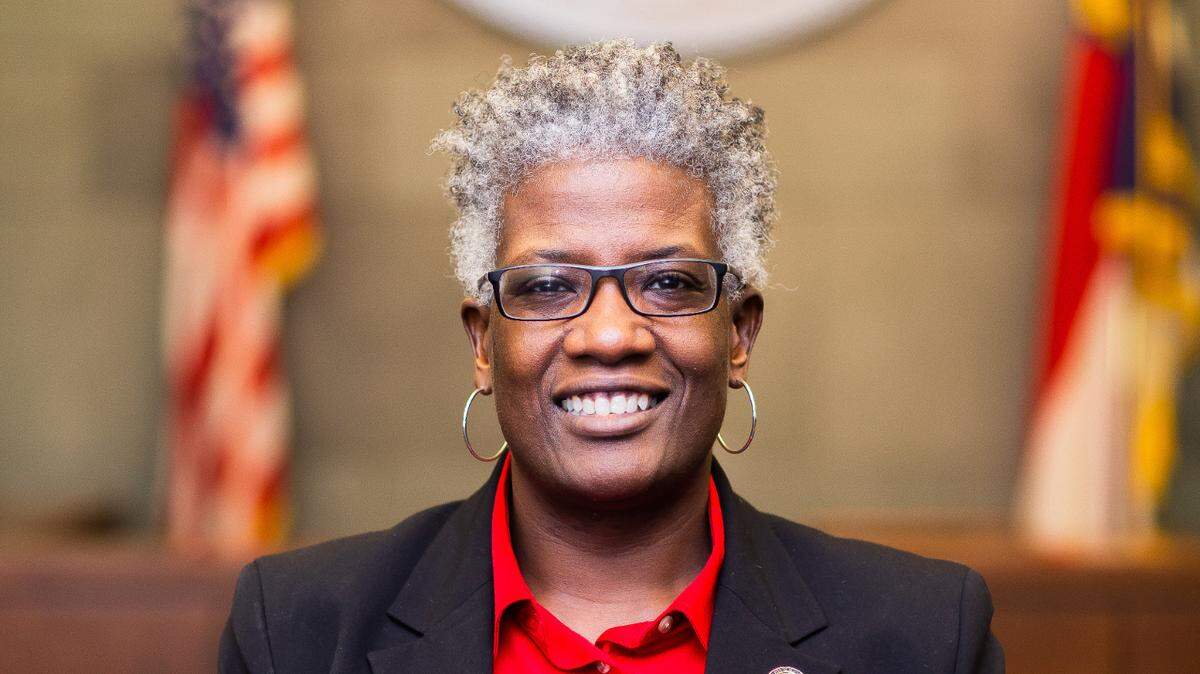
Satana Deberry, candidate for Durham County District Attorney
READ MORE
Candidates for Durham District Attorney
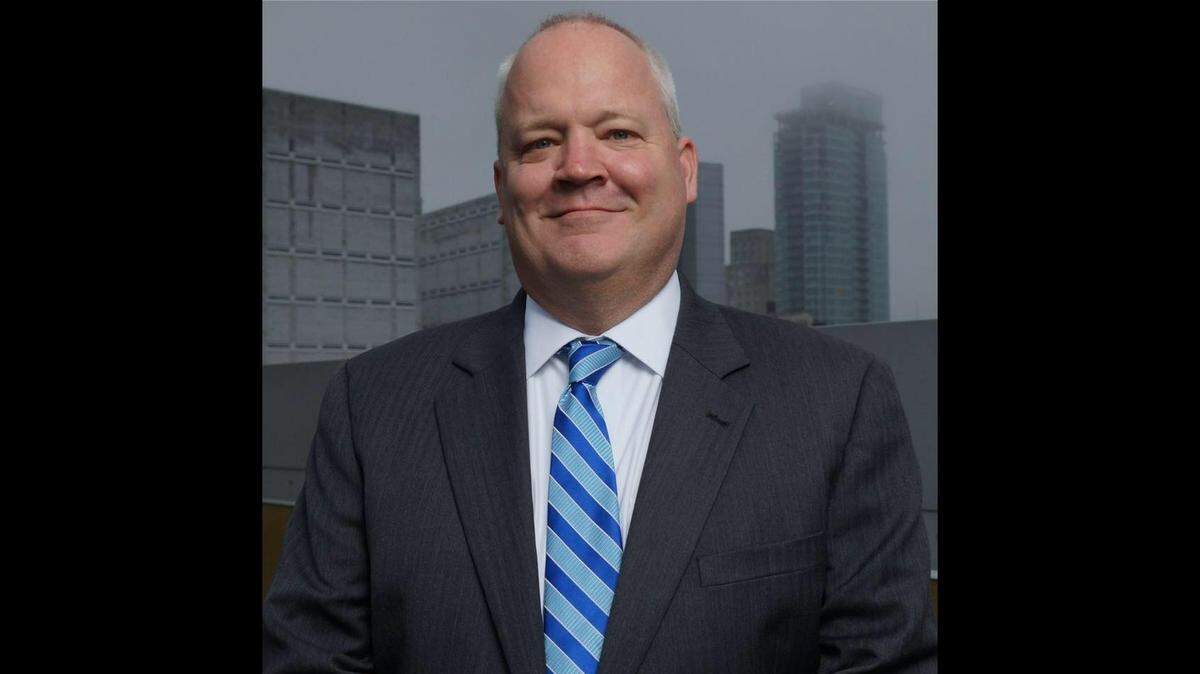
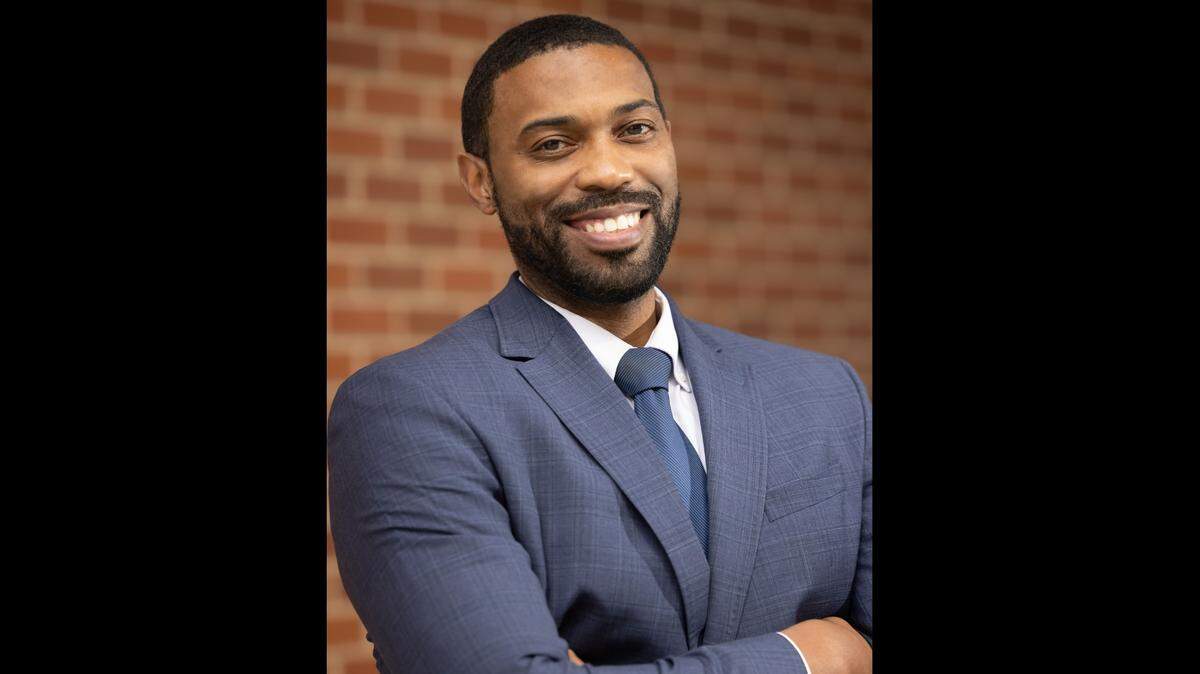
Three Democrats are running for Durham County district attorney: Daniel Meier, Jonathan Wilson and Satana Deberry, the incumbent. No Republicans are running. Get to know the candidates with our 2022 Voter Guide.
Expand All
Name: Satana Deberry
Age: 53
Political party: Democrat
Campaign website: deberry4da.com
Occupation and employer: District Attorney, 16th Prosecutorial District, State of North Carolina
Education: AB, magna cum laude, Sociology, Princeton University; JD, Duke University School of Law; MBA, Duke Fuqua School of Business
Have you run for office before? Yes. District attorney in 2018.
Please list highlights of your civic involvement: Board member, Durham Public Schools Foundation; Chapter officer, Durham Alumnae Chapter of Delta Sigma Theta Sorority Inc.; Former board chair, Reinvestment Partners, Former board member, Habitat for Humanity of Durham
Who are your top three campaign contributors? Jeanette Stokes, Steve Schewel, Patty Quillin
What are three things you want to accomplish in the next year, and how do you plan to accomplish them?
▪ Improve coordination with law enforcement on violent and serious cases. Regular roundtables with law enforcement partners to identify the most serious threats to public safety and develop better holistic strategies
▪ Implement Mental Health Court Expansion. Work with Criminal Justice Resource Center to expand the treatment and diversion options for people who come in contact with the criminal legal system.
▪ Expansion of Victim and Community Services. Continue to find ways to improve our service to victims and other members of the community
What about your experience makes you the best person to be Durham County’s next district attorney?
In the past three years, I have brought leadership in legal policy, management, and community relations to the office. For the first time ever, the people in the office look like the people of Durham. The office is focused on public safety and accountability and not just on convictions and prison.
Our approach separates out the violent crime from the unnecessary prosecution of the most vulnerable members of our community just because they are poor or mentally ill or have substance abuse issues. I have brought a sense of equity and fairness to the office that has resulted in less turnover and more experience in the staff.
Finally, my leadership had changed the perception that the Durham DA Office is troubled to our office becoming a national leader in the movement for a more just criminal leadership
What does the District Attorney’s Office do well? In what areas does it need to improve?
The DA’s Office has done a good job of implementing data driven, evidence based policies and procedures that have resulted in fairer, more just outcomes in Durham’s courts.
Like all prosecutor offices, there is opportunity for improvement in services to victims. The American criminal justice system is set up to protect the rights of defendants — not meet the needs of victims. As the system evolves to deal with the most serious and violent cases, victims will have more complicated needs that are not being addressed.
What role does the DA’s office play in stemming violent crime? How do you plan to approach that role?
Violent crime is complicated and our community is desperate for solutions. As DA, I know that requires a community wide approach to alleviating its root causes as well as confidence in the criminal legal system. Since becoming DA, I reorganized the office so that two-thirds of the prosecutors work on violent and serious crimes — resulting in more convictions for violent cases and homicides than my predecessors.
However, the strongest deterrent to crime is the likelihood of being caught, not the severity of the sentence. When so few people are caught, that deterrent effect is minimized. So my office works alongside law enforcement to invest in shared intelligence for solving and prosecuting violent cases.
On the other hand, we know that a community that sees the DA’s Office as fair is more likely to help when witnesses or information is needed. So we especially try to be fair in lower level cases so people believe they will be believed when they step forward as victims and/or witnesses.
How will you ensure that people of color and people who are poor are treated fairly?
My office has worked with the Motion for Justice program to train our staff on identifying and naming racial bias in the system. Staff organized a training led by some of the nation’s leading experts in racial discrimination and implicit bias in the courtroom.
Prosecutors have also received training from the UNC School of Government in racial bias in jury panels. We also have a regular book club that encourages us to examine our own biases and how that impacts our service to our community.
I have initiated many policies and programs to bring more equity to our decision making processes. Internal office policy mitigates against creating first time felons in nonviolent cases and we solicit mitigation package. Since 2019, we have worked with the Wilson Center at Duke University to track our felony pleas to ensure that our plea bargaining is fair and equitable. Along with our partners in the DEAR program, we have worked to clear court debt for 11,000 Durham residents.
What is your stance on the death penalty?
I believe the death penalty is neither fair nor equitable and I have not used it in my first term as DA. I will not use it in a second term either.
What is your stance on prosecuting misdemeanor marijuana offenses?
My office de-prioritizes the prosecution of simple possession of marijuana. Those cases are either diverted from court or dismissed.
Do you plan to prosecute cases that originate from minor traffic infractions, such as a broken tail light?
Cases that originate from stops for minor infractions trigger additional review in my office. If the charge resulting from the stop is a minor traffic offense, that case will generally be diverted from court to a traffic diversion program.
If a more serious charge — i.e. a felony — results from the stop, the charges are reviewed for not just only probable cause for the stop but additional probable cause for a search. If there is no probable cause for the search, my office does not proceed.
What is your definition of transparency and how do you plan to apply that?
One of the core values of my office has been to provide the public with as much information on who is prosecuted, how the decisions are made, and how the cases are resolved.
I have taken several steps to insure that.
▪ I hired a communications officer who serves as a central point of contact for the public and press. She makes sure that the press and the public gets access to information in a timely and complete manner. She also arranges for the press to talk directly to me or other members of my staff to answer questions.
▪ My office participates in a first of its kind project to study plea bargaining in the DA’s Office. This project is being conducted by the Wilson Center at Duke University and will provide insight into the fairness of plea bargaining as well as if our pleas are equitable across race.
▪ I have provided unprecedented access to local and national researchers to study the Durham DA’s Office.
▪ We maintain and active social media presence and issue an annual report.
Does Durham County do enough to prevent people charged with low-level crimes being on bail bonds they can’t pay? If not, what else should be done?
Durham County has done much over the last three years to prevent people staying in jail with bonds they can’t pay. Changes in prosecutor and judicial policy has resulted in a 25% decrease in the number of people held pretrial since 2018. Law enforcement in Durham has moved toward issuing citations instead of arresting people charged with low level misdemeanors. Since 2018, Durham has introduced a Public Safety Assessment (PSA) tool to help predict failure to appear and new criminal activity.
What programs need to be added to the Durham County court system to better serve its residents?
The vast majority (88%) of cases we see in criminal court are nonviolent. Many of the people who are most at risk of recidivism are mentally ill people charged with repeated property crime. We do not have programs for people who consistently engage in the type of low level felonies that causes financial losses to businesses and individuals.
Of the most serious crimes, Durham does not have nearly enough resources to help victims of human trafficking. As the Triangle attracts more residents, human trafficking is becoming a more present and urgent issue.
This story was originally published April 22, 2022 at 1:41 PM with the headline "Satana Deberry, candidate for Durham County District Attorney."