NC Asian Americans increase political engagement while Kamala Harris makes history
READ MORE
Democratic National Convention: What NC voters should know
National conventions are known for announcing party nominations and platforms. So how could this Democratic National Convention with a brand-new presidential campaign be different? And what role will North Carolina play in the upcoming election? Here is ongoing coverage of the DNC from The News & Observer and The Charlotte Observer.
Expand All
Phone in one hand, clipboard in the other, Annar Parikh climbed the wooden steps on the quiet Morrisville street.
“Hi, my name is Annar, and I’m with North Carolina Asian Americans Together In Action,” she said, introducing herself to the man sitting on the porch. “I was hoping to speak with Ravi Parmar.”
The man confirmed that was him, and Parikh asked three questions:
How did he plan to vote?
What issues would bring him to the polls?
What were his thoughts on the presidential election?
Parmar has historically leaned Democrat, he told The News & Observer, but he’s not excited about either presidential candidate this year. Former President Donald Trump’s administration caused “havoc everywhere,” while President Joe Biden and Vice President Kamala Harris have been too soft on issues like immigration, he said.
Still, Parmar said he plans to vote.
“I want to still see if Kamala Harris is going to make any difference between now and November, and see if her policies take some directions that make sense for the country,” he said.
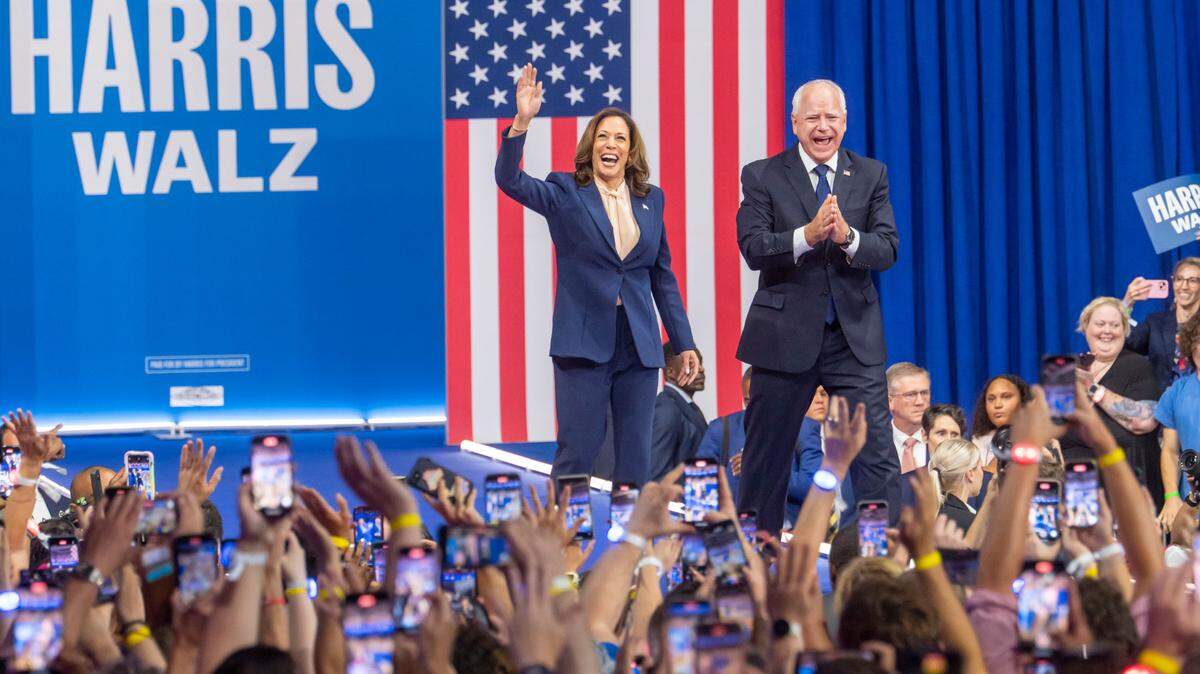
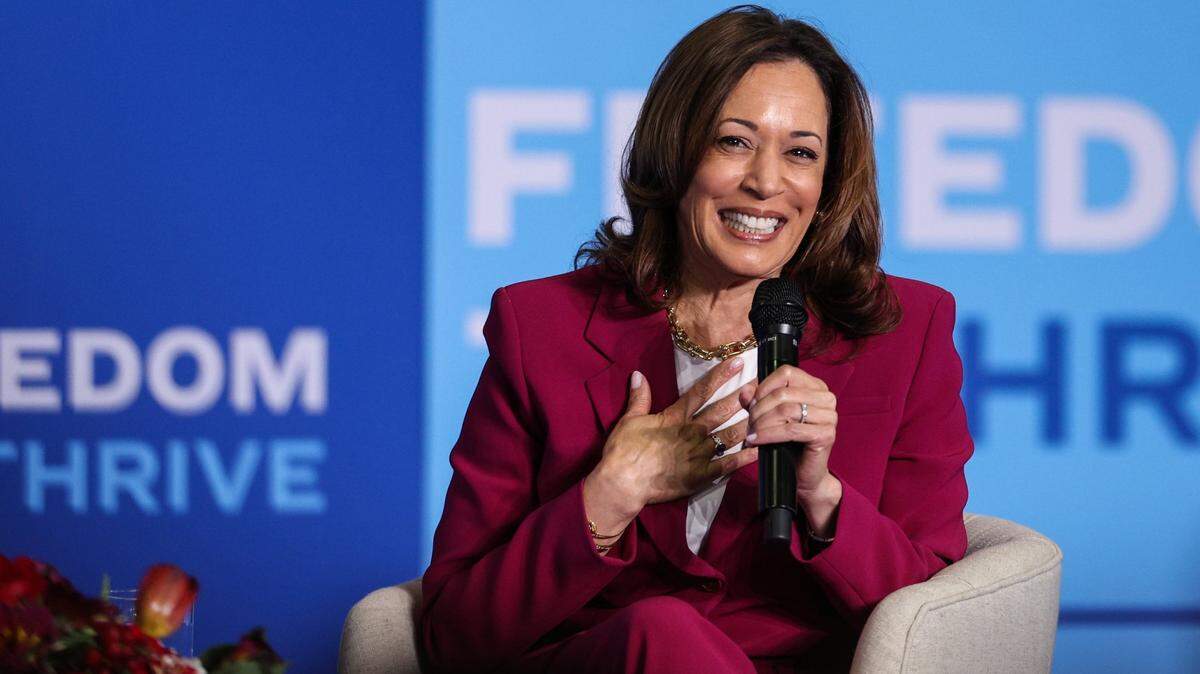
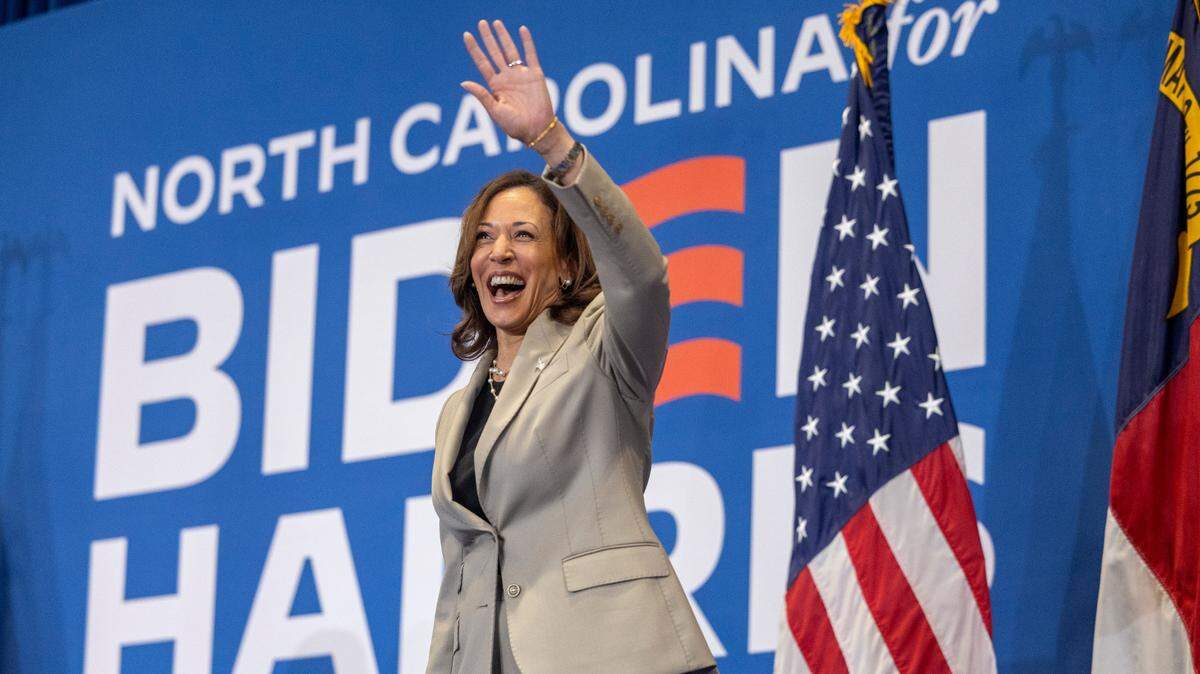
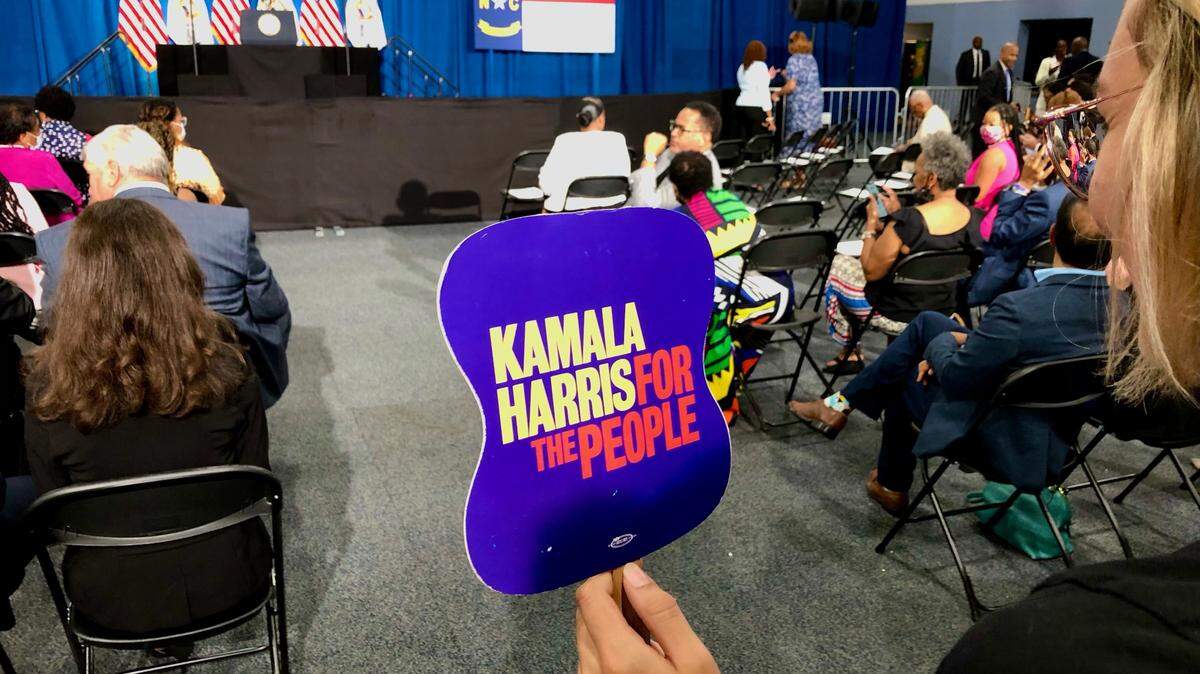
Harris’ bid for the Oval Office — which could make her the first U.S. president of Asian descent — has galvanized some Asian-American voters in North Carolina. But the group has already been more politically active this year than in the past, several political organizers said. Asian Americans are also getting more attention from candidates, they said.
“It’s important for Asian Americans to voice what you care about,” said NCAAT canvasser William Liu. “Or else no one’s going to know.”
Asian-American engagement
Nationally, voter participation among Asian Americans has remained constant. In July, before Biden dropped out of the presidential race, 90% of Asian Americans surveyed across the U.S. said they planned to vote in November, according to APIAVote. That compares with 93% in September 2020.
For some Asian Americans, like Mona Singh, “what’s at stake” this year, like reproductive freedom, is too important to not vote. Singh is the director of engagement for They See Blue NC, a political organization that supports South Asian American Democrats.
“They see it, they smell it, they know it,” Singh said. “Things can go really bad for the community if the Republicans win.”
Other Asian Americans have gradually recognized the impact of their vote, said Cary resident Bella Xu. Xu is a board member for Margin of Victory Empowerment NC, a nonpartisan civic engagement group founded in December.
There are about 236,000 Asian Americans eligible to vote, or nearly 3% of the North Carolina electorate, according to APIAVote.
In 2020, Trump finished 1.3 percentage points ahead of Biden in North Carolina — under 75,000 votes.
Xu said seeing more Asians in local government and the General Assembly showed her the importance of voting.
“If you don’t vote, you don’t have the right to complain,” Xu said. (The N&O interviewed Xu in Mandarin and English.)
Xu, a registered Democrat, said anti-Chinese rhetoric, especially during the COVID-19 pandemic, got her and many other Chinese Americans paying more attention to politics.
“During the primaries, I volunteered in poll greeting,” she said. “A Republican volunteer next to me asked me, ‘Chinese Americans ... can they afford half a million (dollar) houses here?’”
Xu interpreted the question as implying Chinese Americans exploit the U.S. welfare system and can’t afford homes in the area.
“I told them politely that many Chinese people here buy million-dollar houses,” Xu said.
In the 2024 election cycle, Asian Americans have also organized for candidates, Xu said. A January event held by several Chinese and South Asian Americans raised about $50,000 for Democratic Attorney General Josh Stein’s gubernatorial campaign, Xu said.
MOVE NC, They See Blue and other groups have also helped raise money for state attorney general candidate Jeff Jackson and lieutenant governor candidate Rachel Hunt, both Democrats.
Singh said some Asian Americans have organized to raise money for Republican gubernatorial candidate Lt. Gov. Mark Robinson as well.
Not just Kamala Harris
Durham resident Sarah Shah, who is Indian American, was driving when she heard Biden was dropping out of the presidential race. Then, Shah saw him immediately endorse Harris, whose mother was Indian American, for president.
“I didn’t even know it was what I was waiting for,” Shah said.
Shah serves as senior director of strategic communications and partnerships for Indian American Impact. After the announcement, her team immediately got to work organizing for Harris, she said.
“As a South Asian woman, it’s been really inspiring,” she said.
Chitra Balachandran, an Indian American and longtime Democrat, said Harris’ Asian identity is “the icing on the cake.”
Balanchandran tries not to “get into identity politics” but said Harris can make history as the first woman and Asian-American president.
Asian American political participation was up before Harris became the likely Democratic nominee, Balachandran said.
But her choice of running mate and her performance in battleground states will matter more than initial enthusiasm, said Morrisville resident Tony Zhang, who leans Democrat and supports Harris.
“I know the wide sentiment is excitement,” he said. “But I think she still has an uphill battle.”
Increased candidate attention
The Asian American population in North Carolina has grown about 63% since 2012, according to APIAVote, and the number eligible to vote grew 55% between 2012 and 2022.
Candidates are noticing. Some Asian-American organizers in North Carolina said the demographic has received more interest from politicians than in the past.
“It’s a process of mutual support,” MOVE NC Treasurer Xinlan Li said, speaking in in Mandarin.
That gives Asian-American voters the potential to provide the margin of victory in some elections, said Abi Ranganathan, NCAAT voter engagement manager.
“That specifically has interested candidates to make sure they do go out and talk to the AAPI community,” Ranganathan said. AAPI stands for Asian American Pacific Islander.
Both Democrats and Republicans have reached out to Asian Americans at cultural events and on social media.
Democrats have also set up listening sessions and small business tours in Asian American communities, said Kian Sadjadi, N.C. Democratic Party executive director.
Democrats are also looking at ways to reach Asian Americans who speak languages other than English, he added.
“A one size fits all solution, it doesn’t work quite as well for the AAPI community,” Sadjadi said. “It’s really important to do that level of fact finding and having really open and frank conversations about changes people would like to see.”
The state Republican Party did not answer The N&O’s questions about its specific outreach to Asian Americans.
“Republicans are committed to winning the votes of all individuals and families this year,” NCGOP spokesperson Matt Mercer wrote in an email. “The issues that are important to voters: inflation, cost of living, the Biden-Harris open Southern border, and school choice, all affect Asian Americans.”
Issues-based voting
Asian Americans are a diverse voting group, said NCAAT communications director Jimmy Patel-Nguyen. They tend to vote less along party lines and more based on issues, he said.
The share of Asian-American voters who identified as independent increased from 25% in 2020 to 31% in 2024, according to APIAVote.
“There are huge opportunities for major campaigns to reach out to these voters, speak to these issues with their policies,” Patel-Nguyen said. “We are very persuadable on those.”
Leo Chan, a real estate agent in Cary, said while Asian Americans are diverse, many share “traditional values” related to family and education. Chan said he’s unaffiliated with either major party.
He helped found a civic group called NC Asian American Coalition, which has publicized events featuring Lt. Gov. Robinson and conservative activist James Lindsay.
Chan said candidates who prioritize public safety, quality education and not being overly taxed will find support among many Asian Americans.
“The message is in the policies,” he said.
Singh, the outreach director at They See Blue, said she cares about some similar issues.
Public safety is important to her, especially reducing gun violence. Singh also said many Asian-American voters value public education in North Carolina. Lower taxes, she said, shouldn’t come at the expense of civil liberties.
It’s these stances on public issues that draw more North Carolina Asian Americans to participate politically, said Parikh, the canvasser. Increasingly, Asian Americans know someone who is LGBTQ+ or could be affected by abortion and contraception restrictions, she added.
“Things are starting to affect more people,” Parikh said.
This story was originally published August 3, 2024 at 8:00 AM with the headline "NC Asian Americans increase political engagement while Kamala Harris makes history."
.jpeg)

.JPG)