Sweeping hemp regulations would overhaul ‘what is being sold in our communities’
AI-generated summary reviewed by our newsroom.
- NC Senate advances bill to ban hemp sales to minors, regulate production and use.
- The legislation mandates licensing, lab testing and child-resistant packaging.
- NC House response remains uncertain as multiple hemp proposals await action in 2025.
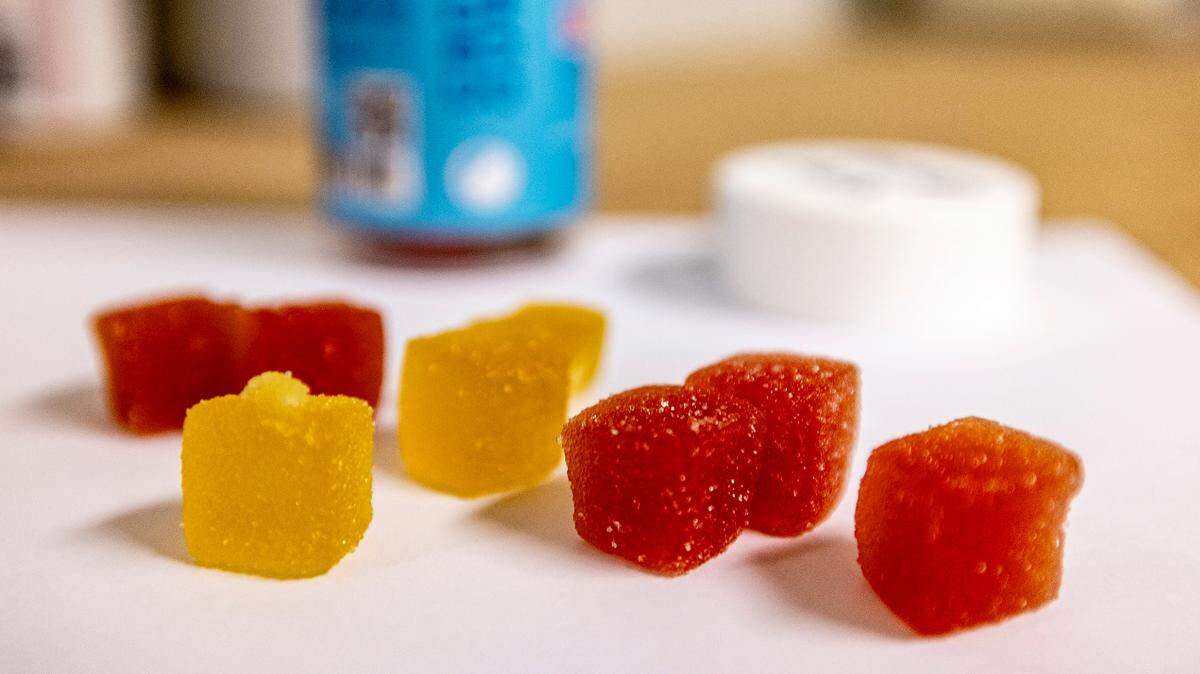
The North Carolina Senate advanced a bill that would ban the sale of hemp products such as gummies and beverages to anyone under 21, prohibit their use on school grounds, and impose new regulations.
The move puts pressure on the House, which has not acted on two hemp regulation bills filed in its chamber.
There are no age limits under state or federal law on buying or using hemp products.
“This is not a bill that was written by the cannabinoid industry for the benefit of the cannabinoid industry. This bill was written with public good front and center, and we’re going to make sure that what is being sold in our communities has no toxins, no synthetics, and keep them, and keep these products out of the possession of minors,” said Sen. Amy Galey, a Burlington Republican.
The bill would also prohibit kratom use by classifying it as a Schedule VI controlled substance, like marijuana currently is in the state.
The House also has a bill on kratom moving through committees that would ban sales to anyone under 21 and implement new regulations, but would not ban it altogether.
“Stores selling these hemp products are popping up in towns across North Carolina, and children are getting a hold of these products,” Senate leader Phil Berger said in a news release on Monday evening.
“We cannot continue to let our state be the Wild West when it comes to hemp. Without these regulations, the availability of these dangerous products is only going to get worse,” said Berger, an Eden Republican.
The new regulations surfaced Tuesday in a committee as an amendment to House Bill 328.
That bill, in its original version, would mandate that public schools adopt a policy prohibiting hemp-derived consumable products inside school buildings, grounds and at school-sponsored events. It would also expand the state’s definition of tobacco products to cover vapor products, thus banning them under existing laws that already restrict tobacco use in school settings.
Rep. Carla Cunningham, a Charlotte Democrat, is a primary bill sponsor of the bipartisan HB 328.
On Tuesday, she spoke at the Senate health committee, saying vaping causes irreversible lung damage known as “popcorn lung.”
“We needed something in place to protect the children,” she said.
The revised legislation would impose sweeping regulations on hemp and hemp-derived products.
It would require anyone selling, manufacturing or distributing such products to be licensed by state Alcohol Law Enforcement, which would also handle enforcement. Licensing fees under the bill would be: $25,000 for manufacturers, $5,000 for distributors and $500 per retail location or per website offering delivery in North Carolina.
The bill passed the health and finance committees Tuesday, sending it to the judiciary committee next. Should it pass the Senate, the House would have to pass the amended bill again before it could go to Democratic Gov. Josh Stein’s desk.
Several hemp proposals
But the House has been slow to move its hemp bills.
There have already been several proposals in both the Senate and the House to prohibit selling hemp to those under 21.
Senate Republicans filed one proposal, Senate Bill 265, while House Republicans introduced two others. House Bill 607 has largely the same language as the Senate bill, while House Bill 680 is less expansive — omitting provisions to limit packaging appealing to minors, product testing requirements, and manufacturer or distributor licensing. It also sets lower fines. All three require sellers to be licensed.
But all seek to keep hemp and its derived products away from minors and tighten industry rules. Despite this shared goal, none of the three bills have advanced or had committee hearings.
House could take action on minors’ access
House Speaker Destin Hall said Tuesday that he didn’t know the specifics of the Senate’s bill.
“We’ll just have to look at it when it comes over here, but, I think, as a general matter, we want to do something about underage people getting a hold of that stuff.”
“And I also understand that nobody really knows where some of these products are coming from, maybe from China or whatever. So it’s something that we need to look at. Now, how we go about it, I don’t know yet,” Hall said.
“It is certainly a big issue in the state and getting larger. We hear from a lot of parents of younger kids who are going out and getting this stuff. So we need to do something, at least as to minors, on it,” he said.
On medical marijuana, Hall said that Republicans have not yet discussed it in their House caucus meetings this year.
‘Weaken the bill’
It’s unclear whether the House — which has not moved its two hemp bills — would agree to the Senate’s latest changes.
Asked about support from the House on the changes, Galey told reporters after the committee hearing that she “would really question anybody who doesn’t support the framework that’s laid out.”
“If you want to weaken the bill? Why would you want to do that? Because it’s going to cost you more money in the long run? Well, I think that the lives and the health — especially of our children — the safety of our people is worth that,” she said.
Asked about her comment about the cannabinoid industry being involved in bills, she said she could not say if they had been involved in drafting the House’s hemp legislation but “I don’t think the House bill is as strong as the Senate bill in protecting children and the public in North Carolina. “ Galey said she had not talked to House members in leadership positions prior to proposing the latest changes to the House bill.
Notably, the Senate’s changes do not include language to legalize medical marijuana.
During the 2024 legislative session, the House attempted to regulate hemp products and prohibit their sale to anyone under 18. But senators tied those proposed regulations to a proposal to legalize medical marijuana.
Sen. Bill Rabon, the Republican chairman of the Senate Rules Committee, has championed medical marijuana legalization over the years. On Tuesday, he attended the committee hearing on the bill, despite not being a part of that committee. Later in the Senate Finance Committee, on which Rabon serves, he made the motion to vote in favor and send to the next step.
The House rules chairman is Rep. John Bell, who has served as president of AsterraLabs, a Nashville, North Carolina, based CBD and hemp company, since 2023. CBD, or cannabidiol, is derived from hemp.
Also in attendance was Democratic Attorney General Jeff Jackson, alongside his son Owen. Jackson said the bill is “long overdue.”
He said he trusts his son with many things but “the notion that he can go into one of these shops and be presented with what is branded as candy” but is not, and that “that is somehow lawful in North Carolina is very difficult for parents when they learn that that’s the current status of the law.”
He said he found the decision to entrust enforcement with ALE “extremely wise” and that his office had begun meeting ALE over the last several months in anticipation of a bill like this one. He said ALE is “very well positioned to move on this,” though with some concerns about capacity.
Stein has also created an advisory council on cannabis to study and make recommendations on how to approach and regulate cannabis sales.
More details on the bill
Retailers selling online would have to verify buyers’ ages and use delivery methods requiring the signature of someone 21 or older.
The bill would ban the sale of hemp products with more than 0.3% delta-9 THC by dry weight and require child-resistant packaging.
Delta-9 THC is marijuana’s key psychoactive component and delivers what’s typically associated with the drug’s “high.”
Hemp is defined as cannabis with less than 0.3% delta-9 THC. Other compounds in cannabis — often found in hemp — can also cause a high, including delta-8 THC.
Products such as CBD creams would still be allowed.
The bill would also require products to be tested for nearly 100 substances before reaching retail stores.
What “this bill does is it cleans up the garbage that’s on our shelves. There is high quality testing, using proven methods. There must be an independent lab that’s been approved by the ALE,” said Galey.
Packaging would also need to show allergen information, warning statements, and the cannabinoid content per serving and per package, in milligrams.
Violations could result in civil penalties and criminal penalties. Licenses could also be revoked.
This story was originally published June 17, 2025 at 12:40 PM with the headline "Sweeping hemp regulations would overhaul ‘what is being sold in our communities’."