Controversial substance used for pain, anxiety could be banned for NC buyers under 21
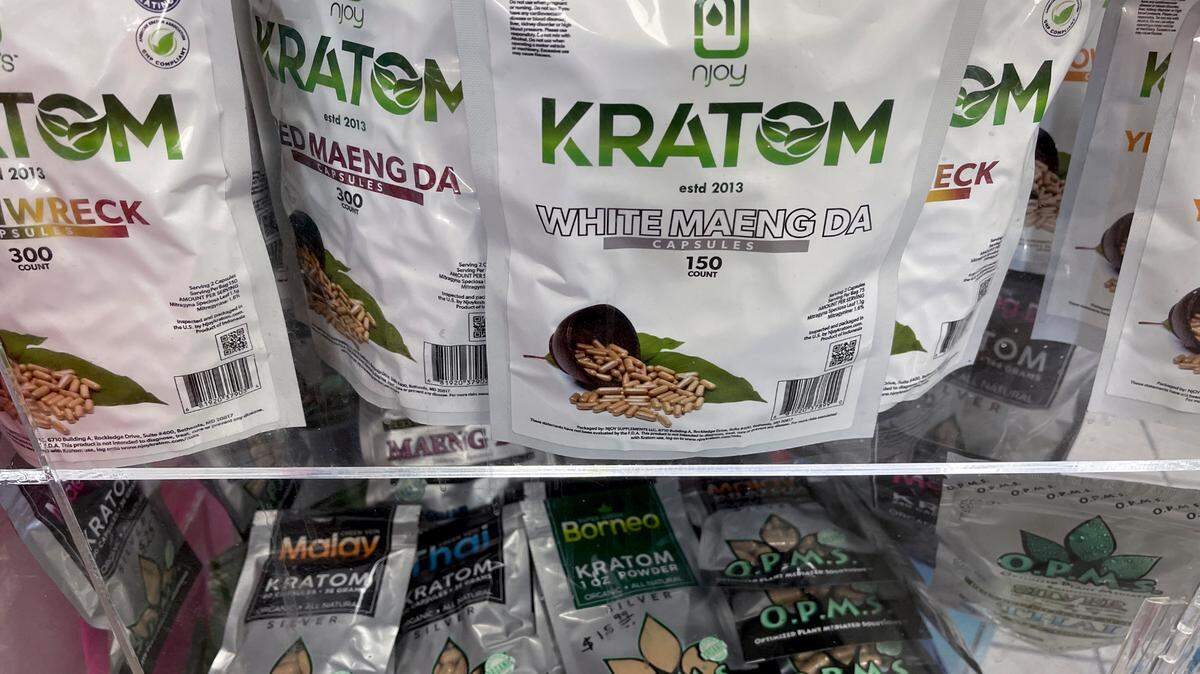
Kratom, commonly sold as pills or green powder in North Carolina gas stations and smoke shops, could soon face new regulations, including a ban on sales to anyone under 21.
State lawmakers are once again pushing to regulate the substance, which comes from a Southeast Asian tree and is often used to self-treat pain, anxiety, diarrhea and opioid use disorder — though it remains controversial due to safety concerns.
At low doses, kratom acts as a stimulant; at higher doses, it can have sedative effects.
House Bill 468, which advanced Tuesday in a House regulatory reform committee, drew about an hour of debate among lawmakers and public speakers, including a kratom business owner.
Rep. Jeffrey McNeely, a Stony Point Republican and primary bill sponsor, said lawmakers split kratom from regulations on cannabinoid products this year to improve the bill’s chances.
“Hopefully, we’ll get something through the other side of the General Assembly,” he said.
An effort last year to regulate hemp and kratom failed after the Senate tied medical marijuana legalization to it.
Earlier on Tuesday, lawmakers also held a press conference on bills to raise the legal sales age of tobacco products to 21. Bills have also been filed this year to ban hemp sales to minors.
“Eventually, North Carolina will get to 21, I think, on tobacco products,” McNeely said.
“We hope someday that the cannabinoid products will be 21, whenever we get that regulation done. We should have had kratom and hemp regulated at least two years ago, if not four years ago,” he said.
Beyond the ban on sales to minors, HB 468 would also prohibit sample distribution in certain public spaces, and require licenses for manufacturing, distribution and retail. It would also bar the sale of contaminated products, among various other provisions. Violations could result in civil penalties and, in some cases, criminal charges.
Could synthetic parts of kratom be banned?
The most debated provision in the committee was a requirement banning the sale of any kratom product containing certain substances, including more than 1% 7-hydroxymitragynine in its alkaloid composition.
McNeely said in the bill, “we have taken basically synthetic out of this. We’re to the point in the industry, (from) what I’ve gathered that they do not want synthetic kratom, and for that matter synthetic cannabis.”
Sheldon Bradshaw, with the Food and Drug Administration’s regulatory counsel for botanicals for better health and wellness, supported the bill, calling it a balanced approach. It “walks a very nice line between a pathway for kratom” in its natural form, he said, while “simultaneously banning synthetic compounds, particularly anything more than trace amounts of 7-hydroxymitragynine,” also known as 7-OH.
Bradshaw said kratom is the name of a tree native to Southeast Asia, and its leaves are used in products marketed as containing kratom. The leaves contain no 7-OH while on the tree, he said, but trace amounts form through natural oxidation after harvesting. But many products marketed as containing natural 7-OH, he said, are synthetically produced. They are “very dangerous and should not be made available,” he said.
New requirements push out some businesses?
Isaac Montanya, the former CEO for Charlotte Extraction Labs, pushed back against criticism of 7-OH.
He said the company manufactures 7-OH and the bill would “drastically impact” the livelihood of his 30 employees.
“We manufacture a very good, efficacious and ethical product. It’s a very clean product,” he said in the committee.
The bill “is more about a turf war between an industry that would like to regulate another industry because it impacts that particular industry’s bottom line,” he said. Kratom products need “to be labeled correctly, with transparency and regulate the bad actors out of the marketplace. But I’m not a bad actor.”
Asked what the turf war entailed, Montanya said many kratom users intentionally buy 7-OH products instead of traditional kratom, cutting into kratom businesses’ profits.
The FDA has not placed kratom on its list of controlled substances and has not approved any prescription or over-the-counter kratom products. The agency has warned consumers not to take it due to the risk of serious adverse events such as liver toxicity and substance use disorder.
The National Institute on Drug Abuse supports and conducts research to evaluate potential medicinal uses for kratom and related chemical compounds, according to its website.
Should it pass into law, the bill would become effective in July 2026.
Editor’s note: This article has been updated to clarify Montanya’s title. During the committee hearing, Montanya identified himself as the company’s CEO and founder.
Amy Whitfield, public affairs advisor with the law firm and strategy firm Michael Best, contacted The News & Observer on behalf of Charlotte Extraction Labs and said Montanya has not served as CEO since February 2025 and does not represent the company in any official or unofficial capacity.
While he had continued as an advisor, she said, he misrepresented his role, and the company has since severed ties with him.
Whitfield also shared a statement from Dean Mangrich, managing member of Charlotte Extraction Labs:
“Charlotte Extraction Labs understands that House Bill 468 is a significant discussion in the North Carolina General Assembly and does not take a public position on this matter. Our primary mission is to be a manufacturer and innovator. We use highly methodical extraction techniques across a variety of natural plant alkaloids. Any reference to industry turf wars regarding one product does not represent our approach or interests,” said Mangrich.
This story was originally published June 3, 2025 at 3:37 PM with the headline "Controversial substance used for pain, anxiety could be banned for NC buyers under 21."