NC police, sheriffs want veteran officers to keep badges & retirement benefits
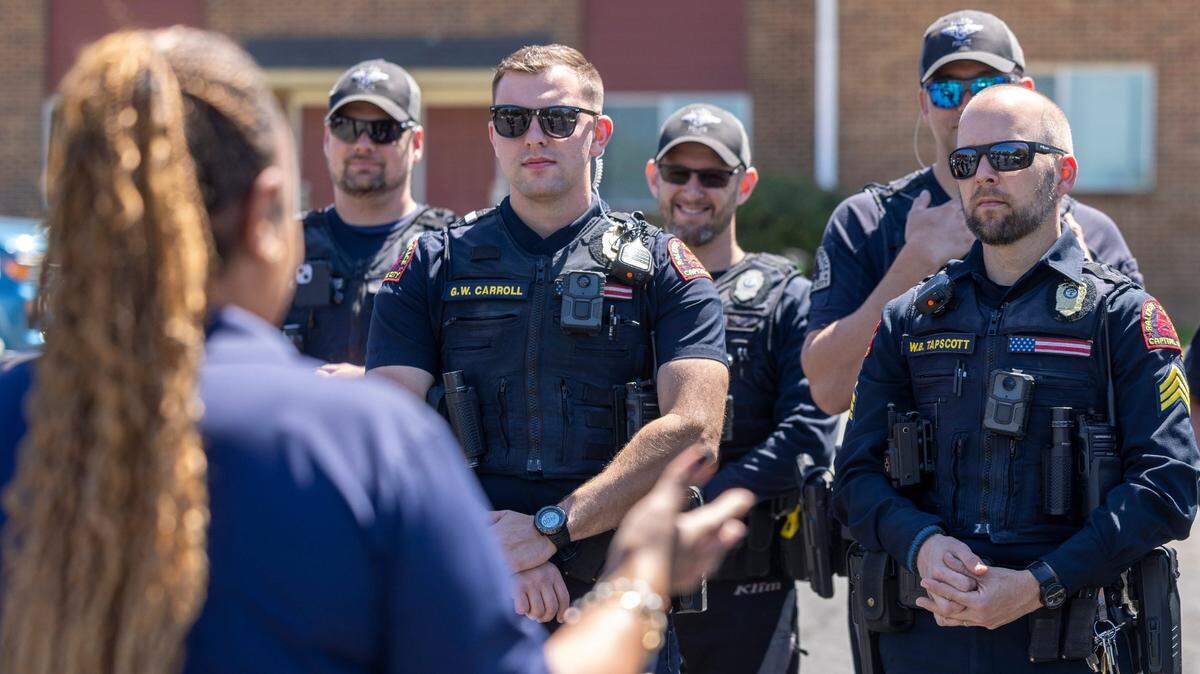
As law enforcement agencies across the state face staffing challenges, police chiefs and sheriffs are lobbying North Carolina legislators to allow veteran officers to keep their badges and retirement benefits.
The proposed changes would help in a current “staffing crisis,” said Fred Baggett, legislative council for the North Carolina Association of Chiefs of Police. It would also help departments hold onto experienced leaders.
As things stand today, too many are leaving law enforcement while still able to contribute, Baggett and others say. Among them is Henry King.
Last year King was thriving in his job overseeing 18 sworn Edenton police officers in a quaint waterfront town home to about 5,000 residents.
Trained by multiple police leadership schools over his career, he became the first Edenton chief to serve as president of the North Carolina Association of Chiefs of Police. He introduced new technology to help officers detain those on drugs or with dementia without using a Taser or a gun.
He was working with federal officials to tackle gang problems and overcome “snitch culture” in Edenton.
“The community was buying into the philosophy. They weren’t worried about somebody calling them a snitch. We were receiving tips. We were arresting people and putting them in federal prison,” King said.
Also last year, King hit his 30-year-anniversary as a local police officer in North Carolina and was forced to make a decision: retire or forfeit thousands of dollars a year under a special retirement benefit for law enforcement.
King, a father of a 15-year-old, retired at 51.
“It doesn’t benefit me to stay because I will be losing money,” King said he concluded.
What’s the problem?
Local and state law enforcement across the state receive a benefit known as the “special separation allowance” after they serve 30 years or turn age 55 with at least five years of service.
If they retire, they can start collecting the benefit, typically thousands of dollars a month, until they turn age 62.
The formula setting the benefit multiplies their final salary by .85% and then that by the number of years they were employed. For police chiefs making $100,000 a year after 30 years on the job, that can be a sacrifice of about $25,500 a year until they reach 62, according to the formula.
The catch for those like King is that when they are eligible for the allowance, every year that they don’t retire is one that they forfeit the benefit.
The issue is claiming police chiefs and experienced law enforcement across the state, according to interviews. The North Carolina Association of Police Chiefs identified nearly 20 chiefs who are retiring in the next few months. And they aren’t sure who will replace them, Baggett said.
A shrinking pool of experienced executive officers stings when paired with shrinking pools of new recruits, Baggett said.
“Fewer people are becoming officers, therefore fewer are growing in experience through the years, and there’s just a big vacuum at the top,” Baggett said.
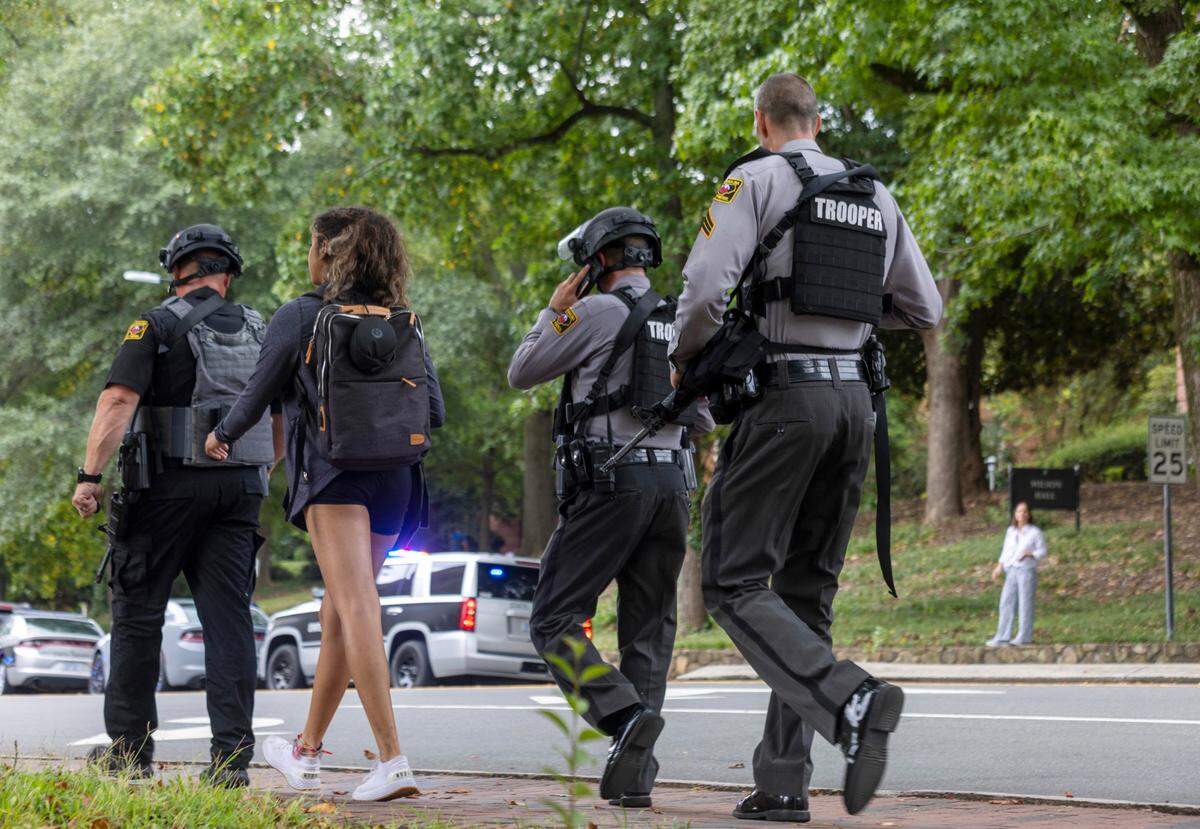
For several years, police chiefs, sheriffs and state officials — Gov. Josh Stein included — have voiced concerns about the challenge of attracting qualified law enforcement recruits.
Not only North Carolina agencies here have this problem. From 2019 to 2023, nearly 50,100 new officers were sworn in while 56,000 retired or resigned, according to law enforcement agencies that responded to a survey from the Police Executive Research Forum.
North Carolina sheriffs’ offices are facing similar issues, said Eddie Caldwell, executive vice president of the North Carolina Sheriffs’ Association.
What does law enforcement want?
Police chiefs and sheriffs are pushing for passage of two companion bills, House Bill 50 and Senate Bill 320, to allow officers eligible for the special separation allowance to defer retirement but not forfeit their eligibility for the benefit.
“It freezes the benefit,” Caldwell said.
A similar bill was introduced last session and did not pass but it likely has a better chance now. Senate leader Phil Berger is a primary sponsor and the bill’s language is included in the Senate budget.
“I’m quite hopeful,” Baggett said about the bill.
The change would not be free. It could save the state and local governments up to half million dollars per year for the first five years. But it would then cost about $2 to $3 million per year, according to Sam Watts, executive director of the North Carolina Retirement Systems division, which falls under the Department of State Treasurer.
Second proposed retirement tweak
Another bill, House Bill 753, includes language that would allow local and state officers to retire but return to work full time while receiving their pensions after a defined period. Officers would not be able to expand their retirement benefits from the same retirement system paying the pension.
Under the current system, officers and deputies who want to remain working for a state or local agency after retiring cannot work more than 1,000 hours a year. Their pay is limited to 50% of their previous salary or $42,160, whichever is higher, according to state policies.

These proposed changes, also introduced in the previous legislative session, don’t have the same level of support. Berger is not a co-sponsor and language supporting the switch is not included in the Senate budget.
A memorandum from the Treasurer’s Office says that the changes would violate federal law related to retirement plans and distributions.
Considering those and other concerns, North Carolina Retirement Systems officials would typically oppose the legislation, according to an April 28 memo from executive director Sam Watts.
“However, we would like to explore finding a viable solution and respectfully suggest a joint legislative study commission,” the memo states.
Other legal analysts have a different opinion about whether the change would be consistent with Internal Revenue Service rules, Baggett said. Caldwell said he hopes the legislation moves forward and doesn’t believe a study is necessary.
‘More to give’
At King’s retirement party, he was presented with the Order of the Long Leaf Pine, one of North Carolina’s highest civilian honors, a proclamation making him an honorary Secretary of State, and other honors, The Daily Advance reported.
Unable to work for local police and keep the separation dollars he looked for employment independent of the local retirement system.
After his family settled on a school with strong academics, Grimsley High School in Greensboro, King took a new job at Winston-Salem State University, where he is now a deputy chief.
John Letteney said separation and retirement benefits played into his decision to retire as police chief of Apex in 2021 too. Afterwards, he moved from the Triangle to Thomasville, Georgia and became the top cop there.
Last year he moved back to become an assistant city manager in Morrisville.
“We often feel like we have more to give and more to serve, and more to accomplish and help, because of all the experience we’ve gained over a period of time,” said Letteney, now 63.
Since Letteney left Apex, the chief who succeeded him retired in 2024 and a new chief was hired earlier this year. The turnover cost cities and towns money when they hire consultants to recruit and hire applicants, he said.
Now Letteney is on the other side of the hiring process. The Morrisville police chief plans to retire in July and the town is looking for his replacement.
Virginia Bridges covers criminal justice in the Triangle and across North Carolina for The News & Observer. Her work is produced with financial support from the nonprofit The Just Trust. The N&O maintains full editorial control of its journalism.
This story was originally published May 6, 2025 at 5:00 AM with the headline "NC police, sheriffs want veteran officers to keep badges & retirement benefits."