NC Senate moves first to end permit requirement for concealed carry of handguns
 "House Speaker Destin Hall, left, and Senate President Pro Tempore Phil Berger, talk before Gov. Josh Stein delivered his State of the State address to a joint session of the General Assembly on Wednesday, March 12, 2025, in the House chamber of the Legislative Building.")
The North Carolina Senate passed legislation Thursday that would allow people to carry a concealed handgun in the state without getting a permit.
Senators voted Thursday afternoon along party lines, 26-18, to approve the bill and send it to the House.
Under current law, carrying a concealed handgun is only allowed with a permit obtained from a sheriff’s office that involves first completing a firearms safety and training course, as well as passing a background check. The permits are also only allowed for people over the age of 21.
The bill passed by the Senate, and another one that is advancing in the House, would remove the permit requirement and lower the age after which carrying a concealed handgun is legal to 18.
Both bills would still keep the permitting system in place “for the purpose of reciprocity when traveling in another state, to make the purchase of a firearm more efficient, or for various other reasons.”
Similar legislation proposed in the House two years ago started moving through committees but ultimately stalled. This year, Republicans moved quickly to file bills in each chamber, and Senate leader Phil Berger signed on in support of the Senate bill.
Republicans, presenting the bills in committee this week, said that the permit requirement infringes on the Second Amendment rights of responsible gun owners.
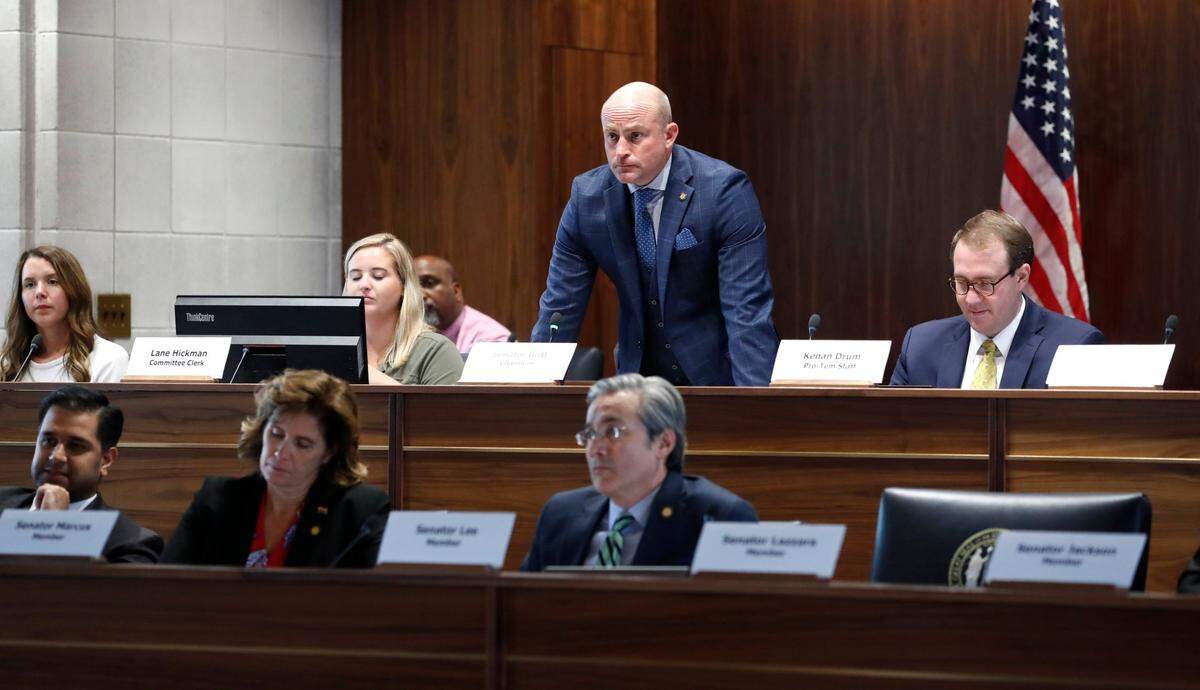
Asked what problem the bill is trying to solve, Sen. Danny Britt, a Lumberton Republican who is one of the bill’s primary sponsors, said earlier this week that people have a constitutional right to be able to carry a concealed handgun for their protection “without having to jump through the hoops that you do for a concealed carry permit.”
Gun rights groups that have been lobbying for the bill for years said that North Carolina would become the 30th state in the country to pass some form of what supporters call “constitutional carry,” also referred to as “permitless carry.”
Democrats who have strongly opposed the bills have questioned why Republicans are moving to eliminate the permit requirement altogether, instead of proposing changes or fixes to the current process that bill supporters say takes too long and can be arbitrary.
Democrats add benefits for slain police officers and their families
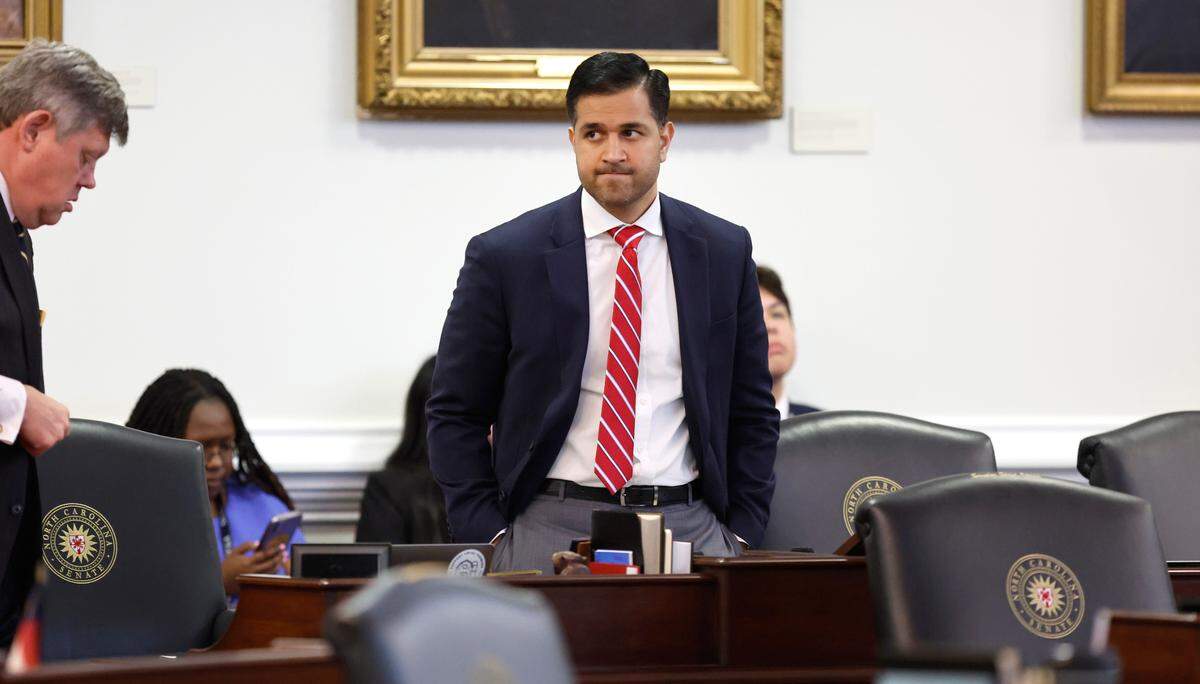
Sen. Mujtaba Mohammed, a Charlotte Democrat, raised concerns during floor debate on Thursday that allowing concealed carry without a permit and the required training and background check would endanger police officers.
Mohammed said the bill could have focused on improving the permitting process, but instead was “taking a chainsaw to the system, leaving officers and the public to deal with the consequences.”
Mohammed offered a pair of amendments to the bill that would raise the amount of death benefits that are paid to officers who are killed in the line of duty from $100,000 to $150,000, and establish a scholarship for the children of permanently disabled or slain officers.
Britt asked for a five-minute break to discuss the first amendment and returned to recommend its adoption, praising Mohammed for working on it.
Republicans joined Democrats in voting to adopt both amendments. Britt urged Democrats to also vote in favor of the bill. Mohammed thanked Republicans for supporting the amendments but reiterated his opposition to the bill.
A number of other amendments offered by Senate Minority Leader Sydney Batch and other Democrats including Sens. Kandie Smith, Woodson Bradley, Sophia Chitlik and Michael Garrett, were rejected after Republicans proposed and passed substitute amendments or voted to table them.
Sen. Paul Lowe, a Winston-Salem Democrat and gun owner, talked about going through the training and permit process to obtain his concealed carry permit, and said he believed it is important to keep the education component about how to handle a gun safely and responsibly.
“If someone is going to handle a firearm, if they’re going to use it, if they’re going to own it, they need to know how to operate it, and they need to know what the law says about its operation,” Lowe said.
11 other amendments to the bill rejected
The other amendments Democrats put forward that failed would have provided funding for protective gear, required gun detection systems in schools and hospitals, expanded gun-free zones, adopted a so-called red flag law, reinstated the permit requirement to buy handguns that Republicans eliminated two years ago, required universal background checks, and penalized people in certain circumstances for failing to keep guns out of the reach of children.
After the vote, Democrats said the 11 amendments that Republicans had rejected were “common-sense safety measures.”
Mohammed said he proposed the two amendments that the GOP did support to help the families of police officers killed in the line of duty because he believes the bill will lead to more first responders and law enforcement officers losing their lives.
“We don’t get to create the best bills because we’re in the minority, but it’s my job to reduce harm to the people of North Carolina,” Mohammed told reporters.
Berger, meanwhile, said that Thursday’s debate showed that even on contentious bills like this one, Republicans are “willing to listen to alternatives that don’t gut the bill, don’t try to rehash issues” on which both parties have clear differences.
At the same time, Berger noted that the bill was filed in early February and said that if Democrats were “serious” about incorporating additional amendments, they should have brought them up in committees.
This story was originally published March 20, 2025 at 1:48 PM with the headline "NC Senate moves first to end permit requirement for concealed carry of handguns."