You know about the big political fights. Here are 20 other NC bills, and why they matter
By Staff reports
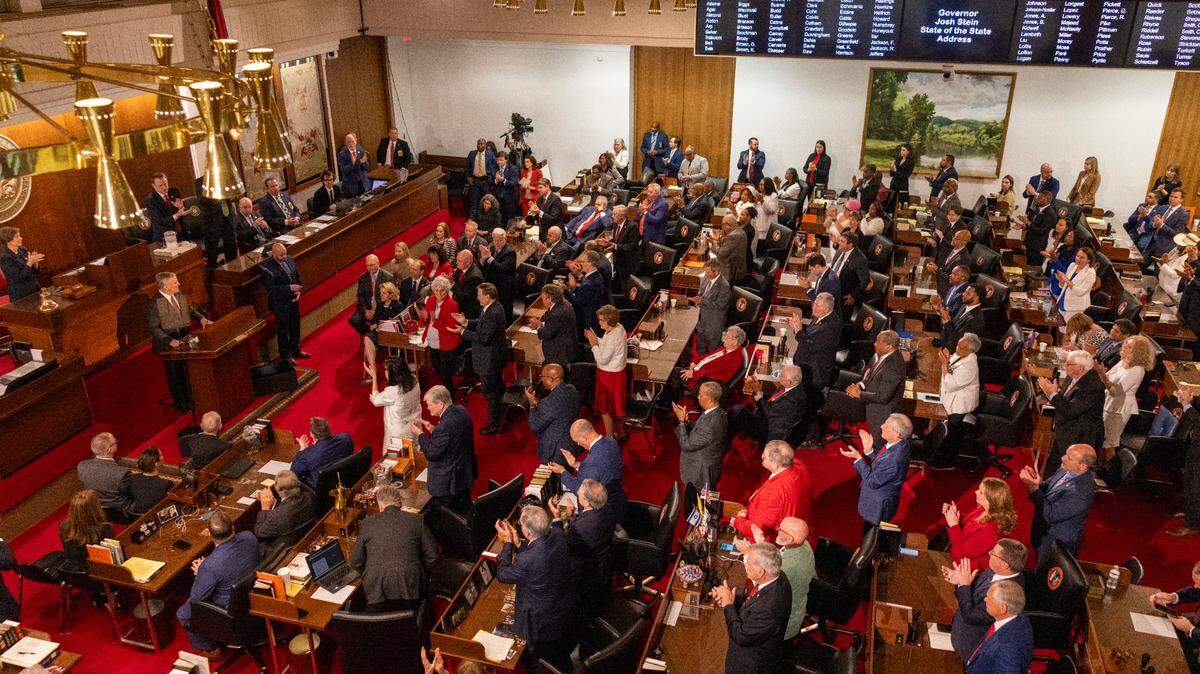
Gov. Josh Stein delivers his State of the State address to a joint session of the General Assembly on Wednesday, March 12, 2025, in the House chamber of the Legislative Building.
Travis Long
tlong@newsobserver.com
RALEIGH
The North Carolina General Assembly has 50 senators and 120 representatives in the House, and each of them can sponsor a bill. Whether that bill passes is another story.
But there are hundreds of other bills waiting for action.
Each day of session, bills are added to committee schedules and work their way through committees to the floor. If a bill passes either the House or Senate, it goes to the other chamber for a final vote.
Bills sponsored by Republicans, who have a near-supermajority, are more likely to pass than those sponsored by Democrats. But being in the majority party doesn’t guarantee your bill support.
Here are 20 under-the-radar bills, why they matter, and where they stand right now.
Looser gun restrictions
House Bill 5 and Senate Bill 50: Republicans in North Carolina typically support loosening gun restrictions, while Democrats generally oppose such measures. This year is no exception, with GOP lawmakers in both chambers introducing legislation to allow concealed carry of handguns without a permit. The Senate version of the bill has the support of the chamber’s top Republican, Sen. Phil Berger. Meanwhile, a group that helped put together the House version but supports the Senate bill as well, Grass Roots North Carolina, met with House Speaker Destin Hall last week and delivered 5,000 petition signatures to him from supporters urging him to advance the legislation. Hall told the bill’s supporters that he believes Republicans are close to getting ready to move the bill forward.
House Speaker Destin Hall, left, and Senate President Pro Tempore Phil Berger, talk before Gov. Josh Stein delivered his State of the State address to a joint session of the General Assembly on Wednesday, March 12, 2025, in the House chamber of the Legislative Building. Travis Long tlong@newsobserver.com
Tighter gun restrictions
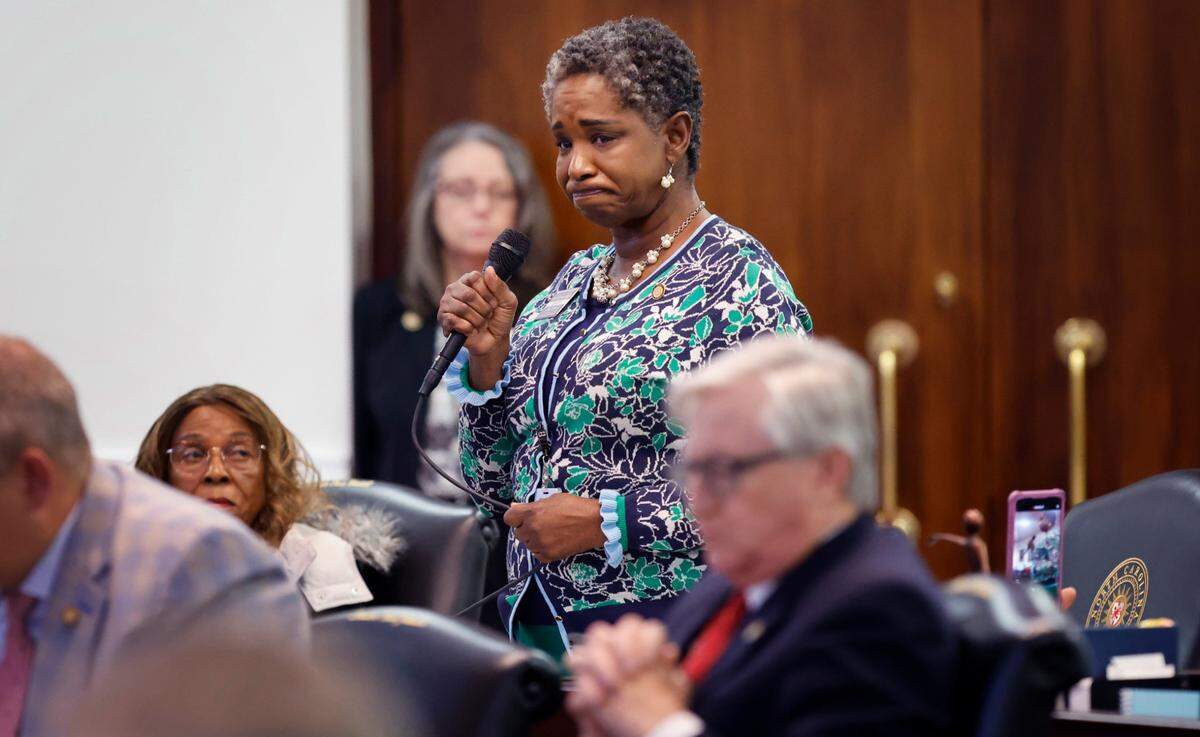
Senate Bill 161: Senate Democrats have filed the Jenesis Firearm Accountability Act, a bill unlikely to pass in the Republican-led General Assembly. It would require lost or stolen firearms to be reported within 48 hours, with fines for repeat offenses. Owners of unreported guns used in crimes could face financial or criminal charges. The sponsors, Sens. Val Applewhite, Woodson Bradley and Caleb Theodros, also propose a tax break for firearm safety equipment and $500,000 for a statewide public awareness campaign. The reporting and tax rules would take effect on Oct. 1, 2025, while funding for the campaign starting on July 1, 2025.
N.C. Senator Val Applewhite speaks against Senate SB 20, the “Care for Women, Children, and Families Act,” during debate at the N.C. Legislature in Raleigh, N.C. Thursday, May 4, 2023. Ethan Hyman ehyman@newsobserver.com
Election Day holiday
House Bill 31 would make the statewide general election day a paid holiday for state employees. The bipartisan bill has more than 60 sponsors from both parties. It hasn’t received a committee hearing yet.
Fewer early voting days
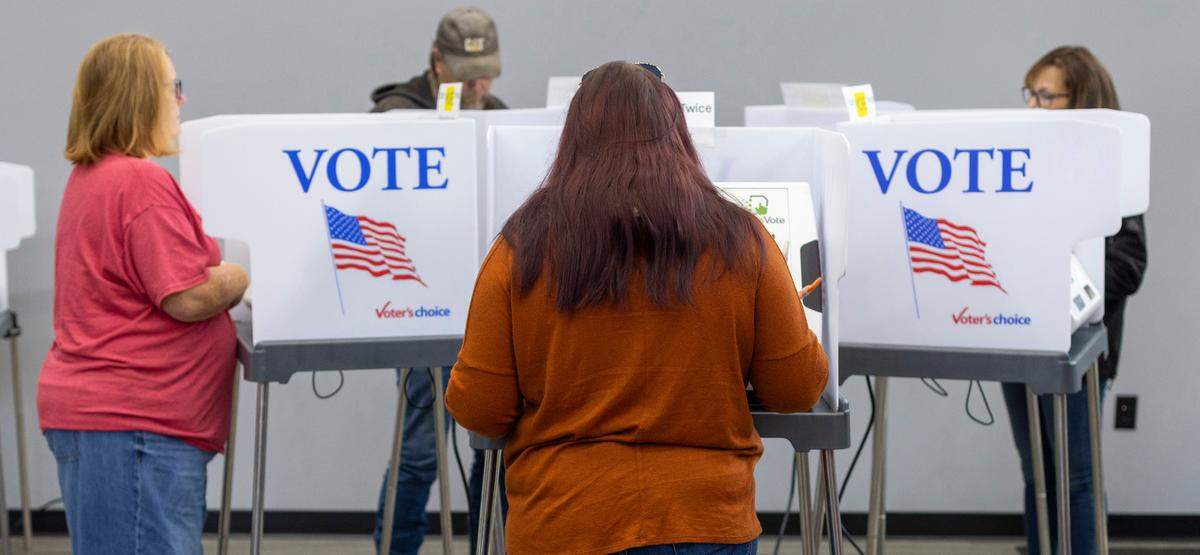
House Bill 66 would reduce the early voting period by moving the start date from the third Thursday before an election to the second Monday before that election. The bill would keep the end of the early voting period in place as 3 p.m. on the Saturday before the election. This bill, which hasn’t yet received a committee hearing, has 14 Republican sponsors.
Voters cast their ballots Robert Willett rwillett@newsobserver.com
Cost of health care
Senate Bill 24, titled “Govt Mandates Increase Healthcare Costs,” would require any new health insurance mandates to be offset by repealing an existing one and by including state funding to cover costs. Introduced by Republican Sens. Jim Burgin, Amy Galey, and Benton Sawrey and backed by 19 other Republicans and two Democrats, former Minority Leader Dan Blue and Sen. Paul Lowe, the bill would also require any mandate enacted after July 1 to apply to the State Health Plan. Supporters say it will help control health care costs, while opponents warn it could limit access to essential services. The bill passed the Senate largely along party lines, with Republicans joined by three Democrats in support, and now awaits a hearing in the House.
Regulations on drug pricing middlemen
House Bill 163, filed by Republican Reps. Heather Rhyne, Hugh Blackwell, Cody Huneycutt, and Jarrod Lowery, seeks to regulate pharmacy benefit managers (PBMs), companies that negotiate drug prices on behalf of insurers and influence which medications are covered. The bill would ban spread pricing, in which PBMs charge insurers more for a drug than they reimburse pharmacies, keeping the difference as profit. It would also require PBMs to limit fees on pharmacies, while preventing favoritism toward PBM-affiliated pharmacies. PBM regulations have repeatedly stalled in past sessions, including a 2023 effort by Republican Rep. Wayne Sasser, who has criticized PBMs for operating behind the scenes, as previously reported by The News & Observer.
Free and low-cost prostate cancer screenings
House Bill 128 calls for the state to offer free or affordable prostate cancer screenings. The bill would give the N.C. Department of Health and Human Services ongoing funding of $2 million a year to launch and administer a statewide prostate cancer control program. The program would provide free or low-cost prostate screenings and follow-up to men who are uninsured or underinsured, aren’t beneficiaries of Medicare Part B or Medicaid, are between 40 and 70 years old and have a family history of prostate cancer (or, if they don’t have a family history of prostate cancer, are at least 50 years old), and have a household income below 250% of the federal poverty level. The bill hasn’t received a committee hearing yet, but has more than 30 sponsors from both parties.
Protecting access to IVF
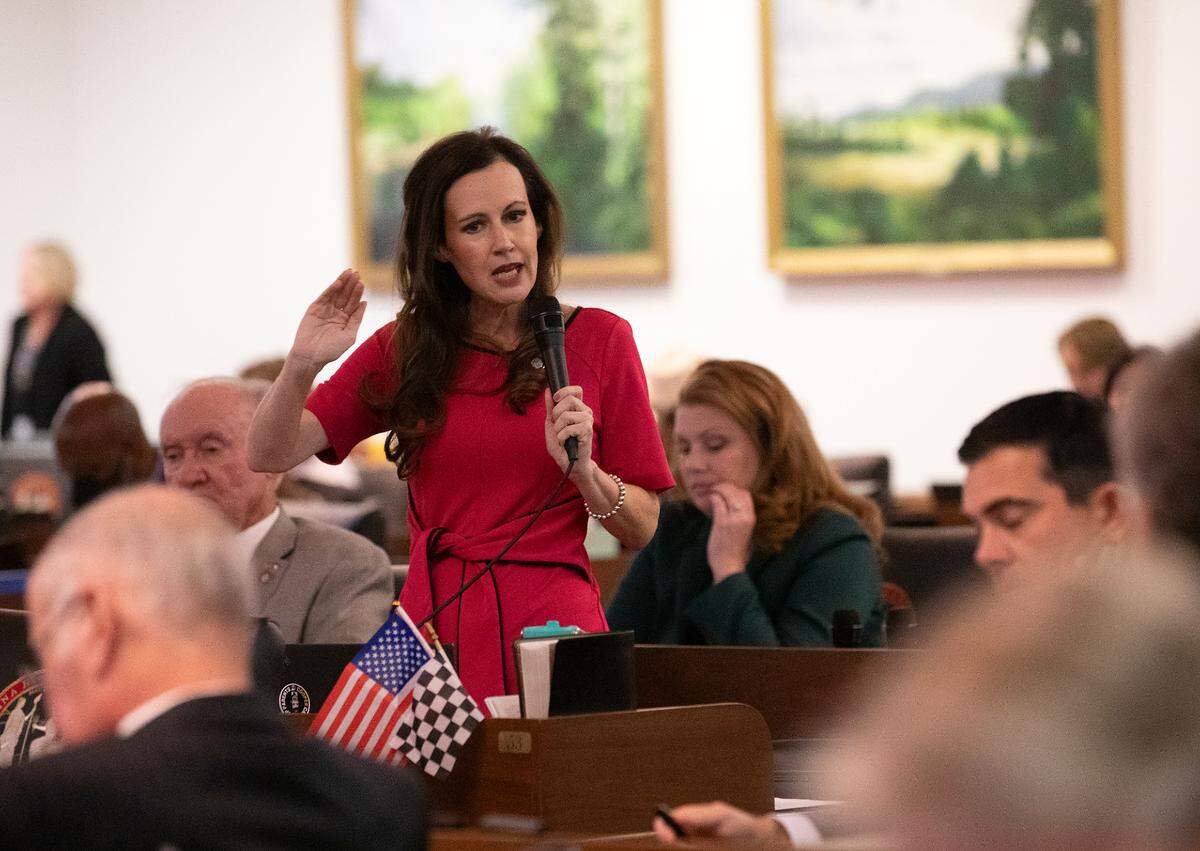
House Bill 76 seeks to protect access to in-vitro fertilization by effectively guaranteeing the right to access IVF or other assisted reproductive technologies. The bill prohibits the state or any of its political subdivisions from blocking or interfering with the rights of patients to access IVF treatment, and of health care providers to provide information about the procedures and carry it out. The bill’s primary sponsors include Reps. Tricia Cotham and Erin Paré, two influential members of the House Republican Caucus. A total of eight Republicans have signed onto the bill as sponsors.
Rep. Tricia Cotham speaks about funding for private school vouchers prior to a vote to override Gov. Roy Cooper’s veto of a budget bill in the House at the General Assembly in Raleigh on Tuesday, Nov. 19, 2024. Kaitlin McKeown kmckeown@newsobserver.com
Labor rights
House Bill 269 would repeal laws banning collective bargaining and restricting labor organizing. Sponsored by Rep. Bryan Cohn, who represents Vance and Granville counties, the bill would also prohibit non-compete contracts for employees making $75,000 or less. Two dozen more Democrats have joined in sponsoring the bill, but no Republicans. The bill was referred to the Committee on Commerce and Economic Development on March 5, but has not had a hearing, and similar bills have languished in past years.
Affordable housing
House Bill 306 would let a few communities in the mountains create affordable housing for public employees on government property. Republican Rep. Ray Pickett’s bill would allow Boone, Blowing Rock and Watauga County to build and designate affordable housing for their town and county employees, as well as public school teachers. Pickett lives in Blowing Rock and his district includes Alleghany, Ashe and Watauga counties. Previous bills sponsored by Democrats in other counties have not made it past committees, but this bill is sponsored by a Western North Carolina Republican as well as several Democrats.
Extending death benefits to officers killed on the way to work
House Bill 137, titled the “Gabe Torres Act,” would extend death benefits to police officers, firefighters and other public safety employees who are killed on their way to and from work. The bill is named after Raleigh police officer Gabe Torres, who was one of five people fatally shot in the Hedingham mass shooting in October 2022. The bill would amend existing law that provides death benefits to employees killed during active duty or while they are on their way to and from training. The bill, which was unanimously passed by the House last session but not taken up by the Senate, would retroactively cover Torres and his family. It is now moving forward in the House again, and cleared its first committee last week.
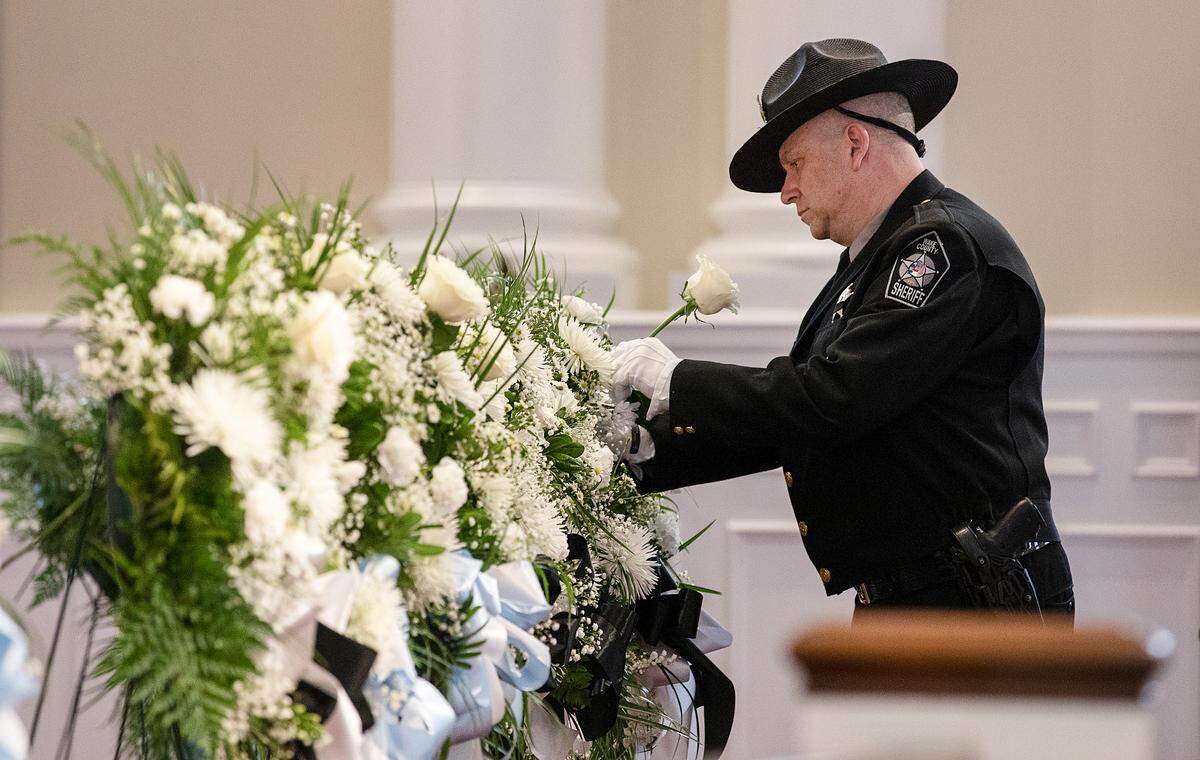
Flowers are placed during the Wake County Law Enforcement Officer Memorial Ceremony on Monday at Hayes Barton Baptist Church in Raleigh. The ceremony, part of National Police Week, honored 23 Wake County fallen officers. Kaitlin McKeown kmckeown@newsobserver.com
Increasing pension benefits for firefighters
House Bill 37 would increase the monthly benefit that members of the N.C. Firefighters’ and Rescue Squad Workers’ Pension Fund receive from $175 to $180.The bill would also give the State Firefighters’ Association a seat on N.C. Emergency Medical Services Advisory Council, which advises the Department of Health and Human Services on the state’s Emergency Medical Services System. The bill has broad bipartisan support in the House, where 72 lawmakers have signed on as sponsors. It’s mirrored by a Senate version, Senate Bill 86.
More explosive fireworks
Senate Bill 250, titled “Celebrate America’s 250th-Let Freedom Ring!” is sponsored by Republican Sen. Amy Galey, who is a Senate whip, along with another seven Republican senators. The bill raises the age to buy fireworks from 16 to 18 and allows “pyrotechnics that are consumer fireworks.” The nine-page bill includes several regulations about the types of fireworks permitted, as well as a 5% tax on consumer fireworks. Most of the bill would become law on Jan. 1, 2026.
Fireworks will be on display throughout the Triangle for Fourth of July celebrations. File photo
Pledge of Allegiance
House Bill 186, “The Stars and Stripes Commitment Act,” requires the Pledge of Allegiance to be recited at the start of meetings of the State Board of Education and local school boards and within the first hour of the instructional day at K-12 public schools. State law already requires schools to schedule a daily recital of the Pledge of Allegiance. But GOP Rep. Brian Biggs, one of the bill’s primary sponsors, said the bill will address how some schools aren’t mentioning the words “United States of America” or “under God” by requiring them to say the full version that’s in U.S. Code.
Pickleball diversity
House Bill 249, “Diversity in Pickleball Pilot Program,” would provide N.C. State University with $10,112 to start a pilot program in Wake County to enhance the diversity of the sport. Democratic Rep. James Roberson, one of the bill’s primary sponsors. says pickleball has the capacity to help all ages but that people of color are underrepresented among players. A similar bill filed in 2023 died in committee.
Higher speed limit
House Bill 112 would increase the maximum speed limit to 75 mph, making North Carolina only the third state east of the Mississippi River, after Louisiana and Maine, with a maximum speed limit that high. An identical bill went nowhere last year.
State lawmakers are renewing an effort to increase the maximum speed limit in North Carolina to 75 mph. File photo hlynch@newsobserver.com
Driver’s license on your phone
Senate Bill 10 would require the Division of Motor Vehicles to offer people an electronic driver’s license or state ID. It would also clarify that a mobile license is an acceptable form of ID for voting and would require the DMV to recognize electronic licenses and IDs issued by other states, as long as the requirements for obtaining them are compatible with North Carolina law. Last year, lawmakers commissioned a study of mobile driver’s licenses and authorized the DMV to offer them. This would require the agency to offer them.
Access to public high school sports
Senate Bill 48 would allow students who are attending private schools or who are homeschooling to play on sports teams at public high schools. School districts would be allowed to charge those non-public school students a “reasonable fee” to participate. The bill comes at a time when some school districts bar athletic access to students who don’t attend their schools.
Distracted driving with animals and children
House Bill 394 would prohibit people from driving with an animal in their lap or interacting with an animal or child in the car “in a manner that impairs or restricts the proper operation of the motor vehicle and results in operation that is careless, reckless, or heedless.” Rep. Frank Iler, a Brunswick County Republican, filed the bill Thursday.
Reporters Dawn Baumgartner Vaughan, Avi Bajpai, Luciana Perez Uribe Guinassi, T. Keung Hui, Richard Stradling and Anna Roman contributed to this story.
Dawn Baumgartner Vaughan is the Capitol Bureau Chief for The News & Observer, leading coverage of the legislative and executive branches in North Carolina with a focus on the governor, General Assembly leadership and state budget. She has received the McClatchy President’s Award, N.C. Open Government Coalition Sunshine Award and several North Carolina Press Association awards, including for politics and investigative reporting.
Avi Bajpai is a state politics reporter for The News & Observer. He previously covered breaking news and public safety. Contact him at abajpai@newsobserver.com or (919) 346-4817.

 "031125-STATE-OF-THE-STATE-TEL-19.jpg (duplicate)")

.jpg)