NC Republicans move fast on DOGE, DEI, Helene, immigration. How 2025 session is playing out.
After a slow start, the North Carolina General Assembly has its foot on the gas two months into the legislative session.
Just in the past few weeks, bills about immigration, cryptocurrency and eliminating diversity, equity and inclusion from state agencies and K-12 schools have moved quickly through the legislature.
Those issues, along with tax cuts, private school vouchers and Trump administration-influenced efficiency, are all Republican priorities. Republicans are one vote short of total control of the legislature. They have a veto-proof supermajority in the Senate, as they did last session, and the House is one vote short of that threshold. With those majorities, Republicans can pass bills without Democratic support, but will need them to override a veto from Democratic Gov. Josh Stein.
The session is early and the battles have barely begun.
Money may be tighter this year, with a House budget leader telling The News & Observer that anyone asking for funding needs to “mitigate expectations.”
So far, Stein has gotten out in front of issues that matter to both parties, like Helene recovery for Western North Carolina. Lawmakers have already moved their fourth Helene relief bill — the first of the year — through both chambers, although it stalled on a final vote in the House this past week.
Stein and his Republican counterparts — Senate President Pro Tempore Phil Berger and House Speaker Destin Hall — all agree that Helene recovery funds are needed. Stein said in his State of the State address on Wednesday night that he was ready to sign that bill, and that the money was needed “yesterday.”
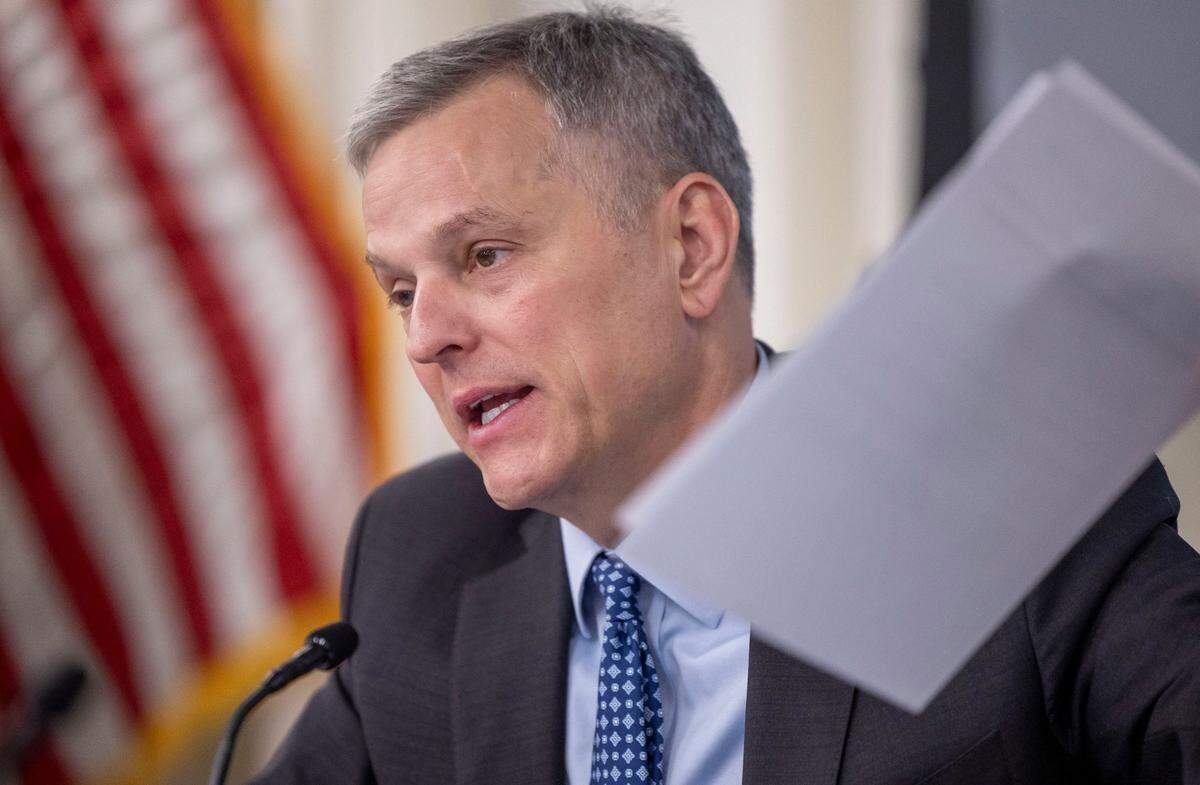
But there is plenty they don’t agree on, and big themes are already taking shape, including the influence of the Trump administration.
Here’s what you can expect from the rest of this legislative long session.
What makes 2025 different
Much of what the Trump administration does has an impact on North Carolina. The biggest spotlight has been on President Donald Trump’s billionaire adviser, Elon Musk, and the clear-cutting of federal agencies by the new initiative set up by Trump and Musk known as DOGE, or the Department of Government Efficiency. Some DOGE cuts have backfired, with employees having to be rehired, including those who maintain the country’s nuclear weapons.
.JPG "US-NEWS-MUSK-FEDERAL-FIRINGS-GET (1).JPG")
Cuts to federal grants have already resulted in job losses in the Triangle. Those employees may move away, or if they stay, spend less money that the state needs to buffer its coffers in a year without a huge surplus.
The impact of Trump’s policy on the North Carolina economy is uncertain.
It’s difficult to know which programs are being targeted, State Budget Director Kristin Walker told lawmakers. Budget officials are asking agencies to tell them as soon as the state loses any of the more than 100 federal grants it currently receives.
“We have to be planning for the future and thinking about what those cuts might mean. But we also have to operate in the world right now, sort of one of the known knowns,” Walker recently told lawmakers.
Lawmakers, too, are focused on what they want to do now, with voting sessions multiple times a week.
The way legislation moves through the General Assembly is all about power and control. If the most powerful Republicans sponsor a bill — Hall, Berger, the House or Senate majority leaders, or the chairs of the House or Senate rules committees — it has a good chance of passing.
So far this session, Berger is backing sweeping immigration enforcement legislation, so that is likely to move. Senate Rules Chair Bill Rabon’s key issue in previous sessions has been legalizing medical marijuana, so that could come up again this session. Hall said that new House Republicans could be more open to what the Senate sends over to them. Hall himself is pushing more immigration legislation as well as more money for Helene recovery, some of which has already passed the House.

North Carolina’s version of DOGE
Republican House Majority Leader Brenden Jones, a co-chair of the House Oversight Committee, is pushing to ban DEI in state agencies. Jones said he’s also focused on accountability for the slow pace of Eastern North Carolina hurricane recovery under former Democratic Gov. Roy Cooper.
“That’s why we’re here: To oversee, to ask what’s working, what’s not working (and) why not?” Jones said in late February at the start of a series of House Oversight Committee hearings examining state agencies. The day before the hearing, embattled Division of Motor Vehicles Commissioner Wayne Goodwin, a Democrat, announced he would step down. He still faced an afternoon of being grilled by lawmakers.
Rep. Jake Johnson, who co-chairs House Oversight, told The News & Observer in an interview that the committee wants to catch problems early and hold agencies accountable.
“We’re turning over every stone trying to find every penny we can. So I think this is going internally in these departments and going, OK, where can we trim some of the fat off to operate as efficient as possible?” he said, adding “just knowing how bad of a year it could potentially be when we get the numbers in April.”
February’s consensus revenue forecast showed economic growth in the state faces downward pressure from tax cuts. A revision to the forecast is due in May, after taxes are collected.
Johnson, who is also vice chair of the powerful House Appropriations Committee, said the state also needs to look at new revenue sources, like legalizing and taxing video lottery terminals. He said a bill on those terminals — electronic gambling machines that can be found across the state despite years of court fights over their legal status — may move soon in the House.
He said any lawmaker or agency asking for money in the upcoming budget needs to “mitigate expectations.”
For the Oversight Committee, Johnson sees its job as being “more the 30,000-foot view — that if you suspect something’s wrong, you come tell us.”
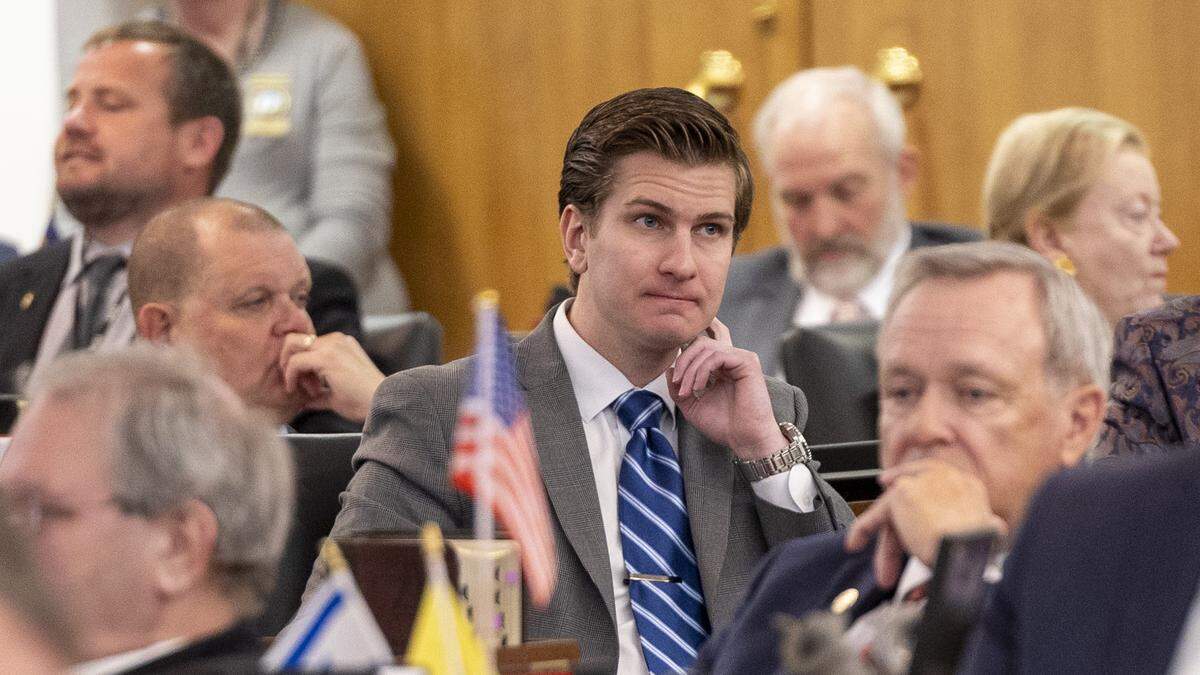
Johnson said they would call in agency leaders about it, then delegate the actual audit to State Auditor Dave Boliek. Boliek, a Republican, is seeking 65 more employees to help his office’s investigation and rapid response teams.
Rep. Brian Echevarria, a Cabarrus County Republican, said in a late February hearing of the Oversight Committee that he and others in the state House were excited to have “our own DOGE.”
Rep. Zack Hawkins, a Durham Democrat, remarked later in the hearing he doesn’t know anyone excited about DOGE.
Eliminating diversity, equity and inclusion programs
Part of that efficiency, as Republicans see it, is eliminating diversity, equity and inclusion programs.
Echevarria asked agency leaders during the Oversight Committee hearing if they have any DEI programs, wanting the assurance that they would comply with Jones’ bill, if it becomes law.
The Legislative Black Caucus opposes Jones’ DEI bill, House Bill 171. Sen. Kandie Smith, a Greenville Democrat, said during a recent news conference that there’s a false narrative that DEI “lowers standards and promotes unqualified candidates.” Rather, it expands opportunities without lowering standards, she said, adding that companies with diverse leadership are more profitable.
“This is diversity, equity and inclusion. We’re not talking about someone trying to injure people, cause harm, do anything negative. We are talking about trying to include individuals who have been excluded for the majority of the time to ensure that we have the best and the brightest, and that is an issue,” Smith said.
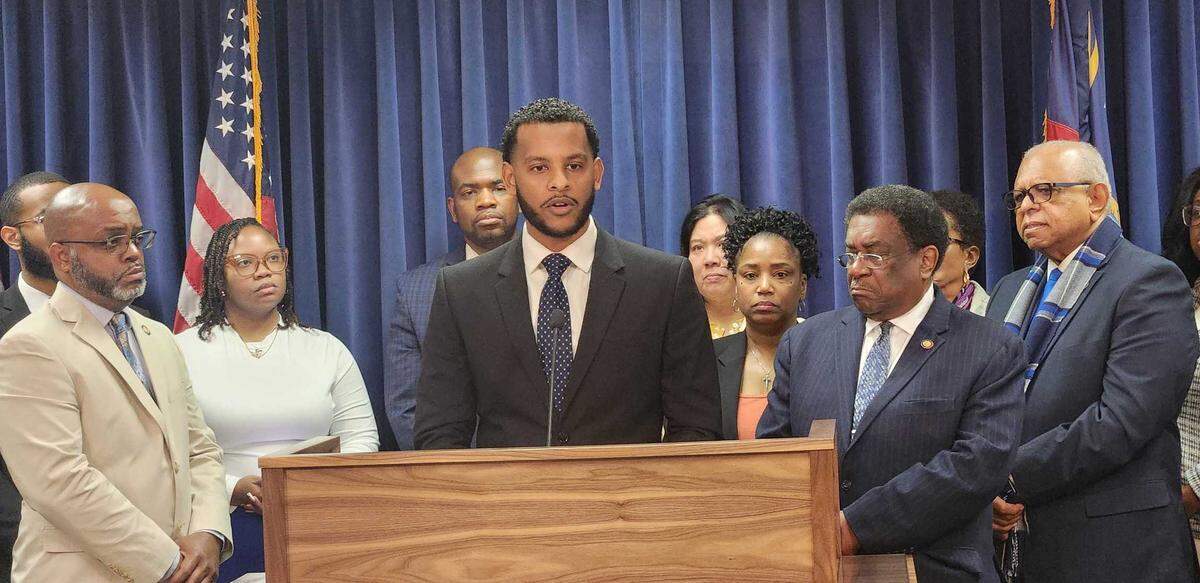
Mecklenburg County Democratic Sen. Caleb Theodros also talked about DEI’s economic impact.
“Diversity, equity, inclusion aren’t some hookup for Black folks,” he said.
“This is something that corporations inherently did to make themselves better. These aren’t new initiatives. It may be a new title, but it’s not new. In the 1980s, a majority of law firms only hired from Harvard Law, but at a certain point, they realized that it’s a dumb idea. There are other attorneys at other law schools who are very capable, so to include them in the talent pool is something that would help the law firm, not from some moral place. This is something to help make the corporations better,” Theodros said.
A separate DEI bill focused on K-12 was backed by Berger and has already passed the Republican-controlled Senate.
“We cannot teach our nation’s history without acknowledging our past,” Berger said in a statement when he announced the K-12 DEI bill on March 3. “But we can teach history without forcing our educators and students to embrace and adopt ideologies inconsistent with equality.”
The language in the bill is reminiscent of a bill vetoed by Cooper in 2021 that was described by Republicans as an anti-Critical Race Theory bill.
Berger told reporters that the 2024 election shows “we have heard loud and clear from the voters that the voters have serious concerns about how we’ve gotten off the rails on some of these woke agenda items, and so I think it’s appropriate for the legislature to look into where we are with those particular issues.”
Cooperation with immigration enforcement
Republican lawmakers enacted a longstanding priority on immigration enforcement last year that had been blocked by Cooper twice before.
That bill required sheriffs to honor detainer requests from U.S. Immigration and Customs Enforcement to temporarily hold people under arrest who were believed to be in the country illegally, to give ICE time to take custody of them.
Now, as Trump aims to deliver on his campaign promise to launch the “largest domestic deportation operation in American history,” GOP lawmakers are advancing new legislation they say is needed to help North Carolina fully cooperate with the administration’s immigration enforcement efforts.

The entire Senate Republican Caucus signed on in support of a bill sponsored by Berger that would require four state law enforcement agencies to participate in ICE’s 287(g) program, which allows federal immigration agents to delegate their enforcement functions to state and local law enforcement officers. The program requires training and supervision by ICE.
The bill, approved by the Senate on March 4, would also require the Office of State Budget and Management to determine if any public benefits programs are being used by immigrants lacking legal status.
Berger’s office told The N&O that the General Assembly needed to step in to require state law enforcement agency cooperation with ICE because Stein had yet to take a “clear stance” on ICE cooperation.
Asked about the bill on the day the Senate passed it, Stein didn’t say if he supported or opposed it but said he wants the public to know that “to the extent there are people committing violent crimes who are not here lawfully, they will be held accountable to the full extent of the law and deported.”
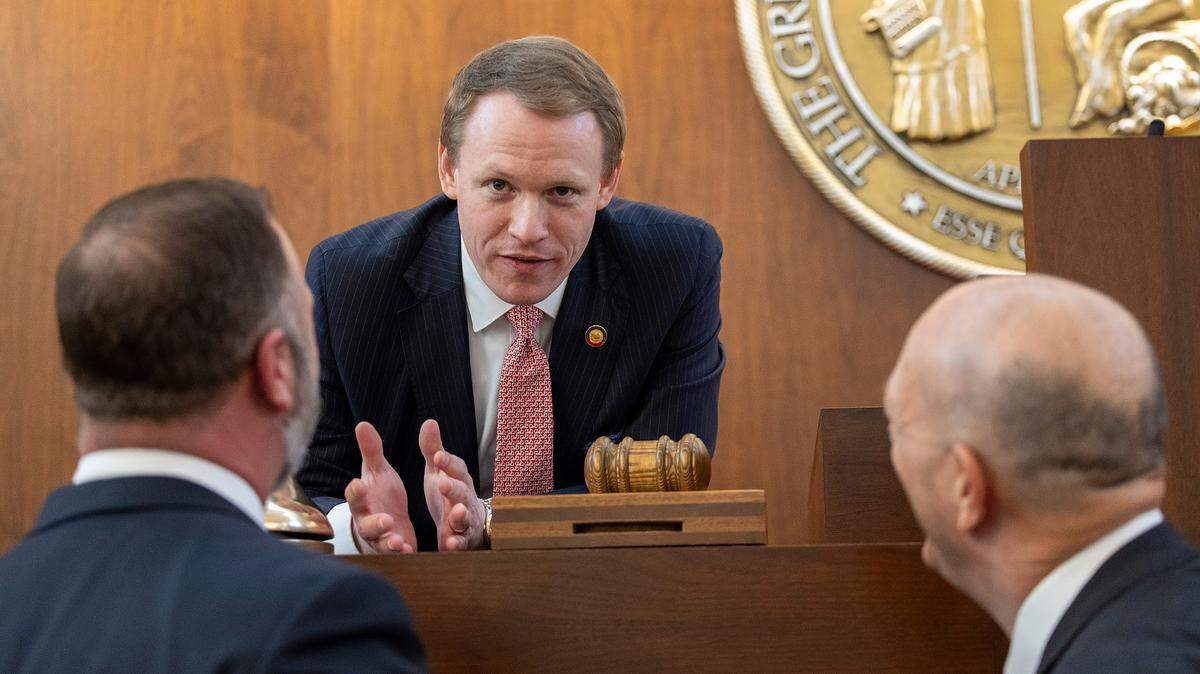
Hall, the chief proponent of the ICE cooperation bill concerning sheriffs that was enacted last year over Cooper’s veto, has said lawmakers may need to revisit that law to strengthen it.
Hall pointed to an ongoing dispute between ICE and Mecklenburg County Sheriff Garry McFadden over whether McFadden needs to inform the agency before releasing an individual who has been held for up to 48 hours on a detainer. McFadden has said the law doesn’t require him to inform ICE before release.
Hall told reporters last month that there are a few additional counties where ICE has faced this issue, and said he views the refusal to inform the agency before release “as an effort to get around trying to help the federal authorities enforce immigration law.”
He said that the House would have its own version of Berger’s immigration bill, but “still the same general thrust of making sure that we’re helping the federal government in their enforcement of immigration laws.”
Attorney General and lawsuits over Trump
Longstanding disputes between Republican lawmakers and North Carolina’s attorney general over the powers and priorities of the state’s top law enforcement official promise to be another major issue this session.
GOP lawmakers acted quickly after Democratic Attorney General Jeff Jackson was elected in November to limit his powers, enacting legislation that prohibited him from making arguments in court that would result in the invalidation of any state laws, or taking a position on the validity of a state law that was different from the position of Republican legislative leaders.
Now Republicans have shifted their attention to Jackson’s challenges of executive actions taken by Trump that he believes are illegal or unconstitutional, and will hurt North Carolina.
A bill approved in the Senate on March 11 builds on the restrictions Republicans put in place last year by blocking Jackson from filing or joining any lawsuits in state or federal courts that seek to invalidate any of Trump’s executive orders.
Berger and other Republicans have said that Jackson should be focused on “working for the people of North Carolina” instead of joining other Democrats across the country in trying to block Trump’s policies in court.
Democrats have said in response that Jackson was elected in November partly to challenge policies that could negatively impact the state. They’ve also pointed out that while Trump has signed more than 70 executive orders since taking office, Jackson has only joined lawsuits challenging four administration policies.
The lawsuits North Carolina has joined target the Trump administration’s actions to end birthright citizenship, pause federal grants and other funding while a review is conducted, grant DOGE access to federal payment systems, and cut funding from the National Institutes of Health for indirect medical research payments.
Jackson’s office defended the legal action he has taken so far, saying his duty is “to be a nonpartisan shield for the people of North Carolina,” and pointing out that in each of the four cases Jackson has joined, judges have sided with the states suing Trump and agreed that his administration’s actions likely violate federal law or are unconstitutional.
In a statement, a spokesman for Jackson added that “any legislation that undermines the independence of the Attorney General’s Office is bad for our state and its people.”
Jackson previously acknowledged that while he’s been meeting with lawmakers on both sides of the aisle and believes there is “common ground” to address issues like the fentanyl epidemic and consumer fraud and scams, the GOP’s moves to strip power from his office underscore their “complicated relationship” with him.
Helene recovery
Passing more Helene recovery bills is a given.
“I don’t think it’s a question, we’ll have to fund more,” Berger told reporters. He said the question is going to be how much to spend, where and when.
Democratic Sen. Julie Mayfield, of Asheville, was optimistic about lawmakers coming up with a final version of a Helene funding package.
“We need it. We just need it,” Mayfield told reporters.
“You know, federal money is not flowing as much as we want. State money is not coming as fast as anybody would want,” she said.
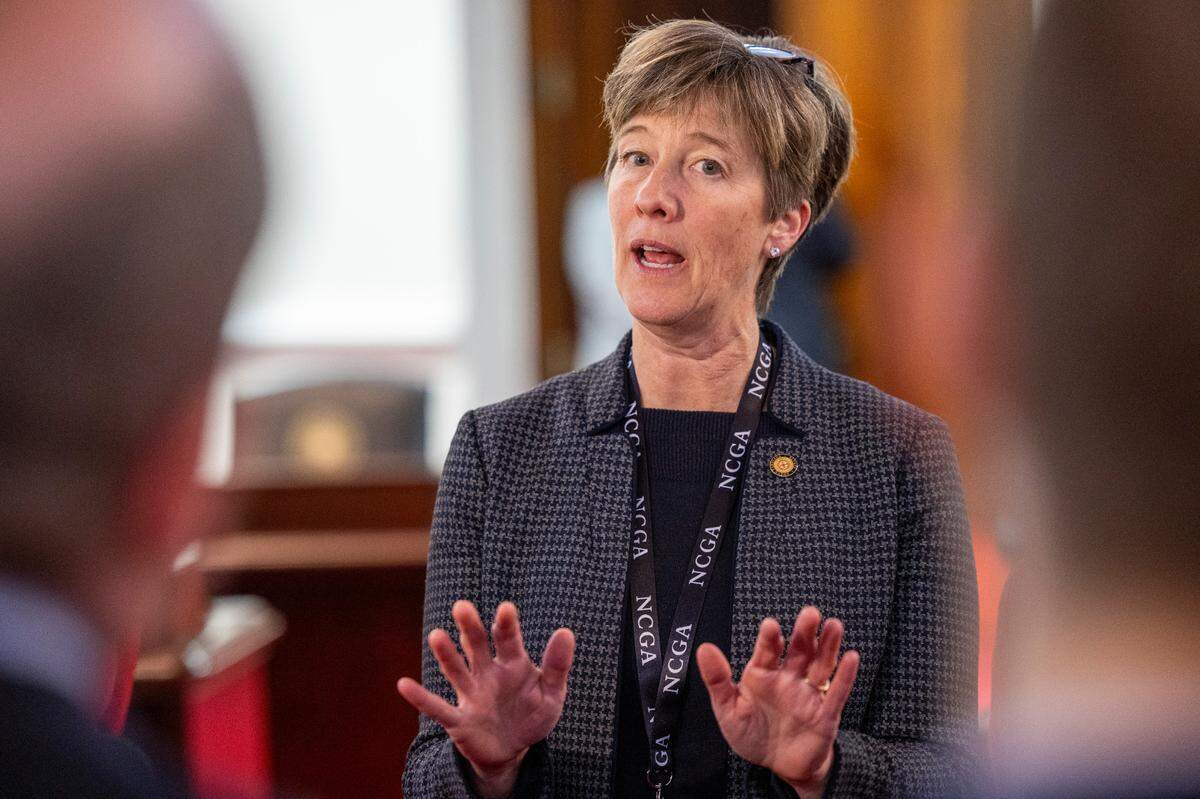
Chris Cooper, a political science professor at Western Carolina University, said while Democrats and Republicans may not present a unified front on Helene, “directionally, they’re in the same place” and want more funds from the federal government.
As they are in a near-superminority, Democrats’ power lies in negotiating across the aisle, or using public sentiment. In the House, even a few absent Democrats change the math Republicans need to overturn a veto. House Democratic Leader Robert Reives and Senate Democratic Leader Sydney Batch will need to ensure their entire caucuses are in solidarity.
Bipartisan support for curbing student cellphone use, raising unemployment benefits
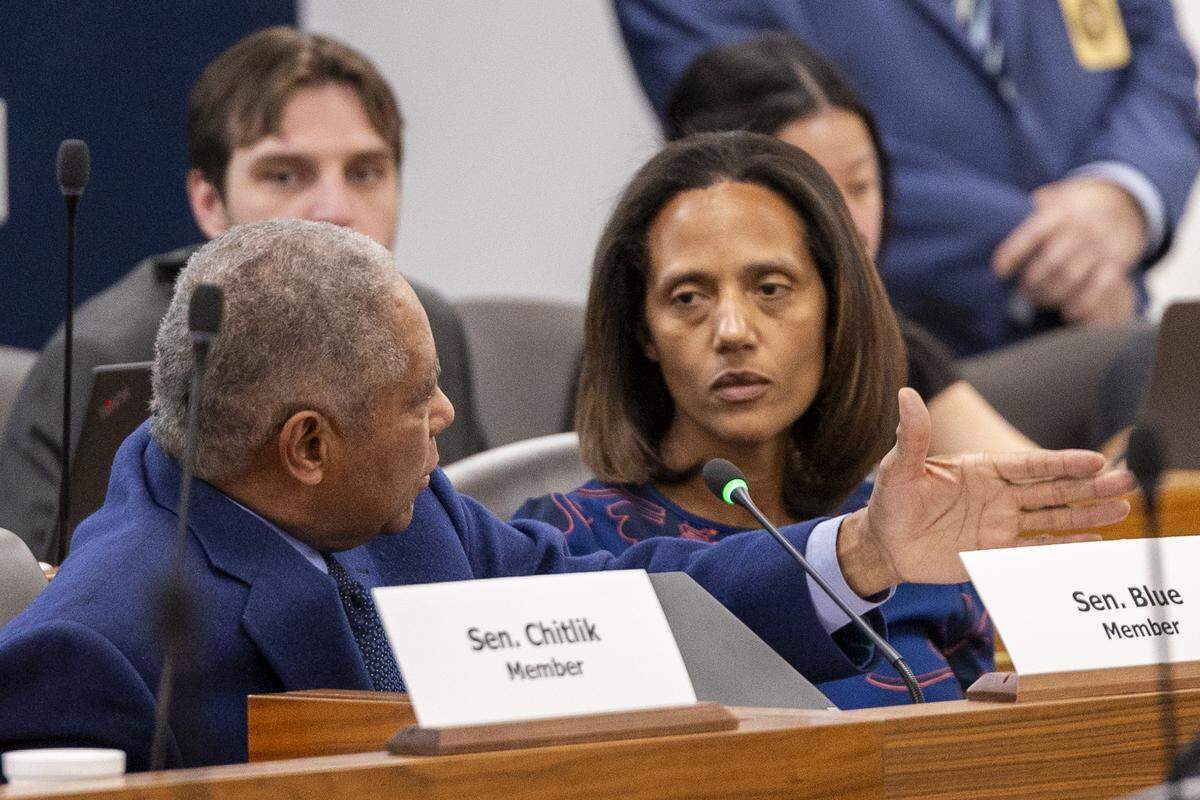
There has already been bipartisan support to curb student use of cellphones in schools as well as increasing the amount of weekly unemployment benefits. Some details are yet to be worked out, but there is support in both chambers, and on both sides of the aisle.
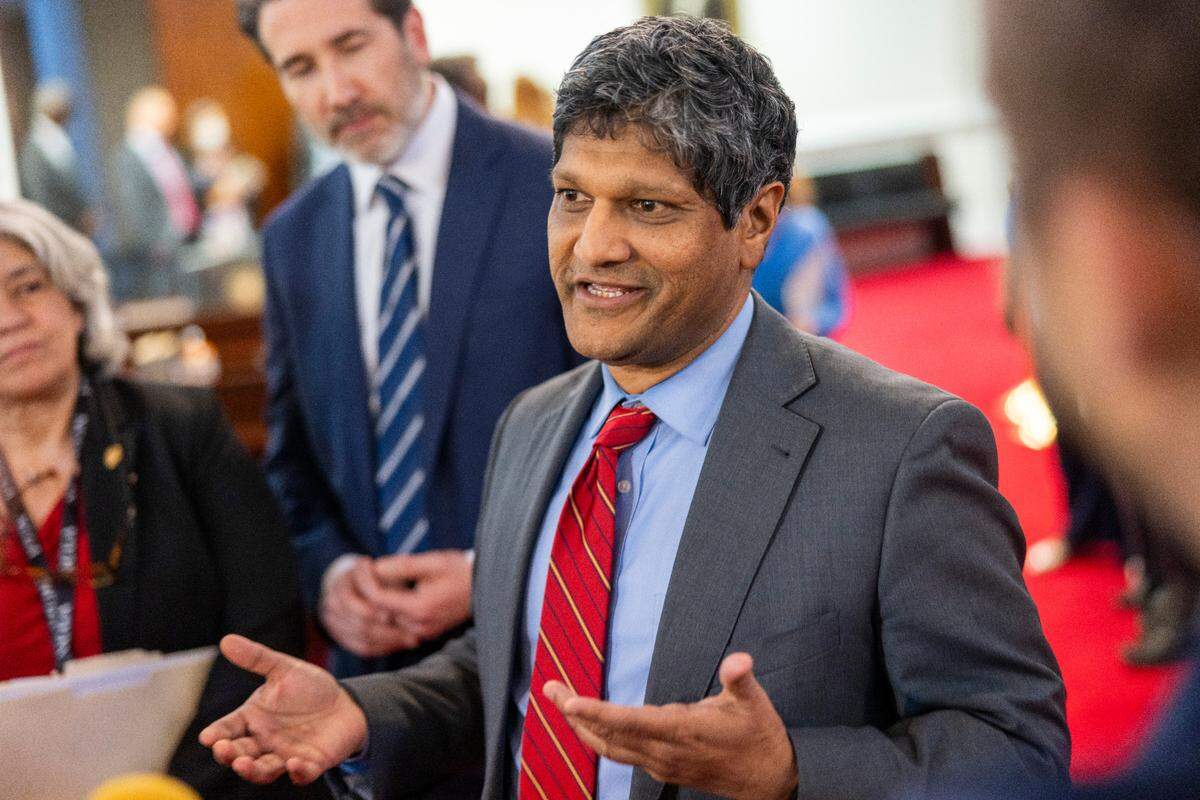
“It’s always nice to start off with with a bill with bipartisan support, and I think we remain optimistic as we go into the year, but most of what we deal in the General Assembly is not unpredictable,” Democratic Sen. Jay Chaudhuri said.
“So I suspect that we will have disagreements on issues related to taxes and how we spend our money, and what we’re doing to invest in public education,” Chaudhuri told reporters.
Stein also said in his State of the State that he supports banning cellphones from classrooms.
What’s to come
Stein’s State of the State on March 12 focused on Helene, wanting bipartisanship with Republicans and policy proposals without specifics yet, like cutting taxes on middle class families and wanting to launch a center in his budget office around efficiency. Stein will make his budget proposal to lawmakers in the coming days. He also called in his speech for raises for law enforcement officers and higher starting teacher pay.
North Carolina doesn’t have a rule about when the General Assembly adjourns its long session. While the state budget should be passed by the start of the next fiscal year on July 1, it usually isn’t. The bulk of the legislative work is likely to be finished by the end of June, but in the past several years, budget battles between the chambers and with the governor have extended well into the summer and fall.
Cooper, the political science professor, also said that Stein “seems to have at this very early stage a little better relationship with the General Assembly than Cooper did.”
“It’s certainly not a fresh start,” he said, “but the grooves aren’t, perhaps, as deep as they were in previous sessions.”
This story was originally published March 4, 2025 at 2:08 PM with the headline "NC Republicans move fast on DOGE, DEI, Helene, immigration. How 2025 session is playing out.."
.jpg)