
Trump wants to make sweeping changes to immigration laws. What did past presidents do?
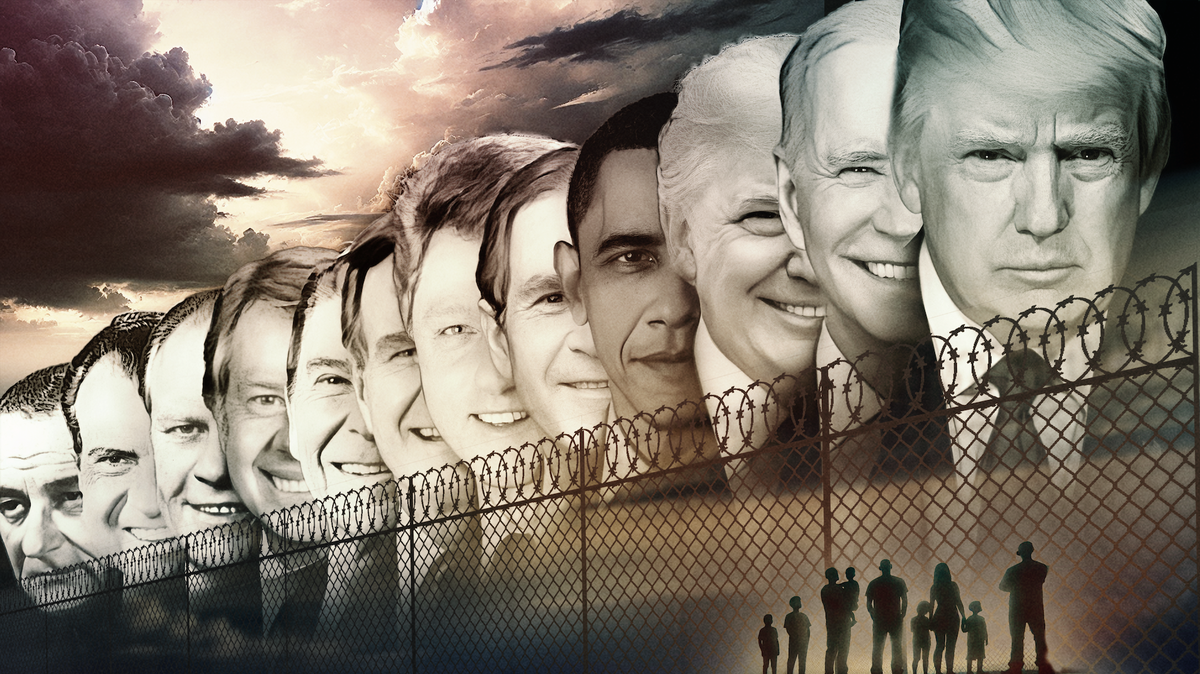
As early as 1874, a Republican newspaper in northern Virginia called the United States “a nation of immigrants.”
The phrase appeared 90 years after the country’s first immigration law, and one year before lawmakers began enacting policies to restrict immigration.
For almost as long as the United States has existed, its leaders have grappled with who could be a citizen, and created policies and laws that passed judgments on how immigration might affect the country’s nationals.
Now, as President-elect Donald Trump is set to take office for a second time, he vows to pass sweeping immigration changes, including carrying out the largest mass deportation in the country’s history.
Which raises the question: What have past presidents done when it comes to immigration in the United States?
To answer, we can go all the way back to George Washington’s first term.
In 1790, lawmakers created the Naturalization Act that allowed people to become citizens if they lived in the United States for two years and were free, white, in good moral standing and, for the most part, from western Europe.
From 1795 to 1802, lawmakers wrestled with how long a person should live in the country before becoming a citizen. At its most extreme, they thought 14 years. In 1802, they settled for five.
During that time, they also chose who could be sent away. In 1798, they created the country’s first deportation law that allowed any male over 14 from an enemy country during wartime to be deported.
But it wasn’t until 1875 that lawmakers began restricting immigration and targeting certain groups of people who were entering the country. Then, President Ulysses S. Grant signed a law that made it difficult for Chinese women and contract laborers to immigrate to the U.S. Supporters were motivated by racism and concerns about potential slavery and prostitution.
The law ended up affecting women from other east Asian countries, and in 1917, the Immigration Act barred immigrants from across Asia. It also created a literacy test and banned members of the LGBTQ community from immigrating to the United States.
In 1920, the United States began limiting the number of immigrants coming from each country or region.
But the Immigration and Nationality Act of 1965, signed by Democratic President Lyndon Johnson, made drastic changes to immigration laws, looking toward bringing in skilled laborers and reuniting families, instead of meeting quotas created from the 1920 law.
Limiting Mexican migration
Brad Jones, a political science professor focused on immigration at University of California, Davis, said this “fundamentally changed the landscape of immigration policy in the United States.”
“That’s almost 60 years old, but it did one very fundamental thing, and that thing is this: Prior to 1965 there were effectively no limits on migrants coming from the western hemisphere nations,” Jones said. “You can read that as Mexico and Latin America.”
Jones said migrant laborers would come to the United States for seasonal work and then go back, in a pattern of circular migration.
Once the Immigration and Nationality Act of 1965 passed, immigrants from the western hemisphere faced a quota for the first time, while quotas for immigrants from the eastern hemisphere were increased to allow more people from those countries to enter.
“You go from an era where there’s effectively no limits on Mexican migration, to an era where there are extraordinarily high limits on Mexican migration, but American immigration policy never deals with the factors that lead migrants,” Jones said.
He includes economic opportunities and family ties as two of the factors bringing immigrants to the U.S.
“If those factors never go away, and you put limits on the number of Mexicans who can legally come to the United States, guess what you’ve done?” Jones said. “You created a problem called illegal immigration.”

Jones is third-generation Mexican-American, and his grandfather was an activist in the Kansas City Mexican community, he said.
Jones became interested in immigration when he taught at the University of Arizona. At the same time, a policy implemented under President Bill Clinton had slowed down migration at the country’s two typical points of entry in San Diego, California, and El Paso, Texas. Instead, migrants began funneling into the Arizona desert, and many would die there.
Jones said his political science career morphed into studying immigration, deportation and migrant deaths.
“This problem of illegal immigration, in large part, is fundamentally connected to policy choices that we made literally 60 years ago,” Jones said.
And, he added, that immigration policy has only become more restrictive.
The Carter era
As Democrat Jimmy Carter became president, Jones said the number of low-skilled workers permitted into the United States dropped, and that added to the number of immigrants crossing the border illegally.
Eskinder Negash said Carter also signed into law the 1980 Refugee Act, welcoming around 3.5 million refugees to the United States. Negash is the president and CEO of the U.S. Committee for Refugees and Immigrants, which advocates for refugees and immigrants nationally and globally and provides legal, social and health services to both groups in the U.S., El Salvador, Honduras, Kenya and Mexico.
“That doesn’t include asylees,” Negash said. “It also doesn’t include Cubans, because in the 1980s, over 100,000 Cubans came to the U.S. via Florida.”

Negash defines refugees as people with a well-founded fear of persecution, either because of their religion, political affiliation or ethnicity.
The Reagan era and amnesty
Republican President Ronald Reagan welcomed immigrants to the United States.
Reagan signed into law the Immigration Reform and Control Act of 1986. This gave immigrants in the country without legal authorization a pathway toward legal citizenship. The bill also made it illegal to knowingly hire someone who crossed the border without permission.
Under this new law, more than 3 million people who had been in the United States prior to 1982 were granted legal citizenship after paying a fine and back taxes and proving they had good moral character and that they spoke English.
From 1980 to 1990 more than 5.7 million people immigrated to the United States, Jones said.
But it was also during this period that new laws allowed migrants to be held at ports of entry for very minimal reasons.
George H.W. Bush
During Republican President George H.W. Bush’s presidency, Congress reformed the Immigration and Nationality Act of 1965. Under the law, family-based immigration visas were granted and five employment-based visas were created to bring in skilled workers, specifically in science, engineering and education.
The law also created a lottery program to allow immigrants from low-admittance countries.
Temporary protected status visas were created.
Bush also lifted the English-testing requirements.
Legal immigration to the United States rose significantly under Bush, and Negash said Bush welcomed another 207,000 refugees.
Bush also made it possible for people who served in the armed forces for more than 12 years to become permanent residents, by signing into law the Armed Forces Immigration Adjustment Act of 1991.

The Clinton era
During Clinton’s administration, the Democrat signed the Illegal Immigration Reform and Immigrant Responsibility Act of 1996, passed by a Republican Congress. This law increased the number of crimes, including both misdemeanors and felonies, that could lead to an immigrant’s deportation, regardless of legal status.
It also prevented unauthorized migrants caught within 100 miles of the border to be deported without appearing before a judge.
But most of note, the law included 287(g), a policy that wouldn’t often be utilized until after 9/11, but would be important under the Trump administration.

“The 287(g) agreement, which was codified into law in the 1990s, basically made it possible for local law-enforcement, like local sheriffs’ offices, to partner with immigration officials — at that time it was Immigration and Naturalization Service — to effectively deputize local sheriffs to become immigration officers,” Jones said.
A new Bush era
As Republican President George W. Bush took office, he was determined to create immigration reform policies, but Congress wouldn’t act.
Among Bush’s requests were to return every immigrant caught crossing the southwestern border without permission and increasing manpower and technology to monitor the border.
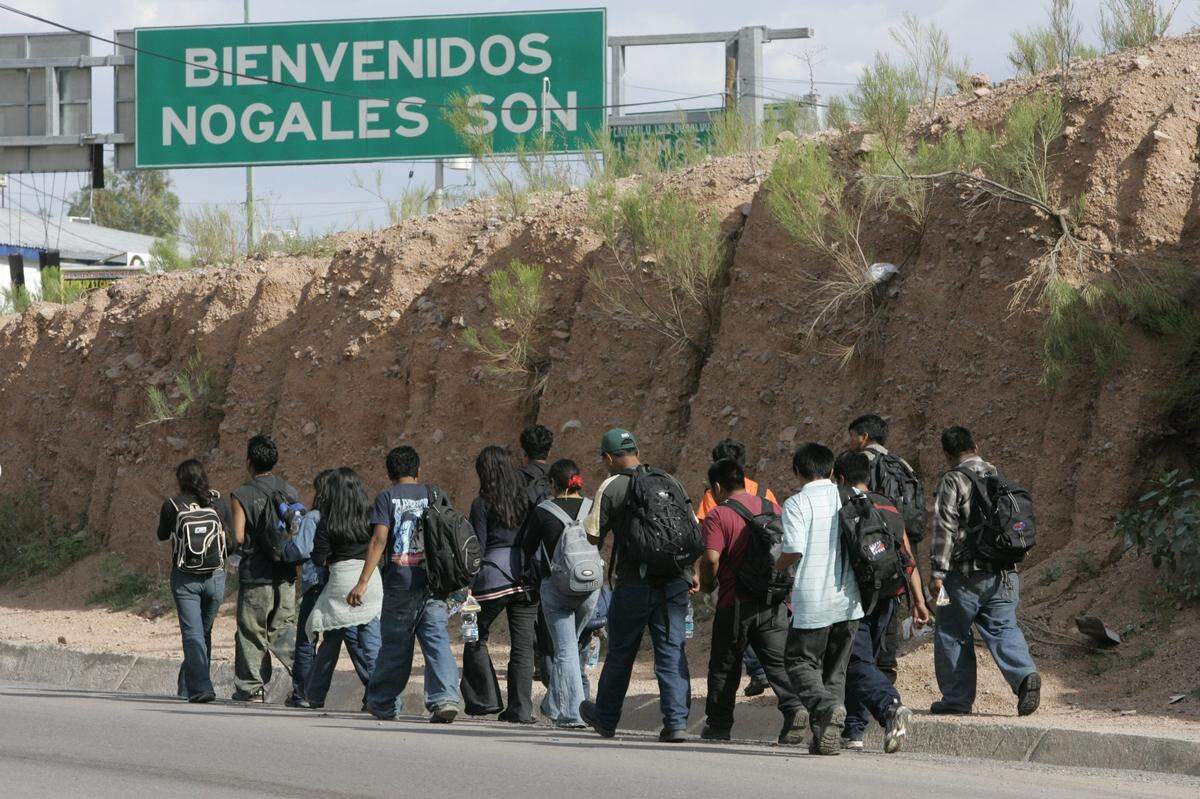
But Bush also disagreed with deporting every immigrant already in the U.S. without permission. He wanted to offer a pathway to citizenship for those who had connections to the United States. He also hoped to create a temporary workers program.
But Congress — with a Republican majority in the House and a Democratic majority in the Senate — wouldn’t budge.
The Obama era
President Barack Obama became known by immigration advocates as the “deporter in chief.”
Jones said Obama used the 287(g) agreement, and with more immigration agents on the ground, it led to far more jurisdictions charging and convicting people for immigration violations. It also led to law enforcement being accused of racial profiling.
A law similar to 287(g) was passed during Obama’s administration called the Secure Communities Act. This allowed local law enforcement to hold someone they suspected of being in the country illegally and check his or her immigration status before turning them over to Immigration and Customs Enforcement.
“This is a policy, then, that makes it even more easy for local law-enforcement to turn over individuals for whatever reason their being detained,” Jones said.
He added people would be arrested for small things like having a broken brake light or failure to produce proper documentation.
Jones said the majority of those who are deported have no criminal background or a level-three violation, which are very minor offenses like driving through a stoplight.
“So if you make it easier to detain and turn over these individuals, then you make it easier to deport individuals like this, and that happened at a really high level during the first Obama administration,” Jones said.
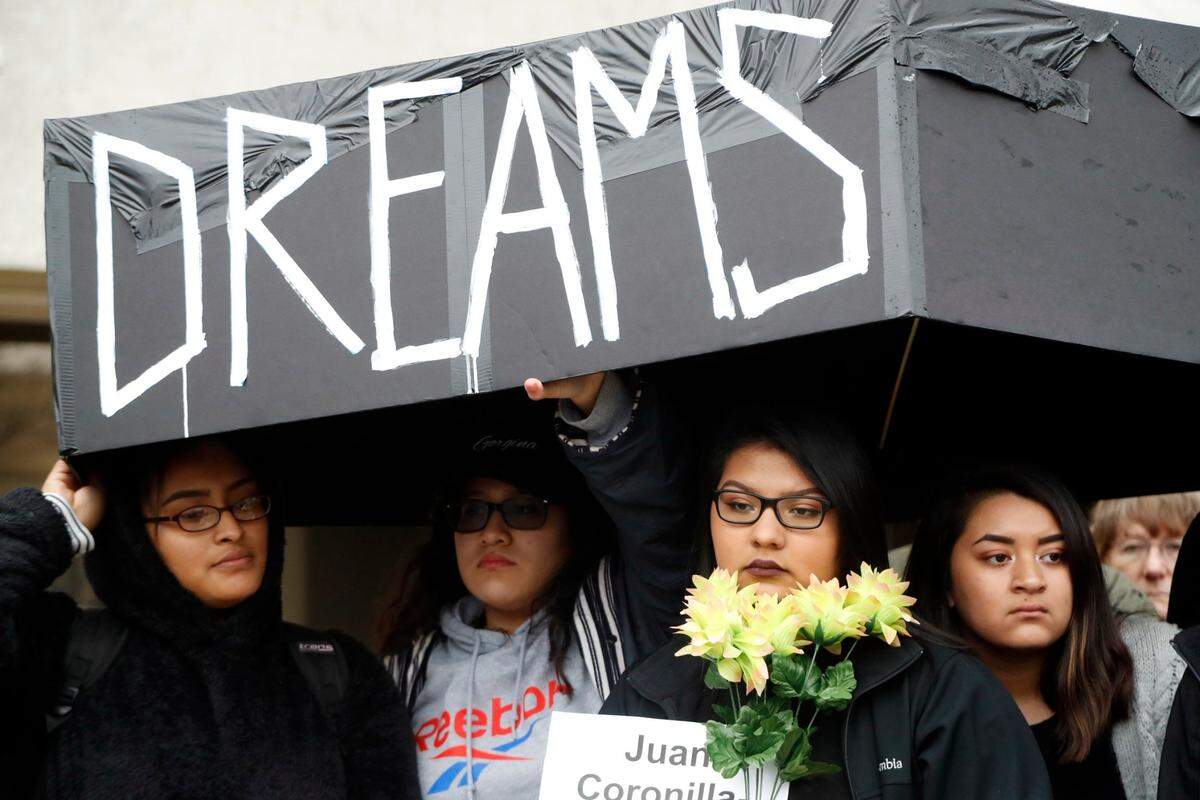
During Obama’s first term, he also passed an executive order that created Deferred Action for Childhood Arrivals, which gave immigrants who arrived without legal authorization in the United States before they were 16 years old and met several requirements, the ability to stay in the country under a work permit for a renewable two-year period.
Jones said he doesn’t always agree with Obama’s nickname, because Obama also extensively used an expedited removal process in which people caught at the border are immediately returned, but it counts against Obama’s deportation numbers, causing a sharp increase.
Jones said Obama realized that these policies weren’t very popular so he reduced the use of 287(g) and the Secure Communities Act during his second term.
Donald Trump’s first term
Those laws remained available for future use, however.
Jones said within his first week Trump increased the use of 287(g) agreements and through an executive order made it easier for border patrol to detain people they suspect — “for whatever reason,” Jones said — of being in the country illegally.
“What we now know — what Trump fails to do in his first administration — to be blunt about it, he fails to get his act together,” Jones said. “He didn’t have the people around him that had the ‘competence’ to actually carry out the kinds of nasty deportation policies that he may have advocated for, maybe some of his advisers would have advocated for, and he didn’t have agency heads that necessarily would comply with everything he wanted to do.”
Jones added that the Trump administration “failed to get out of their own way.”
Despite that, Jones says, Trump’s administration did make sweeping policy changes that included separating children from their parents and implementing the Migrant Protection Protocols, also known as the Remain in Mexico program, which required a person seeking asylum to do just that, until their court date.
“What the Trump administration did is disrupt regular order at the border and so this largely affected asylum seekers,” Jones said.
Negash said one of the big fears going into the next Trump administration is whether people will have a right to apply for asylum.
“An asylum seeker is someone who is seeking international protection from dangers in his or her home country,” Negash said.
But he adds that the person must apply for asylum at the border.
“You can’t apply overseas for asylum,” Negash said.

He adds that under U.S. immigration law, the United States has a legal obligation to provide protection to anyone who qualifies.
There is a fear that in the upcoming administration, if Trump closes the southern border, people won’t be able to seek asylum, Negash said.
During Trump’s first administration, he also implemented Title 42, a public health policy intended to prevent the spread of illness. In 2020, COVID-19 became a global pandemic and Trump implemented Title 42 to stop people from entering the United States from various countries.
The Biden administration
Jones said when Biden came into office he tried to put an end to Title 42, but was unsuccessful until May 2023.
“So throughout 2023, into early 2024, we see a large number of asylum seekers from all over the world coming to the U.S. border,” Jones said. “Folks like Govs. Greg Abbott, Ron DeSantis, and certainly, Donald Trump made explicit use of these images of asylum seekers attempting to enter into Texas across the Rio Grande.”
Jones said Biden responded to that, in June 2024, by implementing a policy similar to the Remain in Mexico program. His policy required asylum seekers to remain across the border until the number of daily apprehensions decreased below a certain threshold, Jones said.
Jones said apprehensions at the border are at very low levels right now and said that’s due to Biden’s policies.
“I would characterize Biden’s policy on immigration as largely mimicking, in broad terms, Trump’s policies,” Jones said. “The one thing that Biden doesn’t do, thankfully, is implement child separation policies, but aside from that, what’s the difference between what Biden does and what Trump did?”
The return of Trump
The answer to that could be coming shortly.
On Jan. 20, Trump will take his oath of office.
In his second term, Trump is threatening mass deportations, ending birthright citizenship, preventing children brought to the country without legal authorization from getting an education and separating children from their parents.
Jones predicts Trump can be more successful in getting his policies accomplished in his second term.
“He had a solid legislative base of support that will be in some corners, unwavering, so he’s got that going for him,” Jones said.
Jones also lists off the support Trump has from the House and Senate, with Republicans maintaining the majority in both, and advisers in place with clear ideas on what they plan to do.
“He actually has the infrastructure around him, and people who know how to tinker with this infrastructure to make these kind of policies work now,” he said.
But Jones also said when trying to implement this sort of mass deportation, people will actually see and feel the effects of that, and that could crack the support that Trump enjoys.
This story was originally published January 16, 2025 at 5:00 AM with the headline "Trump wants to make sweeping changes to immigration laws. What did past presidents do?."
