NC’s economy could ‘lose a lot’ if Trump starts promised mass deportations, experts say
Amparo has lived in the United States for over 35 years.
She has family, a 28-year-old daughter, a dog, a job and friends in North Carolina. But in President-elect Donald Trump’s second term, she worries about being sent back to the country she left when she was 18.
Amparo, who The Charlotte Observer is referring to only by her middle name because of fears about being deported, paid for a work visa when she first moved to the U.S. from Colombia. She couldn’t afford to keep it after the pandemic, she said.
As she tried to keep her legal status, Amparo fell into credit card debt before losing her status. She’s also lost thousands of dollars to immigration lawyers who promised they could help her get immigration documents before telling her they couldn’t help her, Amparo said.
“I came here young, I studied here as a youngster, I graduated, and I’ve been on various career paths since,” Amparo, 56, said using a translator. “Now there’s millions of people who don’t know what will happen with us because there’s this huge change coming with the presidency.”

Millions of people like Amparo are at risk of detainment and deportation when Trump takes office Jan. 20. The incoming president has promised to carry out mass deportations of people living in the country illegally, expand the wall at the U.S.-Mexico border, increase workplace raids, end birthright citizenship and suggested deporting legal immigrants who have undocumented family members, among other anti-immigration measures.
Republicans cite public safety and the economy as explanations for these measures, including U.S. Rep. Mark Harris, who said in a statement to The Charlotte Observer he fully supports Trump and his newly appointed border czar Tom Homan.
“No state has been immune from the border havoc Biden created – including North Carolina. From deadly gangs to fentanyl poisonings and increasing crime, Americans across our nation have felt the devastating impacts of Biden’s open borders agenda,” said Harris, the 8th Congressional District representative. “With an estimated net cost of illegal immigration topping $150 billion, American citizens should not have to shoulder the impacts of lawless behavior any longer.”
The $150 billion figure comes from the Federation for American Immigration Reform, a group that supports reducing immigration to the US. The group presented at a House Budget Committee hearing in May.
For U.S. Rep. Pat Harrigan, support for Trump’s plans stem from public safety concerns.
“Let’s be clear — illegal immigration is a crime, and enforcing our laws is not just necessary, it’s non-negotiable. Deporting those who break our laws restores order, protects American jobs, and ensures that our resources go to American families—not to those who cut in line,” Harrigan said in a statement to the Observer. “This isn’t about politics or compassion for lawbreakers, it’s about standing up for the rule of law and putting Americans first.”
The Observer sent questions to Harrigan and Harris specifically about the economic impact of undocumented and legal immigrants, but both emphasized their support for Trump’s policies due to public safety concerns.
The looming fight over immigration policy pits concerns about crime and safety with worries about the economy, plus the emotional toll of deportation and stricter immigration laws. While Trump pushes the idea that the Biden administration’s immigration policies have caused a dramatic uptick in violent crime, economists and immigration experts say mass deportation and lowered legal immigration methods could cause serious harm to the economy, not to mention the personal impacts across the country.

‘It’s the workforce’
Immigrants make up 11% of North Carolinas’ labor force and account for 14% of North Carolina entrepreneurs, 17% of science, technology, engineering and math workers and nearly 8% of nurses, according to the American Immigration Council.
Immigration, including undocumented immigration, is good for the economy, said economist Tara Watson, the director of the Center for Economic Security and Opportunity at the Brookings Institute. They bolster the labor force, keep the labor force younger and contribute to programs such as Social Security and Medicare even when they don’t benefit from them, Watson said.
If Trump were to follow through on his promises to dramatically ramp up deportation efforts, it would decrease the labor force and harm important industries, Watson said. Even without mass deportations, stricter regulations could have negative impacts.
“We might go from a situation that we’ve always had of net-positive migration to one where we could even have net-negative migration. So the labor force would therefore shrink, because we would be losing immigrants as well, and we already have a more or less flat U.S.-born labor force,” Watson said. “That would be really bad for the macro economy”
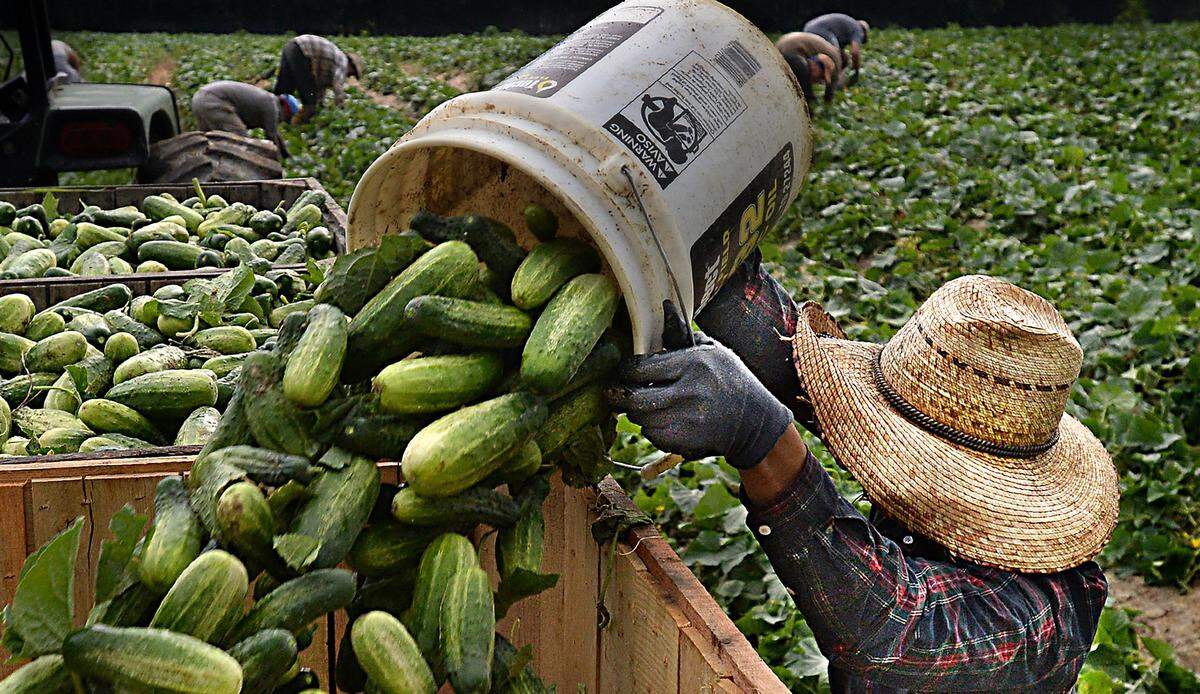
Immigrants are particularly important to North Carolina’s construction and agriculture industries, said Becca O’Neill, co-founder of Carolina Migrant Network, a group that provides free legal services to individuals detained by U.S. Immigration and Customs Enforcement.
“I’m from Charlotte … you can see the construction everywhere. The city is heavily reliant on that sector, and a huge portion of that labor force are undocumented immigrants,” O’Neill said. “In other parts of the state, agriculture is an industry that relies heavily on immigrant labor. So it’s not just lost revenue as far as taxes goes, it’s the workforce.”
In addition to labor, immigrants have massive spending power, O’Neill said, citing the American Immigration Council study that showed immigrants spent more than $28 billion and paid more than $10 billion in taxes in the state in 2022.
“States like North Carolina that rely on immigrants both to pay taxes and to contribute to important economies… stand to lose a lot economically,” O’Neill said.
In July 2024, there were only 66 workers for every 100 jobs available in the state, according to previous reporting by the Observer. The idea that immigrants take jobs away from American citizens is a myth, O’Neill said.
Amparo said she doesn’t receive any assistance from the government and is a hard worker.
“We’re honest people who come here to work,” she said. “We come here. We don’t beg. We work. We fight for it all.”
Amparo said Trump should consider undocumented immigrants who work to make the country a better place by paying taxes, starting businesses and boosting the economy.
“He should give us a hand,” she said.
‘Exploited in just a brutal way’
In contributing to North Carolina’s workforce, including in agricultural and construction positions, undocumented immigrants often face exploitation, unfair conditions and difficulty finding stable work.
Many immigrants are forced to work undesirable jobs for little pay, said Rusty Price, CEO of Camino, a group that serves Charlotte’s Latino community, including undocumented people.
“Every week we’ll deal with someone that’s worked for 30 days and then the person who they work for said, ‘well, we’re not gonna pay you because you’re undocumented,’” he said. “They’re getting exploited in just a brutal way like that.”
The exploitation includes underpaying, overworking, and taking advantage of a lack of knowledge about the U.S. legal system, Price said.
“They came here at a very high price and now they work every day with hope that there will be some way that they can become legal residents, if not citizens, and in the meantime, they’re going to work as hard as they can and try to provide a good future for their kids,” he said. “It’s incredible to see their resilience. I think I’d lay down in emotional fetal position if I had to deal with half of what these people deal with.”
Amparo has struggled to find work that pays enough. Currently, she makes money driving and working at a salon.
“You have to have two or three jobs just to survive,” she said. “There’s many jobs you can do but when you don’t have official documents they take advantage of you, and you don’t make enough, and I’m used to it.”

As of 2022, undocumented immigrants made up slightly less than a quarter of the foreign-born population in the United States, according to Pew Research Center. Because of the diverse backgrounds and status of immigrants, it’s important not to overgeneralize, said Ilana Dubester, the executive director of The Hispanic Liaison in Siler City.
“In North Carolina, you have a huge variety of people working in all sorts of jobs, not just low-wage jobs” she said. “You can’t really generalize for all of us when you know we’re talking about a segment of our community that is stuck in an immigration limbo with no path to citizenship.”
About 36% of new businesses launched in 2023 were created by Latinos, according to Forbes. This entrepreneurial spirit is present in the Latino population in Chatham County, Dubester said.
Concern about legal inflows, visas
Advocates and immigrants also worry about what Trump’s term could mean for legal immigration and those in the country legally, said Autumn Weil, director of Charlotte’s International House.
One such program is Temporary Protected Status, which allows people to legally work in the US if they have fled certain dangerous situations. The Biden administration earlier this month extended TPS for 600,000 Venezuelans to Oct. 2, 2026, but Weil said she fears the Trump administration could halt future renewal of TPS for immigrants.
“And then what does that do to these families, and what does that mean for their livelihood? Many of them are not going to be able to get on a plane and go home. It’s just not possible. It’s not safe. There’s nothing there for them anymore,” she said. “Some of them… have been in this country for decades.”
Trump said recently he supports H-1B visas, which allow companies to hire specialized workers from other countries. They’re primarily used in tech, including by Trump-ally Elon Musk at Tesla and Space-X. In North Carolina, technology company IBM is one of the largest beneficiaries of the H-1B program in the country, the News & Observer previously reported.
The program has faced criticism by some Republicans and even U.S. Sen. Bernie Sanders who argue it takes jobs away from American workers and allows employers to underpay foreign laborers. Immigration advocates, including O’Neill at the Carolina Migrant Network, generally support H-1B visas as a way to increase paths for legal immigration.

Another popular visa is H-2A, which allows U.S. employers to hire foreign employees for temporary agricultural work. In North Carolina, they’re essential to agriculture. These employees grow cotton, sweet potatoes, tobacco and more, said Mauricio Chenlo, the executive director of Episcopal Farmworker Ministry, a group that serves agricultural workers in rural North Carolina.
“If they go for that kind of thing, the temporary workers, I assume the government should have some sort of alternative plan because these people are not taking the jobs of (American) workers… they are here because they are needed.”
Alisson Herrarte, a 24-year-old employee of Episcopal Farmworker Ministry, moved to North Carolina eight years ago after life-threatening gang violence forced her and her family to flee El Salvador. Herrarte went to high school in the U.S. and is planning on transferring to the University of North Carolina at Pembroke to study science.
.JPG "RAL_121425-IMMIGRATION-TEL-08 (1).JPG")
While Herrarte, her parents and her 15-year-old brother have Temporary Protected Status, she’s worried about her own future and those she works with.
“It gives you insecurity to not know what will happen in the future during his term, because we don’t know how he’s going to handle the immigration situation, and I can say ‘I’m scared,’” Herrarte said. “We really try to survive like everyone else. We just want to get a job, have our lives and live in tranquility.”
Observer multimedia journalist Diamond Vences helped with translating.
This story was originally published January 16, 2025 at 5:00 AM with the headline "NC’s economy could ‘lose a lot’ if Trump starts promised mass deportations, experts say."