
Power shifts: How NC Republicans fast-tracked post-election changes drafted in secret
As evening commuters drove away from downtown Raleigh on Tuesday at the end of the business day, the North Carolina House was in session on Jones Street and planning to vote on a bill — one that wasn’t made public yet, aside from a draft version circulated among some lawmakers and the press.
Republicans wrote the bill in secret.
They released it to the public one hour before beginning debate in the House.
And they put it forward in a form that could not be amended.
Less than 24 hours later, they had moved it through votes in the House and Senate and sent it to Democratic Gov. Roy Cooper.
The proposal included Helene disaster relief as well as a series of power shifts that, among other things, would take control from the governor and attorney general and give it to the legislature and a different statewide elected official.
Election results help explain the timing. The General Assembly has a Republican supermajority, but voters narrowed that to a large but not veto-proof majority in the November election. Voters also chose a Democrat as governor, Josh Stein, and a Democrat as attorney general, Jeff Jackson.
Stein is currently attorney general and Jackson is a member of Congress.
The bill takes the power to appoint the State Board of Elections from the governor and gives it to the state auditor. Republican Dave Boliek is the incoming auditor.
The Board of Elections is now appointed by the governor, who can give his party a 3-2 majority, which Cooper has done.
The Board of Elections’ executive director said that board staff were not consulted about the legislation before Tuesday, The News & Observer previously reported.
As the next attorney general, Jackson would not have the same power that Stein has in arguing cases that differed from what the Republican-controlled General Assembly wanted, The N&O reported.
Democrats call it ‘power grab’
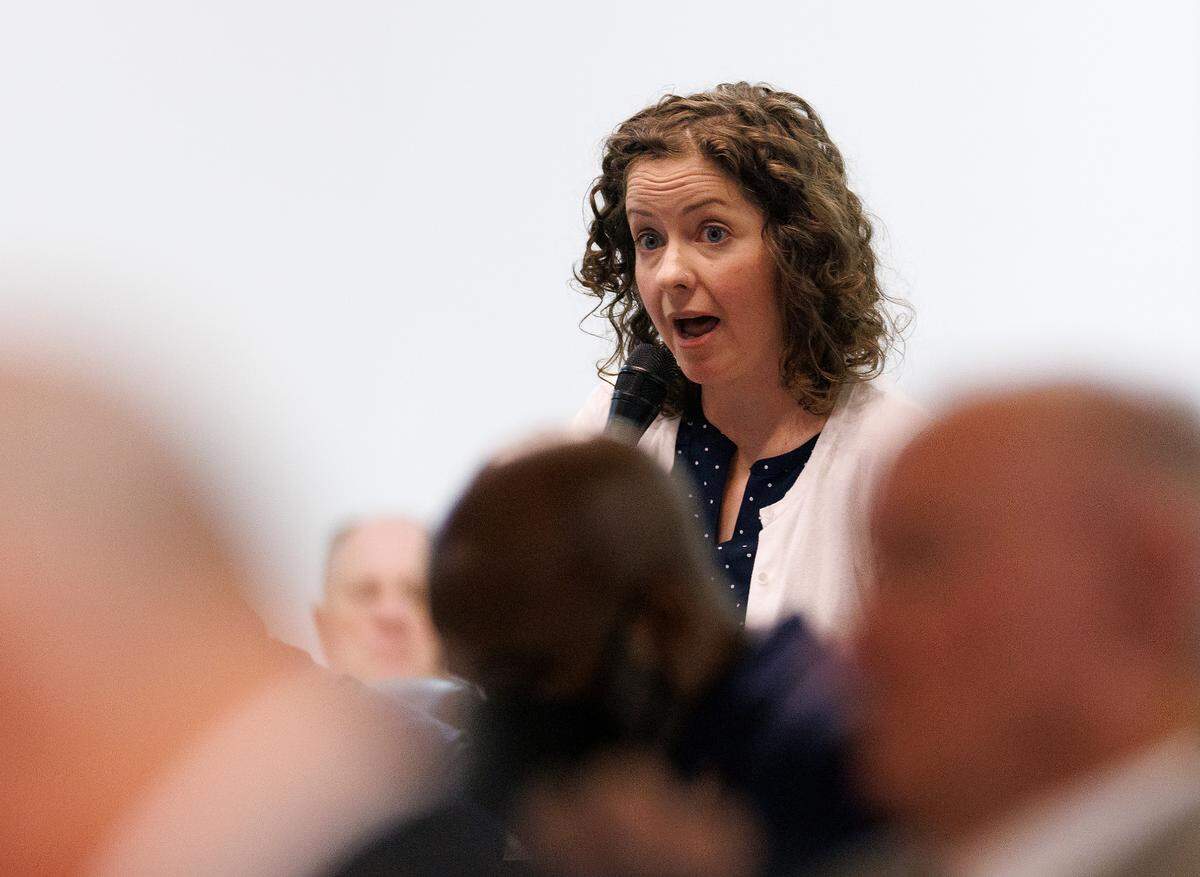
Tuesday was the first legislative session day since Republicans found out they would lose total control of the General Assembly next year.
“This is a transparent power grab pushed through by a supermajority that’s not happy with the recent election results, and you’re calling it a disaster relief bill. This is shameful, and Western North Carolina is not going to stand for it,” said Democratic Rep. Lindsey Prather of Buncombe County, which was hard-hit from Helene.
During the debate, Republicans did not respond to Democrats’ criticism of the process, but House Rules Committee Chair Destin Hall spoke about that process afterward with reporters. He told reporters that Democrats had an hour and a half to debate the bill ahead of the vote that came a little after 8 p.m.
“We didn’t cut off debate, which sometimes we do if it’s a bill that we think warrants it,” Hall said. “But tonight, you know, we knew that they got the bill a little bit later, so we allowed them debate it, and it sounded like they debated just about every page of it.”
Hall said he seriously doubted “that they would have been for it if they’d had a month to look at it. I know they’re the loyal opposition, and they’ve got to be against things like that, but at the end of the day, I don’t know that there were any real shockers in there.”
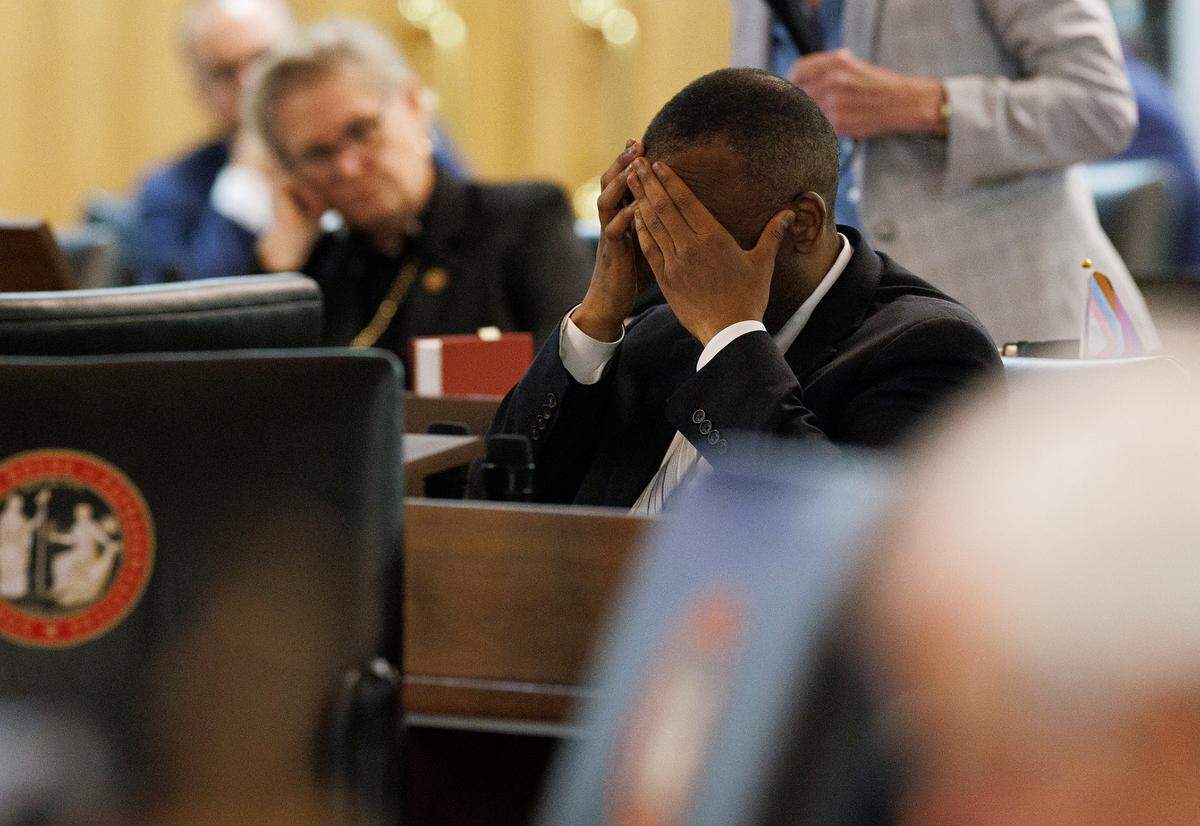
House Democratic Leader Robert Reives said during his time in the House, the bill-making process has changed from one involving committees to one in which small groups of Republicans decide what’s in a bill. He said a Republican friend of his called it “fiefdoms.”
“Wouldn’t it be nice sometimes just to be consulted? ... None of us do well with unfettered power,” Reives said.
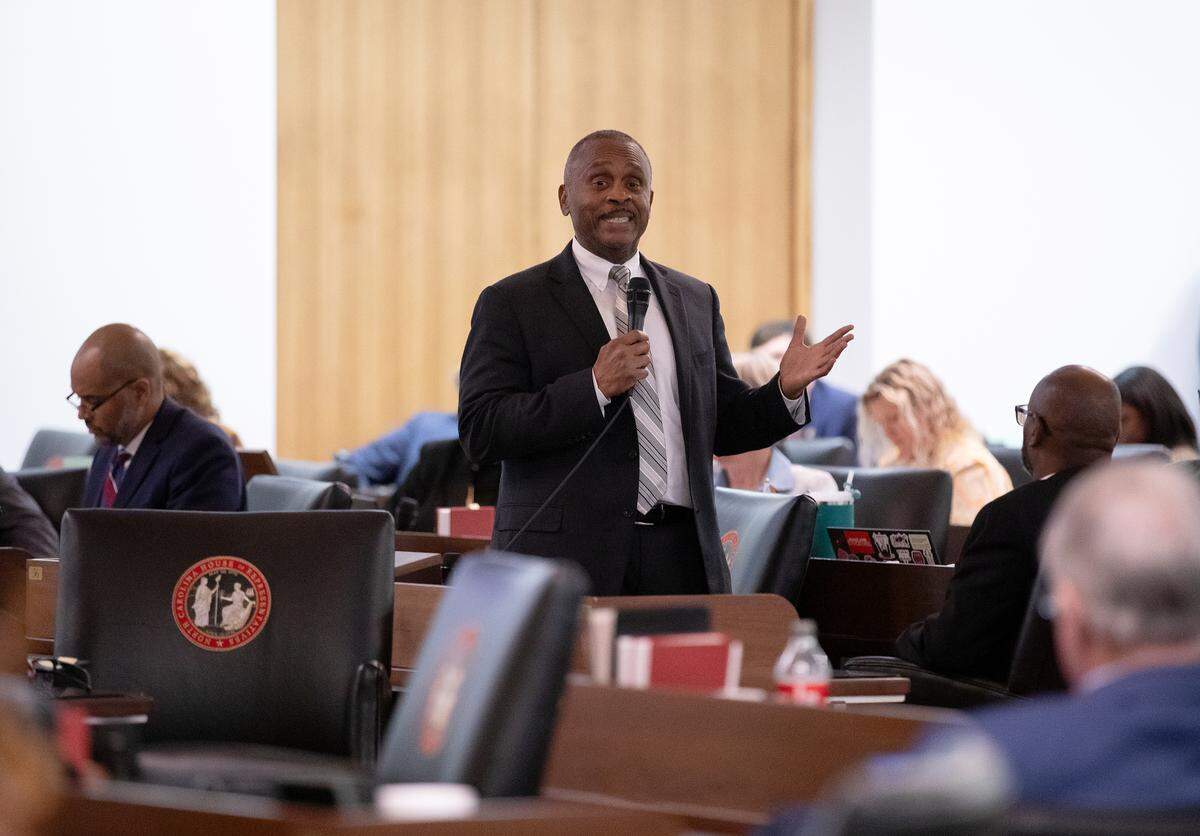
He said he’s “exhausted with conference reports,” which can’t be amended once they are agreed upon in secret, and asked if lawmakers can do it another way, where more lawmakers know about what they will be voting on.
The bill passed the House 63-46 before going to the Senate, where it passed 30-19 along party lines. Three House Republicans from Western North Carolina voted against the bill, but Hall said he’s confident that they would vote to override a veto if Cooper blocks the bill.
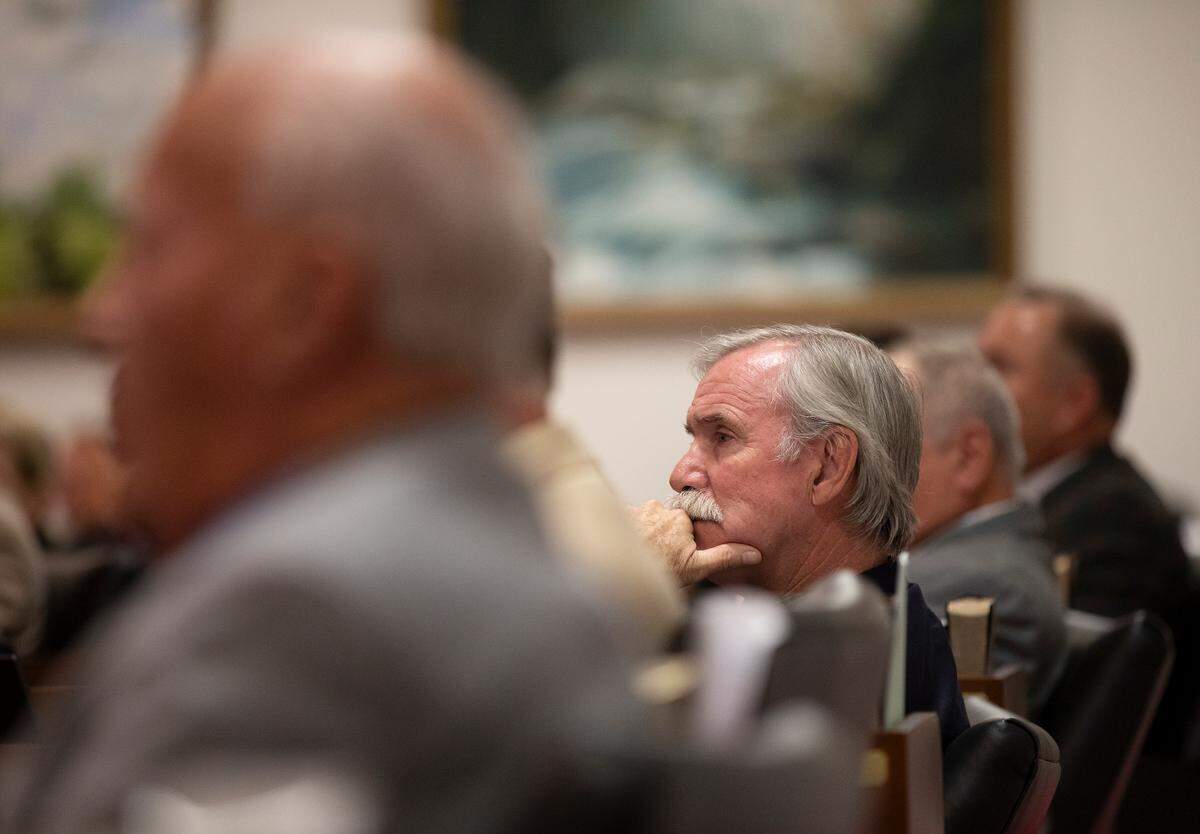
Speaker elected, vetoes overridden
Earlier in the day, House Republicans elected Rules Chair Destin Hall, a Caldwell County attorney to serve as speaker in the 2025 and 2026 legislative sessions. The caucus meeting lasted longer than expected, which resulted in postponing a press conference about the elections by two hours.
The House then held a legislative session to override Democratic Gov. Roy Cooper’s veto of House Bill 10, which spends about $500 million in taxpayer money to fund the backlog of private school vouchers as well as requiring county sheriffs to cooperate with detainers from U.S. Immigration and Customs Enforcement. The House also overturned Cooper’s veto of Senate Bill 445, which deals with recording court documents.
Then there was another break for Republicans to meet again, and more delays for the rest of the House session.
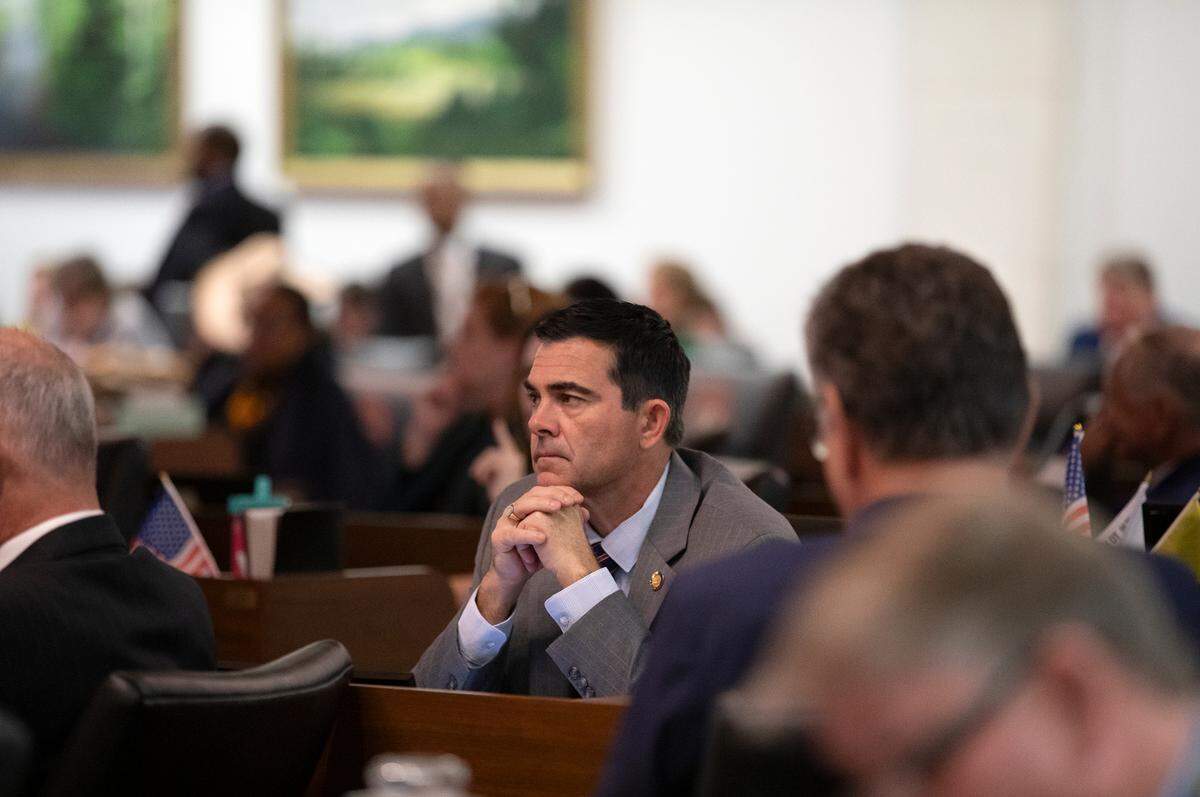
Democrats take 45 minutes to review the bill
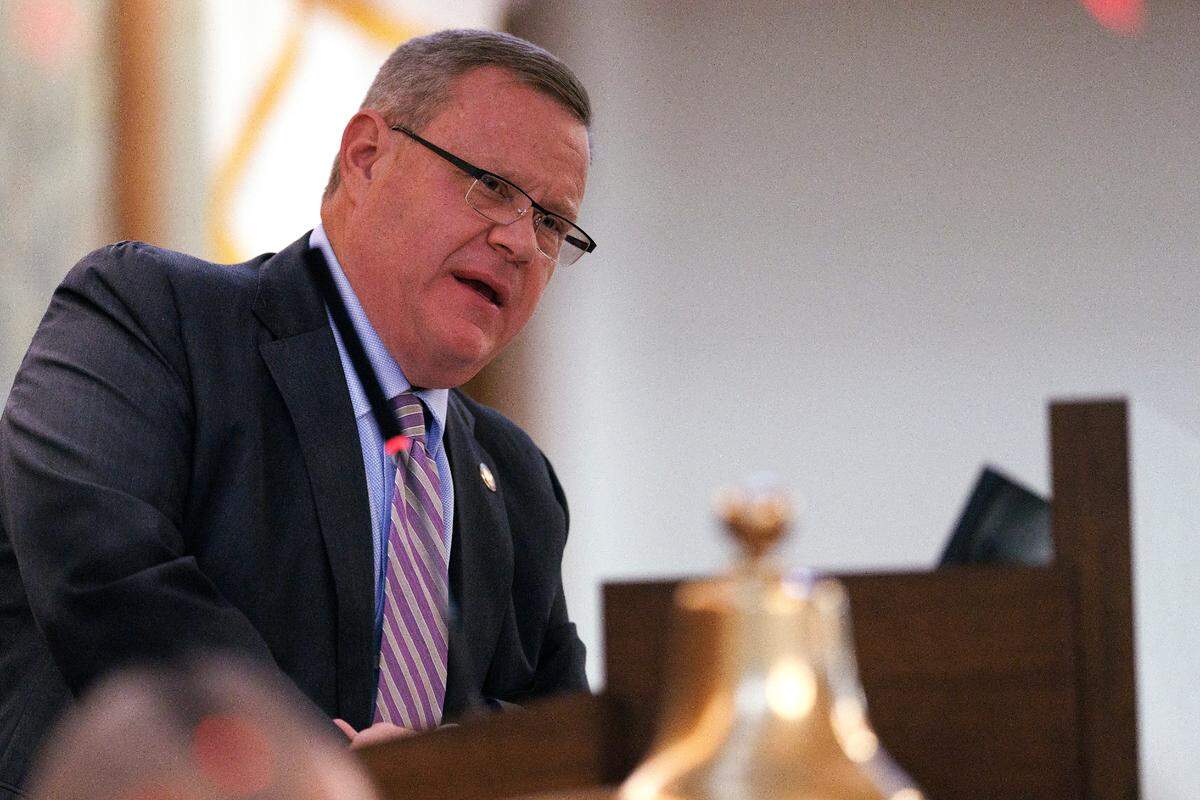
As the evening dragged on, Republican House Speaker Tim Moore, who is leaving at the end of the year after winning a seat in Congress, said that he was waiting for the bill to be ready.
Lawmakers named to decide what should be in the final bill were Republicans Sen. Ralph Hise, Sen. Kevin Corbin, Sen. Bill Rabon, Rep. Brenden Jones and Rep. Donny Lambeth.
Senate Bill 382, originally about dentistry, was replaced with a new bill around 5:30 p.m.
Moore told lawmakers he would add the new bill to that day’s calendar for a vote the same day. The speaker then allowed a break for House Democrats to read the bill. At the same time, the bill itself was just becoming public.
Rep. Cynthia Ball, the House deputy Democratic leader, requested 20 minutes for Democrats to review the bill. Democrats had also been meeting earlier in the day discussing the bill. Lawmakers waited for Democrats to finish meeting. Just before 6:30 p.m., the session reconvened.
Cooper says bill ‘prioritizes more power grabs’
The bill is the legislature’s third package of Helene relief and would add another $227 million.
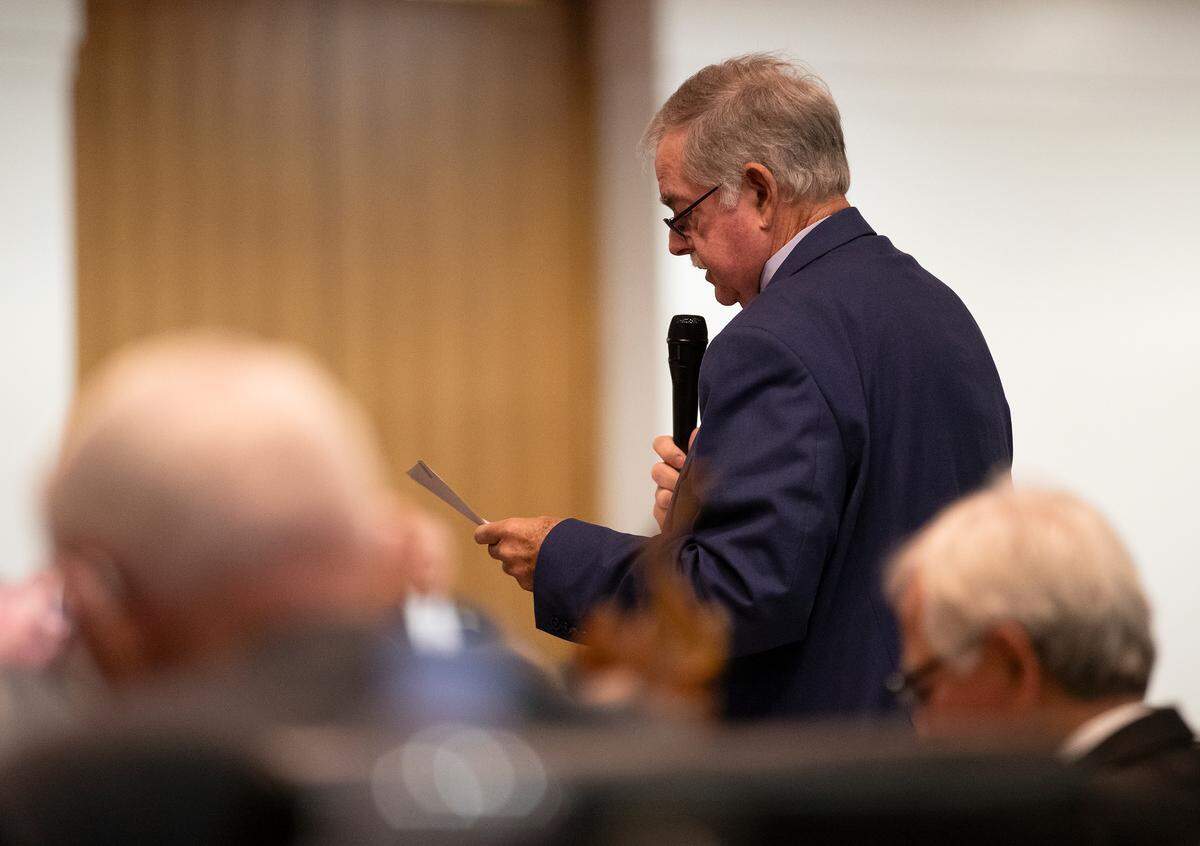
Lambeth, of Winston-Salem, a powerful budget writer said lawmakers would pass even more relief in December.
As the evening waned, Cooper posted a statement on the social media site Threads, saying the bill “prioritizes more power grabs in Raleigh” over more Helene disaster relief funding.
Buncombe County Democratic Rep. Eric Ager said the bill was more about “political priorities” than Helene relief, saying the bill does “almost nothing to address” Helene needs.
“Calling this bill a disaster relief bill is really rich,” Ager said during floor debate.
Durham Democratic Rep. Marcia Morey said the bill should be called “disaster” instead of “disaster relief” because it shortchanged Western North Carolina. She also protested the lack of a committee process.
“None of this has had any open public hearing. ... And now this is rammed down our throat within hours of coming out,” Morey said.
Hall told reporters after session that some of the reason for the short-notice vote was scheduling.
“At the end of the day, it’s not an uncommon thing in this body for the process you’ve seen tonight. You know, you like to when you can, to go through the normal process, but again, part of it is just the time in the calendar and the legislative calendar,” he said.
Asked if the election results were a factor in the powers shifted in the bill, Hall said that the bill included issues that have been discussed for some time. He said “virtually every member” of the Republican caucus was part of the decision-making.
Hall also said that “in some way” everything the General Assembly does is because of election results.
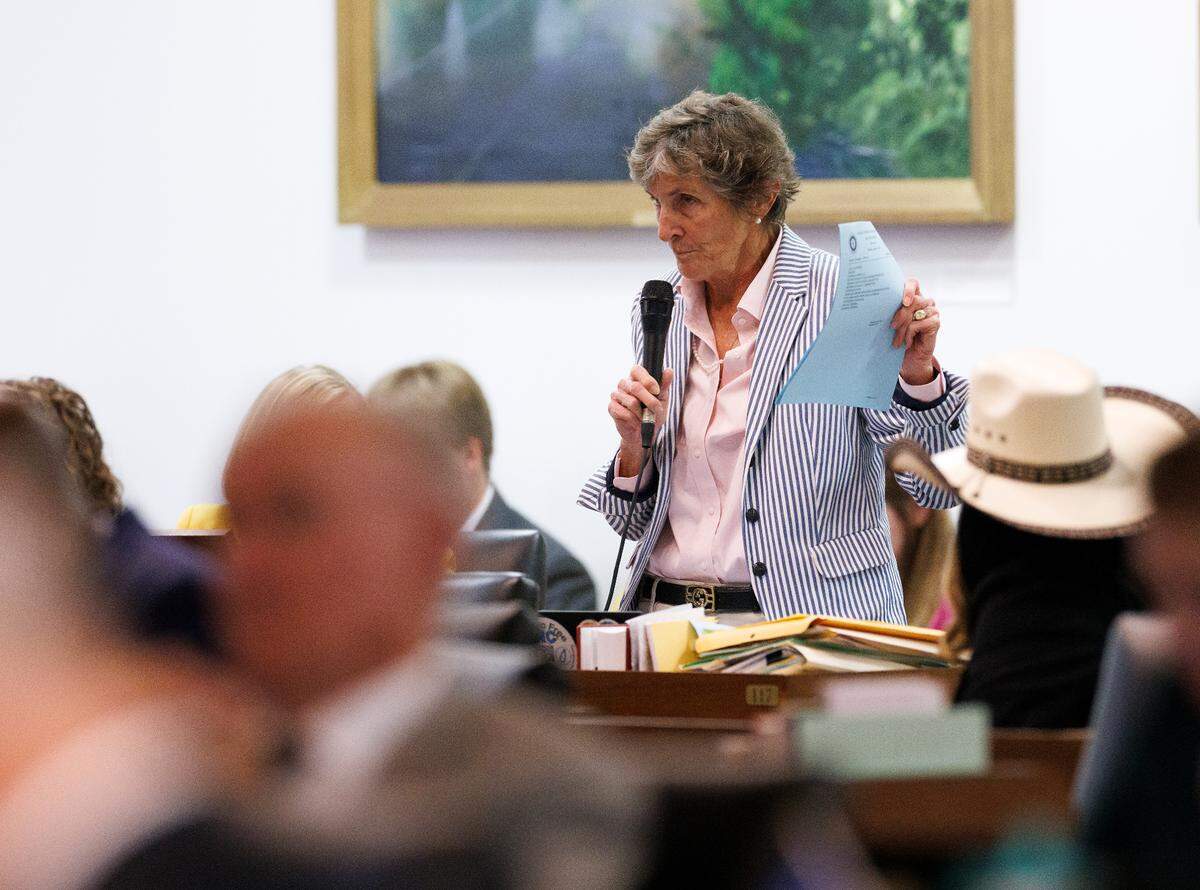
Rep. Pricey Harrison, a Guilford County Democrat, told Moore on the floor that she she appreciated Democrats having time to review it ahead of the vote, even though it wasn’t very long.
“Combining all these significant policy changes is completely inappropriate in a 132-page bill that just became public maybe an hour and a half ago. I know that I don’t want to dwell on the process, but the process could have been a lot better,” she said.
Legislative staff briefed Democrats on the bill just before the floor debate.
“Politicizing a natural disaster” is how Apex Democratic Rep. Julie von Haefen described the bill.
Senate leader says process was ‘all within bounds’
After the Senate passed the bill on Wednesday, Senate leader Phil Berger said the process was “all within the rules that we have. It’s all within the process that we have employed, and the Democrats employed before, and it’s all within bounds as far as we’re concerned.”
Asked why the power policy changes weren’t run as a separate bill that goes through committees, Berger said “the decision was made not to do that.”
Berger also said the power shift on the Board of Elections on appointments addressed longstanding concerns. Among them: they wanted an office that would count votes faster.
“We’ve expressed concerns for a number of years about how the Board of Elections has been operating under the appointees of Roy Cooper. And we have tried on multiple occasions to put forward the idea that we need to have balance on the board that is responsible for counting votes, and making decisions about elections. The Democrats have said, no, no, no, hell no. And so we just decided that it was time for us to go ahead and take action.”
“We’ll see how it works with the auditor, if we see the same sorts of partisan engagement there, I think it’s a fair question for us to step in and and maybe make another change,” he said.
Asked if Republicans chose the auditor because a Republican won the election, Berger said, “no, it’s because we felt the auditor’s office was a place that would work.”
For the attorney general power change, Berger said it was because of how Stein, as attorney general, had been “at odds” with what the General Assembly wanted.
During the Senate’s floor debate on Wednesday, Granville County Democratic Sen. Mary Wills Bode called the bill “sore loser politics.”
During debate by Democratic Sen. Lisa Grafstein, of Wake County, visitors in the gallery cheered and Republican Lt. Gov. Mark Robinson, who was presiding, told the sergeants-at-arms to clear the gallery. Berger called for a 10-minute recess. There had been multiple interruptions including cheers and whispered hissing during the session. Some visitors called out “shame, shame, shame” as they left the gallery.
Vickie Shea, a Democratic supporter from Pittsboro who said she had been sitting silently in the gallery, called the gallery-clearing move, “bullying of the Republicans, who are about to lose a lot of power, and are going to grab as much as they can on their way out of the door.”
This story was originally published November 19, 2024 at 9:29 PM with the headline "Power shifts: How NC Republicans fast-tracked post-election changes drafted in secret."
.jpg)