NC’s new disaster recovery bill has a lot more than just relief. Here’s what’s in it.
A new state funding package, titled to suggest prioritization of aid for Hurricane Helene recovery efforts but containing a mix of other provisions, was released Tuesday by North Carolina’s Republican-led legislature and fast-tracked to the state House floor.
The bill — which is 131 pages long — reduces the authority of several newly elected Democratic executive officials, allocates funding to various programs and state agencies, reshuffles some agencies, and includes financial support for Hurricane Helene recovery efforts. The remnants of Hurricane Helene struck Western North Carolina in late September, devastating the region. Recovery is expected to take years.
The News & Observer obtained a draft copy of the bill early Tuesday, but the official version of the legislation was not released until the evening during a House session.
After its release to the public after 5 p.m., it was debated extensively, with Democrats heavily criticizing the way the bill was introduced, its inclusion of various provisions unrelated to Helene aid and the lack of significant Helene funding.
The legislation, titled “Disaster Relief 3/Budget/Various Law Changes,” replaces a prior version of Senate Bill 382, which originally addressed dental practice reforms.
The bill passed the House just before 8 p.m. The bill now moves to the Senate for a vote Wednesday.
Here are some of the key provisions of the bill.
Council of State power shifts
The bill removes the power of incoming Democratic Gov. Josh Stein to appoint members to the State Board of Elections and transfers them to the state’s newly elected Republican state auditor, Dave Boliek. The bill also shortens the time voters have to fix issues with their provisional ballots.
The bill also makes changes to the power of the attorney general’s office, including by not allowing the incoming attorney general, Democrat Jeff Jackson, to take any position on behalf of the state that is “contrary to or inconsistent with the position of the General Assembly,” according to the bill.
Stein, the state’s current attorney general who was elected as governor this November, has argued against the state in lawsuits, including on abortion.
The bill also removes the ability of the state superintendent of public instruction to appeal decisions made by the N.C. Charter Schools Review Board. Current Superintendent Catherine Truitt, who is a Republican, hasn’t used that option.
But Mo Green, a Democrat, will take office in January after defeating Republican Michele Morrow. The new provision means Green couldn’t ask the State Board of Education, which has a Democratic majority, to reject charter schools approved by the Review Board.
Another change transfers the Center for Safer Schools away from the state Department of Public Instruction to the State Bureau of Investigation. Green oversees DPI.
Changes to how judges are chosen
The bill redraws court districts in a way that eliminates the current district of Superior Court Judge Bryan Collins, a Democrat who in 2019 threw out two amendments to the North Carolina Constitution that voters approved in 2018 — one on voter ID and another to cap the state income tax rate.
The bill also creates two new special superior court judge positions, with one nominated by the speaker of the House and the other by the president pro tempore of the Senate.
And it changes the appointment process for filling state Supreme Court and Court of Appeals vacancies by requiring the governor to select appointees from a list of three people recommended by the political party with which the judge leaving the seat was affiliated. Durham Democratic Rep. Marcia Morey said that provision violated the state constitution and hinted at a future lawsuit.
New law enforcement agency
The bill would also create a new cabinet-level law enforcement agency.
It would turn the State Highway Patrol into a standalone department, rather than a subset of the N.C. Department of Public Safety.
The State Capitol Police would also leave Public Safety to become part of the new Highway Patrol, as would the Division of Motor Vehicles’ License and Theft Bureau, which is now part of the Department of Transportation.
The head of the new department, the commander of the State Highway Patrol, would be appointed by the governor, subject to confirmation of the General Assembly. The current commander is chosen by the governor without approval of lawmakers.
The new commander would be appointed to a five-year term, with the first to begin in July.
Helene funding
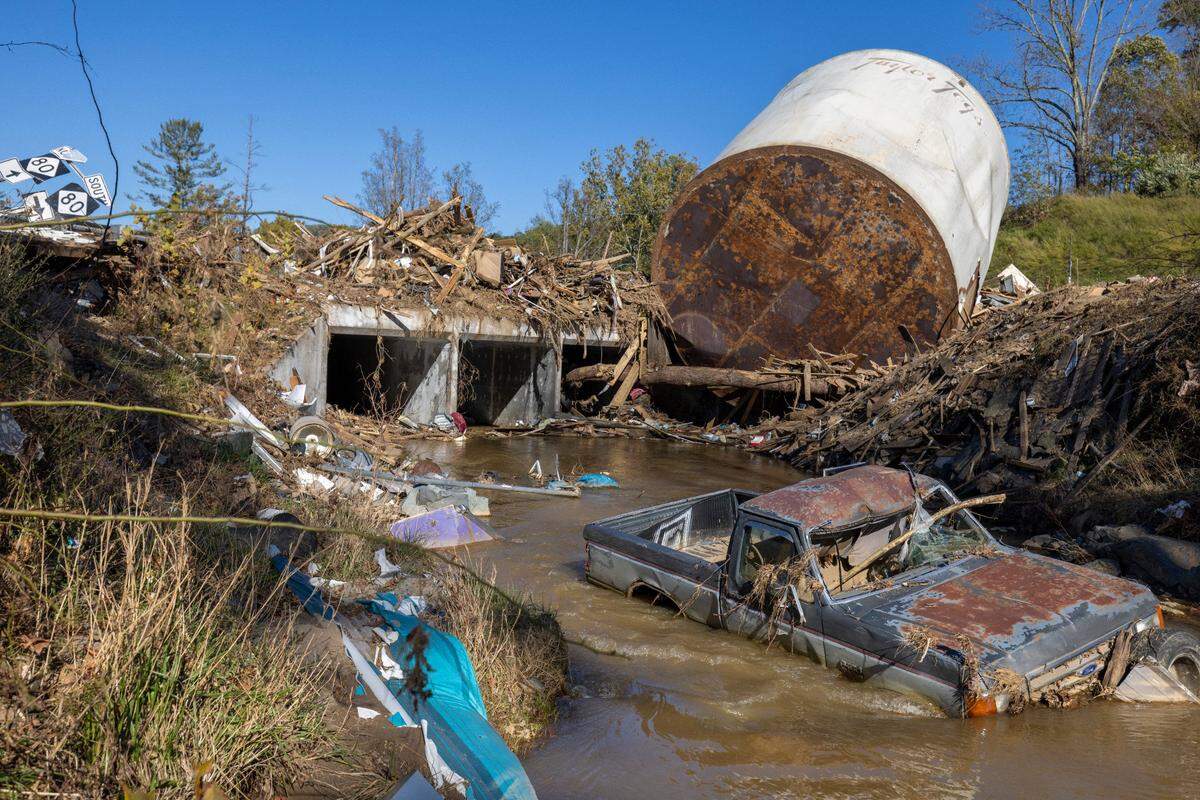
As for Hurricane Helene funding, among other things, the bill provides:
▪ Helene Fund: $227 million for the state’s Helene Fund, which was created in a past bill. It does not appear all these funds are spent in the bill, but they are reserved for Helene recovery purposes.
▪ Debris Removal: $25 million to the Department of Agriculture and Consumer Services for debris removal.
▪ Technical Support: $2 million for technical assistance to soil and water conservation districts in affected areas.
▪ Local Government Loans: $100 million for loans to local governments in impacted regions.
▪ Water Infrastructure Repairs: Another $100 million to support a loan program for water and wastewater service repairs and related needs.
This funding package follows two earlier relief efforts, which together allocated over $877 million for Helene recovery. Lawmakers are expected to come back in early December, where they may provide additional funding for Helene. State lawmakers have taken a cautious approach to funding, citing concerns about potential delays or denials of federal reimbursements.
Democratic Gov. Roy Cooper had proposed a much larger $3.9 billion relief package in late October. Cooper’s Office of State Budget and Management estimates the total cost of Helene’s damage in Western North Carolina to be $53 billion. Cooper has criticized the General Assembly, alleging they prioritize private school vouchers over adequate funding for Helene recovery.
Funding for agency tasked with Eastern NC hurricane recovery efforts
The bill allocates $50 million to Rebuild NC for homeowner recovery projects and mandates the state auditor to conduct a financial and performance audit of the office by July 1, 2025.
It also requires the Office of State Budget and Management to perform ongoing financial monitoring of Rebuild NC for the duration of its operations. This follows a request from Rebuild NC — the office responsible for rebuilding homes damaged by hurricanes Florence and Matthew — for additional funding after exhausting its federal funds.
University funding, including for Poe Hall toxic remediation
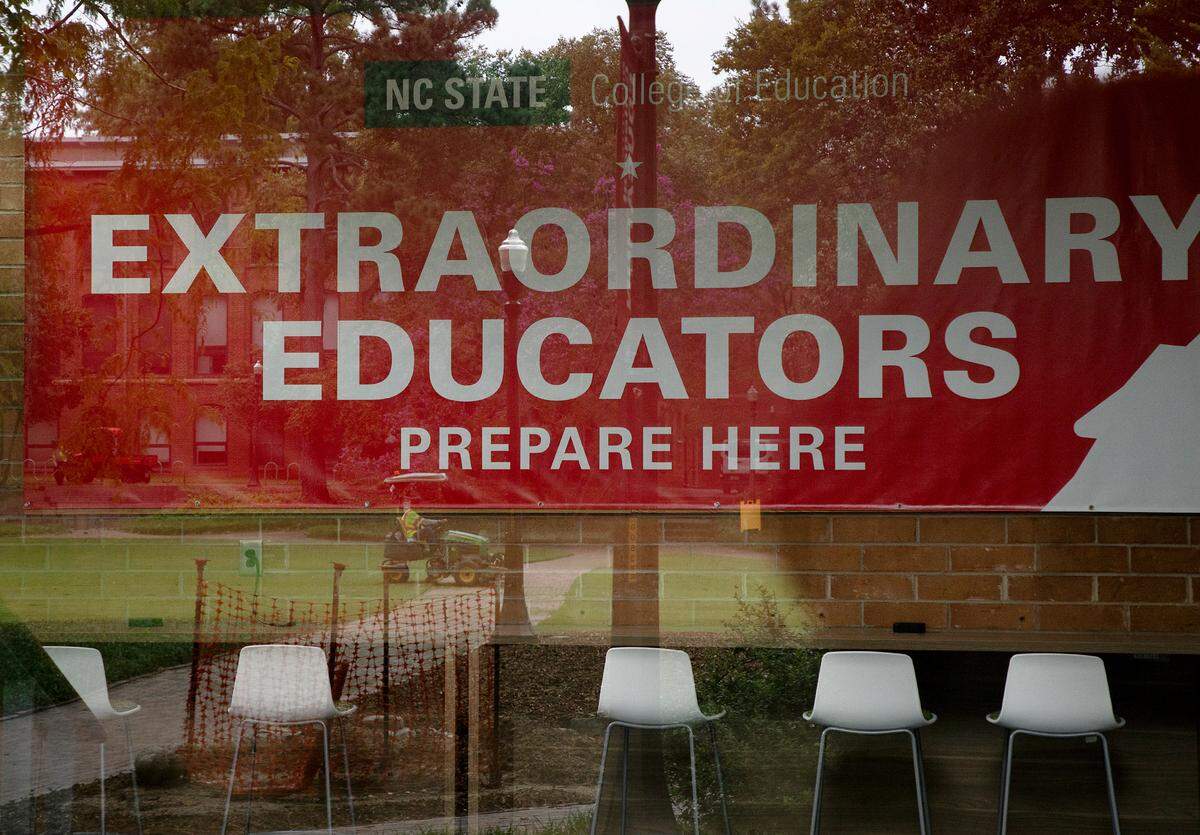
The bill would spend $5 million “to assess the costs associated with rehabilitating or replacing” NC State University’s Poe Hall.
The building has been closed for nearly a year after tests showed the presence of toxic chemicals known as polychlorinated biphenyls, or PCBs, which the Environmental Protection Agency considers “probable human carcinogens” and which were banned from being produced in the United States in 1979.
NC State announced this summer that it plans to remove the heating, ventilation and air conditioning, or HVAC, systems and other building materials in Poe Hall to remedy the presence of the chemicals.
Lawmakers in the state House this summer proposed up to $180 million for rehabilitation of the building in their budget proposal, which did not advance in the Senate. Speaking about the bill on Tuesday evening, Rep. Donny Lambeth, a Forsyth County Republican, indicated that lawmakers would provide additional funding for Poe Hall in the long legislative session next year.
The bill also provides funding to the UNC System, which includes all 16 of the state’s public universities, for the schools’ changes in enrollment and performance.
The UNC System Board of Governors in 2022 revised the system’s funding model for campuses, tying funds to schools’ performance instead of their ability to increase enrollment, but campuses still receive state funds based on students’ credit hours.
For performance, which is based on each school’s progress toward metrics like improving student success or affordability, the bill would provide more than $13 million in one-time funding to be divided among the campuses based on their performance.
For enrollment, which is based on the change in in-state students’ credit hours, the bill would provide about $575,000 in funding.
Five schools — UNC Asheville, UNC Greensboro, UNC Pembroke, Winston-Salem State University and East Carolina University — would receive additional funding to address the losses they otherwise would have experienced due to declines in student enrollments between 2022 and 2023.
Child care funding
The relief bill would provide an additional $33.8 million in grants to help keep child care facilities open. During the pandemic, Congress provided similar money, known as stabilization grants, that allowed child care facilities to give raises to employees and pay for rent and mortgage costs. Child care advocates have been lobbying legislators to continue the funding at the state level to keep the centers running.
Earlier this year, a survey of the state’s child care programs found 29% expect to close when the stabilization grants go away. That means 1,535 programs could close. That would take away 91,660 slots. Business groups have warned that the closure of large numbers of child care centers would have a devastating effect on the economy by forcing parents to stay at home to care for their children.
Energy regulation changes
The bill would also shift control of the state’s Utilities Commission away from the governor’s office.
The Utilities Commission regulates electricity, natural gas, telecommunications and household movers in North Carolina. Most notably, it regulates Duke Energy, setting the utility’s rates and making decisions about how its power will be generated.
Currently the governor appoints three members of the Utilities Commission, a majority of the five-person body. The other two are appointed by the speaker of the House and the Senate president pro tem.
SB 382 would shift one of the governor’s seats to the state treasurer, a seat won by Republican Brad Briner earlier this month.
The General Assembly has used a similar maneuver on the Environmental Management and Coastal Resources commissions, taking majority control away from the governor by giving a small number of seats to Republicans elected to the Council of State.
The bill also takes the power to appoint the Utilities Commission’s chairperson away from the governor. Now, that person will be elected by the five-member commission.
In another energy maneuver, SB 382 would repeal the Energy Policy Council, an advisory council housed in the N.C. Department of Environmental Quality that was chaired by the state’s lieutenant governor. Rachel Hunt, a Democrat, was elected to that position earlier this month.
Campaign finance changes
Under current law, two kinds of groups tied to political parties, known as political party executive committees and affiliated party committees, can establish a political party headquarters building fund. The bill changes the rules for contributions to these funds by allowing previously prohibited sources — such as from corporations, business entities, and labor unions — to be used to fund legal actions.
Currently, these funds are largely restricted to spending related to a headquarters building.
This story was originally published November 19, 2024 at 6:58 PM with the headline "NC’s new disaster recovery bill has a lot more than just relief. Here’s what’s in it.."