
NC Republicans are one vote short of total control. Will they be able to override Cooper?

North Carolina Senate Republicans now have a supermajority in the state legislature. That’s half of what they need to override a veto of Democratic Gov. Roy Cooper.
North Carolina has had divided government for the past four years, but the power has shifted slightly to Republicans after some key wins in swing districts on Election Day.
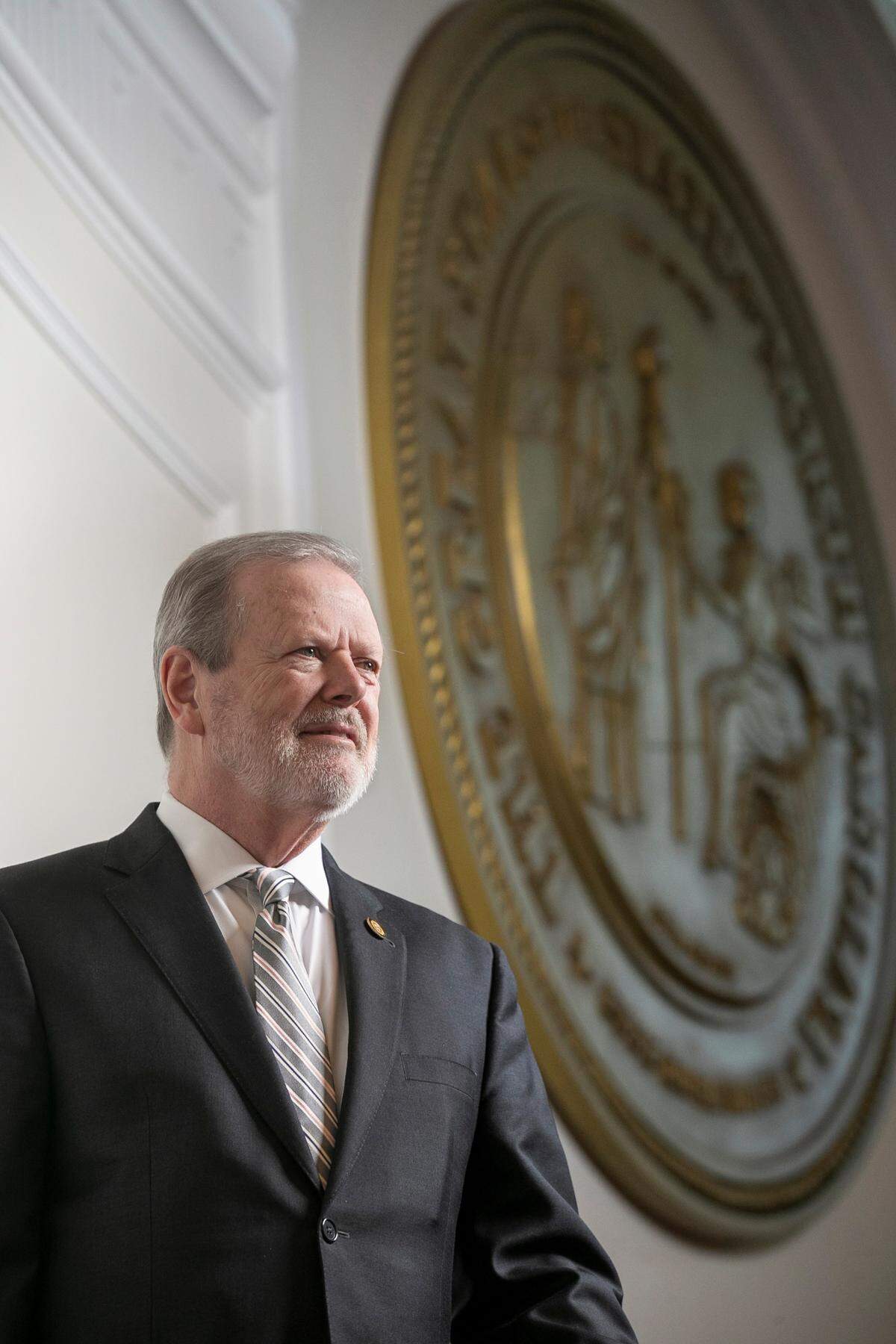
“Today’s a good day in North Carolina to be a Republican,” Senate leader Phil Berger told reporters the morning after the election.
But while Republicans also made gains in the House, they are likely to fall one seat short of a supermajority. That means several things have to happen for the General Assembly to make laws without the governor’s signature.
Lawmakers will convene in the new year for their long session, when they will spend several months passing bills including the state budget. For a bill to become law regardless of Cooper’s veto stamp, several factors are at play.
Supermajority by the numbers
A supermajority is three-fifths of voting lawmakers. So it’s not enough to have a supermajority of seats. All the lawmakers have to be there for the vote on the Senate floor. Post-election, Senate Republicans hold 30 seats, while Democrats hold 20 seats. If Cooper vetoes a bill, in order to override it, all 30 Senate Republicans will need to be present for the vote, assuming all Democrats are there, too.
If fewer senators are in the room, the math changes. If some Democrats are absent, Republicans won’t need all 30 senators there to override a veto.
Another path to an override would be for Republicans to get some Democrats to vote with them, which has happened in the past. But of the four more moderate Senate Democrats, three will be gone. Sen. Don Davis was just elected to Congress; Sen. Ben Clark ran for Congress but lost; and Sen. Kirk deViere lost his primary.
The one remaining of those key Democrats is Sen. Paul Lowe, who was just reelected to another term, winning with 59% of the vote according to unofficial results.
In the room where it happens
While some proxy voting was allowed during the height of the coronavirus pandemic, that’s not the case now. To vote on a bill, a lawmaker has to be there in person: Not just in the Legislative Building, but on the floor. When a vote is called, the sergeants-at-arms open the chamber doors and call out “Vote!” into the hallways to bring lawmakers back to vote. There are even some speakers in restrooms outside the chambers so lawmakers taking a break know when to get back to the floor for proceedings.
Some lawmakers will do what is referred to as “taking a walk” during a vote, meaning they intentionally leave the floor to get out of having to vote. It could be a controversial vote that their party caucus wants but their district’s constituents don’t, or they may want to increase the odds for the majority to pass the bill.
So in 2023, a Republican or Democrat could pull that move. Or they could have an excused absence for reasons of work, health or family. Excused absences are mentioned at the beginning of daily sessions.
Chamber leadership decides when to call a vote. So in March 2021 when Clark, who was a co-sponsor of a schools reopening bill during COVID-19 restrictions, was absent for a planned override vote on that bill because of work, Senate leadership called his bluff by threatening to hold the override vote when he came back.
Lowe, after initially supporting the same bill, changed his mind when it was put to an override because Cooper asked him to do so. “He asked. I am a Democrat. He’s the governor, and a Democratic governor,” Lowe told The News & Observer then.
Duke University public policy professor Pope “Mac” McCorkle told reporters on Wednesday that there are going to be “a lot of Democrats in the legislature getting lavish attention from Republicans to abandon Gov. Cooper on the veto.”
McCorkle said the narrow Senate supermajority is “very perilous for Democrats and for Gov. Cooper, just one vote.”
One vote short in the House
With two seats still too close for The Associated Press to call, House Republicans appear to have a majority of 71 seats to Democrats’ 49.
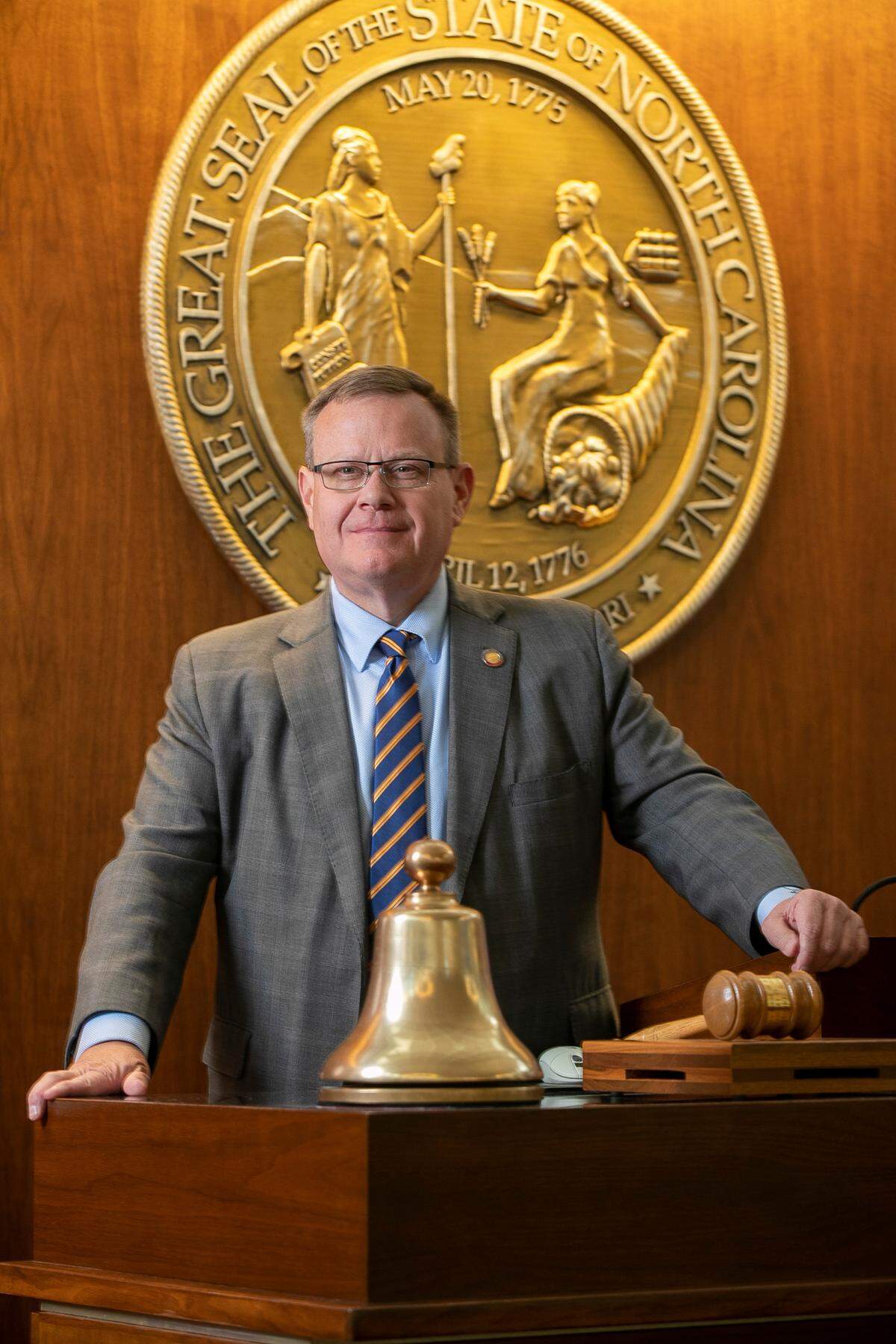
On Wednesday, House Speaker Tim Moore said he considers Republicans’ majority in the House a “governing supermajority.”
Asked what he meant, Moore referred to the Democrats who had a say in the state budget process because they had voted in favor of the first version of the Republican-written budget last year.
“Because the positions that we’ve advocated as Republicans have been just common-sense positions. And I think the moderate Democrats that we have, have said to me they want to continue that. So we’re feeling very good,” Moore said.
Those House Democrats in 2021 who were budget negotiators were Reps. Cecil Brockman, Brian Farkas, Charles Graham, Howard Hunter III, Marvin Lucas, Garland Pierce, William Richardson, Shelly Willingham and Michael Wray.
But Hunter lost, Farkas appears to have lost in a close race that hasn’t been called yet, and Richardson and Graham didn’t run for reelection. That leaves Brockman, Lucas, Pierce, Willingham and Wray, who all just won reelection, according to unofficial results.
Western Carolina University politics professor Chris Cooper said conservative Democrats hold a “critical position” in the House now.
“It only makes sense that their support and their positions have just taken on increased importance. There’s a reason that Kyrsten Sinema and Joe Manchin are household names who wield outsized power in the U.S. Senate,” Cooper said.
“Conservative Democrats in the N.C. House will take on similar significance and power.”
With 120 seats in the House, 72 is a three-fifths supermajority, and like the Senate, the math changes depending on who’s on the floor to vote.
However, there is one key difference on override votes: the Senate gives the minority party a day’s notice of an override vote. The House does not.
That played out in dramatic fashion in the fall of 2019 when House Republicans overrode Cooper’s veto of the budget. The Senate, which gives a day’s notice to Senate Democratic Leader Dan Blue if Republicans are considering an override vote, never called the vote.
House and Senate coordination
Blue won reelection to his seat on Tuesday, as did House Minority Leader Robert Reives, a Chatham County Democrat. Both Blue and Reives previously told The N&O they intended to seek their caucus’ leadership roles again.
Berger said he expects his “good relationship” with Blue to continue.
“I would say that, given what I heard from some of the Democrats in terms of how they ran their races, I fully expect them to be folks that will be supporting what we’re doing because they ran on reducing taxes, balancing the budget and supporting law enforcement. So we’ll see if that was just campaign talk or whether it’s real or not,” Berger said.
According to the Senate’s rules for itself, bills are heard in the Senate Rules Committee the day before they come to the floor for a vote. But in the other chamber, the House Rules Committee has met on bills the same day they are on the House floor for a vote. That makes the lawmaking process rather unpredictable.
The House and Senate will likely coordinate some on bills they want to pass and vetoes with the potential for overrides. Moore alluded to that the day after the election.
“We’re going to be talking with our friends over the Senate to see, to try to get rid of as much daylight between the two chambers as we can, and try to deal with some of these tough issues that are out there,” Moore said.
.JPG "RAL_XGR-NE-063022-RTW_5 (2).JPG")
For more North Carolina government and politics news, subscribe to the Under the Dome politics newsletter from The News & Observer and the NC Insider and follow our weekly Under the Dome podcast at campsite.bio/underthedome or wherever you get your podcasts.
This story was originally published November 11, 2022 at 6:00 AM with the headline "NC Republicans are one vote short of total control. Will they be able to override Cooper?."
.jpg)