
Durham had a tool for tracking stolen guns. North Carolina lawmakers killed it.
READ MORE
As gun ownership rises, thieves take advantage
A growing trend across North Carolina and much of the United States: More people own guns, and experts say the loosening of laws limiting where people can take them is leading to more gun thefts. Police report that higher numbers of guns are getting stolen as more owners leave them in vehicles, sometimes unlocked. So why did lawmakers eliminate NC’s only tool to track down stolen guns?
Expand All
As more people carry guns, thieves steal with ease — adding weapons to NC streets
Durham had a tool for tracking stolen guns. North Carolina lawmakers killed it.
5 things we learned about rising gun thefts in the Triangle and NC
Guns are easily being stolen. Here’s how to prevent it and what to do it if happens.
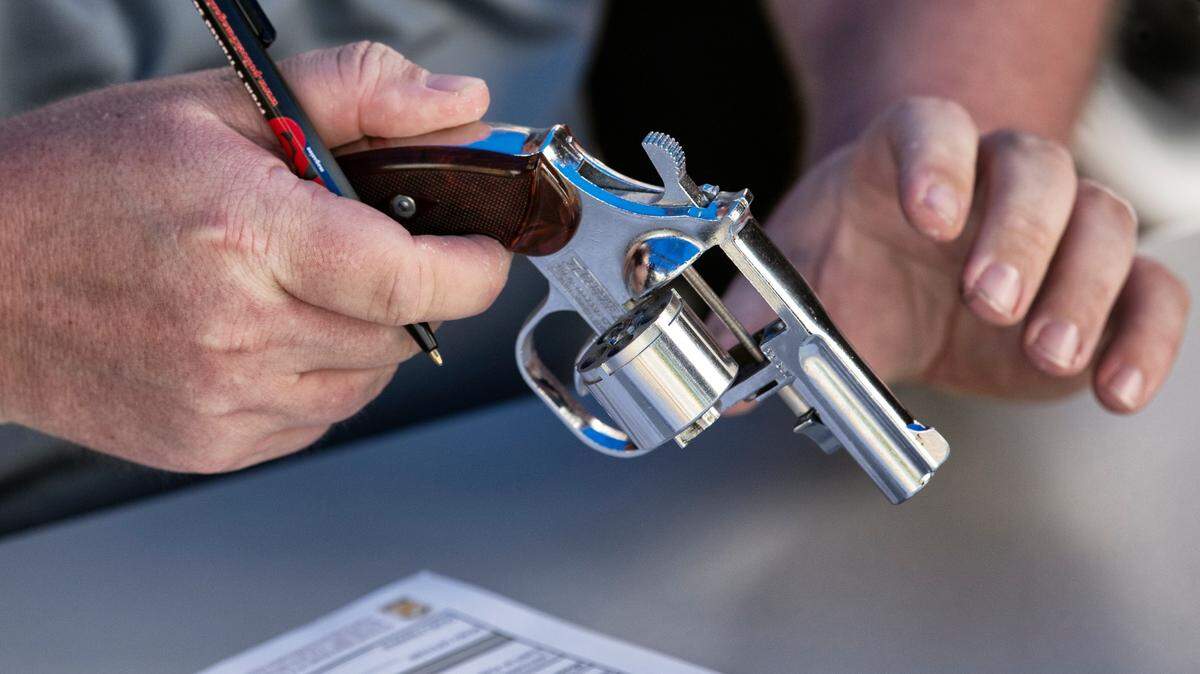
Back when Ashly Sealy worked at the Durham County courthouse nearly a decade ago, she’d accept gun registrations from residents. The short registration forms required the weapon’s serial number.
Last year, after getting home from bartending late, she forgot to bring the handgun she carried from her car parked outside her apartment. The next morning, the passenger door of her 2013 Chevy Equinox was slightly ajar, and her 9 millimeter SCCY handgun was gone.
Sealy reported the stolen gun to police but she did not know its serial number, which would help them find and prove it was stolen. The store where her brother purchased the gun had gone out of business. And the courthouse where she used to work was no help either.
State lawmakers eliminated North Carolina’s only gun registry program in 2014. After that, due to pressure from gun rights activists, county officials destroyed the tens of thousands of registrations they started collecting in the mid 1930s.
“If they had still continued it that would have been a perfect way to get that,” Sealy said of the serial number records.
When police have serial numbers to identify firearms, they can do more than reunite owners with stolen property. They have a better chance at solving crimes and charging thieves with possession of a stolen firearm, police say.
Police reports show that one in four guns reported stolen in Durham in 2021 lacked serial numbers, The News & Observer found. That leaves investigators in the dark about a quarter of those weapons, which included six assault style firearms.
“That’s really the only way for law enforcement to track that firearm if it is stolen,” said Bill Hollingsed, executive director of the North Carolina Association of Chiefs of Police.
A lone NC registry
State lawmakers passed Durham’s gun registration law in 1935, at a time when the murder rate surged as rum runners were trying to get around Prohibition. It required registrations of handguns, “short-arm machine guns and sub-machine guns.”
It was the only county in the state that had such a law when The News & Observer wrote about it 62 years later in 1997. Today, only a handful of states have gun registration laws, none of them in the south.
Durham residents recorded their registrations on a form that went into a wooden cabinet. But as the years went by, court officials and police officers rarely looked at them, and a judge ruled those who failed to register their handguns couldn’t be punished.
After the N&O report, however, Durham City Council members recognized an opportunity: If they could digitize the registration data, it could be at a patrol officer’s fingertips and lead to more guns being taken off the streets. The previous year the city had a record 43 homicides. Council members sought solutions.
Newly hired Durham Police Chief Teresa Chambers initially supported the move and won a clerical position from the council. But Chambers changed course a year later, saying digitizing roughly 58,000 registrations would take too long and cost too much. By then, gun rights advocates led by Grass Roots North Carolina, a nonprofit gun rights group, were calling for a boycott of Durham businesses if assembling a data set went through.
The police department didn’t prioritize the work. No computer was available to input the data at the start, and when the clerk went on maternity leave no one filled in.
Those in favor of the digitization sought to launch a volunteer effort to enter the data, but that drew opposition as well from Grass Roots NC, and never got off the ground.
Registration law killed
In 2013, state Sen. Mike Woodard, a Durham Democrat and former city council member, introduced legislation to kill the law. It passed the following year with little debate.
Woodard in a recent interview said he filed the bill after a constituent who had bought a gun questioned why it had to be registered. Woodard said both Sheriff Mike Andrews and Clerk of Court Archie Smith told him it was an inefficient system.
Woodard said he was not aware that the city council had tried to digitize the files 15 years earlier. He was also under the impression that the serial numbers were in a federal registry, making Durham’s redundant. There is no federal registry. A 1986 federal law backed by the NRA prohibits it.
A short time after Woodard’s legislation became law, Grass Roots NC lobbied Woodard and others to destroy the files, which were kept in Smith’s office.
One prominent local law enforcement officer, Sheriff’s Maj. Paul Martin, told The Carolina Journal at the time that the records should be kept because they included serial numbers.
Smith recalled a meeting in which Woodard and various city and county officials told him he should destroy the files. No one in state and local government was willing to take responsibility for them, he said.
Smith said the files didn’t belong to his office. But since no one else was willing to claim them, he ran them through a shredder. And with them, an opportunity for some of the hundreds of guns stolen since then to be traced with a visit to the courthouse.
“The horse has already bolted the barn,” Smith said. “I can’t let it bother me. It is what it is.”
Andrews helped shred the registrations, and posted a video on YouTube of them being destroyed shortly after.
Vital gun serial numbers
The federal government began requiring serial numbers on guns in 1968. The serial numbers are so important that it’s a felony in North Carolina to remove them, or knowingly sell, buy or possess a firearm with a removed serial number. A U.S. district judge in West Virginia, however, this month challenged the legality of that requirement in federal law.
Bryan Whitlow is a Second Amendment supporter, but he said he sees how Durham’s former registry would be helpful. He didn’t have a serial number to give police when someone smashed the back window of his truck and stole his 9 millimeter Glock handgun. He had parked the truck at his home in north Durham but had forgotten to bring the gun in, he said.
He turned to the gun dealer who sold him the weapon to try to get the serial number. No luck there – Whitlow couldn’t remember exactly when he purchased it. But he later located the box for the gun, which had the serial number, and he called the police.
He didn’t understand why state lawmakers would dump a law that made it easier for the police to identify and return stolen guns to their owners, as well as help fight crime, he said.
Only six of the 102 guns without serial numbers reported stolen last year in Durham were recovered, Durham police reports show. That’s compared to 65 guns with serial numbers reported.
“What representative thought that was a bad idea?” he said. “Let him have his firearm stolen and let me hear from him.”
This story was originally published October 21, 2022 at 6:00 AM with the headline "Durham had a tool for tracking stolen guns. North Carolina lawmakers killed it.."