
How Duke Energy uses campaign money to influence legislation in North Carolina
READ MORE
Power Play
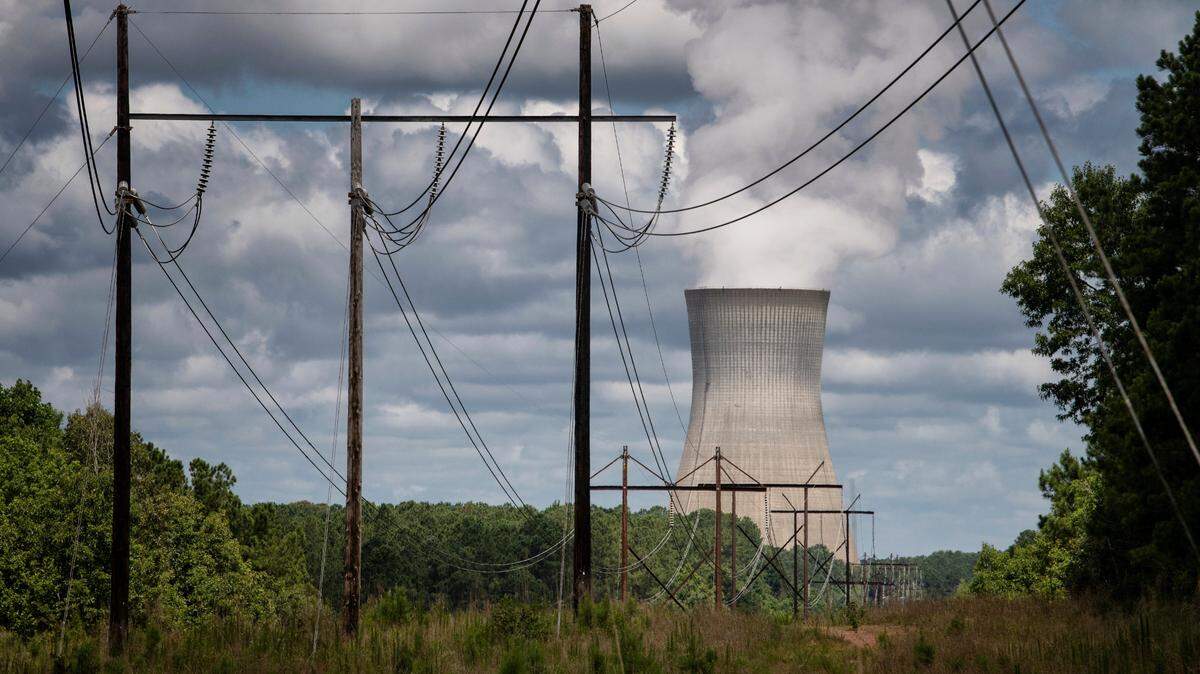
Money can influence politics. That’s why people and corporations like Duke Energy shell out so much of it. Is Duke’s position as one of North Carolina’s largest political donors in conflict with the utility company’s role as the state’s power provider? Follow the money to see where it goes.
Expand All

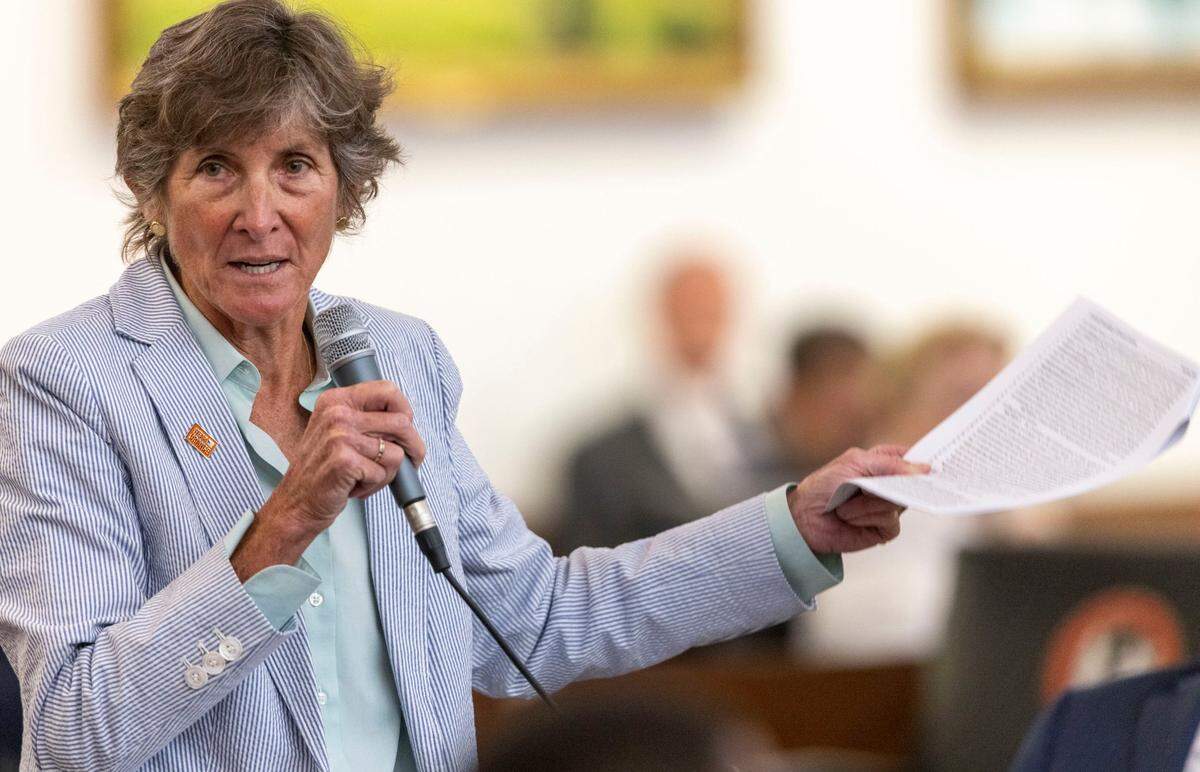
Before being elected to the General Assembly, Rep. Pricey Harrison advocated for environmental issues. In that role, the Greensboro-area Democrat pushed for the legislature to pass the Clean Smokestacks Act, 2002 legislation requiring Duke Energy to cut hazardous emissions from its power plants.
As she was lobbying legislators, Harrison said, one told her that they were receiving $4,000 checks from Duke Energy executives and $250 checks from environmental advocates.
“How do you think I’m going to vote?” Harrison recalled the lawmaker telling her.
Harrison noted that Duke Energy isn’t the only prolific contributor at the General Assembly and is simply taking advantage of a campaign finance structure that allows for significant giving and lobbying by large companies.
“It’s been frustrating, but that’s sort of how to play the game in that building until we get a handle on campaign finance issues,” Harrison said. “It’s very frustrating because public interest is always going to lose in that scenario.”
Duke Energy has reason to want to influence state government. The General Assembly helps set policy for the state’s Utilities Commission, which in turn decides how much Duke should be allowed to charge customers, how it should deal with waste and pollution and how quickly it should transition toward renewable energy.
Duke’s influence sprawls across North Carolina politics, ranging from political donations through the company’s corporate political action committee to spending $903,800 lobbying those legislators last year, to sponsoring events like the N.C. Chamber’s Government Affairs Reception or the N.C. Legislative Black Caucus’ Education Scholarship event.
Altogether, in the current election cycle, Duke employees have donated over $350,000 to North Carolina-based candidates or groups, both as individuals and via the PAC.
The company’s influence is also felt in more secretive ways. It has given millions of dollars to various PACs, political parties and other organizations focused on congressional races, governors’ races and other political causes. Unlike the money its PAC gives to individual candidates, which in North Carolina is capped at $5,600 per election, Duke itself is allowed to give unlimited sums to those types of groups.
Those organizations can then spend the money themselves or pass it along to favored candidates. The company reported giving more than $4.2 million to such groups last year.
The company also funds Citizens for a Responsible Energy Future. The organization is technically independent, but it was founded by two former Duke employees and counts the utility as its sole donor. It pays for political advertising and polling key to the company’s interests in North Carolina.
North Carolina’s Public Staff, a public agency that defends ratepayer interests, successfully argued in 2020 that Duke was improperly asking customers, instead of corporate shareholders, to pay for more than $4 million in political donations. Recipients of that money included chambers of commerce, the right-leaning Ripon Society think tank and the N.C. Chamber Foundation.
Duke says its political spending supports a bipartisan group of elected officials who are working to shape the state’s energy future. The utility also argues that its spending is no different from that of any other interested party.
“We fully participate in public discourse on important policy matters that affect our customers and our company’s role in providing clean, affordable, and reliable energy in North Carolina — and it’s important to note that the way Duke Energy supports energy issues in the state is consistent with the way many other businesses, organizations and individuals participate in public discourse on policy issues,” Emily Kissee, a Duke spokeswoman, wrote in a statement.
Critics of the utility argue its presence in the halls of the General Assembly slows action on the transition to renewable energy sources and is geared solely toward benefiting the company’s bottom line.
Duke’s stock price hit an all-time high in April, according to Yahoo Finance, trading at over $115 a share.
On Aug. 11, Duke was trading just shy of $111, up 28.15% over the last five years. That’s an impressive return, but the stock has consistently lagged slightly behind a Vanguard fund made up of utilities stocks — including Duke — that gained 36.75% over the same five-year period.
Bob Hall, the retired executive director of Democracy NC and a longtime watchdog of Duke’s political spending, said Duke’s mission as the state’s regulated monopoly utility is to provide power at the lowest cost. Hall and others believe the utility’s lobbying is in direct conflict with that mission.
“Its mission is not just to maximize profit,” Hall said. “It has a historic and legally structured obligation to serve the public interest, so it gets into conflict with that when it throws its money around.”
House Bill 951: The future of energy in NC
Many of these dynamics played out in the run-up to and fallout from last year’s House Bill 951, which overhauled the future of power generation in North Carolina.
The bipartisan legislation received widespread attention for writing carbon emission reductions into state law and for the first time requiring the Utilities Commission to consider emissions in addition to affordability and reliability when giving Duke directions on what should be included in the state’s generation portfolio.
HB 951 also included Duke’s long-sought goal of being able to ask the Utilities Commission to set rates over a three-year period instead of annually.
Duke started pushing for multiyear rate-setting in 2019 with Senate Bill 559. Under that bill, the company could have asked for rate hikes covering periods of up to five years. Critics argue that multiyear rate-setting is risky because it lessens oversight over the utility and, they say, creates an environment where it is easier to overcharge consumers.
SB 559’s primary sponsors — Republicans Ralph Hise and Bill Rabon and Democrat Dan Blue — are among the top 15 recipients of Duke campaign contributions since 2010. Blue and Rabon are in the top five.
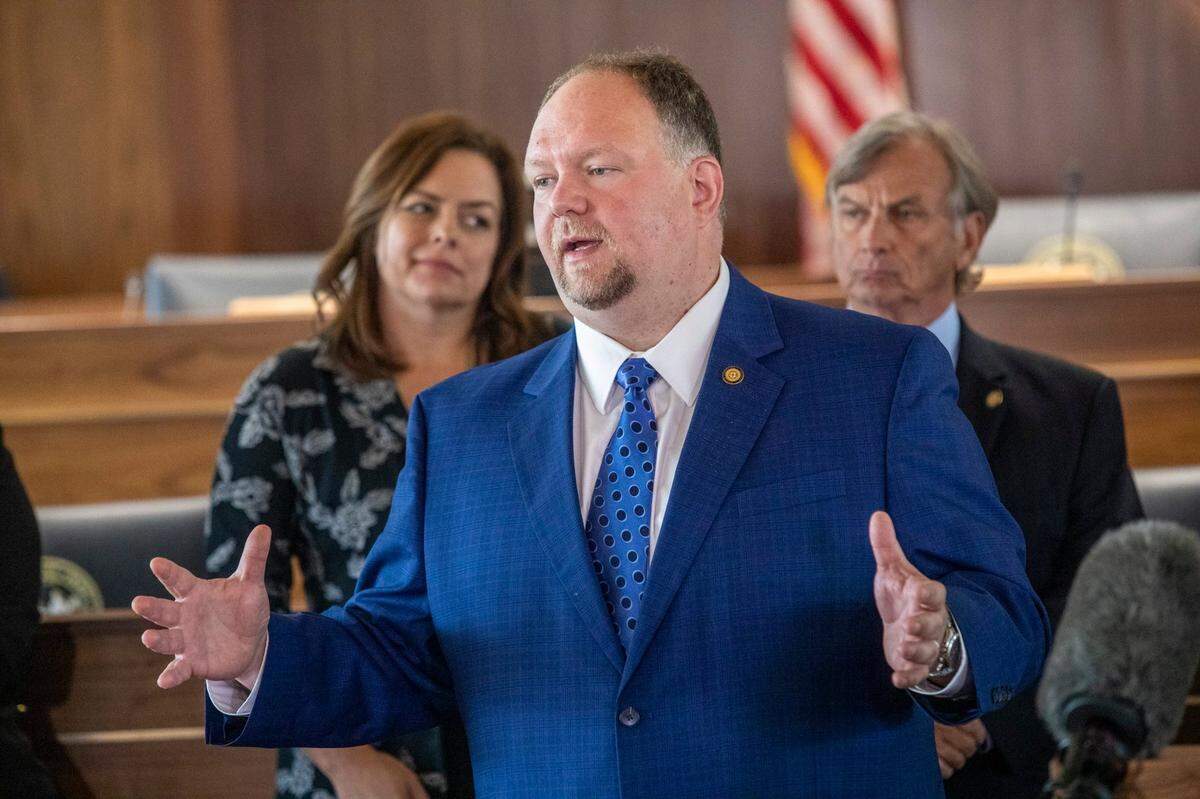
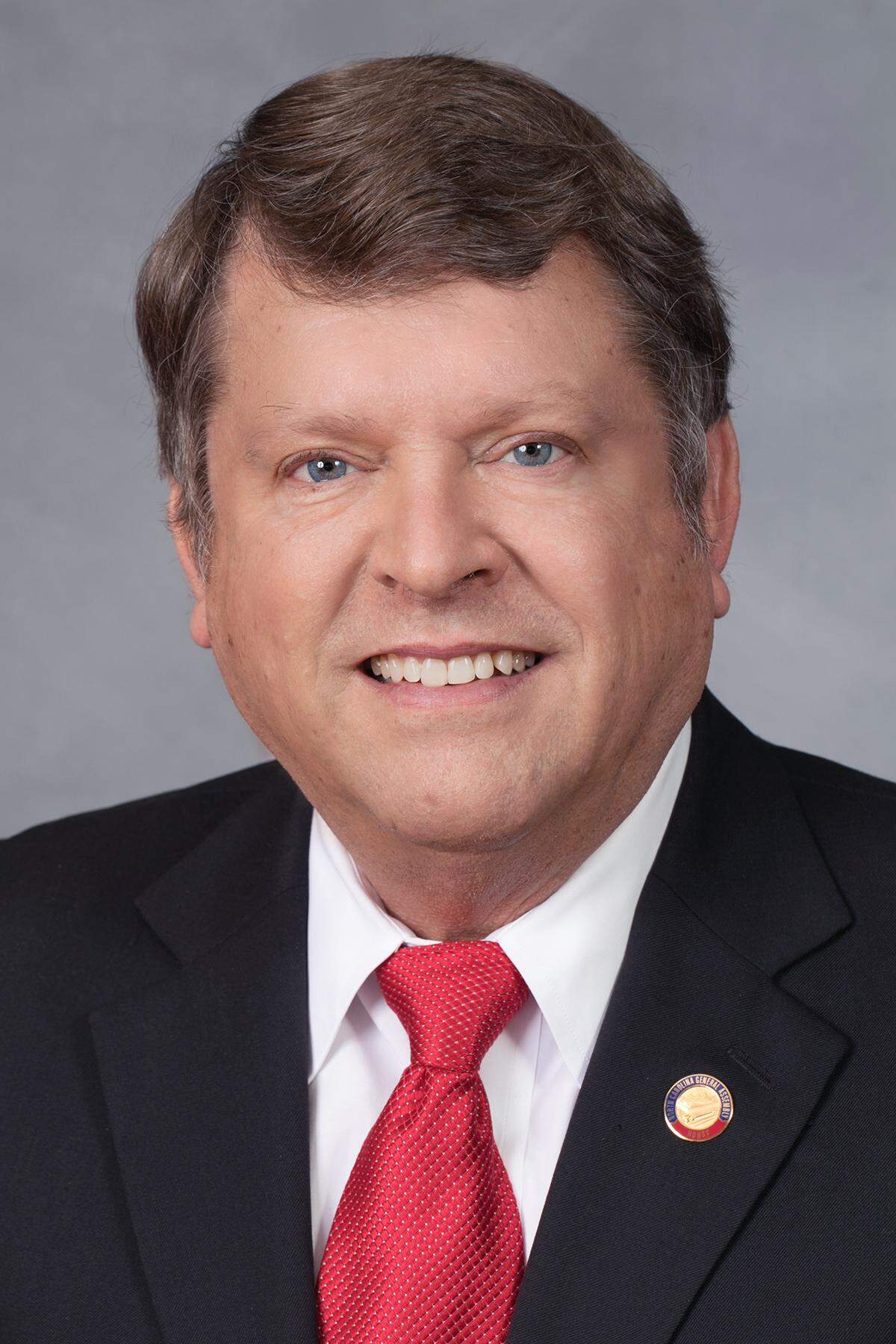
The controversial proposal failed in the House when Larry Strickland, a Johnston County Republican, introduced an amendment replacing the proposed structure with a study. Strickland’s amendment narrowly passed, making it into the version of SB 559 that became law.
Duke was not pleased.
During the 2020 election cycle, Hall wrote in a memo “to interested parties,” Duke’s PAC contributed more than $365,000 to legislators who opposed Strickland’s amendment and just $37,400 to those who supported iterations without multiyear rate-setting.
Strickland himself had received $2,000 in campaign contributions from Duke Energy’s corporate PAC in 2018. In 2019, he introduced the amendment that blocked multiyear rate-setting. In the 2020 and 2022 election cycles, Strickland has received nothing from Duke.
Strickland declined to comment for this story.
The vote in the House to amend SB 559 was bipartisan, with around one in four Republican lawmakers joining most Democrats to push the amendment through, 63-51. A few Democrats — all of them among Duke’s biggest targets of financial support on that side of the aisle — sided with most of the Republican caucus to try, unsuccessfully, to save the multiyear plan Duke had wanted.
Like Strickland, other Republicans who voted against Duke on that bill saw their campaign support fall off. At least one, however, says it isn’t retribution, just coincidence.
Republican Rep. Larry Yarborough of Person County received a combined $5,000 from Duke’s PAC in the two elections before his 2019 vote to strip out the language Duke wanted on multiyear rate-setting. The PAC gave his campaign $1,000 in 2020 and, so far in the 2022 cycle, just $500.
Yarborough, however, pushed back against the implication that Duke slowed its financial support because of his votes. He said he supported Duke on other issues in the past, like the fight over what to do with coal ash following the massive Dan River spill in 2014. Plus, he said, there wasn’t much need for Duke to spend money on him earlier this year, when other incumbent lawmakers had primary challengers but he did not.
“I don’t know that the funding has dried up,” Yarborough said. “I didn’t have a primary opponent, so I hadn’t been paying much attention to campaign finance.”
Writing new legislation behind closed doors
A rebooted multiyear rate-setting proposal was included in HB 951, legislation that was initially drafted during months of closed-door meetings in the spring and summer of 2021. Those conversations included House Republicans, Duke officials, manufacturing groups and representatives of renewable energy companies.
Citizens for a Clean Energy Future, the group founded by two former Duke employees whose only client has been the utility, started running ads on social media around the same time saying that multiyear rate-setting was necessary to protect the state’s power grid, Energy News Network reported at the time.
All but one of the group’s social media ads have been removed from Facebook because a disclaimer wasn’t in line with the platform’s disclaimer policies for political ads. Facebook indicates the group was mostly targeting people ages 55 and up.
Kissee, the Duke spokeswoman, told The N&O, “The company contributes to various 527 organizations, all of which are disclosed both through the organizations’ required reporting and on the company’s website; however, those organizations are independent, and the way they operate is also independent from their donors.”
Under HB 951, Duke must own any new generation sources needed to meet its carbon reduction goals, with the exception of 45% of new solar farms in the state.
The Carolinas Clean Energy Business Association represented solar, wind and other renewable energy companies during those negotiations.
Chris Carmody, the association’s director, said legislators proposed the 55/45% split in ownership of new solar facilities as a compromise between Duke Energy and the renewable energy companies. That provision is the only one in HB 951 that grants an entity other than Duke permission to own a generation source.
“In general, I think the purpose of monopolies is to own everything,” Carmody said. “With the exception of solar and solar plus storage, House Bill 951 essentially works to strengthen the electric monopoly’s control over almost everything else.”
Making Duke’s case
Susan Vick, a lobbyist who worked for Duke for years until leaving the company in 2020 — then returned temporarily to help push HB 951 over the finish line — said that while the company had been “the 800-pound gorilla in the room” in any legislative debate over energy policy, there’s now more competition from the solar industry, as well as lobbying pushes from other groups whose aims don’t always align with Duke’s.
At the same time, she said, Duke’s own calculations for its basic goal — to get electricity to people and businesses — have become more complicated due to the decline of coal-fired plants and the rise of natural gas and green energy.
”Believe it or not, the question is always asked, ‘How will this help the customer, or how will this hurt the customer?’” Vick said. “And in the last decade they’ve been faced with the fuel mix of coal, natural gas, nuclear, and now, people want renewables. And it has become very political.”
Vick said she never viewed campaign contributions as a way to buy votes, but rather as a way to get attention from lawmakers. The best way to get someone’s vote, she said, is to educate them on your point of view. But with more groups now competing for lawmakers’ attention in the energy policy world, the political donations have to keep flowing.
”All those folks are down at the legislature competing for attention,” she said, not just Duke.
Renewable energy companies became more active politically after the introduction of a 2013 bill that would have phased out legislation requiring Duke and other utilities to purchase a set amount of renewable power, Carmody said.
That legislation, Carmody said, made renewable energy providers “kind of aware that in a government-regulated monopoly, they sort of live and die with what happens at the legislature and what happens with regulatory agencies.”
In 2013, the Carolina Clean Energy Business Association’s forerunner set up a political action committee — the North Carolina Clean Energy Business Alliance PAC — that donates to candidates much like Duke’s does. That committee, as well as solar companies and their executives, has focused its contributions on Republican leadership, Strickland and Rep. John Szoka.
This cycle, the renewable companies’ PAC has contributed nearly $17,000. By comparison, Duke’s PAC has contributed more than $200,000 to candidates.
Duke, Carmody said, can employ a team of lobbyists and a group of attorneys to represent its interests, both at the General Assembly and the Utilities Commission.
“Most other entities, especially ratepayer and environmental advocates, are just going to have a smaller presence,” Carmody said, “and so they’ve got to be twice as effective at making their argument.”
Duke’s money after 951
After Strickland’s amendment to the 2019 legislation eked through the House, Duke stopped contributing to dozens of lawmakers who had voted to prevent the company from setting rates over multiyear periods.
In 2021, 36 of those lawmakers voted in favor of the final version of HB 951, which allowed multiyear rate-setting and which Duke helped to write. So far in 2022, the utility has given $35,700 to 26 of those legislators — 18 Democrats and eight Republicans.
Two Republicans in that group received nothing: Szoka, who was running for Congress, and Strickland.
Strickland has emerged as a key supporter of policies that Duke Energy has opposed. He is also emblematic of how the utility uses campaign donations to show its support for some politicians and disapproval of others.
In 2021, Strickland introduced a bill that would direct the Utilities Commission to study how reforming the state’s energy markets could impact customers’ bills. The study would look at how the state’s energy market would be affected if North Carolina joined a regional transmission organization; and if the state allowed large customers to choose their own power providers or to participate in the Duke-supported Energy Exchange Market.
South Carolina passed similar legislation in 2020 despite Duke’s concerns that a regional transmission organization would harm its business model. A regional transmission organization allows power to be transmitted across state lines, effectively creating a broader marketplace for energy.
Duke has argued that enacting the legislation could hinder North Carolina’s transition to renewable energy, according to the Charlotte Business Journal, which also noted that joining a regional transmission organization could threaten the utility’s monopoly..
Strickland’s legislation was banished to the House Rules Committee.
Committee chairman Destin Hall, a Caldwell County Republican, has received $13,000 from Duke’s PAC, including a maximum $5,600 contribution before this May’s primary election.
He never brought the bill to a vote.
This story was produced with financial support from 1Earth Fund, in partnership with Journalism Funding Partners, as part of an independent journalism fellowship program. The N&O maintains full editorial control of the work.
This story was originally published August 19, 2022 at 6:00 AM with the headline "How Duke Energy uses campaign money to influence legislation in North Carolina."