Despite ‘divided government,’ NC turned executive order into landmark climate law
READ MORE
A vehicle to fight climate change
A 2018 executive order from Gov. Roy Cooper was North Carolina’s most ambitious approach to fight climate change in more than a decade. The plan forecast a future that is likely to be powered by renewable energy and driven by electric vehicles. But is the state meeting those goals? Are consumers and car dealers embracing zero-emission transportation? And can lawmakers cross the political divide to enact additional guidance for the state’s future?
Expand All
Gov. Roy Cooper compares North Carolina’s progress on climate change to a football team moving the ball down the field steadily, racking up first downs on its way to the end zone, instead of one that is set on throwing a Hail Mary pass.
“Climate scientists would tell us that the faster we can move, the better off we are,” Cooper said. “But particularly in a state like North Carolina with divided government, it’s important to set goals and work to achieve as much consensus as you can.”
Cooper and administration officials tie much of that progress back to Executive Order 80, a set of directives Cooper signed following 2018’s Hurricane Florence that set targets for greenhouse gas emissions and electric vehicle adoption while also directing government agencies to begin exploring the ways climate change would affect their operations.
The order also directed the N.C. Department of Environmental Quality to gather interested groups together to craft a Clean Energy Plan that would describe how the state could shift toward more power from renewable sources.
That document was completed in November 2019, and a pair of appendices finished more than a year later, included several targets and recommendations that became law in House Bill 951. Most prominently, the Clean Energy Plan called for steep reductions in greenhouse gas emissions from the state’s power sector by 2030, cuts that were included in the final energy bill Cooper signed in October 2021.
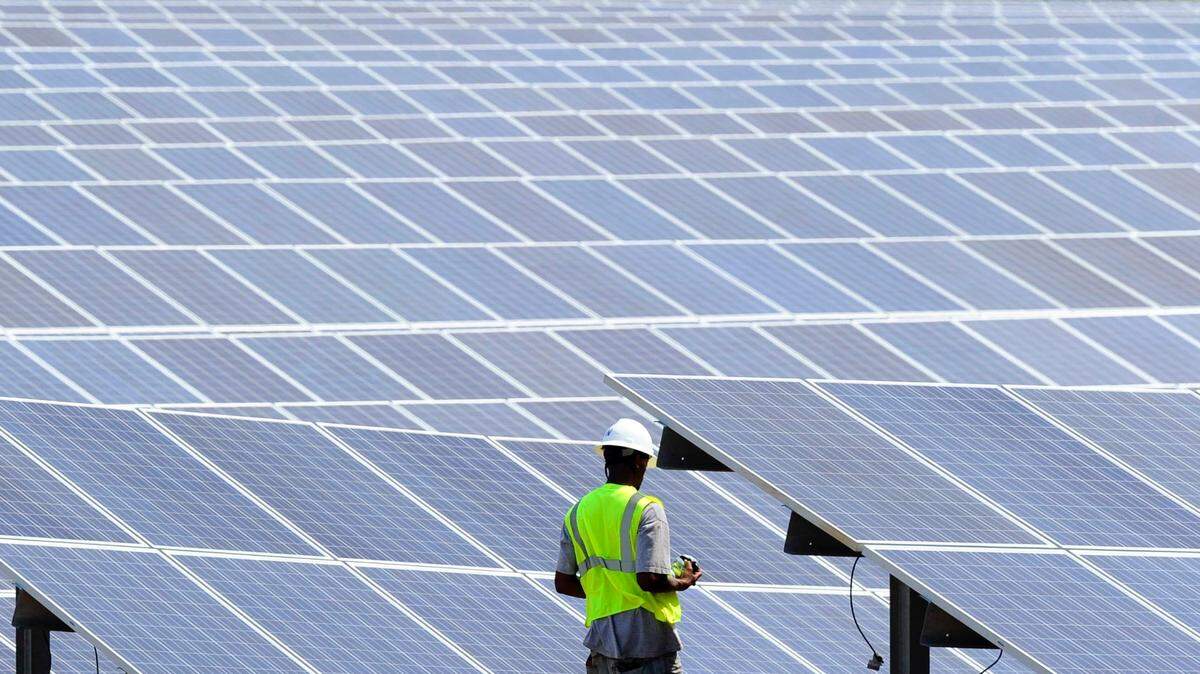
Brian Buzby, executive director of the NC Conservation Network, recalled Cooper signing Executive Order 80 at a Cary solar farm as a starting point.
“It’s started to change things,” Buzby said. “It really did lay down a marker of, ‘Where do we want to go as a state?’ And then it created a whole set of important processes and work that’s been put into place.”
Legislation or executive order?
Republicans who worked on House Bill 951 said they did not consider Executive Order 80’s targets while working on the energy legislation.
In a statement to The News & Observer, Sen. Paul Newton, a Cabarrus County Republican, wrote, “We were not motivated by arbitrary and expensive goals embedded in a legally unenforceable document.”
For Newton, priorities included reducing emissions in a way that was “fiscally sound” while also maintaining grid reliability and doing so at the lowest “possible cost” to consumers.
Rep. John Szoka, a Fayetteville Republican, worked on the Clean Energy Plan and helped write early versions of last year’s energy legislation. Szoka, too, said the targets laid out in Executive Order 80 had little impact on his approach to the legislation.
Much of that, Szoka said, is due to the structure of North Carolina’s government, which includes one of the weakest governor’s offices in the country. That means that an order from Cooper can direct state agencies to take action — buying electric vehicles instead of gas-powered cars for the state fleet, for instance, or curbing energy usage — but not create laws.
“It’s not me against Governor Cooper,” Szoka said, “it’s just the position of governor in this state according to the constitution is one of the weaker roles of governor in the United States. So it just doesn’t have much oomph behind it in policy setting.”
Legislation typically offers more lasting solutions than executive orders, said Doug Vine, the director of energy analysis at the Center for Climate and Energy Solutions, a nonprofit that advocates for greenhouse gas emissions and promotes the transition to carbon-free energy sources.
But executive orders can still carry some heft, despite a shift in policy being as easy as a change in the governor’s office.
“These executive orders oftentimes do put a stake in the ground, or they’re a negotiating tactic that can lead to actionable legislation,” Vine said. “North Carolina is a case study for that.”
A plan to reduce carbon-based energy
Dionne Delli-Gatti helped craft the Clean Energy Plan in her previous job as the Environmental Defense Fund’s director of Southeast climate and clean energy initiatives. Then, last fall, Delli-Gatti helped broker the final agreement while working as North Carolina’s clean energy director.
“All of that was helpful,” Delli-Gatti said. “It wasn’t all pretty, but all of it built up to where we are today and hopefully where we’re continuing to go.”
House Bill 951 directs the N.C. Utilities Commission to approve a plan by the end of 2022 describing how Duke Energy plans to meet the legislatively mandated carbon reductions. The utility company is working on a draft now, which is set to be submitted in May.
“That’s the big question: What does the (carbon) plan look like?” Buzby said. “We are hopeful that it will be a plan that will ensure that the goals of Executive Order 80 actually get over the finish line.”
A plan for the transportation sector
Cooper, meanwhile, has turned the attention of state government toward transportation with Executive Order 246. Signed in January, the order seeks to replicate the process that played out with energy while also directing state agencies to consider environmental justice in their decisions.
A state report that was required under the order shows transportation is now responsible for more greenhouse gas emissions than any other sector in North Carolina, including power generation.
Executive Order 246 also updates statewide greenhouse gas targets and sets a new benchmark of 1.25 million electric vehicles registered in North Carolina by 2030.
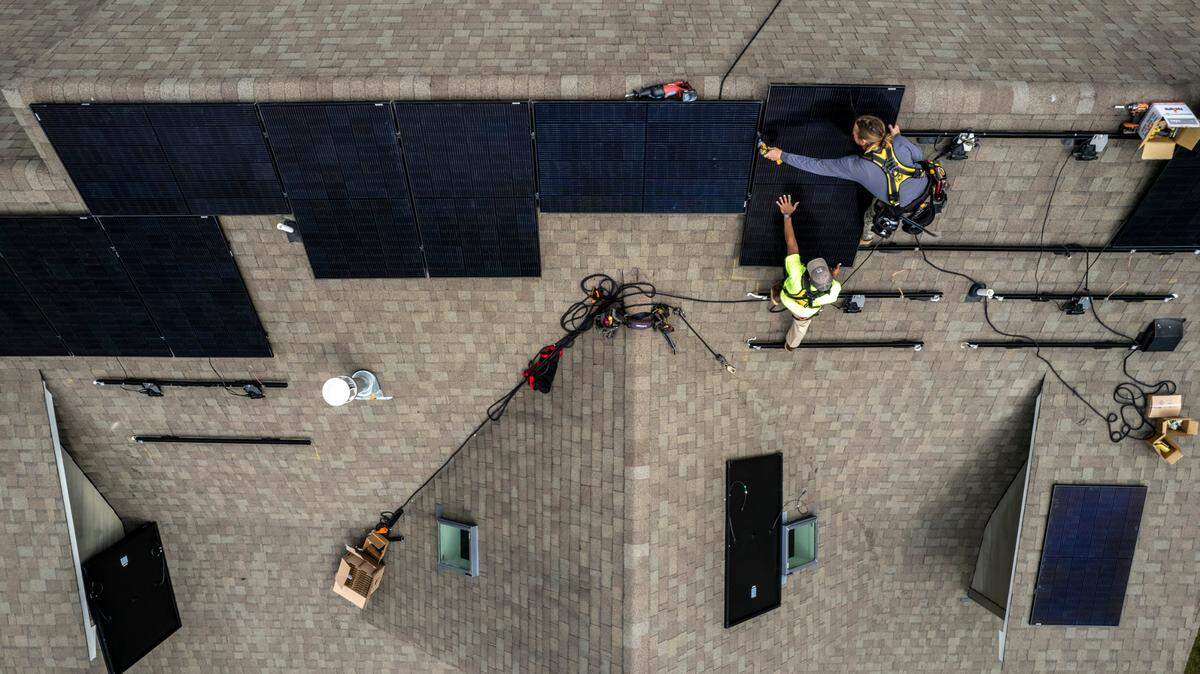
State officials hope they can achieve greater greenhouse gas reductions from electric vehicles by first cleaning up the power sector. An electric car whose battery is powered by rooftop solar, they figure, is associated with significantly fewer emissions than one whose battery is powered by a coal-fired power plant.
“We had to start to transform the power sector to make transforming the transportation sector more viable,” Delli-Gatti said.
Cooper hopes that as with energy, the transportation order can lead to legislation.
“There’s probably even more of a push in the clean transportation area, where it could potentially result in legislation,” Cooper said. “But even if you don’t have legislation, what these executive orders and the resulting stakeholder processes do is to pull in public-private partnerships and help to leverage the market and people’s behavior.”
This story was produced with financial support from 1Earth Fund, in partnership with Journalism Funding Partners, as part of an independent journalism fellowship program. The N&O maintains full editorial control of the work.
This story was originally published April 17, 2022 at 6:00 AM with the headline "Despite ‘divided government,’ NC turned executive order into landmark climate law."
.JPG)