
North Carolina has a state budget. Gov. Cooper signs spending plan into law
North Carolina Gov. Roy Cooper signed the state budget into law on Thursday, the last state in the country to pass a budget.
Cooper, a Democrat, told reporters on Tuesday that he would sign the compromise budget revealed on Monday by the Republican-majority legislature. It followed nearly two months of negotiations between Cooper, House Speaker Tim Moore, Senate leader Phil Berger and other legislative leaders.
The Senate and House passed the budget bill this week with broad bipartisan support after Cooper said he would sign it. The final vote was in the House Thursday morning.
Cooper said Tuesday that the “good outweighs the bad” in the budget, which brings average raises of 5% over two years for teachers and other state employees, cuts individual income taxes and starts the phasing out of the state’s corporate income tax.
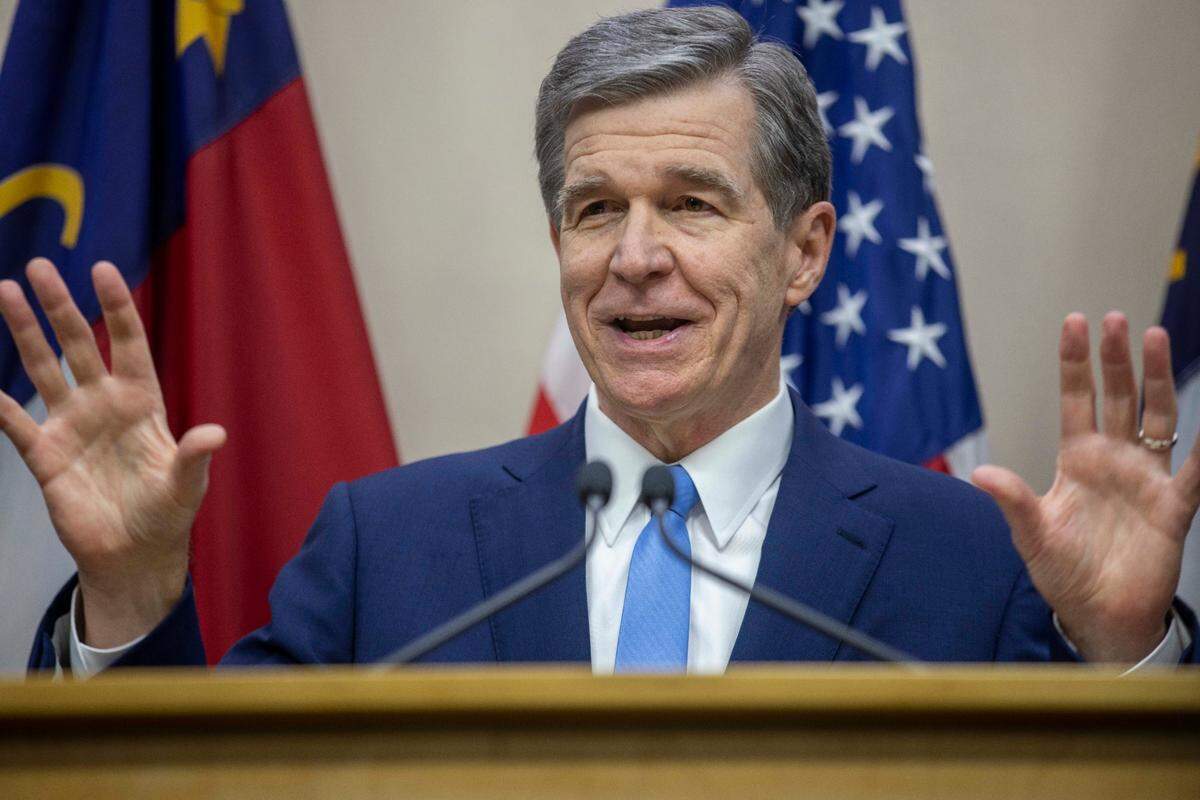
“This budget moves North Carolina forward in important ways,” Cooper said in a statement. “Funding for high speed internet, our universities and community colleges, clean air and drinking water and desperately needed pay increases for teachers and state employees are all critical for our state to emerge from this pandemic stronger than ever. I will continue to fight for progress where this budget falls short but believe that, on balance, it is an important step in the right direction.”
The budget spends $25.9 billion in the current fiscal year, which started July 1, and $27 billion in the 2022-2023 year. Bonuses and raises retroactive to July 1 could be given to state employees by January, or earlier, a House Republican staffer told reporters on Thursday.
Earlier Thursday on the House floor, Rep. Donny Lambeth, a Winston-Salem Republican and a head budget writer, said “we’re already late” and hoped for unanimous support. It passed 101-10 on its final House vote.
On Wednesday, Lambeth compared the final budget to a “fine wine” aging to perfection. He said it will improve the lives of every citizen in North Carolina and called it a “once in a generation” budget with historic investments in education and infrastructure.
The Senate’s final vote a day earlier was 41-7, both votes with significant Democratic support. Several Democrats were part of the budget conference committee and had a hand in negotiations with Republicans.
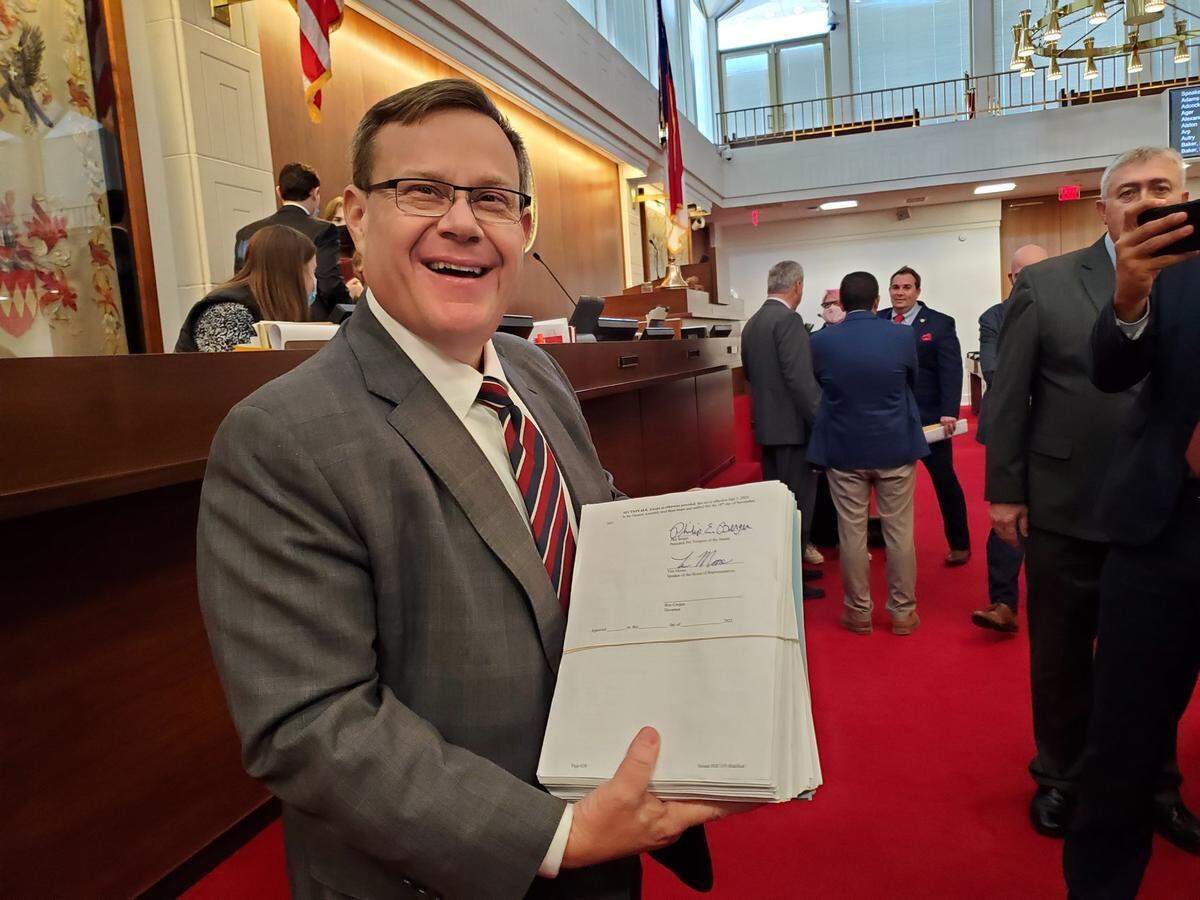
House Speaker Tim Moore quipped Thursday that even though North Carolina was the last state to pass the budget, “we did it the best.”
Moore said that no one wanted to leave the legislative session without a fully enacted budget. In addition to raises, tax cuts and school construction projects, it also allocates federal coronavirus relief funds.
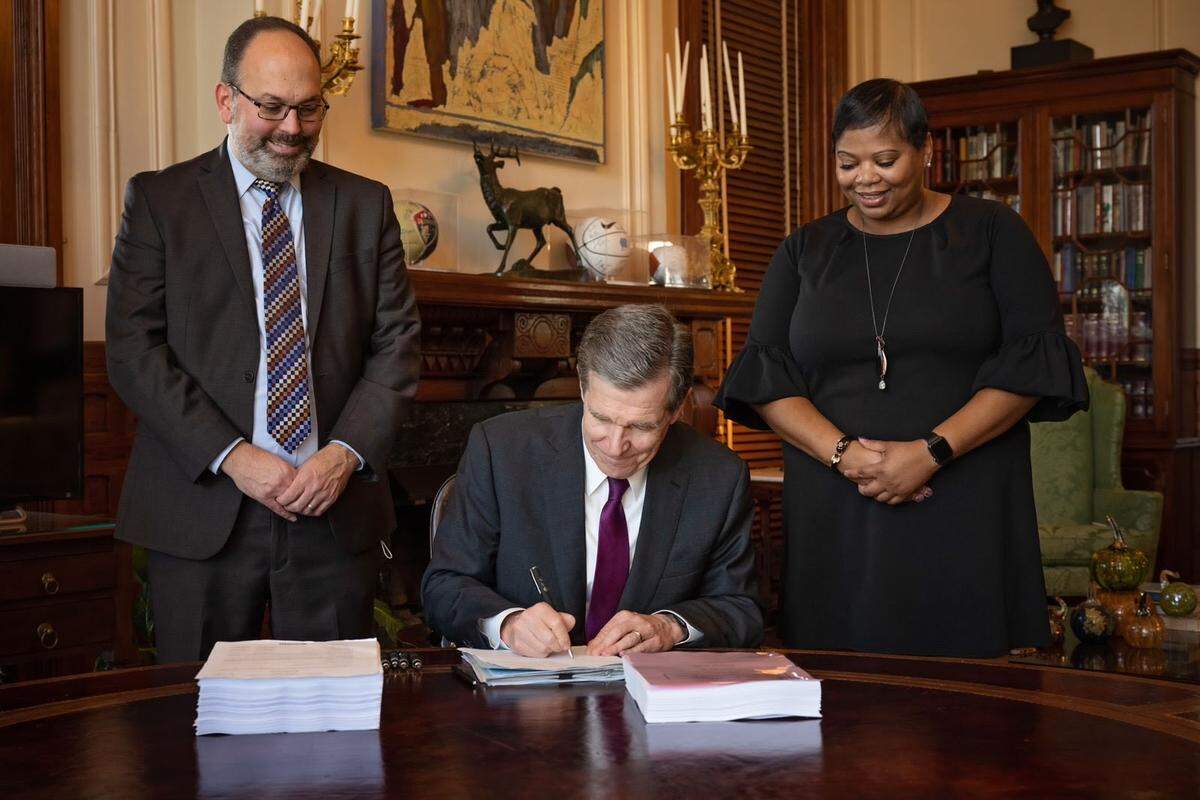
Moore had just signed the budget, also signed by Senate leader Phil Berger, before it was sent by special messenger two blocks away to the governor. Cooper signed the budget in the Executive Mansion, flanked by state budget director Charlie Perusse and legislative affairs director LT McCrimmon, according to a photo released by the governor’s office.
Offers and counteroffers between the sides became public on Wednesday through a public records request by The News & Observer and other local media. The amount of potential tax cuts, Medicaid expansion, limits on emergency powers and amount of raises and education spending were among the negotiations. Cooper, Berger and Moore left negotiations without a complete deal, but enough for each to claim a win.
Berger, an Eden Republican, told reporters after a Senate budget vote on Tuesday that concessions made on the Senate Republican side in the budget include the higher raises than the original Senate plan as well as raising the minimum wage for non-certified school employees to $15 per hour within two years.
Rep. Charles Graham, a Robeson County Democrat who served on the budget conference committee, said this budget is one of the greatest accomplishments he’s been involved with since he came to the General Assembly six terms ago.
“I think this budget speaks volumes for our families looking for us to work in a bipartisan way,” Graham, who is running for Congress, told The N&O on Thursday after the vote.
For more North Carolina government and politics news, listen to the Under the Dome politics podcast from The News & Observer and the NC Insider. You can find it at link.chtbl.com/underthedomenc or wherever you get your podcasts.
This story was originally published November 18, 2021 at 3:32 PM with the headline "North Carolina has a state budget. Gov. Cooper signs spending plan into law."
.jpg)