
Behind the scenes of the NC state budget: Here’s why it happened the way it did
No balloons dropped from the House ceiling after the final vote on the state budget on Nov. 18, ending two years of a state budget stalemate.
Nor was there a ceremony a few hours later when Gov. Roy Cooper signed the spending plan into law.
Senate leader Phil Berger came to the House to watch the final vote. It was 101-10. Not a surprise, as Cooper said he would sign it before Democrats voted, giving extra leeway for bipartisanship.
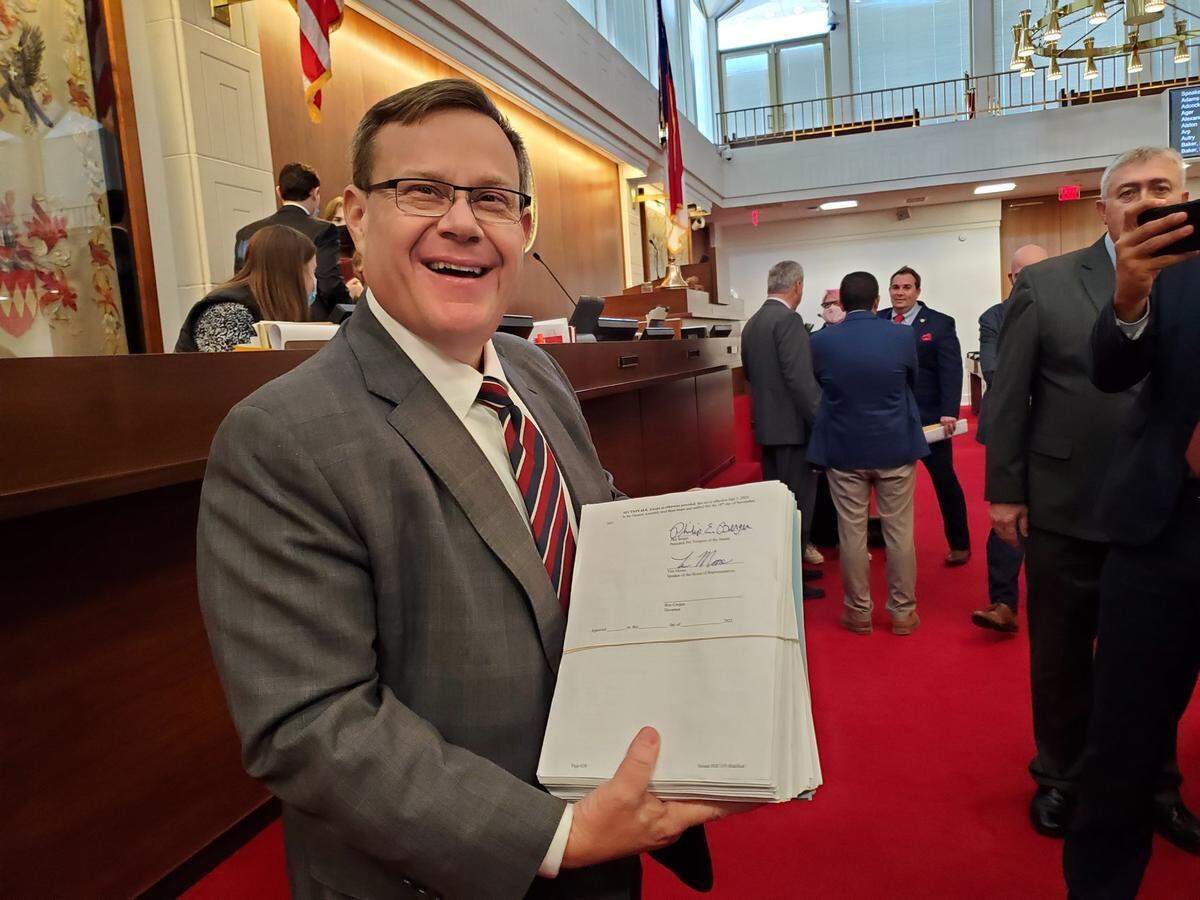
House Speaker Tim Moore signed the massive printed document with a grin and then showed it off to reporters. That was the most public display of fanfare. Asked about the potential for a bill signing ceremony, Berger said he would let the budget speak for itself.
There may have been little fanfare, but the moment was years in the making. In the end, the spending plan had passed because after three years with no budget compromise, lawmakers of both parties and their constituents had run out of patience for any more delay, especially after the long-running coronavirus pandemic. It was also because Democrats who had a hand in negotiations pushed for a compromise that would lead to a budget, even if it wasn’t everything they wanted.
The pressure was on.
Here’s why it happened the way it did.
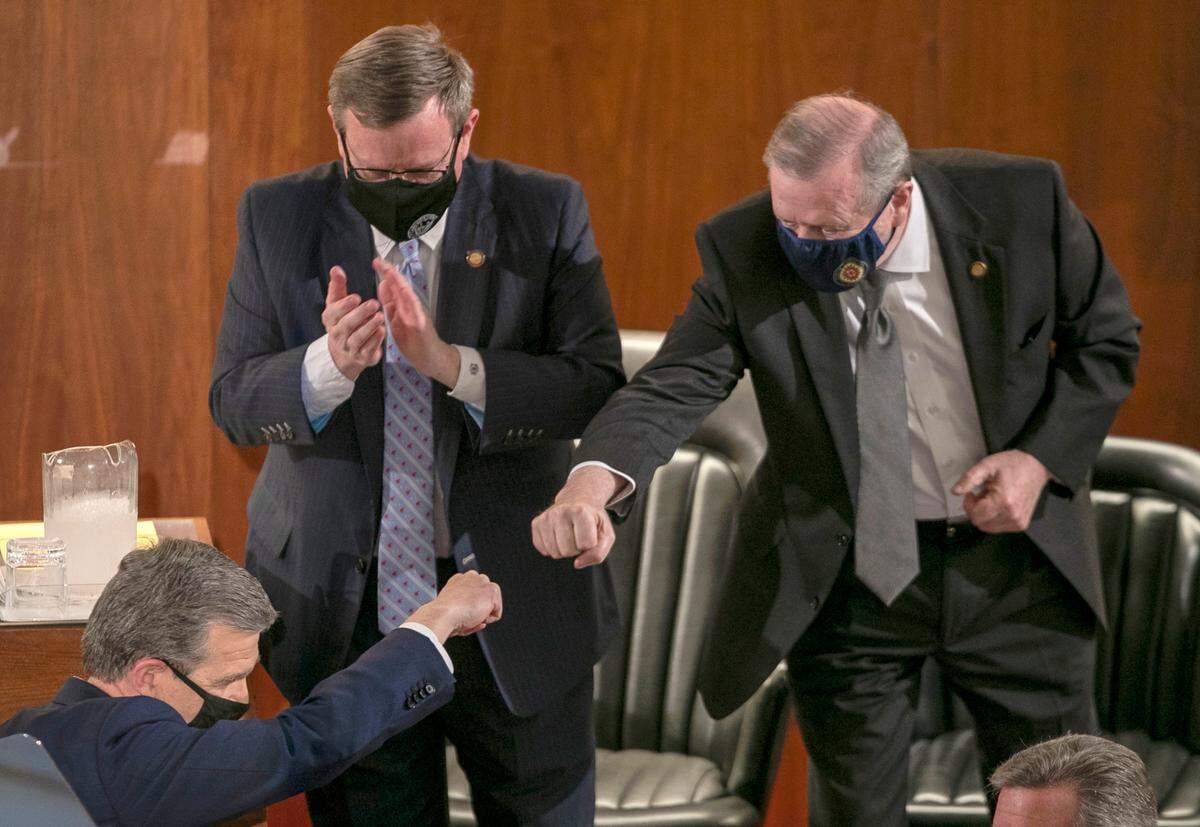
How it started
Legislation is a numbers game. Do you have the votes? If you don’t have the votes, you don’t have a law.
The 2019 budget battle never ended. Cooper vetoed the conference budget. The House overrode it because Moore called the vote when most Democrats weren’t there in a surprise move the morning of Sept. 11, 2019. But the House needs the Senate, and Senate leaders never called the override vote. Because they didn’t have the votes.
Instead, small bill after small bill was passed. Some workers got raises, but many did not, including teachers. Instead of adjourning, lawmakers kept going through the fall and into winter. In January, a one-day session was dominated by a failed override of a teacher raises bill. Everyone went home.
Less than two months later, the coronavirus pandemic arrived in North Carolina.
Everything changed.
A change in tenor
Amid the pandemic in late spring 2020, lawmakers worked together to allocate billions of dollars in COVID-19 relief funds from the federal government. The 2021 session started with a different mood. For nearly a year, the governor had imposed statewide restrictions, and attempts to end them without Cooper’s say-so failed.
There was still a lot to argue about, but the budget process was going to be different this time.
One major reason was the 2020 election. The presidency changed, but not much changed in the politically purple Old North State. Cooper won again. Berger won again. Moore won again. The Republicans kept their legislative majority. The Democrats kept them from getting a supermajority.
Cooper, Berger and Moore like to tell the same story: Cooper didn’t get rid of them, and they didn’t get rid of Cooper. So they resolved to work together for North Carolina.
That became clear early in the year with a compromise that allowed schools to reopen. It could be done. Would it again?
Rep. Marvin Lucas, a Spring Lake Democrat, is a retired principal. He played a lead role on the Democratic side of budget negotiations, according to Republicans and Democrats with knowledge of negotiations.
Lucas saw his role as an ombudsman.
“I thought it would have been detrimental to the state to have three years running of no budget, because the real losers were the citizens of the state, teachers, state employees — regular folk who are just ordinary citizens — counties, cities. Everybody really suffered from lack of a budget,” Lucas said in an interview with The News & Observer after the final House vote.
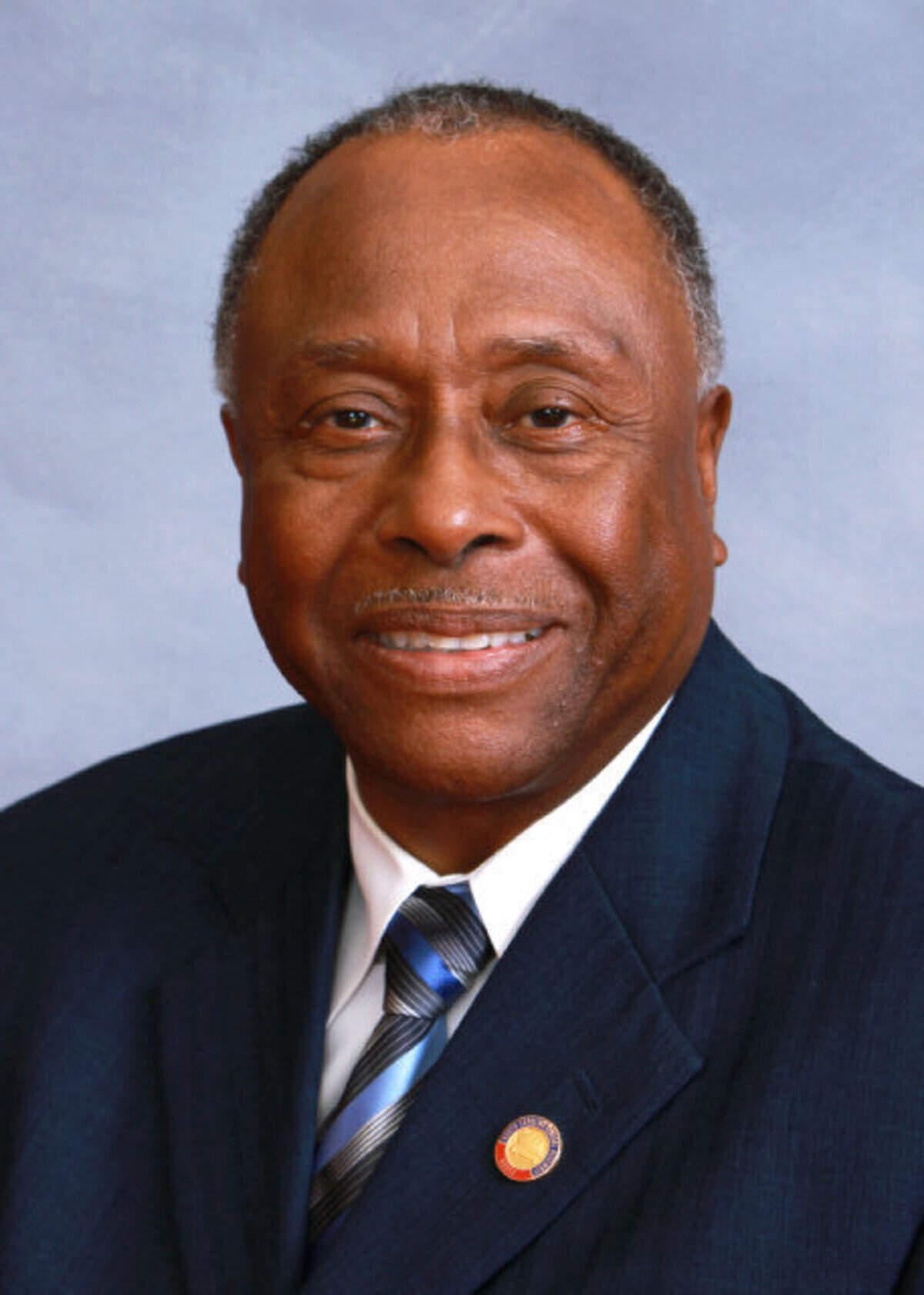
Lucas was one of the Democrats who voted for the House budget, so he was appointed to the conference committee, meaning he had a hand in what the final budget looked like. Its members are referred to as “conferees.”
Lucas, in his 11th term in the House, said Cooper had “really, really been working very religiously to find a way to sign a budget.”
“And so I thought the conferees could play an instrumental role in ombudsmanship in allowing a budget that the governor could sign, and eventually he did feel comfortable enough to sign it. Even though we recognize that poor children ... are still are left way behind in this budget,” he said.
Democrats wanted a budget, not a veto
Republicans have maintained that they had the votes to override a budget veto from Cooper. Democrats have — well, they won’t say publicly if they would have overridden a veto, because it didn’t come to that.
In June, the Senate passed its budget proposal with four Democratic senators in support. That’s enough to override a veto. In August, the House passed its budget proposal with nine Democratic representatives. That’s enough for an override, too. But would they override a budget veto?
Berger told The N&O he didn’t think Cooper would veto the budget, “because it was pretty clear that there was enough support that that would have been problematic for him.”
Did Republicans have the votes?
Remember, teachers didn’t get raises. Projects went unfunded. Things were stagnant, for years. Fatigue with politicians was exacerbated by the pandemic.
Republican Rep. Jason Saine, the gregarious and powerful head of Appropriations, said he had enough Democratic votes for a successful override in the House.
If vetoed, the budget would have had to go to the Senate first. Republican Senate Whip Jim Perry’s job is to count votes.
“I personally believe [Senate Democratic conferees’] goal was never to have to take an override vote,” Perry said in an interview.
“It was to force communication and force conversation. … They didn’t want to be put in that position.”
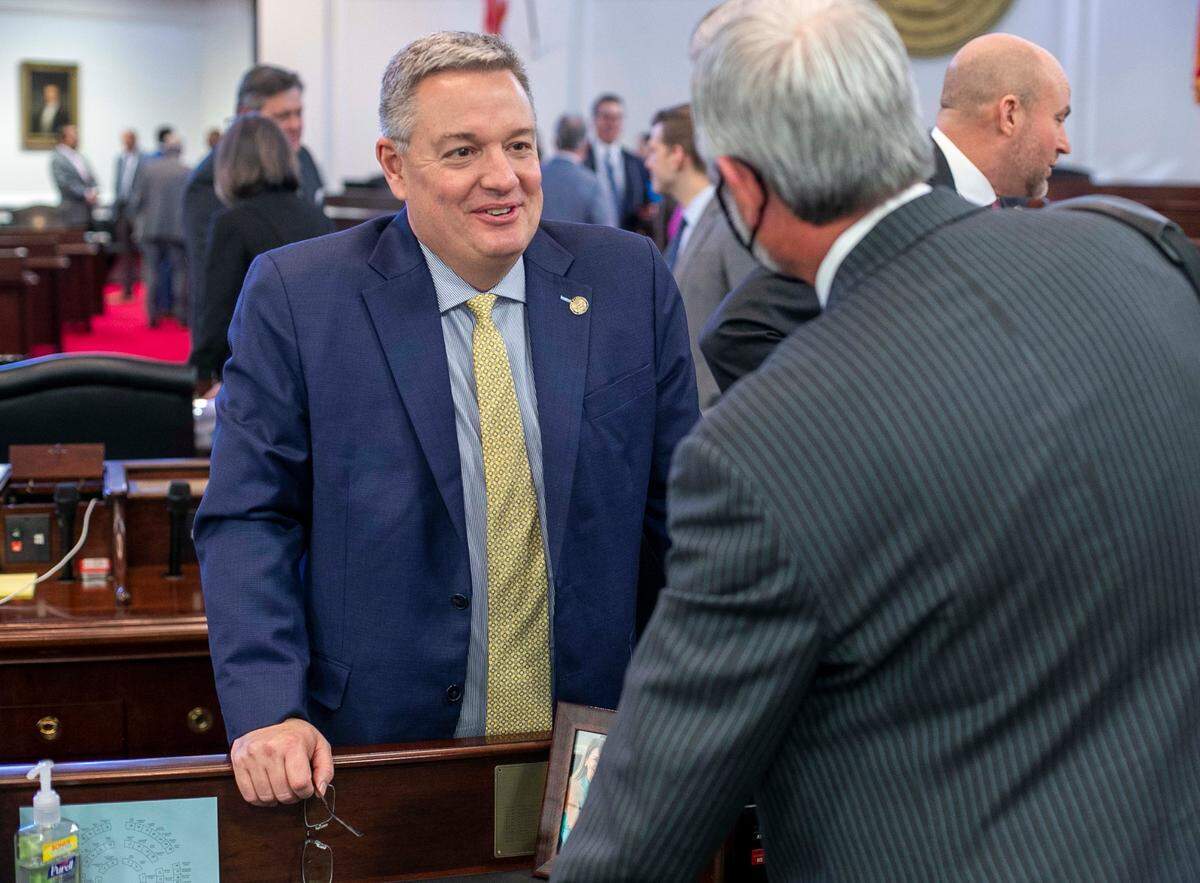
At Cooper’s news conference announcing he would sign the budget, he said he knew that he would have the votes to sustain a veto in the Senate. Senate Republicans only need two Democrats to vote with them for an override. Cooper didn’t mention the House.
When Cooper wants to make sure a potential veto is sustained by fellow Democrats, he will call them on the phone or to an in-person meeting at the Executive Mansion.
Democrats have lined up behind Cooper in the past. In March, Sen. Paul Lowe, a Winston-Salem Democrat, told The N&O that he changed his vote on the schools reopening bill because the governor asked him to do so.
“He asked. I am a Democrat. He’s the governor, and a Democratic governor,” Lowe said about sustaining the schools bill veto.
Sen. Kirk deViere, a Fayetteville Democrat, also met with the governor back then, but still voted to override the schools bill veto. The measure failed because it did not have Lowe’s vote nor Sen. Ben Clark’s, who wasn’t there. Soon after, the deal to reopen schools was announced between Cooper and Republican leadership.
It was, along with the energy bill that will shape the state’s energy and environmental future, the biggest public display of the most powerful politicians in the state working together in 2021 — until this budget.
Lowe, deViere, Clark and Sen. Don Davis all voted for the original Senate budget in June and were on the conference committee.
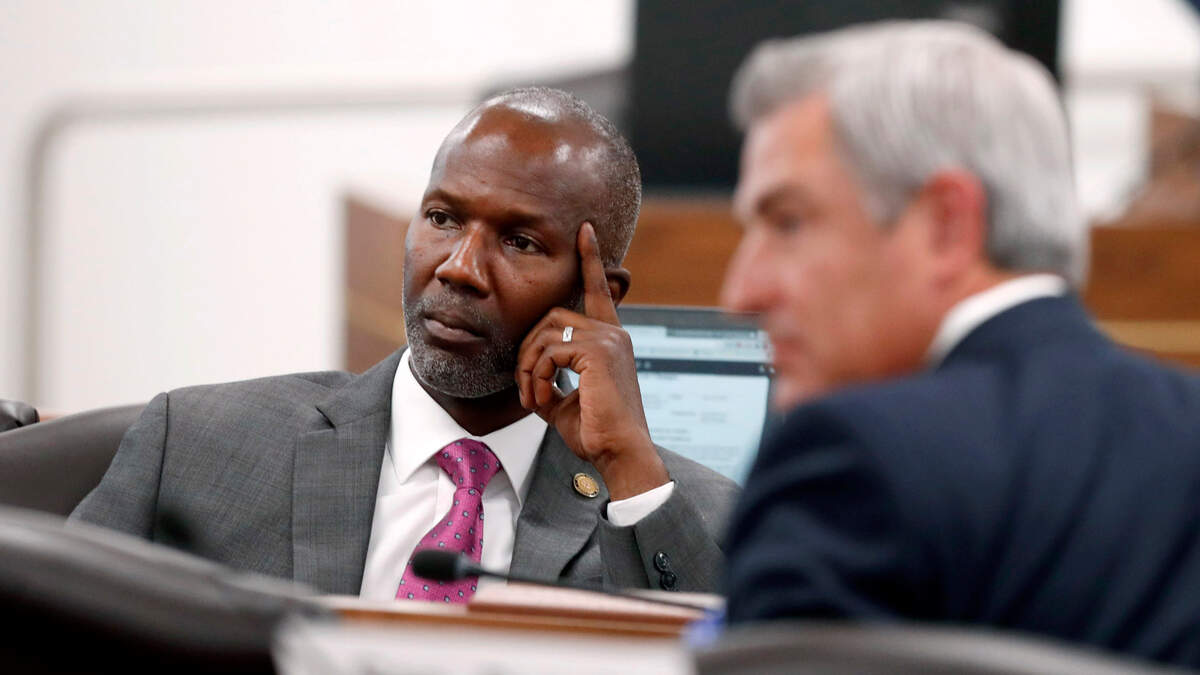
DeViere said for budget negotiations, he had group talks with the governor and a single one-on-one talk. He describes all their conversations as mutually respectful.
“My conversations with him were always around that, ‘Governor, North Carolina needs a budget, and we need to get to a negotiated budget, first and foremost. This has to be a compromise,’” deViere told The N&O in an interview.
“I was very clear that I believe we needed to get to a budget, and if we didn’t, that was failure in my mind,” he said.
DeViere acknowledged there was pressure in the conversations from Cooper, but also him.
“I have a job to do as a legislator, and he has a job to do as governor,” he said.
In the House, Democratic Rep. Brian Farkas of Greenville also served on the conference committee.
Farkas said the House Democratic votes supporting the Republican-led budget “weren’t a given at any point until the very end when we all voted [Nov. 18]. To me, we leveraged that individually.”
The N&O asked Lucas, who led House Democratic budget conferees, if he would have sustained a veto from the governor.
“I will work with the governor,” Lucas said.
Farkas said “that was not a battlefield that we were on, and it’s not something we had to talk about a whole lot.”
Asked if he would have overridden a veto, Farkas said: “It’s not something we gotta worry about.”
The N&O also asked Rep. Charles Graham, a Robeson County Democrat running for Congress, and one of the budget conferees.
“All politics are local,” Graham answered, and the budget is “transformational” for Robeson County. He said his No. 1 concern is his district, and that he was straightforward that he, first and foremost, wanted to have a budget that became law.
“I made it very clear I wanted a budget, and I made that very clear throughout the process,” Graham said.
Cutting the military pension tax
DeViere spent 10 years in the U.S. Army infantry, first enlisted and then as an officer. He lives in a military town: Fayetteville, which is right next to Fort Bragg. He left the Army as a captain after commanding two infantry companies, and owns a marketing firm.
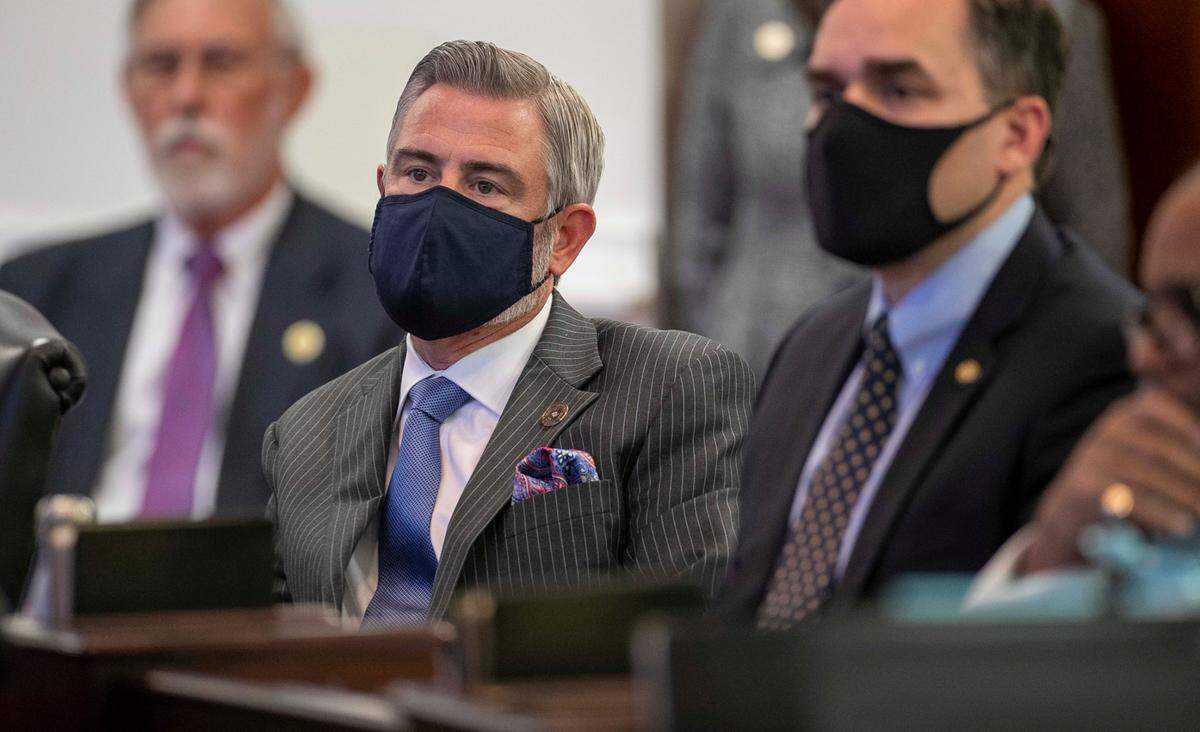
“Really what drove me to run is we were leaving a lot of people behind in different ways and the military ethos in me is: you can’t leave anybody behind,” he said.
DeViere said in an interview with The N&O that “good government happens when people come to the table and be reasonable and find a pathway forward.”
Finding a “reasonable” compromise was central to his push. He also wanted to exempt military pensions from income tax.
Other lawmakers credit deViere with getting the elimination of the tax in the final budget, though it also passed the House as a separate bill sponsored by Fayetteville Republican Rep. John Szoka earlier in the session.
“That particular thing is what I hear every VFW meeting I go to, every active duty change of command,” deViere said. Service members making the decision to plant roots in North Carolina or move away ask about the pension tax.
He said a high-ranking officer looked at him and said: “’Kirk, that’s your number one mission.’ ‘I said, I got that mission sir, I’m all in.’”
“We say we’re the most military-friendly state. We need to put our money where our mouth is,” deViere said.
Raises and fatigue
Davis, a Greenville Democrat and one of the Senate Democrats who voted for an earlier version of the Republican-written Senate budget, has voted with Republicans previously on controversial issues.
He is also running for retiring U.S. Rep. G.K. Butterfield’s congressional seat.
Asked if he would have overridden or sustained, a Cooper veto on the budget, Davis said he wanted to focus on getting the budget over the finish line.
“It was a lot of work, and I’ve been around some time now, and I’ve not seen a perfect budget yet,” Davis said.
Davis talked about the stress on everyone during the pandemic.
“There’s a lot of fatigue, and a lot that’s been going on, and when I think again about this budget and all the teachers have been going through — I mean, we owe them this budget.”
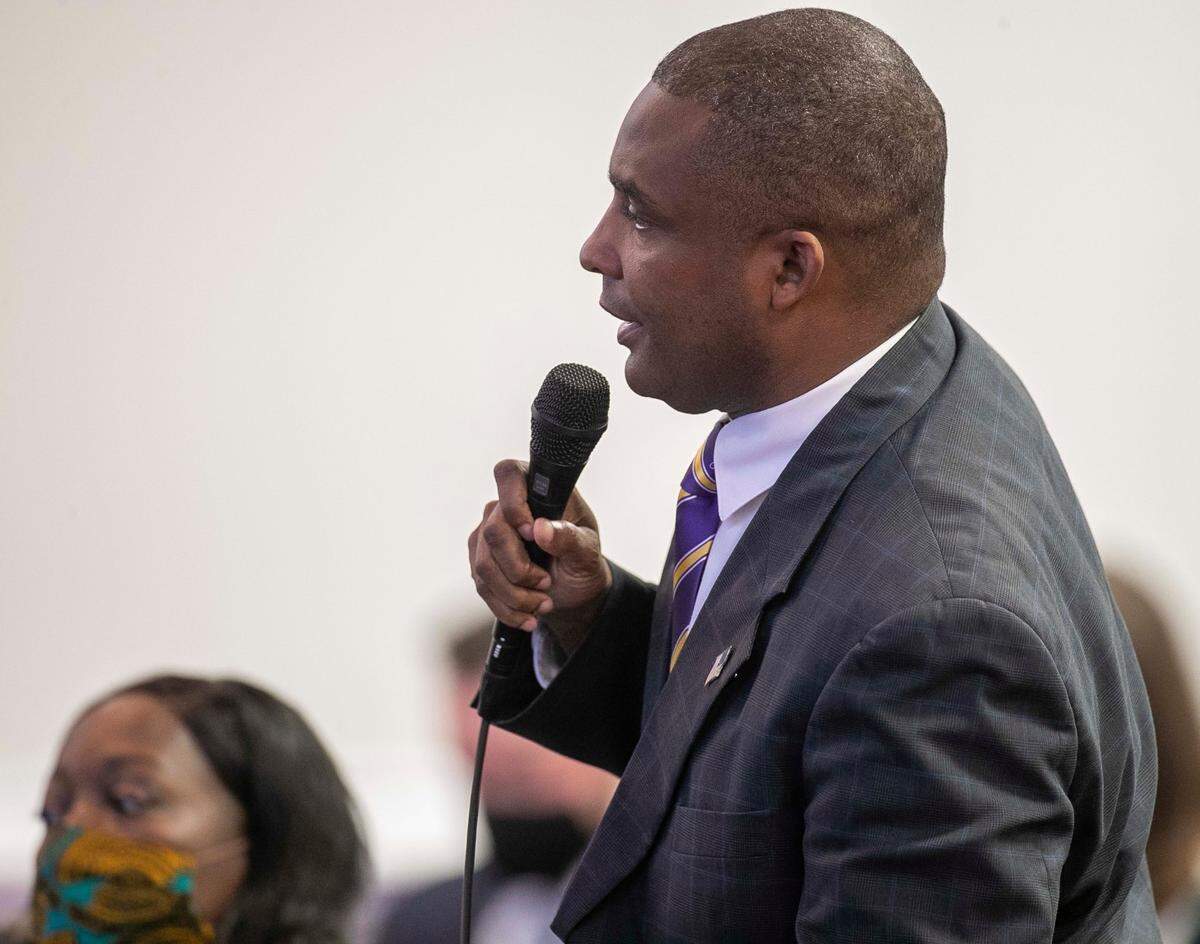
The budget includes an average of 5% raises over two years plus bonuses for most teachers across the state, and even more for teachers in 95 rural counties, including his district. It also includes getting non-certified school employees to a $15-per-hour minimum wage within two years, which some lawmakers pushed for during the last budget process.
“Just imagine looking at your colleagues out there, all state employees, getting to $15 an hour. And these individuals — bus drivers, cafeteria workers, custodians, assistants, and even in our community college system,” he said.
“We owe this to them,” Davis said. Other important items in the budget to him were broadband internet expansion, eliminating the military pension tax and giving bonuses to retired state employees.
Brody School of Medicine
Farkas, another Eastern North Carolina Democrat and a freshman lawmaker, wore an East Carolina University pin on his suit lapel the day of the final budget vote in the House. He said funding a new Brody School of Medicine at ECU was the biggest win for his Pitt County district. A win for Democrats, he said, was the $15 minimum wage.
Farkas said the House Democrats on the budget conference committee met with the governor a few times early in negotiations, as a group.
“I made it clear to him that I wanted to do what I could to strengthen his negotiation position,” Farkas said. Farkas told The N&O that budgets should only be about money, and that “policy provisions had no business in there.”
Policy in, and cut out of the budget
Some policy provisions are in the budget Cooper signed into law — including prohibiting what Republicans call “collusive settlements” by the attorney general. The provision requires legislators to sign off on legal settlements that involve them. Cooper said that is unconstitutional, as is not fully funding the Leandro education spending ruling. Cooper told reporters that those two issues will be resolved in the court system.
Multiple sources in the legislature confirmed that the “collusive settlements” provision had been part of negotiations, and offered by the governor, though not in the official documented offers exchanged. Cooper’s office, however, said that he would not have supported a deal with the settlements provision because he believes it is unconstitutional.
In announcing he’d sign the budget, Cooper stopped short of saying if he would sue over the emergency powers provision, which requires the governor to get agreement from the rest of the Council of State after 30 days to extend a state of emergency, and from the General Assembly to continue it beyond 60 days. It goes into effect in 2023.
That is a big change from legislation Cooper vetoed limiting orders to seven days and starting immediately.
Cooper told reporters that the start date of 2023 gives time to prepare for changes.
Saine said that “not doing something on emergency powers would’ve been almost a non-starter for us. I don’t think it would’ve been a deal breaker.”
But Perry, the Republican Senate whip, said Republicans had thought any proposal with emergency powers changes in it would have resulted in a veto.
That didn’t happen.
Democratic conferees and the governor worked together to push for what they want, but in different ways. One win for the House Democrats was getting rid of a policy provision that would have made teachers post all their lesson plans online — an issue that has been part of the controversy over instruction materials, including anti-Critical Race Theory legislation that Cooper vetoed.
Graham said he fought to eliminate that provision. So did Lucas.
“Oh, that was awful,” Lucas said about the lesson plans provision. “There were several big things, and that was among those. I still have reservations about restrictions on the attorney general, and the governor. Those still give me heartburn. They were lessened somewhat, especially for the governor, but it was enough that the governor could feel comfortable to sign it,” he said.
Medicaid expansion out
Eventually, budget negotiations ran their course. Thanksgiving approached. The budget was months late, and it was time to make a decision.
Unlike the 2019 budget battle, there weren’t any deal breakers. Not in the same way, at least, that would result in no budget at all — given the pressure from those who wanted a budget, period. In the announcement that a legislative budget would move forward without an official deal between Cooper, Berger and Moore, they acknowledged Medicaid expansion would not be included.
Moore said in October that there were not enough votes in the House Republican caucus to include Medicaid expansion in the budget. Perry and Berger confirmed that Moore really didn’t have the votes in his caucus to include it.
Asked yet again after the budget passed, Moore said he does not want expansion without a work requirement.
A source in Cooper’s office said that Moore told them during negotiations, however, that he personally supports Medicaid expansion.
The final budget includes a study committee on Medicaid expansion that will meet before the next legislative session.
Moore said after the final House budget vote that he “never thought that Medicaid expansion was appropriate to be used as a bargaining tool or a trade off point.”
He said the he just doesn’t have the Republican caucus votes for it, “and I’m not going to go browbeating members to vote for something they disagree with.”
Not a deal, but a ‘settlement’
During budget negotiations, Cooper, Berger and Moore talked on the phone multiple times — sometimes two of them, sometimes three. They also met in person more than once, and were joined by Senate Minority Leader Dan Blue and House Minority Leader Robert Reives. They’re known as the “Big Five.” Multiple members of staff and policy advisors were also there. Moore said one meeting was over breakfast. Reives described that meeting as “very positive, a pathway forward for both sides.”
Time between offers and counteroffers was as short as a few days and as long as weeks. Sources in the governor’s office familiar with negotiations said that Cooper’s office and Berger’s office were often at the table waiting on the House to be available to discuss the budget, delaying negotiations.
Moore’s office maintains that he and staffers were available to meet during negotiations, and the only slower movement was around Medicaid expansion.
Cooper’s staff declined to make the governor available for an interview for this story.
After it was clear the House wouldn’t agree to Medicaid expansion in the deal, everyone left the negotiating table and legislative leaders announced that the conference budget would come out Nov. 15. Then, things moved very fast, and Cooper signed the budget a few days later.
“I will sign this budget, because on balance the good outweighs the bad,” Cooper said on Nov. 16, saying it moves North Carolina forward in important ways, “many that are critical to our state’s progress as we are emerging from this pandemic.”
“While I believe that it is a budget of some missed opportunities and misguided policy, it is also a budget that we desperately need at this unique time in the history of our state,” he said.
Saine said Cooper had the same problem other Democrats had: there was so much good in the budget that it was worth supporting.
“But honestly, he really could take a win. I’m in sales — don’t talk yourself out of a sale. Be quiet and take the sale. Take the win,” Saine said.
Saine said Republicans were not going to spike the ball.
“[Cooper] said exactly what I thought he’d say: ‘I’m going to work on the things I don’t like.’ That’s leadership,” he said.
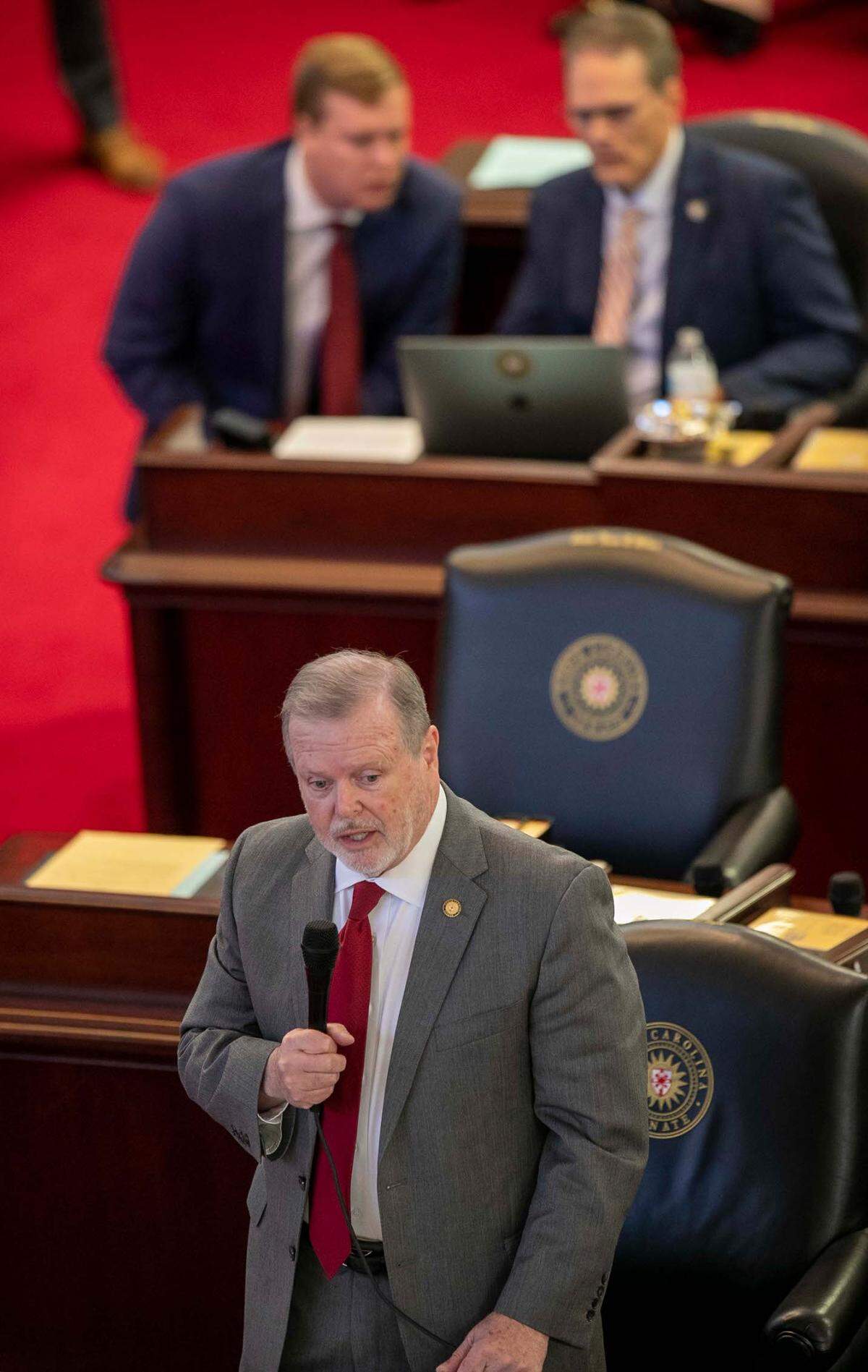
Berger said they followed through on the commitment they made publicly and to each other to engage in conversations back and forth.
“Oft-times a good settlement is something that everybody’s a little bit unhappy with but it’s something that you’re willing to do,” he said.
What this means for the legislature’s future
In 2022, the legislature will have a short session. What does the budget mean for the future of compromise between the branches?
Berger said that there are some things Cooper and Republican leadership are not going to agree on, but they have found “trying to find common ground is the best way for us to resolve things.”
Perry said he doesn’t think “we’ve entered some type of legislative utopia. We’re going to have some things we just disagree on.”
Overshadowing all of that is November 2022, and the election. All 170 seats in the General Assembly are up for election. If the Republicans take back a supermajority, they won’t need any Democrats to override vetoes.
Cooper is in his second term as governor, and final because of term limits. However, his political future could include becoming head of the Democratic Governors Association, where he currently serves as vice chair, and perhaps more.
Moore’s expected congressional campaign fizzled out before it started, on the eve of the budget. Berger’s power position remains unchanged. With new district maps recently drawn and already part of pending litigation, the 2022 election has potential for another power shift.
Candidate filing begins Dec. 6.
For more North Carolina government and politics news, listen to the Under the Dome politics podcast from The News & Observer and the NC Insider. You can find it at link.chtbl.com/underthedomenc or wherever you get your podcasts.
This story was originally published November 23, 2021 at 6:01 PM with the headline "Behind the scenes of the NC state budget: Here’s why it happened the way it did."
.jpg)