
Deep-sea creature — with ‘vivid’ red spots — is new species off Easter Island
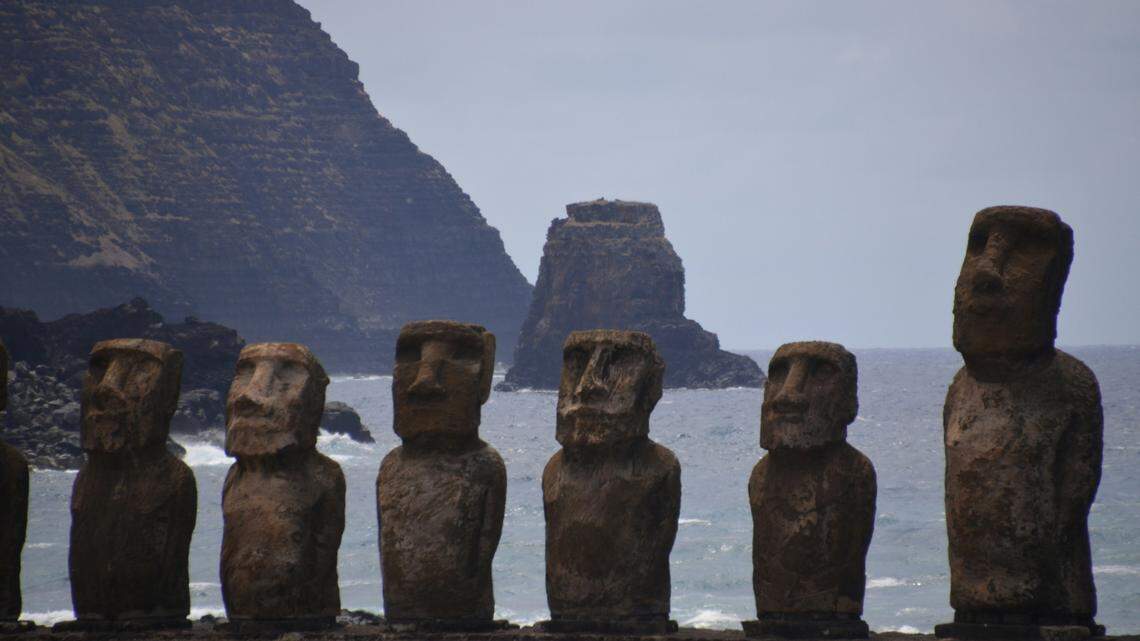
Rapa Nui, more popularly referred to as Easter Island, is known for its isolated culture and towering stone statues.
But when researchers boarded the research vessel Falkor (Too) and set out to the island off the coast of Chile, they weren’t searching for evidence of ancient history.
The Schmidt Ocean Institute’s ship was equipped with the ROV SuBastian, a deep-sea remotely operated vehicle used to explore the seamounts of the Pacific Ocean.
During a 2024 voyage, ROV SuBastian was released to the depths of the Rapa Nui Multiple Use Marine Coastal Protected Area — and discovered a species new to science.
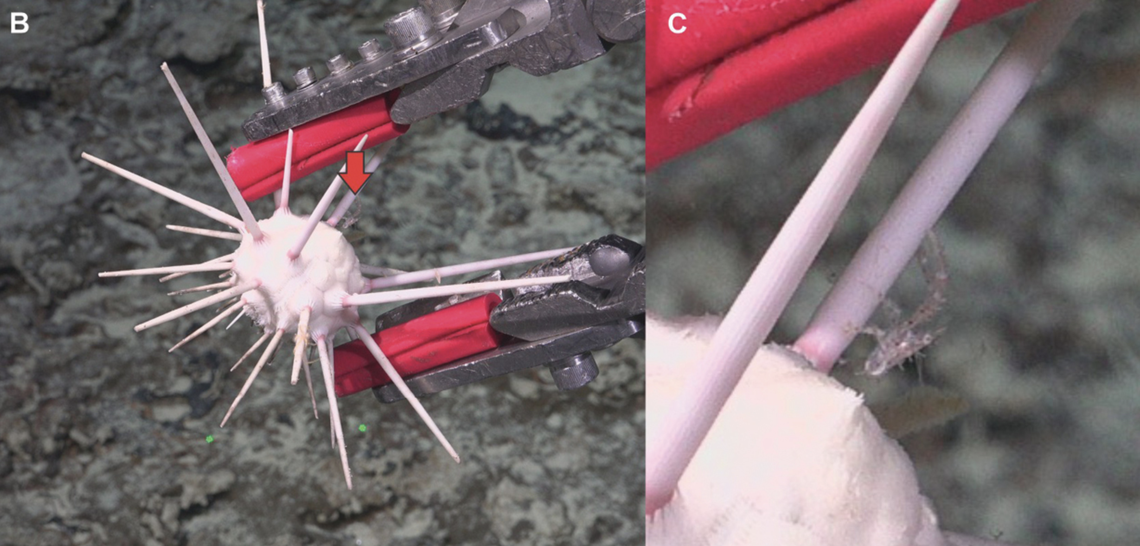
Images taken from the vehicle showed a reddish spiny sea urchin perched on the rocky bottoms of the Pukao seamount at a depth of about 1,100 feet, according to a study published Aug. 4 in the peer-reviewed journal ZooKeys.
Upon closer inspection, there was a small squat lobster clinging to the urchin’s spines, researchers said.
It was a lobster never identified before, and its discovery on the sea urchin was considered “uncommon” by the research team, according to the study.
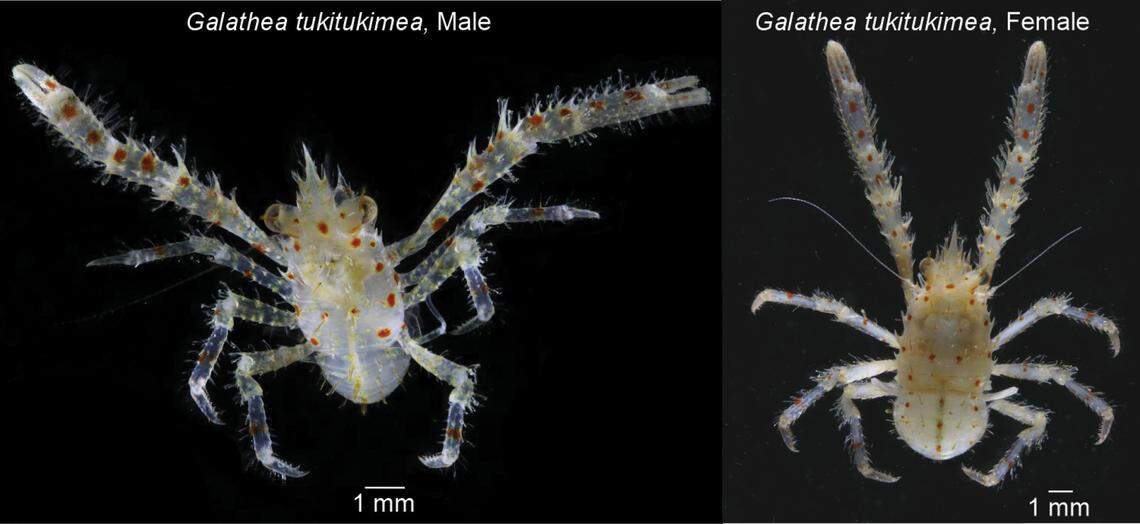
A male of the species was found to measure just 0.12 inches long, and a female still holding eggs measured 0.17 inches long, researchers said.
The lobster’s carapace, or the upper shell, is longer than broad, and the legs are covered with “iridescent setae,” or hair-like structures, according to the study.
The rest of the animal is white with “yellow-orange blotches bearing red spots,” according to the study.
The coloration earned the species its name, Galathea tukitukimea.
“The specific epithet tukitukimea derives from the Rapa Nui words tuki tuki mea, meaning ‘red dots,’ in reference to the vivid reddish spots on the carapace and pereiopods (the walking limbs),” according to the study. “The name was proposed by Serafina Moulton Tepano, a Rapa Nui artist who accompanied the (Faulkor (Too)) expedition.”
Previous studies have found symbiotic relationships between squat lobsters and soft or black coral, but only one species has been found to coexist with sea urchins, researchers said.
The sea urchin belongs to the species Stereocidaris nascaensis, which also means the ROV SuBastian research shows the urchin living farther west than previously known, according to the study. The lobster potentially lives on the urchin as a mimicry behavior, when one organism mimics the physical appearance of another for protection or other benefits.
“This potential mimicry-based association is uncommon in squat lobsters, which warrants further study,” researchers said.
Rapa Nui is in the southeastern Pacific and is governed by Chile.
The research team includes María de los Ángeles Gallardo Salamanca, Cynthia Asorey and Enrique Macpherson.
This story was originally published August 6, 2025 at 11:38 AM with the headline "Deep-sea creature — with ‘vivid’ red spots — is new species off Easter Island."
