
Red-eyed creature — with ‘enormous’ head — found as new species in China. See it

In the lush landscape of southern China, a series of notes echoes through the forest.
The call consists of a line of notes that taper off as the sound spreads, alerting passersby to the presence of a creature in a nearby stream.
In September 2024, researchers followed this sound to the water of Guilin City, and a plump little animal poised on the wet rocks, according to a study published Aug. 4 in the peer-reviewed journal Zoosystematics and Evolution.
The disproportionately-sized animal was a short-legged toad — and a species new to science.
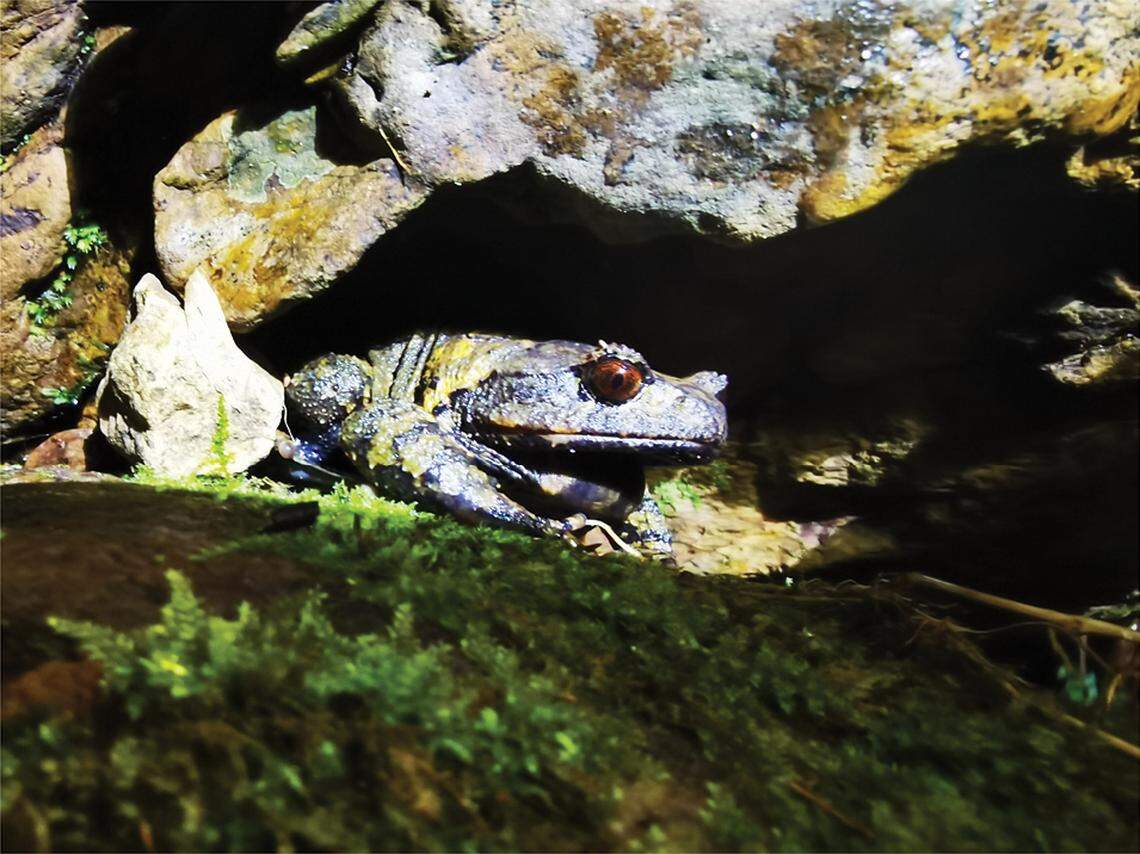
Short-legged toads, belonging to the genus Brachytarsophrys, were first identified in 1983 and include toads with similar thick and stout bodies coupled with “short and strongly thickset” limbs, according to the study.
Their generally “large” bodies are built on the back of “enormous and extremely depressed” heads, making the toad appear wide and flat, researchers said.
The new species, confirmed through genetic analysis, is no exception to this odd group.
Brachytarsophrys guilinensis was described as “robust” if generally smaller in body size than others from the same genus, according to the study.
The new species was named after the region where it was found, with a common name of the Guilin short-legged toad, according to the study.
The toad’s head is “enormous, extremely wide and flat, about 1.5 times as broad as long, and nearly one-half as broad as the (body length),” researchers said.
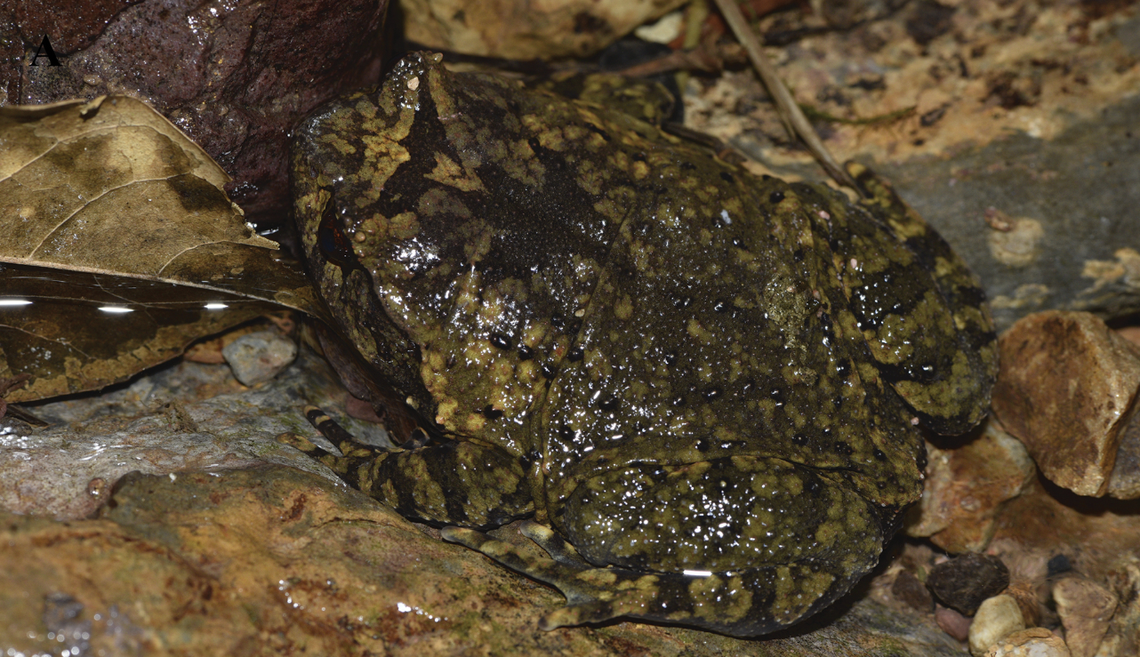
The skin on the toad’s back is rough, with some warts scattered on the back and upper eyelids, according to the study. The skin on the toad’s stomach is smooth and lighter in color.
The “yellow-brown” animal has “scattered” yellow patches, as well as a “black stripe between (the) eyes,” according to the study.
Its eyes stand out from the rest of the body with red irises, researchers said.
Males have an additional “nuptial pad” on the back of their first and second fingers, a feature that helps the males hold on to females during mating, according to the study.
The males also possess a vocal sac and vocal sac opening at the corners of their mouth to let out 9- to 18-beat calls during breeding season, researchers said.
“The species inhabits a stream within a subtropical evergreen broad-leaved forest. The water in the stream is shallow,” researchers said. “During early September, male individuals were discovered on or beneath rocks, and advertisement calls were heard, indicating that the new species is in breeding season.”
Guilin City is in the Guangxi Zhuang Autonomous Region, in south-central China.
The research team includes Xiangjian Wu, Yuanqiang Pan, Wei Xiao, Ju Chen, Guohua Yu and Xinkui Wei.
This story was originally published August 5, 2025 at 2:40 PM with the headline "Red-eyed creature — with ‘enormous’ head — found as new species in China. See it."
