‘Long’-tailed creature gets caught in trap in India forest. It’s a new species

Under a cover of darkness, an “elusive” creature with a “long” tail flew through a mountain forest in northern India — or tried to, at least. But something enveloped it and trapped it.
Scientists checked their net trap and found the “soft” animal. It turned out to be a new species.
A team of researchers visited over a dozen sites in Uttarakhand and the Western Himalayas between 2017 and 2021 to survey wildlife. The region is “one of the richest and most diverse ecosystems on Earth,” but sections of it remain “insufficiently” studied, according to a study published June 5 in the peer-reviewed journal Zootaxa.
During their surveys, researchers set up mist nets of various sizes and waited to see what flew into the traps, the study said. They also ventured into “confined spaces like tunnels and caves” with butterfly nets to see what they could catch.
“Finally in 2021, a few days before the end of my last field season in Uttarakhand, Baseer Baniya returned from our nets with a Collared Scops-Owl bycatch in one cloth bag, and a bat that he couldn’t identify in the other,” study co-author Rohit Chakravarty wrote in a June 5 Facebook post.
“As soon as I pulled the bat out of the bag,” Chakravarty knew it was an “elusive” bat he’d seen twice before and had been searching for for years.
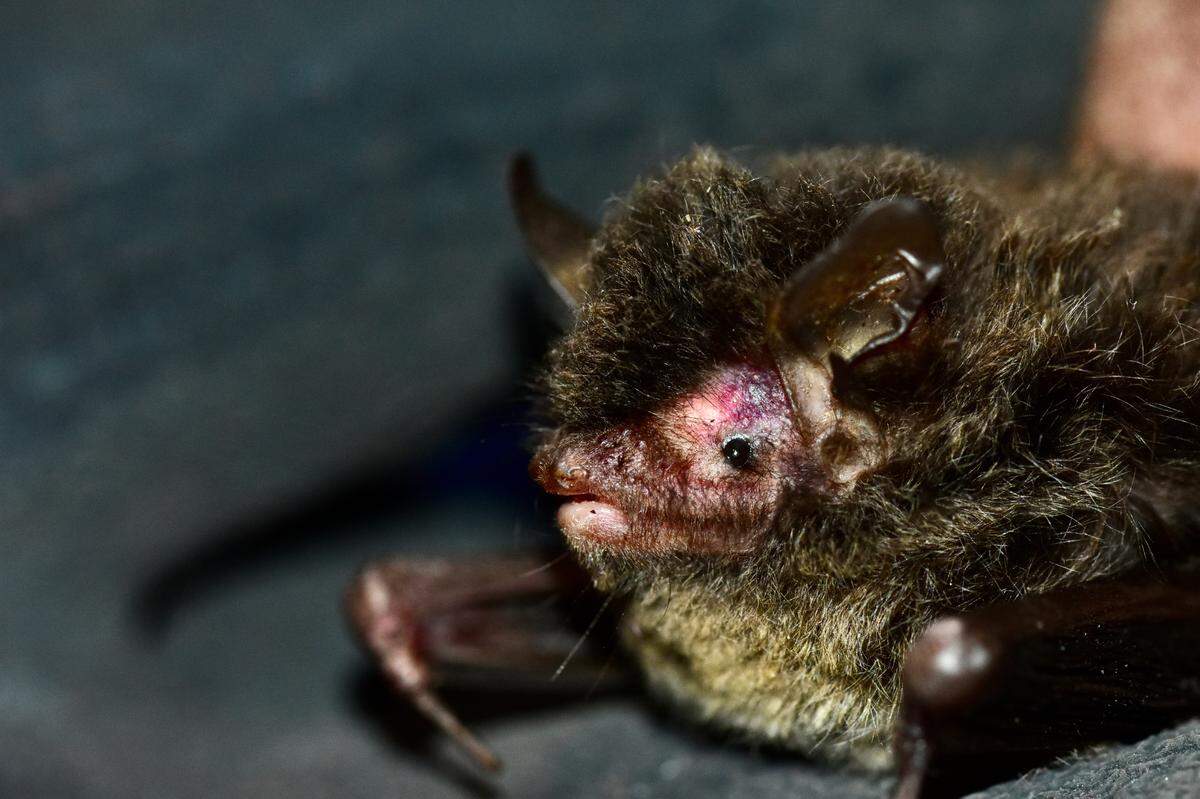
Researchers took a closer look at the unfamiliar-looking bat, analyzed its DNA and realized they’d discovered a new species of mouse-eared bat: Myotis himalaicus, or the Himalayan long-tailed Myotis.
Himalayan long–tailed Myotis bats are considered “medium-sized,” reaching about 3.5 inches in length and weighing less than an ounce, the study said. They have “delicate” feet and “relatively long” thumbs ending in “a strong but short claw.” Their heads have “short” ears and “rather delicate” teeth.
A photo shows the new species’ “dense, soft and relatively long” hair. Overall, the mouse-eared bat’s fur is “dark brown” with some lighter hues mixed in and a paler golden-brown belly.

Himalayan long–tailed Myotis bats were caught in net traps in “a variety of forested habitats at elevations between” 4,900 to 7,500 feet and “appears (to be) uncommon,” the study said. Much about the new species’ lifestyle remains unknown.
Researchers said they named the new species after the Himalayan mountains where it was first discovered. So far, Himalayan long–tailed Myotis bats have been found in Uttarakhand, India, and Khyber Pakhtunkhwa, Pakistan, locations nearly 500 miles apart.
Uttarakhand is a province of northern India bordering Nepal and Tibet.
The new species was identified by its DNA, tail length, body proportions, ears, skull shape, coloring and other subtle physical features, the study said.
The research team included Uttam Saikia, Rohit Chakravarty, Gabor Csorba, Mostaque Ahmed Laskar and Manuel Ruedi. The team also surveyed about two dozen other bat species.
This story was originally published June 6, 2025 at 9:06 AM with the headline "‘Long’-tailed creature gets caught in trap in India forest. It’s a new species."