Electric blue octopuses use potent venom to get females to mate — and not eat them
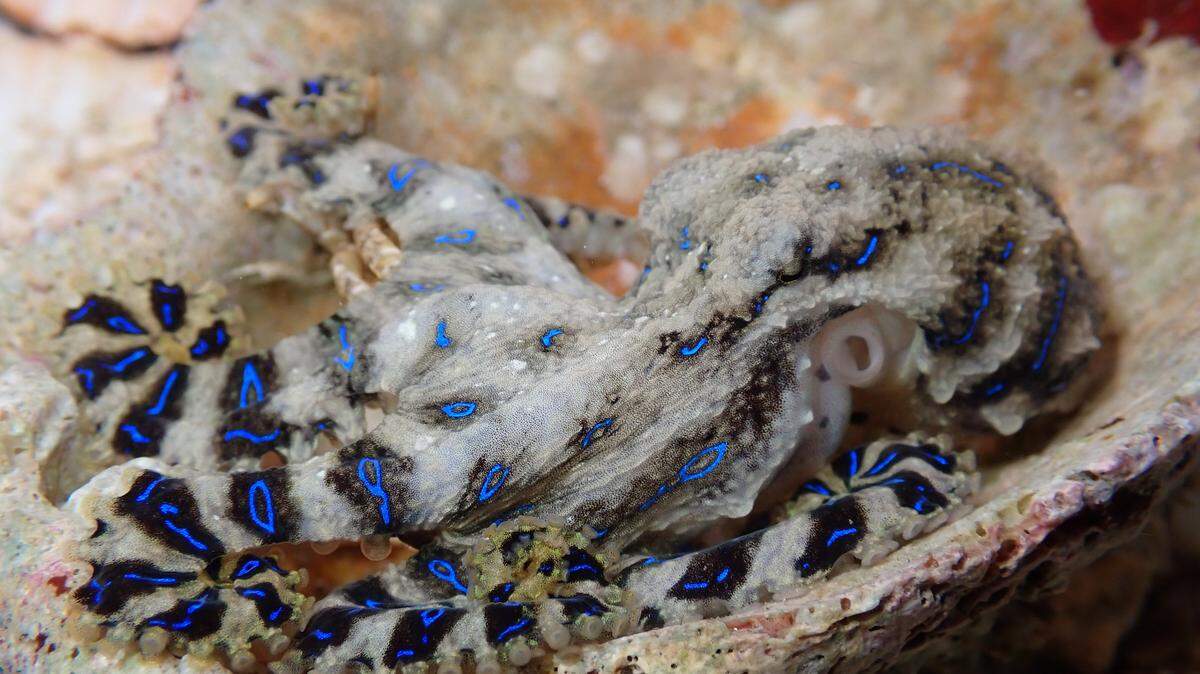
Along the rocky shores of eastern Australia, a small brown octopus is unassuming as it blends in with its surroundings.
When the octopus is scared or hungry, however, it becomes one of the most dangerous animals in the ocean.
Blue-lined octopuses are from a group of venomous octopuses that look plain in color until they are threatened, at which time their bodies flare with electric blue lines to ward off potential threats, according to the Australian Museum.
Their venom is called neurotoxin tetrodotoxin, or TTX, and is created by bacteria that live in a symbiotic relationship with the octopuses. The toxin is stored in their salivary glands, and packs a potentially deadly punch when the octopus takes a bite.
Now, researchers studying the octopuses have learned that not only do male blue-lined octopuses use their venom against enemies, but also against members of their own species — cannibalistic females.
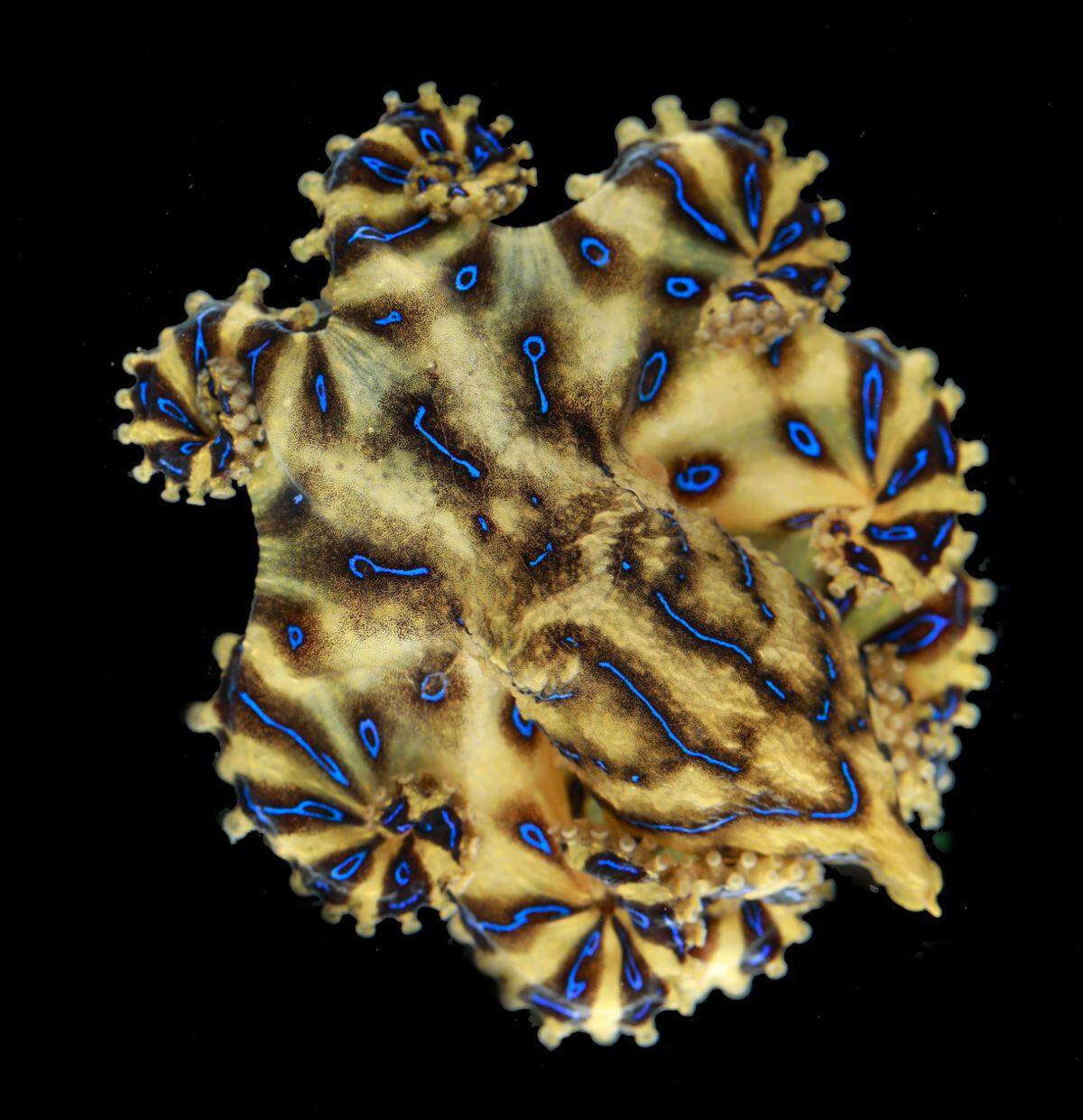
“Female blue-lined octopuses are about twice the size of males, which bears the risk of males being cannibalized during reproduction,” researchers said in a study published March 10 in the peer-reviewed journal Current Biology. “To overcome the size disadvantage and avoid being eaten, male blue-lined octopuses have been observed mounting the females from behind and wrapping their arms around female bodies to immobilize them.”
But even this might not be enough, researchers said. Females of the species overall are much stronger than males, meaning they still may be able to overpower and attack males attempting to mate.
Researchers noticed that male blue-lined octopuses have larger posterior salivary glands, the glands that hold the neurotoxin, meaning males can have access to more stored toxin at any given time compared to females, according to the study.
Then, they caught wild blue-lined octopuses and put them together in aquariums, waiting for the males to become aroused and attempt to mate with the females.
When the males clasped the female bodies, the female appeared to go limp and the color drained from their bodies, according to the study. The breathing rate of the females dropped while the males breathing rate increased as they mated.
The encounter lasted about an hour until the females would steadily regain function of their limbs and would push the males off of themselves, researchers said.
When researchers looked closely at the females after mating, they saw an “open wound” on their skin that was swollen for multiple days, according to the study.
“Therefore, despite not having any direct measurements of TTX in the body of females after male biting behavior, these findings strongly suggest the co-option of the venom for mating in this species,” researchers said. “It also suggests a co-evolutionary arms race between the sexes whereby a cannibalizing large female is counteracted in males through the use of venom.”
Researchers noted that all of the females in the study survived the venom bite, suggesting they have a resistance to their own toxin, something that has been observed in closely related species.
Females might be resistant, but other species are not, including humans.
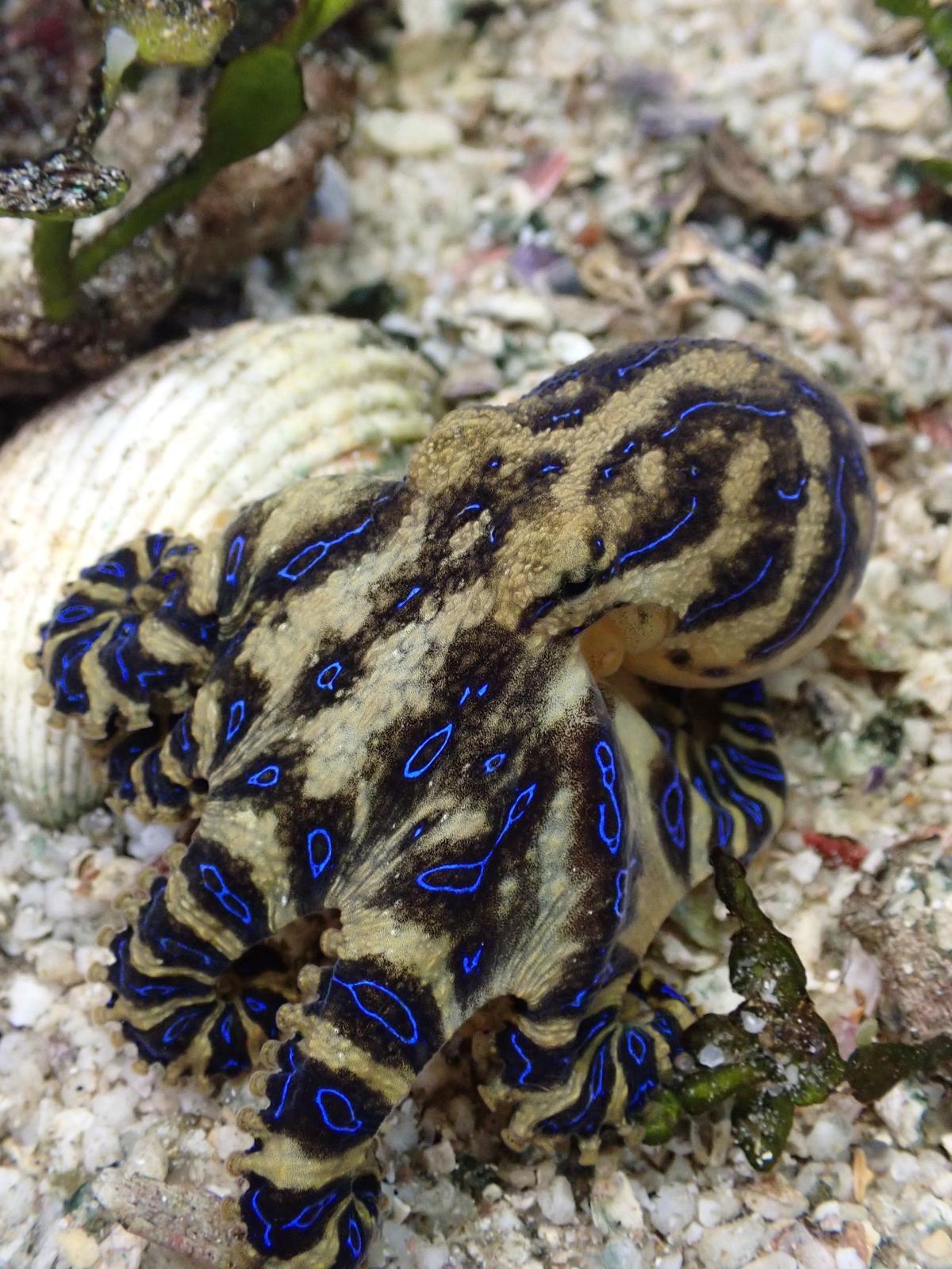
Blue-lined octopuses have a relatively small bite, so a person handling the animal may not even feel the attack take place, according to the Australian Museum.
“However, within minutes symptoms include numbness of the lips and tongue, difficulty in breathing, followed by complete paralysis of the breathing muscles,” the museum said. “Victims appear to lose consciousness as they cannot respond to their name being called.”
Blue-lined octopuses belong to a family of blue-ringed octopuses, which are found throughout tropical waters of the western Pacific from the Sea of Japan to southern Australia.
The research team includes Wen-Sung Chung, Nyoman D. Kurniawan, N. Justin Marshall and Fabio Cortesi.
This story was originally published March 11, 2025 at 12:18 PM with the headline "Electric blue octopuses use potent venom to get females to mate — and not eat them."