
‘Extinct’ marsupial might be alive and ‘evading detection’ in Australia, study says
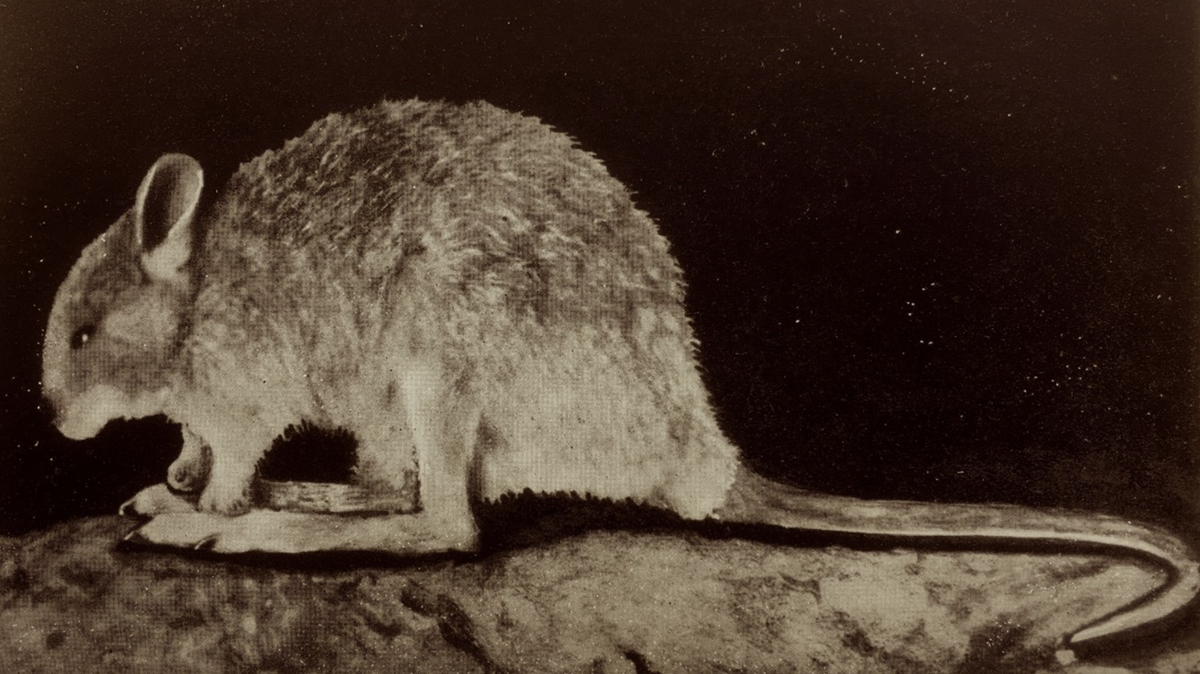
A tiny marsupial species declared extinct decades ago may still be hopping around in the deserts of Australia — and a new study offers a potential roadmap for its rediscovery.
The desert rat-kangaroo, or Caloprymnus campestris — a rodent-like creature with large hind legs — is steeped in mystery.
It was last seen nearly a century ago, in 1930. And it was officially designated extinct in 1994, likely due, in part, to predation from foxes and cats. Now, all that scientists have to show for the species is a handful of skeletons kept in museums.
But, in recent years there have been numerous unconfirmed sightings of the species, indicating it could be extant.
With these sightings in mind, scientists have conducted research — using museum skeletons — that could help rediscover the species, according to a study published on Feb. 25 in the Journal of Experimental Biology.
Pinpointing its habitat
It turns out, the key to locating the desert rat-kangaroo could lie in its skull.
Using computer models of museum specimen skulls, the research team — led by Rex Mitchell from Flinders University — implemented a technique known as Finite Element Analysis (FEA). This allowed them to test the skulls’ potential to handle forces that occur during biting.
By comparing the results to those from related species, such as bettongs and potoroos, they shed light on the desert rat-kangaroo’s diet.
“We were surprised to find the heftier skull of the desert rat-kangaroo isn’t necessarily adapted for biting into harder foods,” Mitchell said in a university news release. “When we included the animal’s smaller size into the analysis, the robust features of the desert rat-kangaroo’s skull were only found to be effective enough to handle eating a softer range of foods.”
This discovery could prove pivotal in narrowing search efforts to specific regions in Australia where softer foods — such as leafy plants — still grow, potentially increasing the likelihood of finding the rare creature.
“Finetuning the search through understanding the animals’ diet better might just resurrect the little desert survivor…” Mitchell said.
Specifically, scientists mentioned the Sturt Stony Desert, an outback desert in South Australia, as a potential place to look.
“It is plausible that a small, nocturnal species could be evading detection in the vast inland desert,” Vera Weisbecker, one of the study authors, said in the release.
The findings serve “as an ongoing reminder that extinction declarations might not always be the end of the story,” Weisbecker added.
The other study authors were Meg Martin and Stephen Wroe.
This story was originally published March 11, 2025 at 9:58 AM with the headline "‘Extinct’ marsupial might be alive and ‘evading detection’ in Australia, study says."