‘Rare’ ancient Roman item found buried under 1,800-year-old fence in Scotland. See it
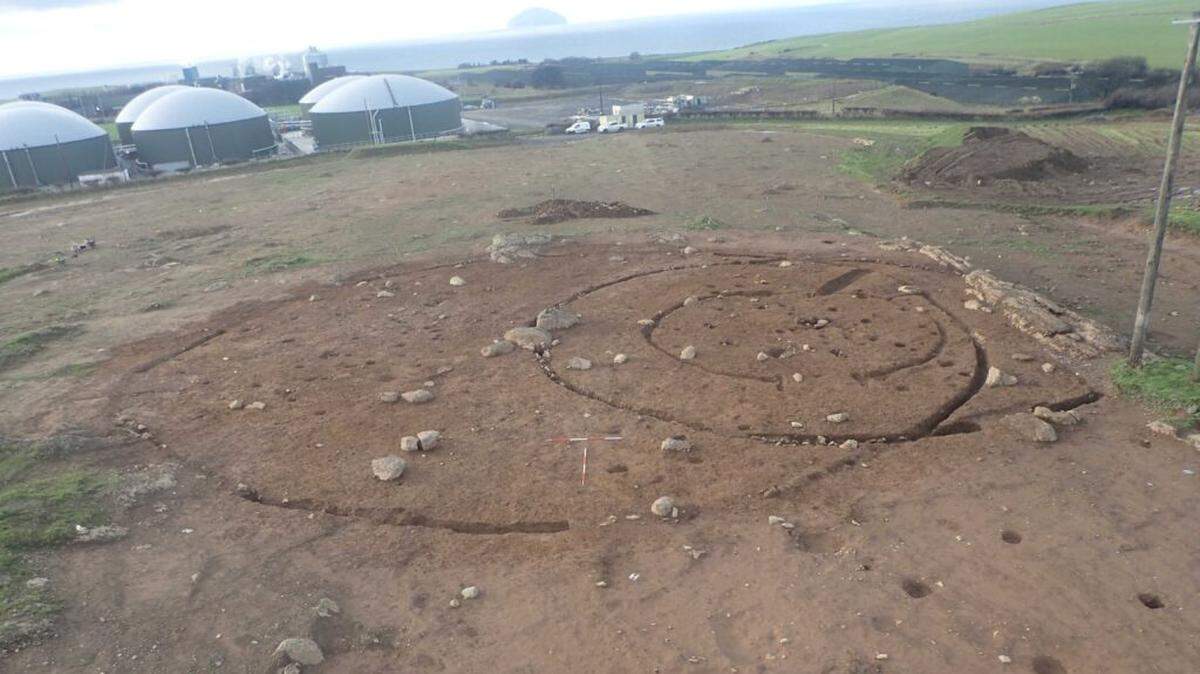
Sifting through the dark brown soil of southwestern Scotland, archaeologists unearthed a “rare” and “visually striking” Roman artifact. The small item — possibly buried as an offering 1,800 years ago — offered an outsized glimpse into ancient social dynamics.
A team of archaeologists began excavating a plot of land at a distillery in South Ayrshire in 2020 because of the “potential for hitherto unknown archaeology to be buried at the site,” according to a March 3 news release from GUARD Archaeology.
During the dig, archaeologists unearthed an Iron Age settlement dating back to the second century “when southern Scotland had slipped from the grasp of the Roman Empire,” the company said.
The ruins included “a substantial timber roundhouse surrounded by a stout wooden palisade,” or fence, “with a large gated entranceway,” the release said. The building was “likely the dwelling of a wealthy farming household.”
But the most intriguing find sat underneath the fence.
There, archaeologists found a “rare” ancient Roman brooch. A photo shows the decorated item, which has a dull gold center and an outer bright blue ring dotted with several concentric circles.
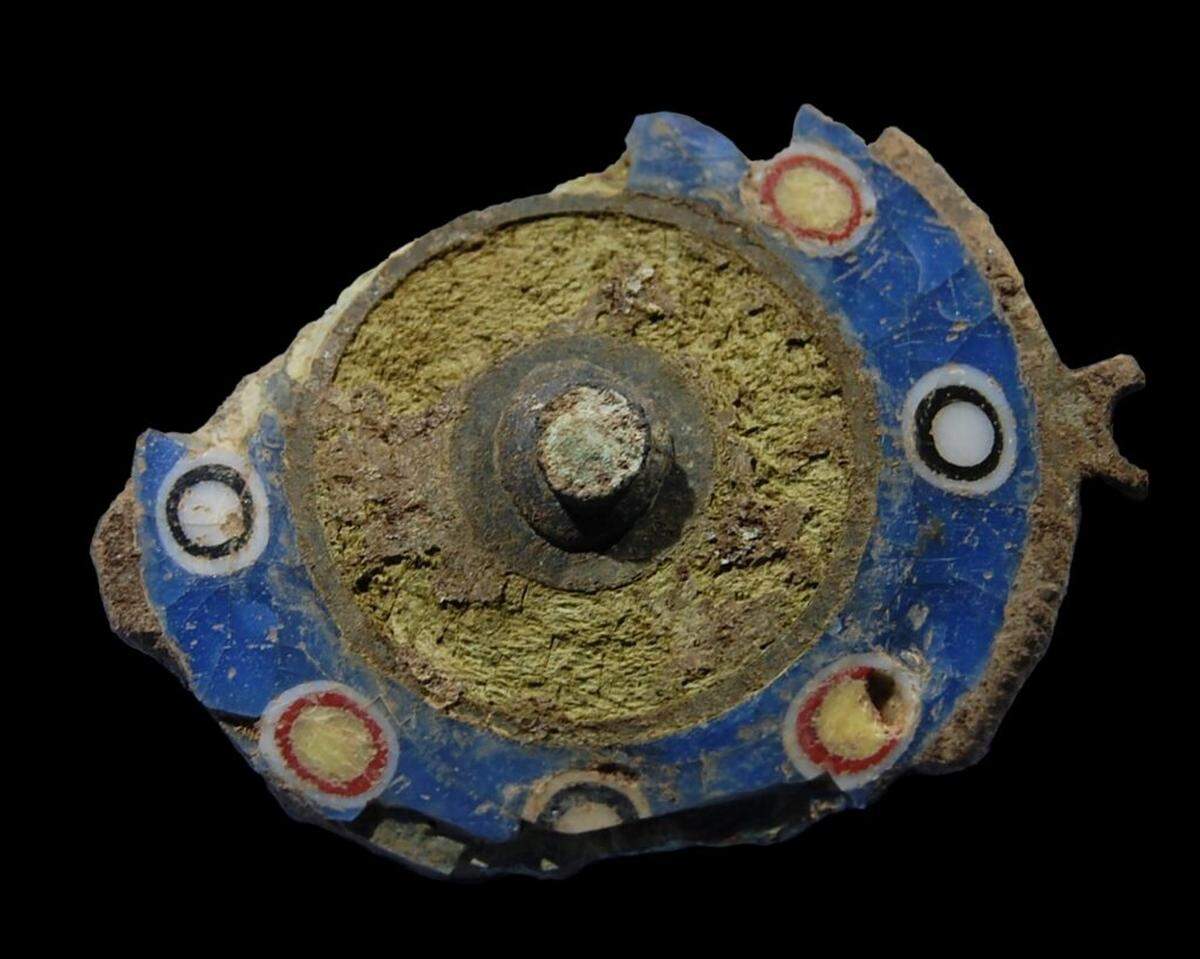
Archaeologists described the brooch as “unusual” and “visually striking” in a company report.
“These brooches were particularly popular among members of the Roman military forces,” Jordan Barbour, one of the company’s archaeologists, said in the release. They are “most commonly found along the borders of the Roman Empire, in eastern Gaul (modern-day France), Switzerland and the Rhineland (modern-day Germany).”
How did a Roman brooch end up roughly 1,500 miles away from Rome in Scotland?
“There are a few plausible scenarios,” Barbour said. The brooch likely arrived in Scotland “on the cloak of a Roman soldier tasked with garrisoning the Empire’s northernmost frontier” and passed to the area’s non-Roman inhabitants “through ad hoc exchange” or “perhaps even taken in battle as a trophy.”
During the second century, the Roman military abandoned some of their forts in southwestern Scotland and moved further south, but “conflict between the local Britons and Roman soldiers is likely to have been a recurring element of Rome’s intermittent occupation” of the region, the company said.
Archaeologists suspect the inhabitants of the Iron Age settlement deliberately buried the Roman brooch, possibly as an offering or other ritual deposit.
Excavations in South Ayrshire also unearthed ruins of another 2,600-year-old roundhouse and 3,500-year-old pottery, archaeologists said.
South Ayrshire is a coastal region in southwestern Scotland and a roughly 80-mile drive southwest from Edinburgh.
This story was originally published March 5, 2025 at 3:55 PM with the headline "‘Rare’ ancient Roman item found buried under 1,800-year-old fence in Scotland. See it."