‘Slender’ creature with ‘long’ toes found in mud nest in Taiwan. It’s a new species
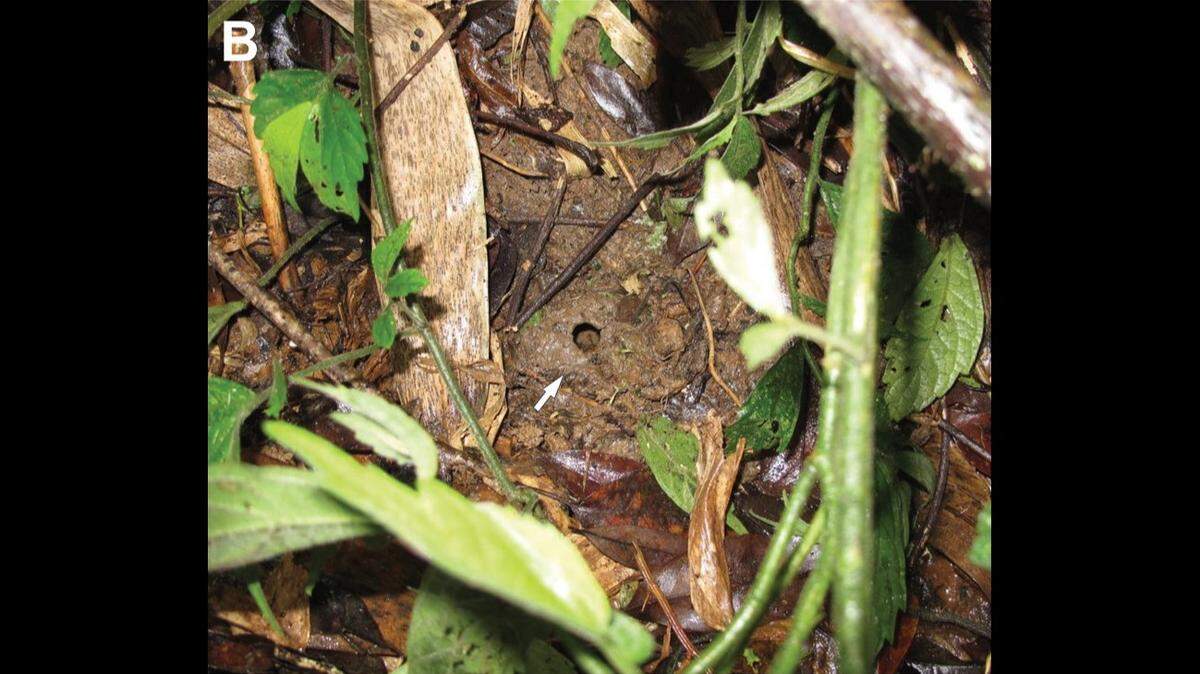
In a wetland of central Taiwan, a “slender” creature poked its “triangular” head out of a mud nest and made an “urgent”-sounding call. The call was intended to attract a mate — but attracted the attention of nearby scientists instead.
The nesting animal turned out to be a new species.
A team of researchers decided to study a small species of frog found on a few islands in southern Japan and two “isolated” spots in central Taiwan. These frogs had been known for about 40 years, but the identity of the Taiwanese population had “always been in doubt” because of the “great geographic distance separating it,” according to a study published Feb. 27 in the peer-reviewed journal ZooKeys.
To investigate, the team tracked down dozens of these Taiwanese frogs in museum archives, tested their DNA, observed the animals in their natural habitat and recorded their calls, the study said.
A pattern began to emerge. The Taiwanese frogs were subtly but consistently distinct, and researchers soon realized they’d discovered a new species: Nidirana shyhhuangi, or the Yuchi music frog.
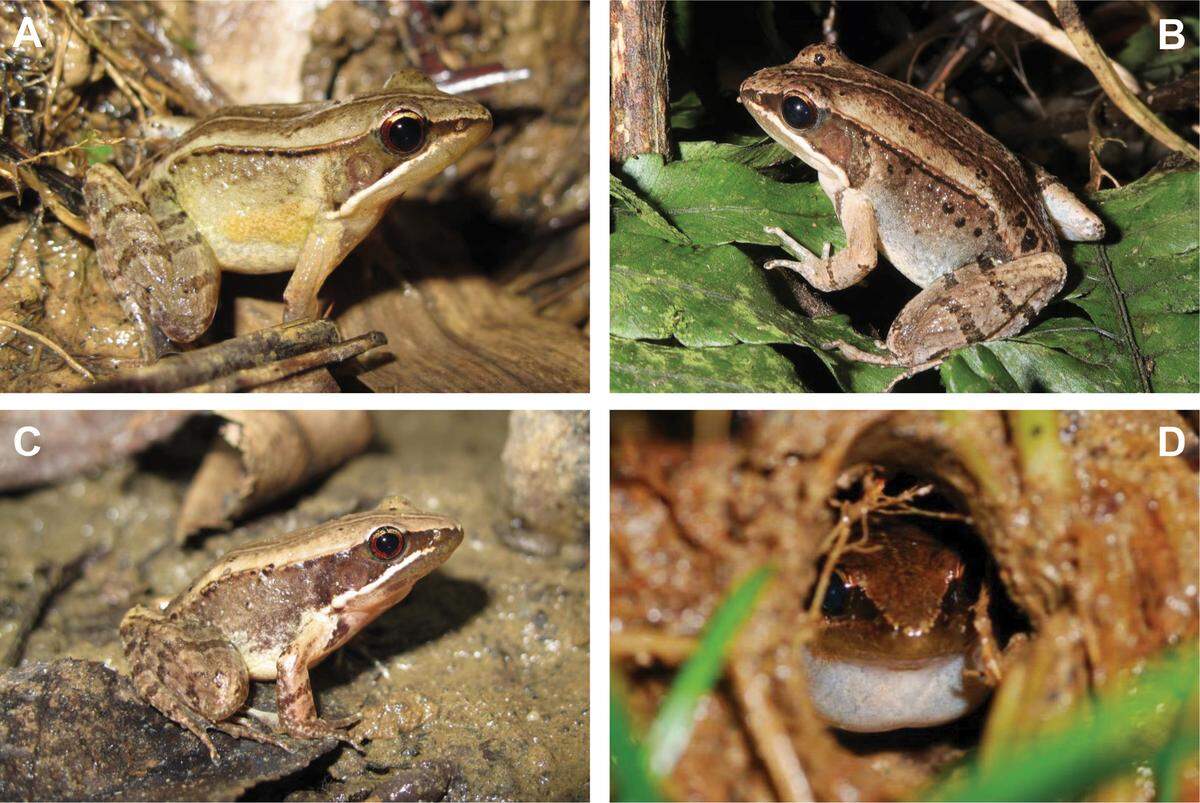
Yuchi music frogs are considered “small-sized,” reaching about 1.5 inches in length, the study said. They have “slender” bodies with “long” limbs and “long, thin” toes. Their “triangular” heads have a “moderately long” snout and multicolored golden-brown eyes.
The coloring of the new species varies from brown to “yellowish-brown” to gray, researchers said and photos show. “Females tend to have a paler and more grayish coloration, while males typically have a darker body color,” but both have a distinct stripe down the center of their backs.
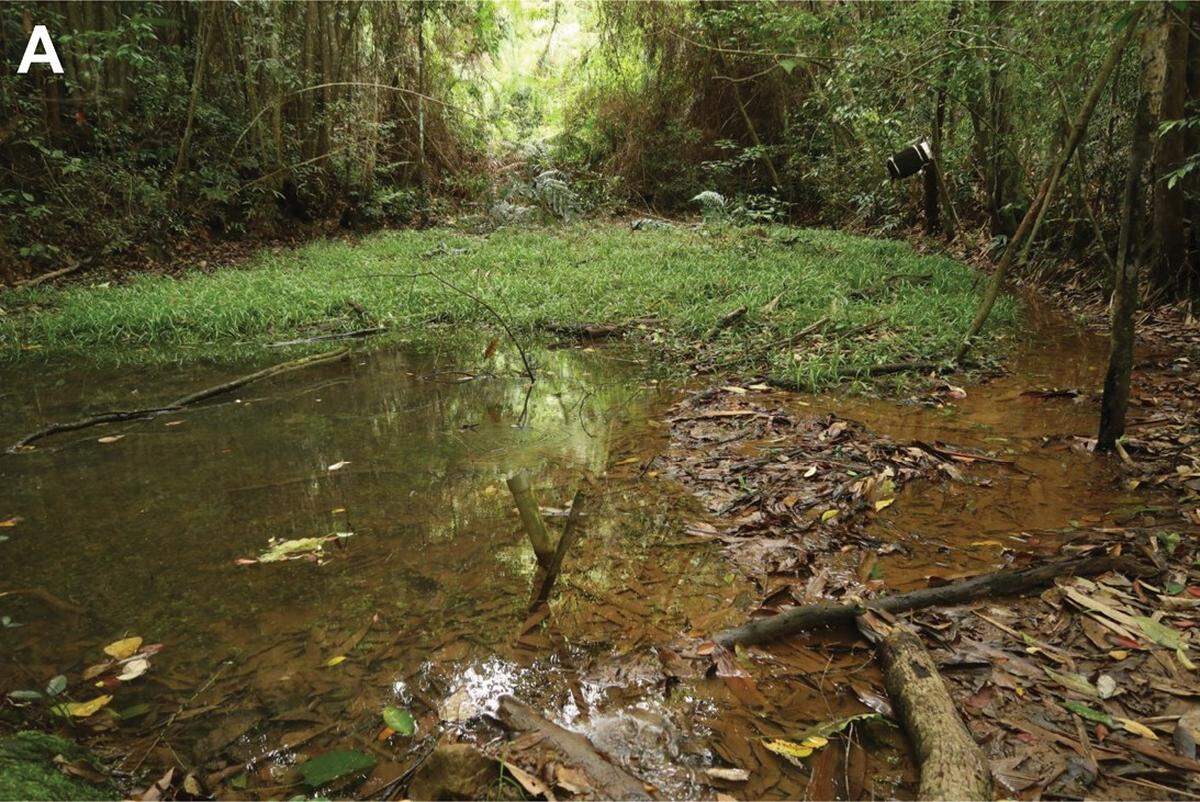
Yuchi music frogs live in the wetlands of “mountain hollows” where the soil is “waterlogged and moist even in the dry season” and build mud nests, the study said.
During the breeding season, which lasts from April to September, male frogs spend two to three hours to “excavate mud nests” then “call from inside the nest to attract females,” researchers said. Female frogs lay up to 40 eggs at a time that are “encased in a transparent gelatinous substance” and left inside the mud nest.
The new species’ mating call sounds “rapid and urgent” and is made up of “quick, continuous, and regular pulses lasting” a few seconds, the study said.
Researchers said they named the new species “shyhhuangi” after Shyh-Huang Chen, a professor and scientist “who first discovered this species in the early 1980s.”
The new species’ common name refers to Yuchi Township, where it was discovered and the only place where it’s been found. The township is in central Taiwan and a roughly 140-mile drive southwest from Taipei.
Researchers said they considered Yuchi music frogs to be critically endangered because of their “extremely limited habitat size, population isolation, and very small population size” coupled with the “current and ongoing threats” of habitat degradation and human encroachment.
The new species was identified by its body size and shape, coloring, eyes and other subtle physical features, the study said. DNA analysis found the new species had “considerable genetic divergence” from other related frog species.
The research team included Chun-Fu Lin, Chunwen Chang, Masafumi Matsui, Chin-Chia Shen, Atsushi Tominaga and Si-Min Lin.
This story was originally published March 3, 2025 at 11:56 AM with the headline "‘Slender’ creature with ‘long’ toes found in mud nest in Taiwan. It’s a new species."