Ruins of Roman winery — at least 1,500 years old — found in French Alps. Look inside
From reds to whites and merlots to sauvignon blancs, France is wine country.
The 8,000-year-old tradition took root in France around the sixth century B.C. when the southern Gauls were settled by the Greeks, later to be encapsulated in the Roman Empire.
Now, archaeologists in the French Alps have found evidence of this ancient trade along a Gallo-Roman road, according to a Nov. 22 news release from the French National Institute for Preventative Archaeological Research.
In 1865, work along a mountain slope unearthed multiple Gallo-Roman substructures, archaeologists said. From 1869 to 1870, more than 400 feet of structure was discovered, including 70 rooms, some of which had mosaic paving, according to the release.
Five new buildings, including private baths, were excavated between 1977 and 1981, researchers said, all of which dated to between the first and fifth centuries.
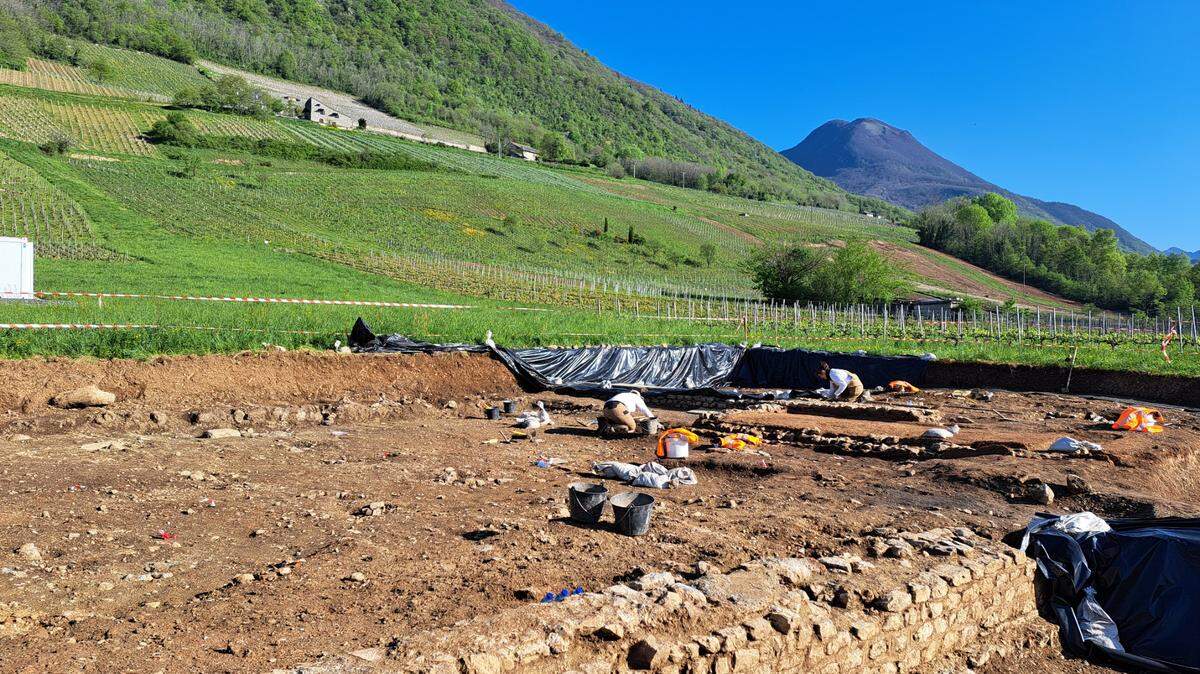
On the southeast end of the buildings, archaeologists have found a room separated by a terrace wall, an aqueduct and what appears to be a road ditch, according to the release.
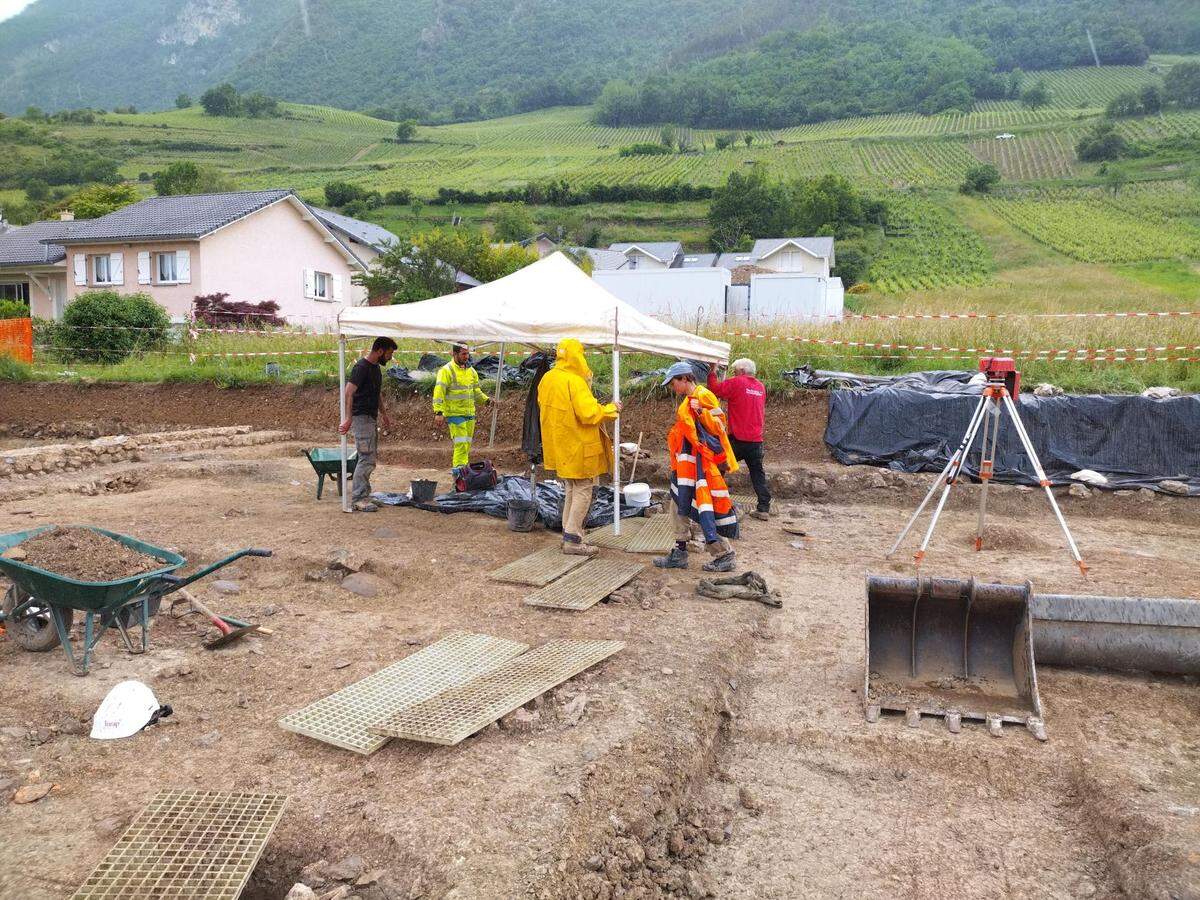
The building was used for wine production, archaeologists said. It was identified by its location and the structures found inside.
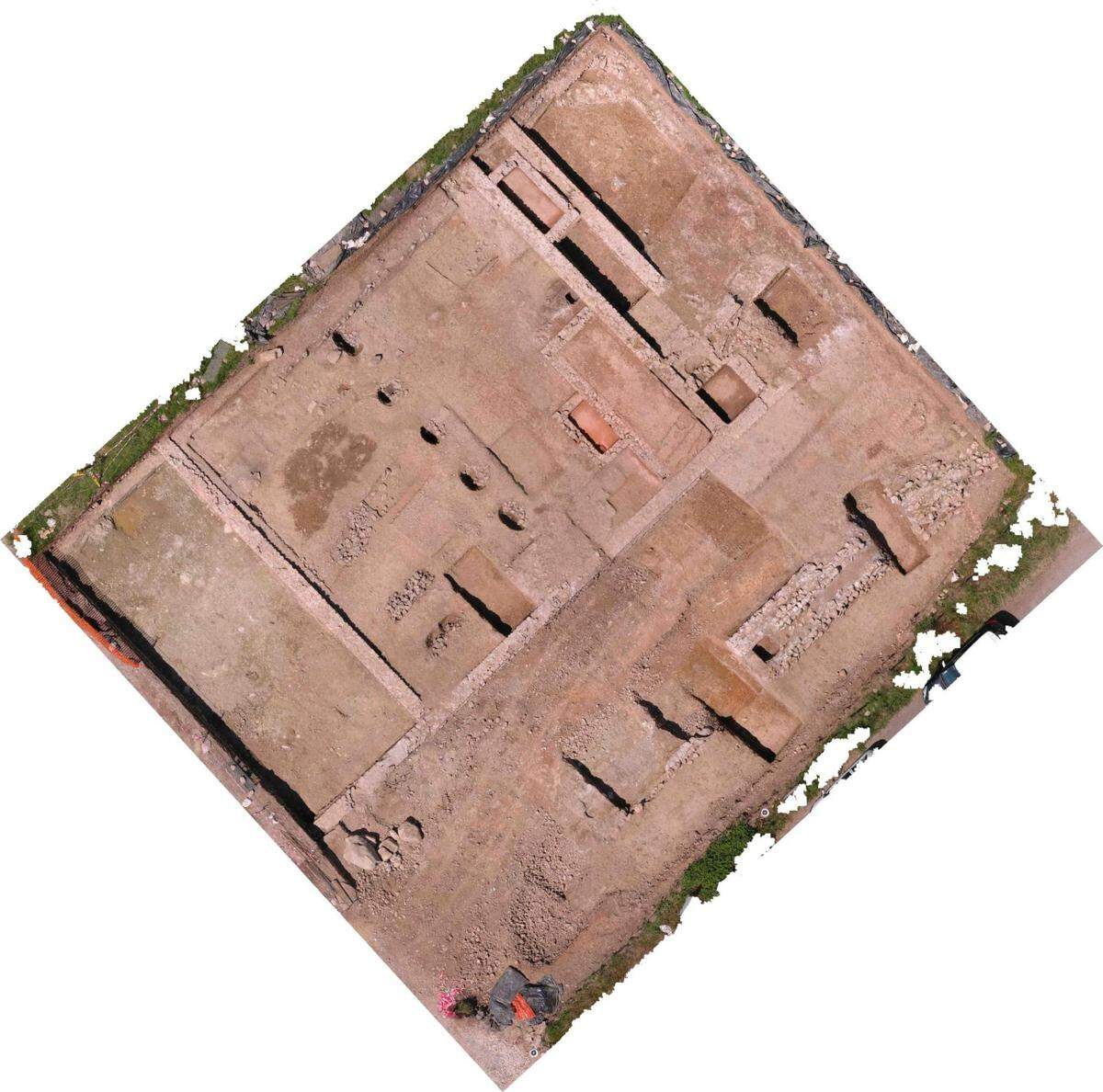
The main room is separated into two naves and was likely more of a shed than a full structure, researchers said. Post holes where a roof could be attached were found down the center of the room.
On one side, archaeologists found a tile mortar where grapes would have been trampled, as well as two decantation tanks that allowed the crushed material to flow through a drain into workshops where the wine would be pressed, archaeologists said.
The other side had a basin and a tank, though researchers said it’s not clear whether they were present at the same time as the grape processing structures.
The site has been excavated and changed multiple times over the past two centuries, so an exact date for the original occupation and construction is hard to measure, archaeologists said. But traces of tile mortar on the walls show that the wine production facility was older than the primary occupation of the site, suggesting it is at least 1,500 years old.
Other wineries have been found in eastern France dating to the same era, including a large-scale winemaking operation discovered during the construction of a parking lot last year, McClatchy News reported.
The region of eastern France and western Germany were inhabited by a Celtic people called the Gauls, according to Britannica. They clashed with the Romans for hundreds of years before the Romans won out and colonized the area in 181 A.D. By the second century, the empire had expanded across the Alps, bringing with it the Roman’s version of wine production.
The climate and soil in France was perfect for multiple grape varieties, an industry that persisted through the centuries and still contributes to the French economy today.
The newly-excavated winery was found along the ancient road from Montmélian to Cruet in southeastern France, about a 65-mile drive south from Geneva, Switzerland.
Google Translate was used to translate the news release from the French National Institute for Preventative Archaeological Research.
This story was originally published November 26, 2024 at 6:04 PM with the headline "Ruins of Roman winery — at least 1,500 years old — found in French Alps. Look inside."