Remains of ancient Italy city destroyed by Roman army uncovered — with stores of wine
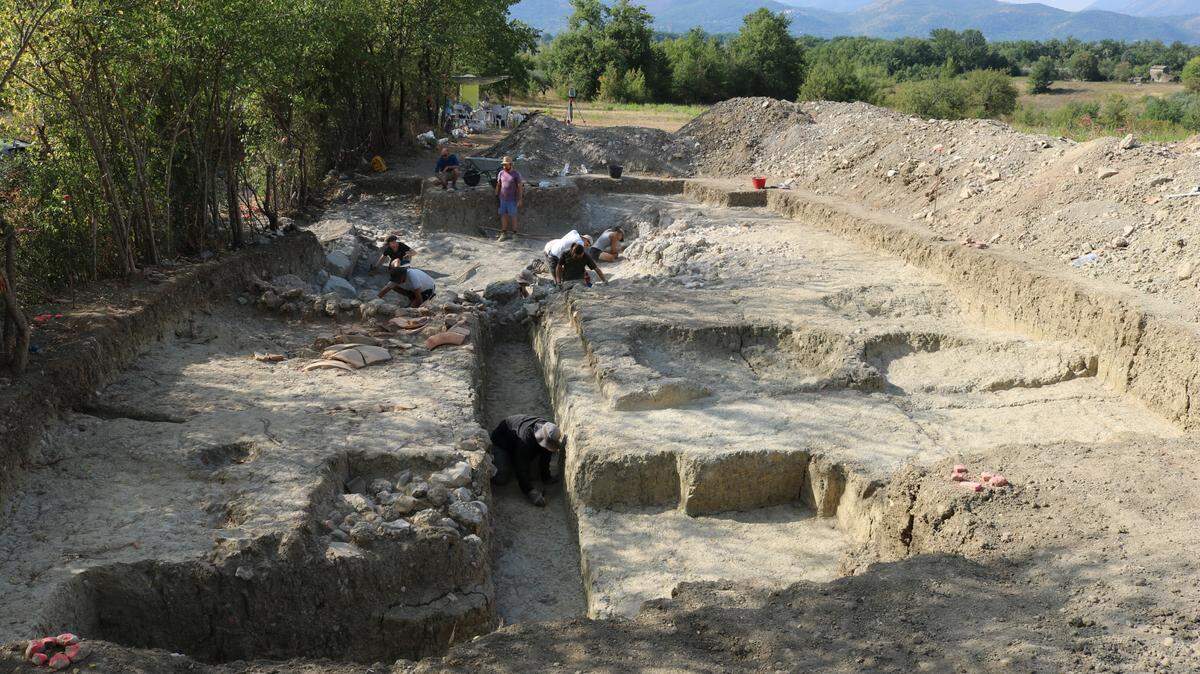
More than 2,000 years ago, the city of Fregellae in modern-day Italy was thriving.
Then, the city revolted against the Romans in 125 B.C. and was torn to the ground.
Fregellae was once an agricultural and cultural center in the region, but after the destruction left behind by the Roman army, the city lay abandoned for more than 170 years.
Now, archaeologists are working to reconstruct the late Republican city, uncovering remnants of a city life cut short.
Archaeologists began work at the site — which is about 60 miles outside Rome — in 2015, led by University of Trier professor Dominik Maschek, according to a Sept. 17 news release from the Leibniz Center for Archaeology (LEIZA).
Previous excavation seasons have revealed wall paintings, sanctuaries, houses, floor mosaics and public baths, according to LEIZA, each with signs they had been deliberately destroyed in the city center.
From July 22 to Aug. 19 of this year, archaeologists were once again at the Fregellae site, and they uncovered what is thought to be the oldest villa in the city.
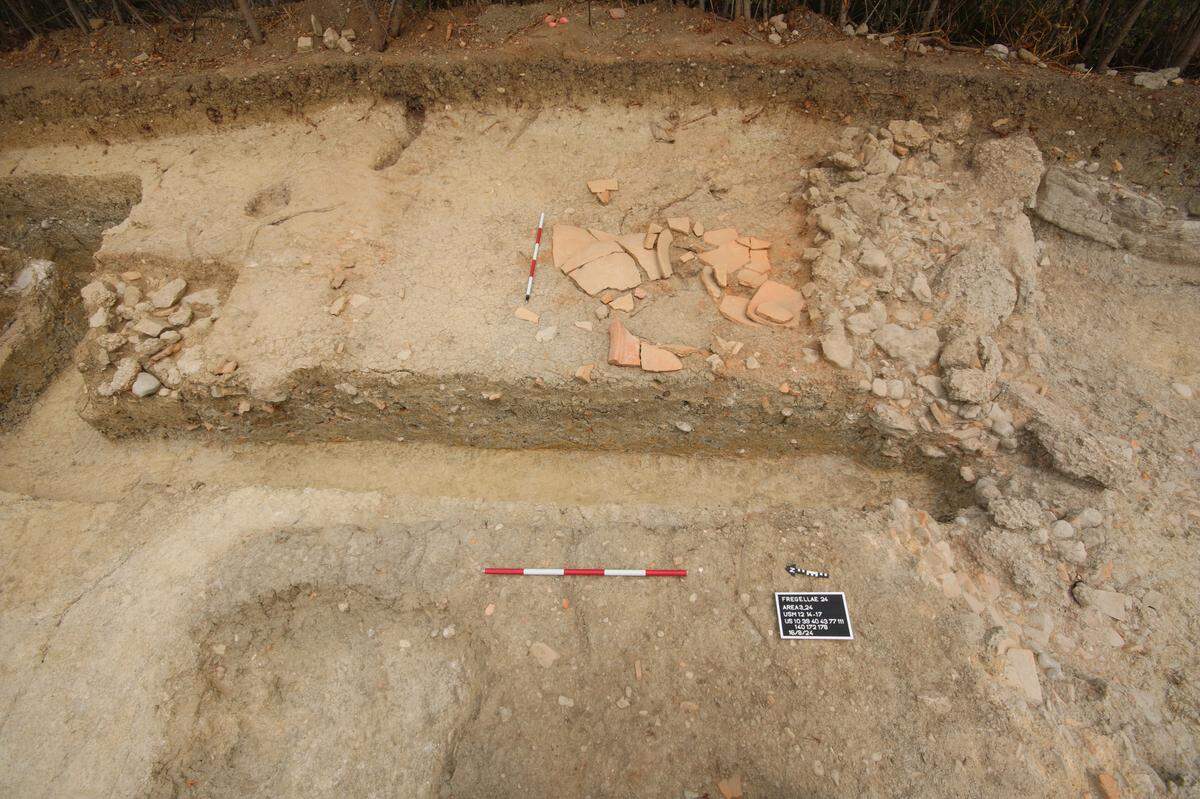
The villa was built around 205 B.C. and was used by local elites in the community, archaeologists said.
“It is fascinating that we were able to uncover the architectural structure of such an early production site,” Maschek said. “Despite traces of fire and the almost completely removed building material, the finds offer valuable insights into the rural life and economic activities of the residents at the time.”
Archaeologists found numerous storage vessels and amphorae, or long-necked vases, around the site that were taken for archaeobotanical study, LEIZA said.
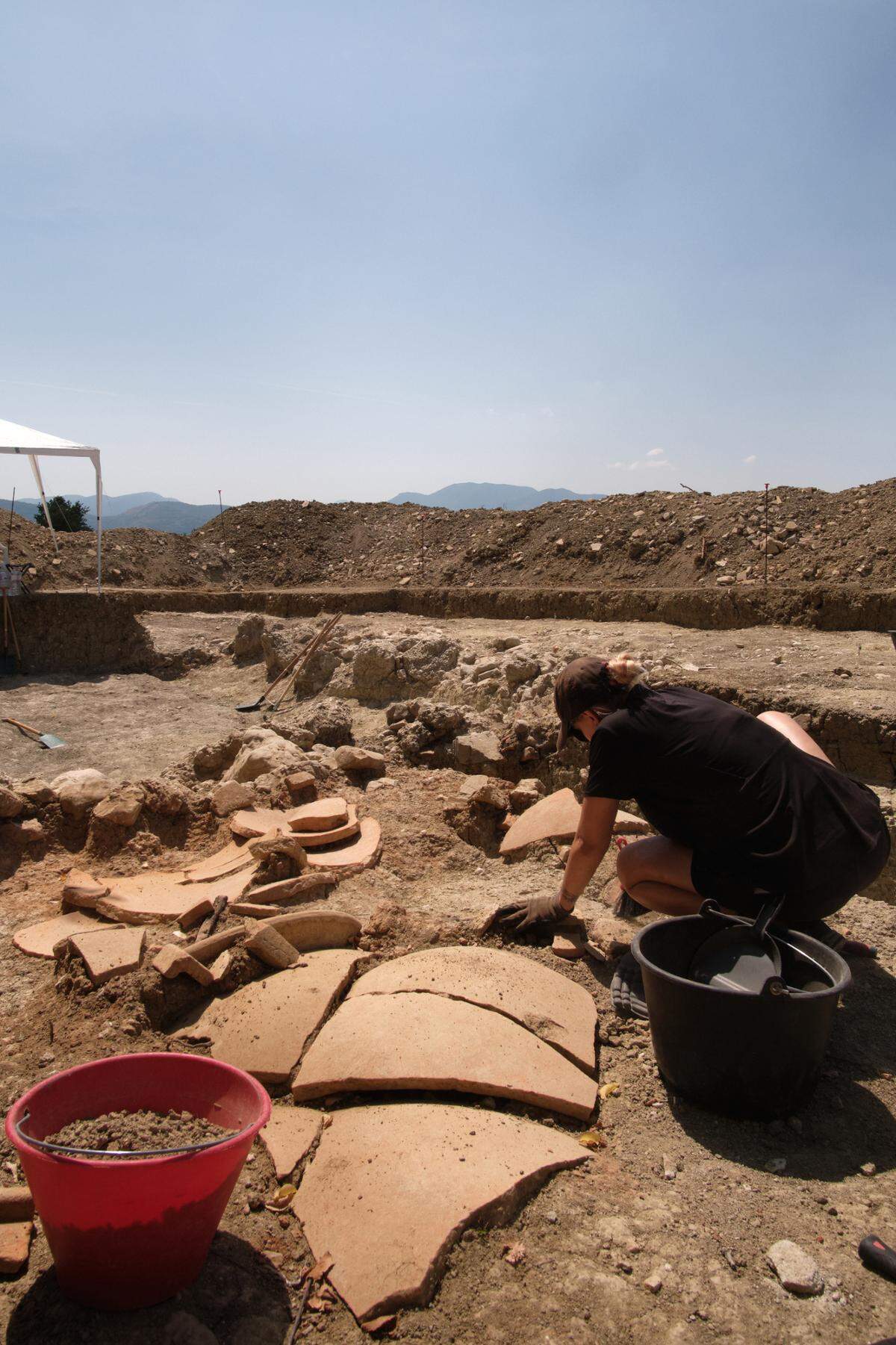
The vases were used to store wine, fruit and grain that were produced there, archaeologists said, but they were likely part of a commercial operation.
“The wine was probably not only produced for the local market. It is quite possible that it was traded within the Mediterranean trade network as far as Spain and France. The cultivation of grain and fruit, on the other hand, was certainly intended for the local market,” Maschek said.

Maschek said the army attack was not only devastating because of the physical destruction, but because of the impact it had on the regional economy. With the agricultural channels broken, the area continued to be uninhabited aside from a waste disposal site dating to 50 A.D., he said.
While the city remained empty, a military camp built during the siege was established and surrounded by a rampart and ditch, LEIZA said. The camp is helping archaeologists understand the military tactics of the army invasion and confirms the dates of the siege, Maschek said.
Excavations will continue, according to LEIZA.
Google Translate was used to translate the news release from the Leibniz Center for Archaeology.
This story was originally published September 24, 2024 at 1:22 PM with the headline "Remains of ancient Italy city destroyed by Roman army uncovered — with stores of wine."