Centuries-old serpent head — Buddha’s protector — found buried in Cambodia. See it
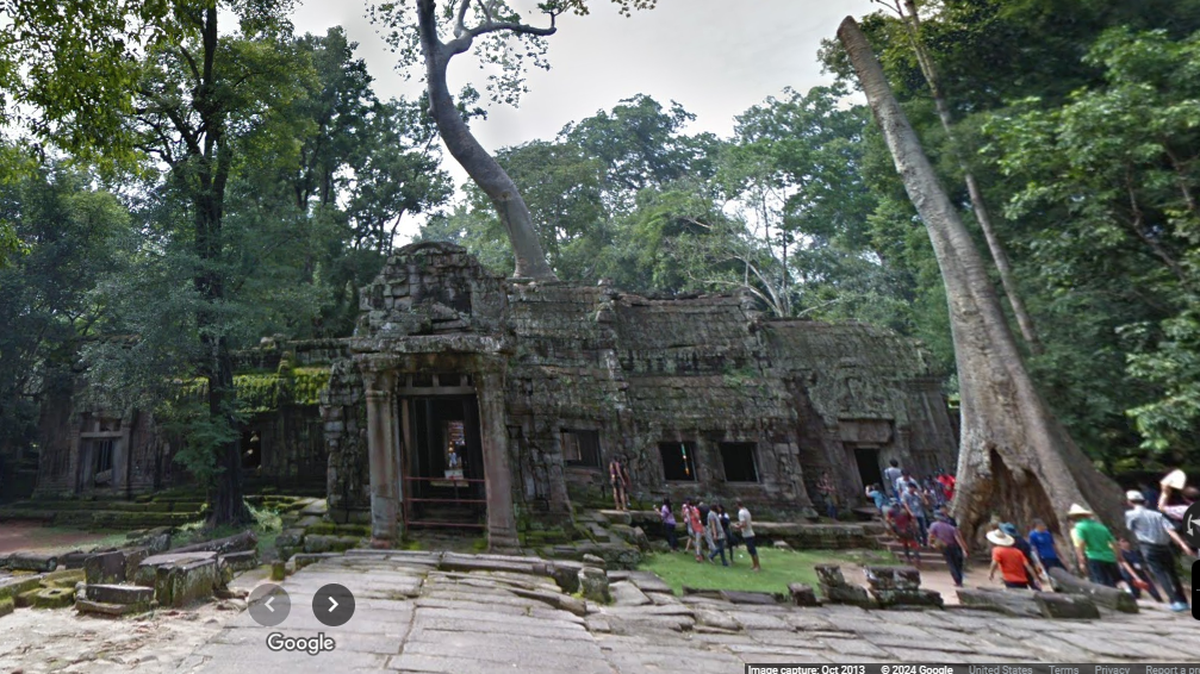
For centuries, the reign of King Jayavarman VII of Cambodia was mostly lost to history.
That was before archaeologists began discovering the evidence of his monarchy in the architecture around them.
The king was responsible for rebuilding the city of Angkor, building elaborate temples and extending a system of highways across the country while in power from 1181 until his death in 1220, according to Britannica.
Now, in Ta Prohm Temple, archaeologists have found more evidence of the legacy left behind by Jayavarman.
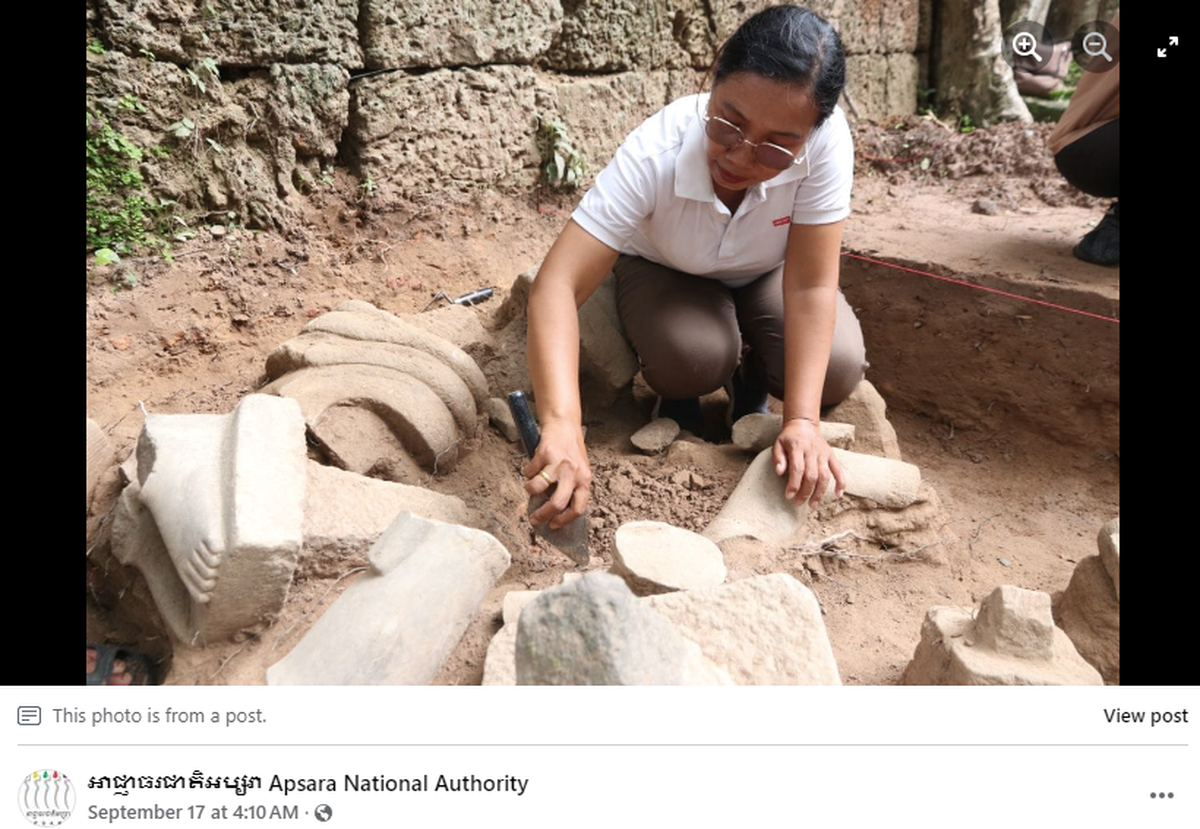
Researchers from the Apsara National Authority of Cambodia and the Archaeological Research of India were conducting excavations in the temple’s dance hall when they found stones buried underground, according to a Sept. 17 Facebook post from the Apsara National Authority.
Carefully arranged between the tree roots, large sections of carved stone were uncovered, pieces of a long-destroyed statue, archaeologists said.
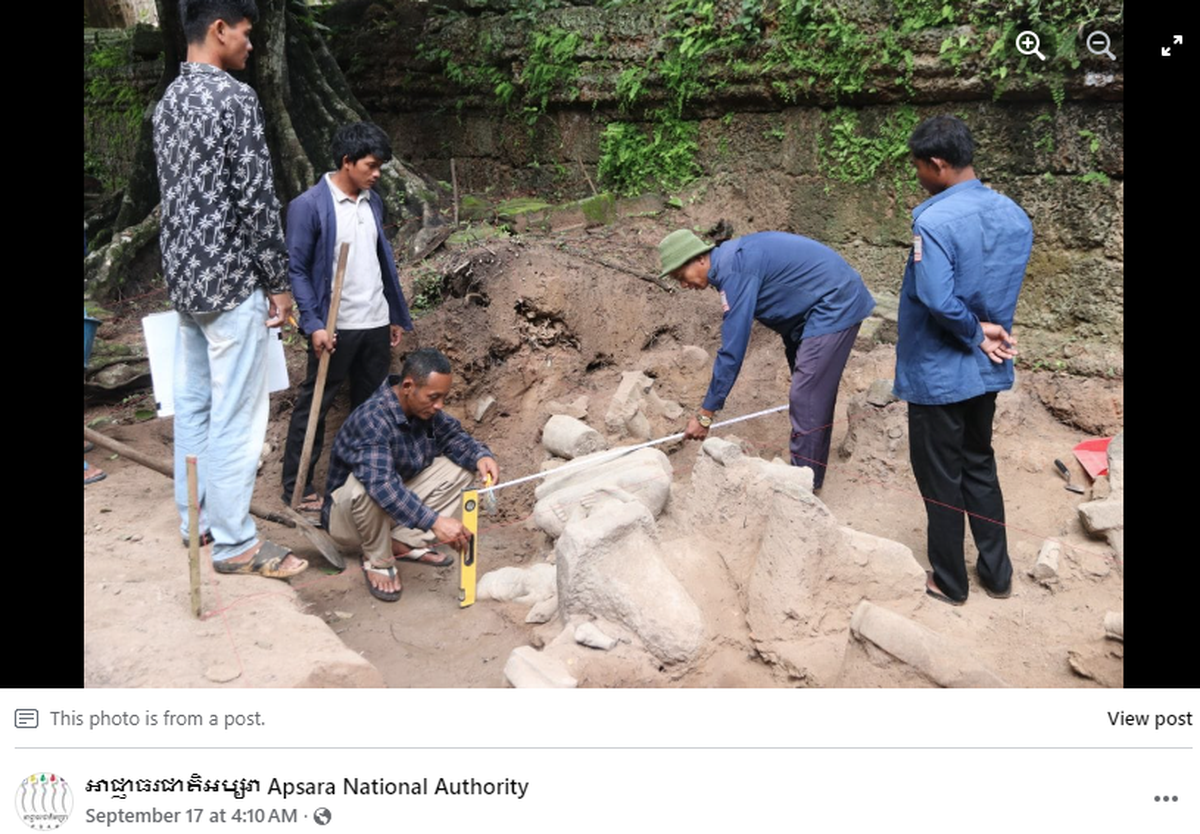
The pieces are part of the heads of Naga, archaeologists said, a guardian deity thought to have sheltered the Buddha from rain during a deep seven-day meditation.
Naga is often depicted as a hooded cobra and can appear in artwork as a seven-headed animal that wraps around the Buddha, according to Britannica.
Archaeologists said the pieces found in the dance hall belonged to the middle and right heads of a seven-headed Naga that once wrapped around a Buddha statue in the temple.
“Experts believe that one of the head fragments matches the size and design of the existing pieces, indicating they once formed part of a larger statue,” officials said. “The careful arrangement of these fragments suggests they were buried with reverence, likely after the reign of King Jayavarman VII, during a period of transition from Mahayana Buddhism to Brahmanism.”
A headless Buddha sitting on the coils of Naga still appears in the temple today, photos show.
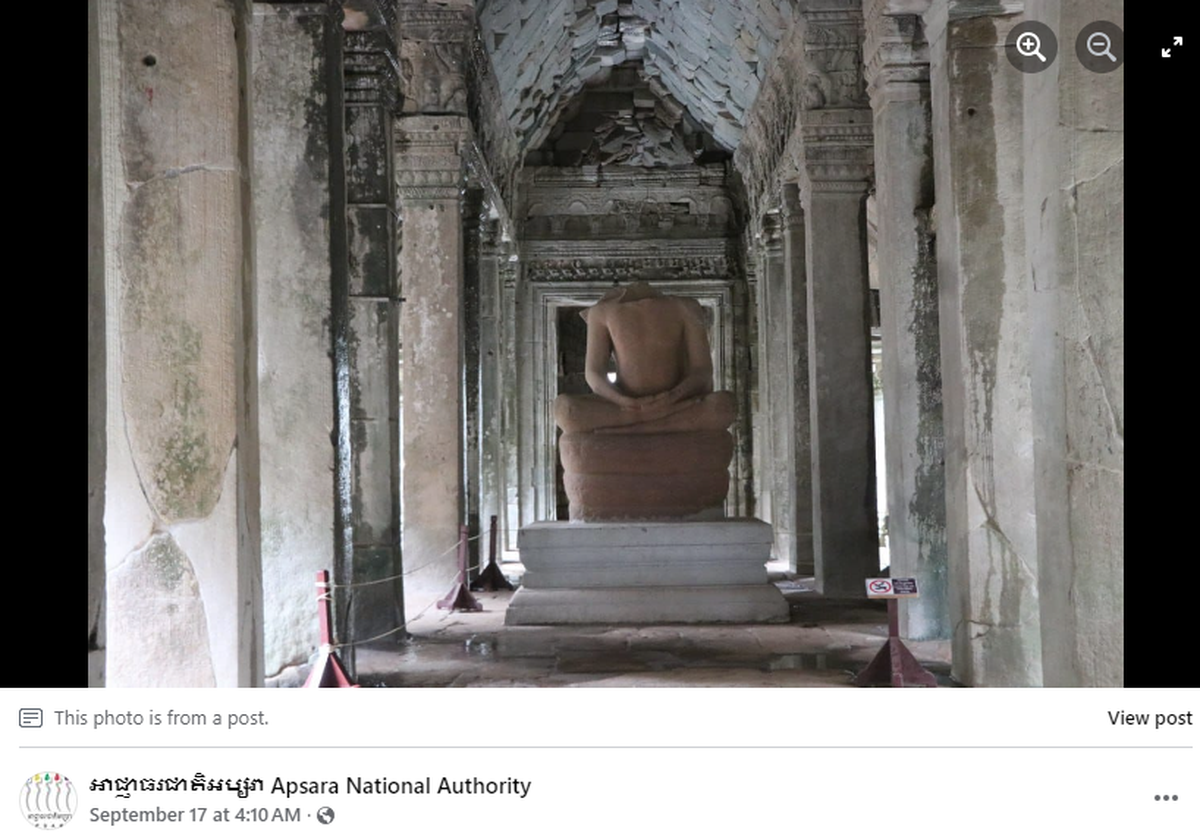
Because one of the pieces likely aligns with the existing Buddha statue, officials said they hope to uncover more pieces of the Naga heads, and archaeologists plan to put the pieces back together so the statue can once again be worshiped by Buddhists.
During the excavations, archaeologists also found other pieces of Buddha sculptures including arms, legs and stone pillars, according to the post.
Ta Prohm Temple is near the city of Siem Reap in northwestern Cambodia.
This story was originally published September 20, 2024 at 5:58 PM with the headline "Centuries-old serpent head — Buddha’s protector — found buried in Cambodia. See it."