Desert oasis — part of 4,000-year-old settlement — explored in Saudi Arabia. See it
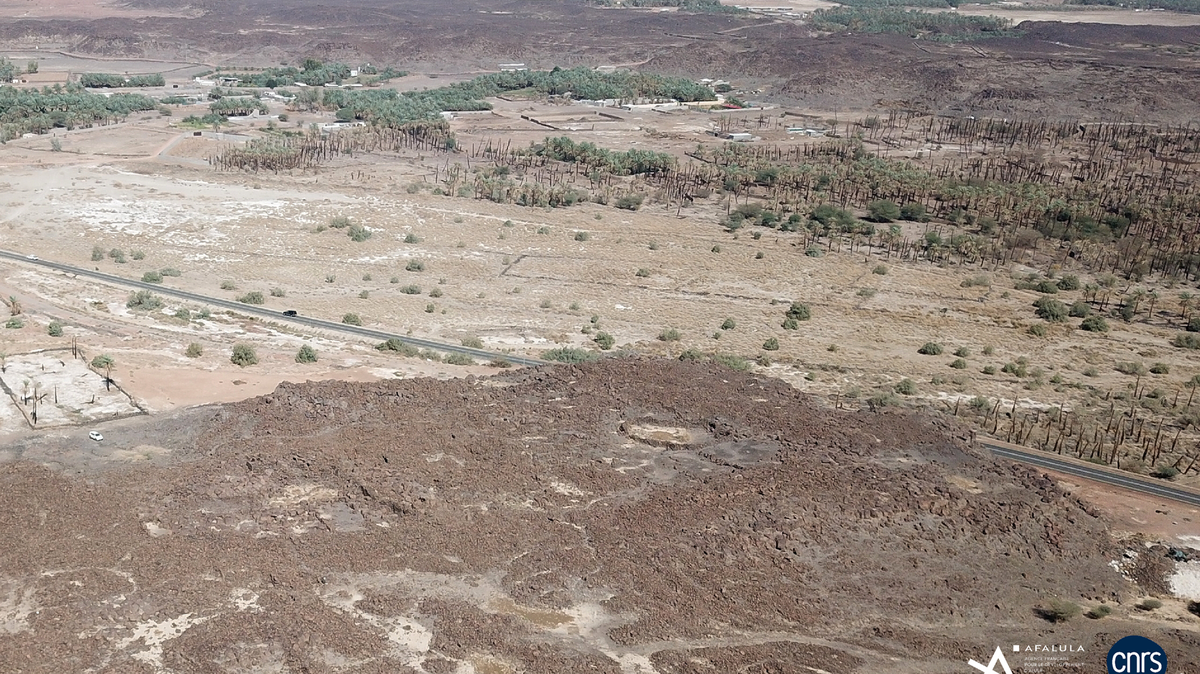
During the Bronze Age, there was little escape from the extreme elements of the Middle East.
The nomadic people of the region began setting down roots more than 4,000 years ago, resulting in a series of settlements stretching across modern-day Saudi Arabia.
Now, researchers have taken a closer look at these desert oases, hoping to learn how they were connected.
Archaeologists began working at the Khaybar Oasis, in western Saudi Arabia, in 2020 after satellite imagery suggested a “walled” settlement may have once existed there, McClatchy News reported in January.
Preliminary findings showed “the existence of (approximately 9 miles) of hitherto unknown rampart walls, (about 3.5 miles) of which are part of an exterior network enclosing the oasis area,” archaeologists said in a study published Jan. 10 in the peer-reviewed Journal of Archaeological Science: Reports.
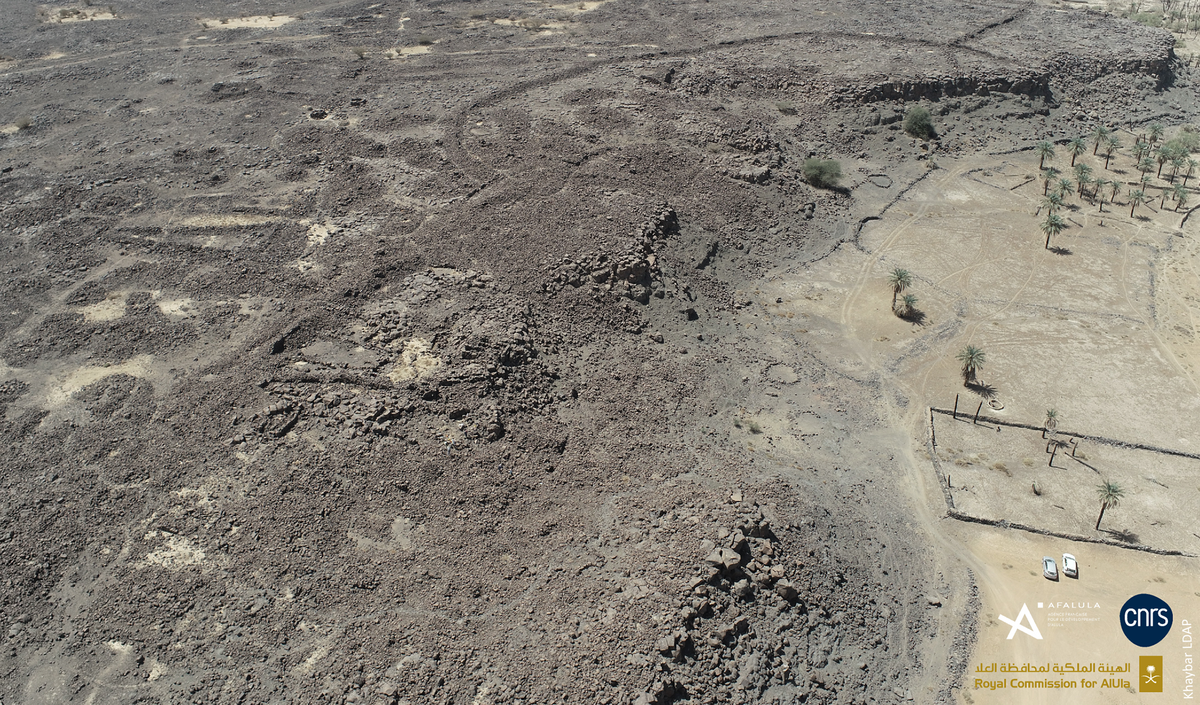
Oases like the Khaybar site have been discovered throughout the region for the better part of two decades, many of which date to the early and middle Bronze Ages. A site within the Khaybar Oasis wrapped up excavations earlier this year, archaeologists said, and is now the subject of new research.
“The al-Natah site was identified during the first survey season of Khaybar LDAP in October 2020 and was studied and excavated until February 2024,” researchers said in a study published Oct. 30 in the peer-reviewed journal PLOS One.
Piles of basalt blocks now covered the site, making it difficult to see and contributing to its late discovery, according to the study. Hoping to get a better look, researchers turned to geographic information systems, or GIS, as a way to map the site using high-resolution photographs.
“The completion of the systematic field survey provides a good overall image of the site, its extent and organization, and also helps us to interpret the types of structures encountered,” researchers said.
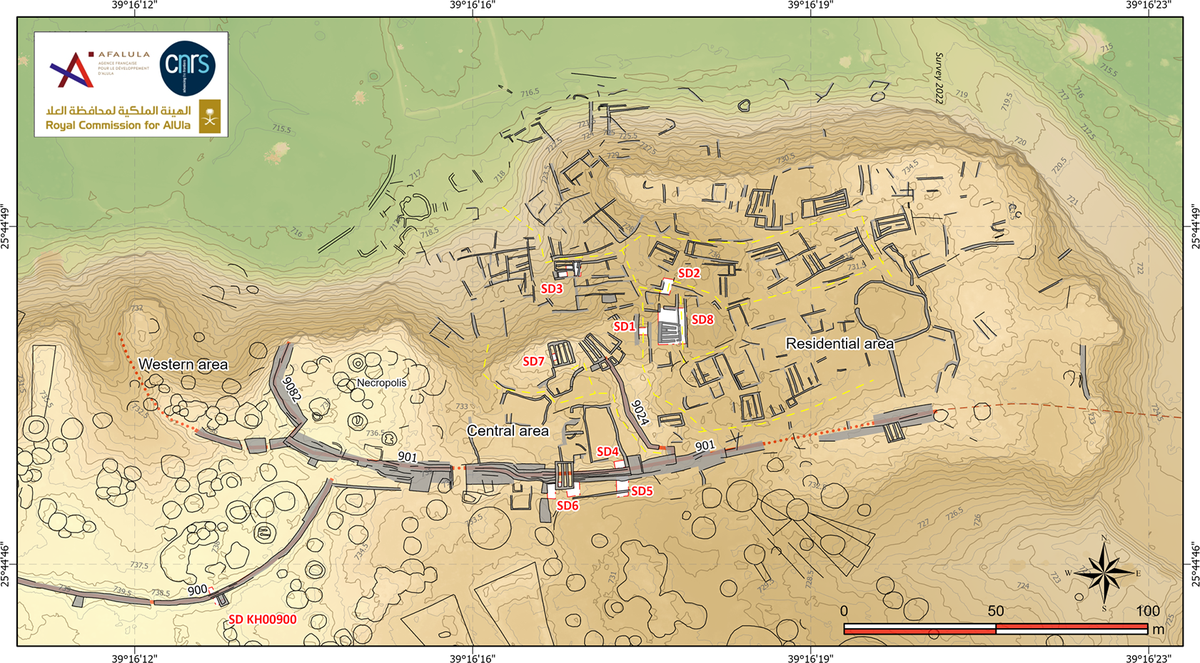
The maps showed two clear areas within the al-Natah site: the residential area and the central area.
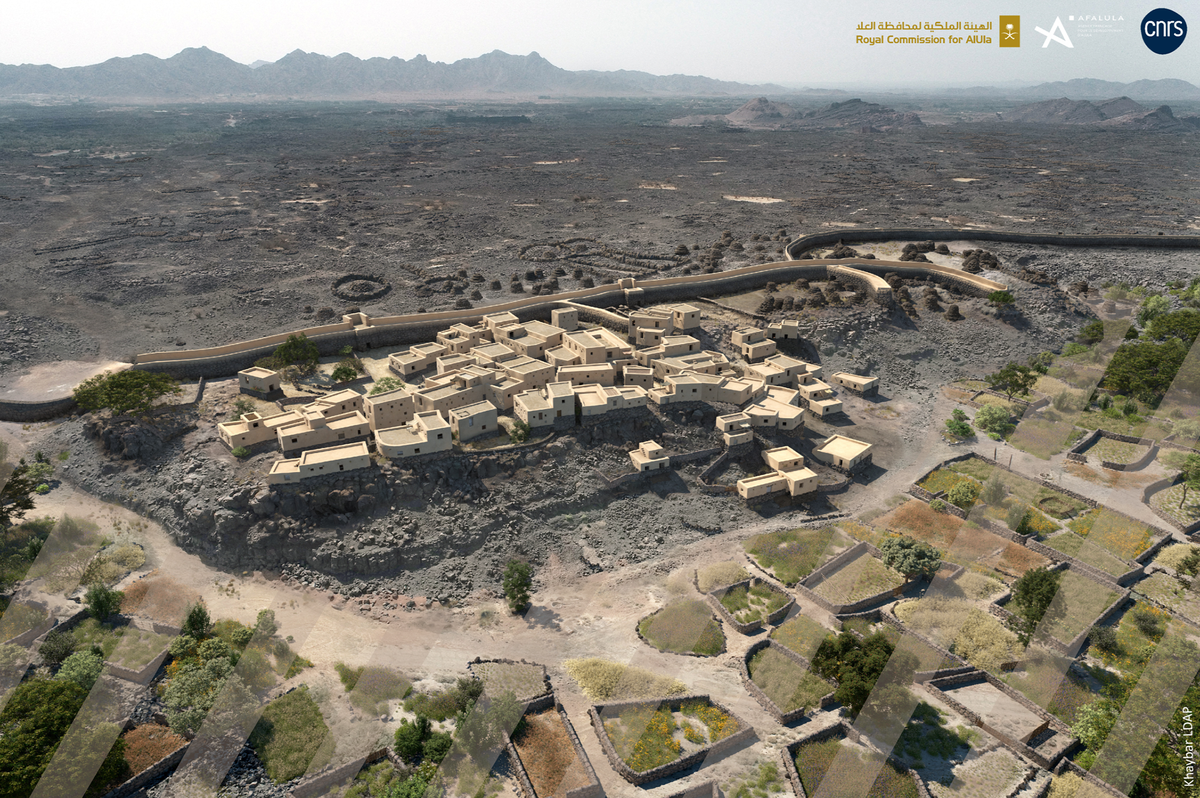
The residential area, which is in the eastern sector of the site, has collapsed dwellings that are connected by narrow alleyways and streets, according to the study.
The masonry of the homes is better built on the exteriors compared with the internal walls, possibly because the external walls were the ones seen by others, researchers said. These walls didn’t have windows, and archaeologists believe larger buildings could have been navigated with ladders or a staircase.
The central area is bordered by ramparts and is slightly more elevated, according to the study. Here, researchers found “stepped tower-tombs,” a new type of structure to Arabia and “defined as a large and high circular tomb with exterior stepped walls and a burial chamber with internal pillars.”
They also found a necropolis from around 2000 B.C., according to the study. The larger stepped tombs were older, dating to the “first third of the second millennium B.C.”
Researchers believe at some point the oasis was abandoned, but no one knows why.
“It’s a pertinent question that I can’t really answer at the moment,” archaeologist Guillaume Charloux, lead author of the study, told LiveScience. He noted researchers “have very few clues about the last phase of occupation.”
Despite the site’s mysterious end, archaeologists believe the greater oasis provided protection of agricultural areas as well as the settlements, according to the study.
“Given the location, size chronological sequence, the absence of any other major contemporaneous settlement found in the oasis and its protection by a line of ramparts with bastions joining the contemporaneous outer rampart, the al-Natah site seems to have formed the heart of the fortified oasis and very probably its political center,” researchers said.
The site’s timeline suggests it urbanized slowly compared with other regional contemporaries, and many towns remained small but were connected by networks of ramparts that encircled oases, according to the study.
“In a context of small settlements with limited population, controlling large agricultural landscapes but lacking writing and administrative tools, the ‘low urbanization’ … concepts help to describe the transitional indigenous political and socio-economic situation,” researchers said.
The site is in western Saudi Arabia.
The research team includes Charloux, Shadi Shabo, Bruno Depreux, Sylvain Colin, Kévin Guadagnini, François Guermont, Sabine Dupuy, Mylène Bussy, Noisette Bec Drelon, Modwene Poulmarc’h, Diaa Albukaai, Saifi Alshilali, Rémy Crassard and Munirah AlMushawh.
This story was originally published October 31, 2024 at 5:57 PM with the headline "Desert oasis — part of 4,000-year-old settlement — explored in Saudi Arabia. See it."