Chunk of ‘fool’s gold’ found in New York — containing 450-million-year-old new species

Walking along the Six Mile Creek there are rocks big and small glinting in the sunlight. You may think you’ve struck it rich before the gold stones disappointingly flake apart in your hands.
The stones are made of iron pyrite, commonly called fool’s gold, and look deceptively similar to the much more valuable mineral.
In central New York, one of these disguised chunks may not have been worth much on its own, but it was encasing something incredibly rare — a prehistoric new species.
Beecher’s Trilobite Bed is located just outside Rome, New York, and multiple species of fossilized trilobites, a prehistoric ocean creature, have been found there, according to a study published Oct. 29 in the peer-reviewed journal Current Biology.
However, when paleontologists were examining a piece of fool’s gold from the area, they realized an animal encased in the stone wasn’t a trilobite at all.
They placed the stone in a CT scan, imaging that can show the shape of something under the surface, to get a closer look.
The creature had a “large, modified leg (called a ‘great appendage’) at the front of their bodies” and reduced claws with “flexible whip-like flagella at their end,” researchers said in an Oct. 29 news release from the University of Oxford.
“As well as having their beautiful and striking golden color, these fossils are spectacularly preserved,” study author Luke Parry said. “They look as if they could just get up and scuttle away.”
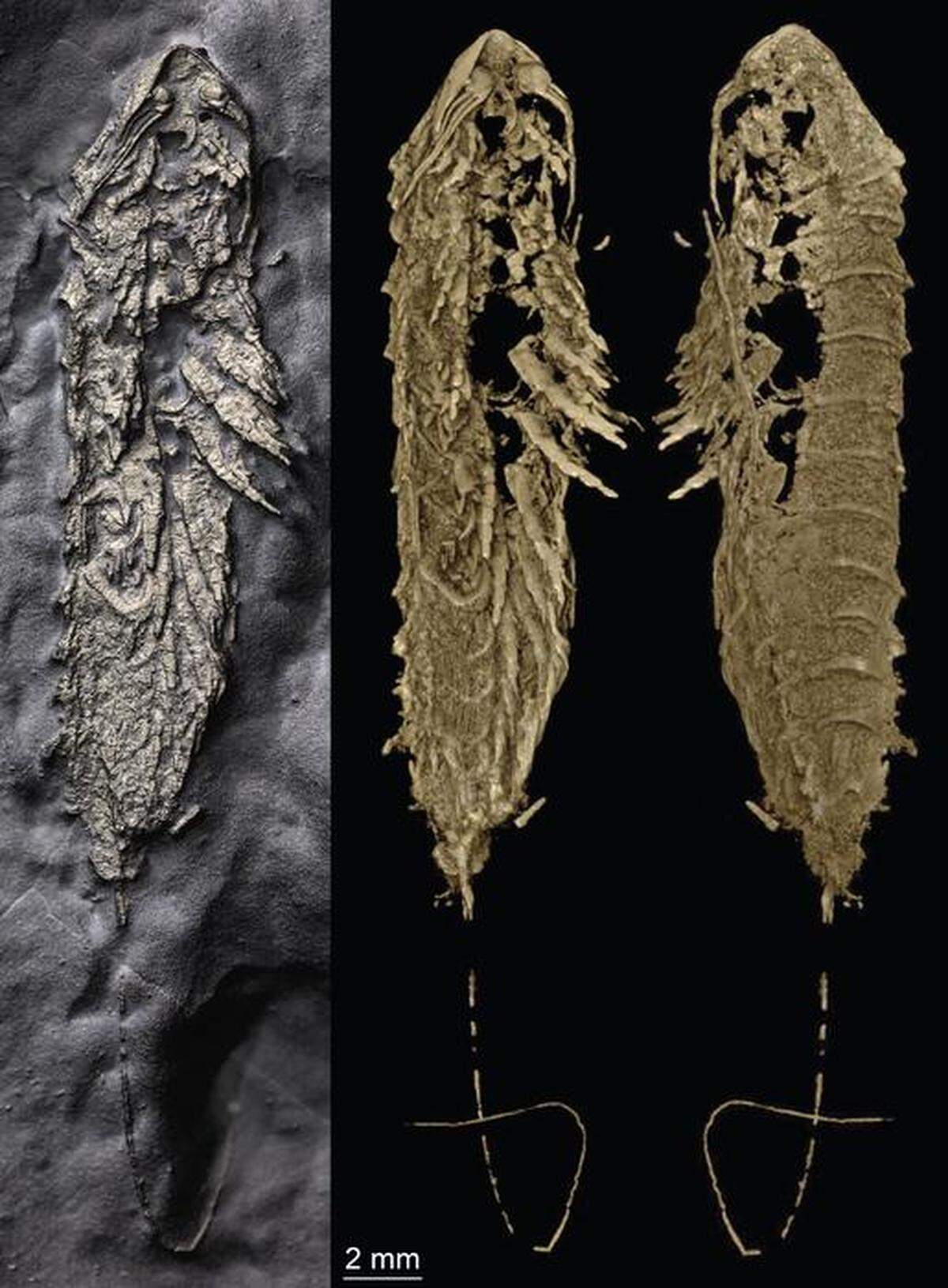
“The animals preserved in Beecher’s Trilobite Bed lived in a hostile, low oxygen environment that allowed pyrite, commonly known as fool’s gold, to replace parts of their bodies after they were buried in sediment, resulting in spectacular golden 3D fossils,” according to the University of Oxford. “Pyrite is a very dense mineral, and so fossils from this layer can be CT scanned to reveal hidden details of their anatomy. This technique involves rotating the specimen while taking thousands of X-ray images, allowing the fossils to be reconstructed in three dimensions.”
The reconstructions revealed a never-before-seen species of arthropod from a group called megacheirans, according to the study. They are distant relatives to modern day spiders, scorpions and horseshoe crabs and lived 450 million years ago.
The new species was named Lomankus edgecombei, after researcher Gregory D. Edgecombe, according to the study. The genus derives from the Greek words “loma,” meaning edge or border, and “ankos,” meaning valley, which comes from the meaning of the name Edgecombe.
“Today, there are more species of arthropod than any other group of animals on Earth. Part of the key to this success is their highly adaptable head and its appendages, that has adapted to various challenges like a biological Swiss army knife,” Parry said.
The species is unique because it seems to lack any eye structure, something that is present in other megacheirans, according to the study.
This adaptation suggests the great appendage was used for sensing and searching for food in the dark, as opposed to simply capturing prey, researchers said.
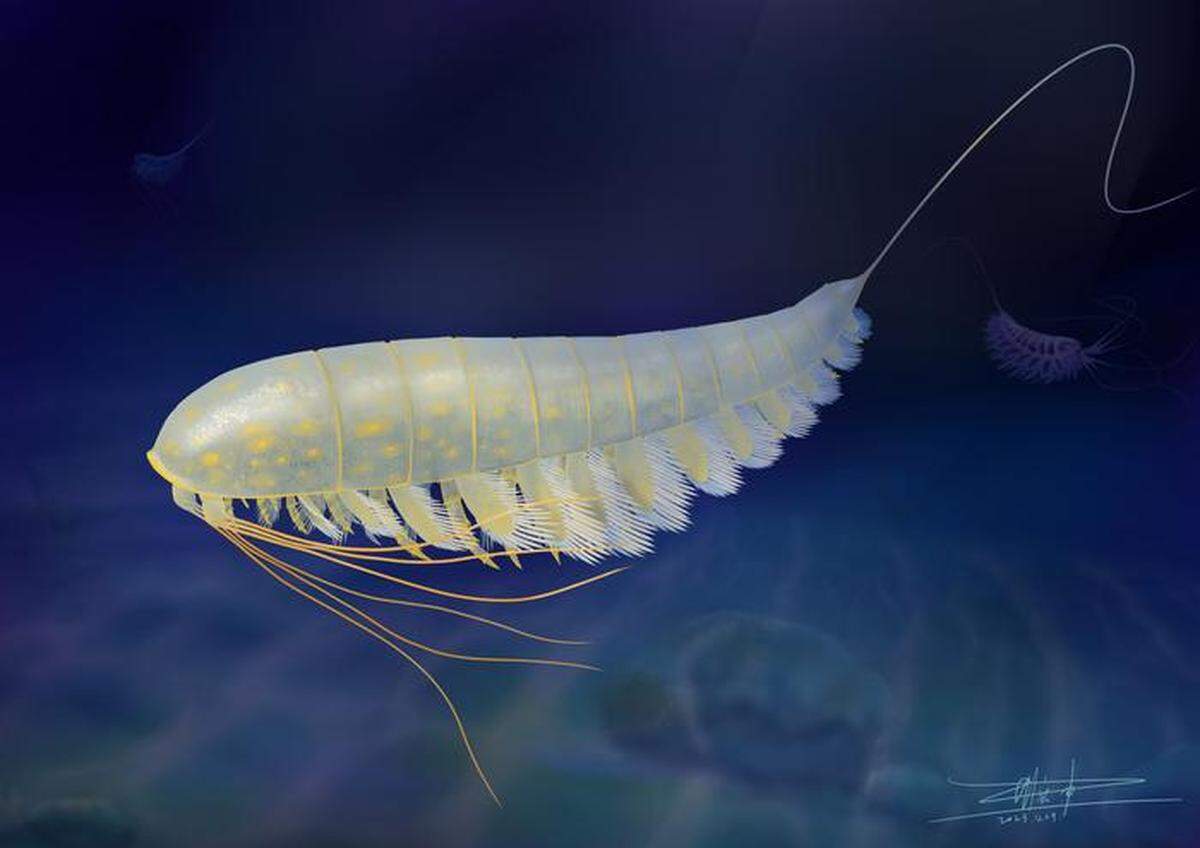
Megacheirans lived during the Cambrian Period and into the beginning of the Ordovician Period, researchers said, so this species can help scientists learn what the ocean environment was like during that time.
“These beautiful new fossils show a very clear plate on the underside of the head, associated with the mouth and flanked by the great appendages,” study co-author Yu Liu said. “This is a very similar arrangement to the head of megacheirans from the early Cambrian of China except for the lack of eyes, suggesting that Lomankus probably lived in a deeper and darker niche than its Cambrian relatives.”
Rome is in north-central New York, about a 255 mile drive northwest from New York City.
The research team includes Parry, Liu, Derek E.G. Briggs, Ruixin Ran, Robert J. O’Flynn, Huijuan Mai and Elizabeth G. Clark.
This story was originally published October 31, 2024 at 11:24 AM with the headline "Chunk of ‘fool’s gold’ found in New York — containing 450-million-year-old new species."