2,300-year-old battering ram — used in Roman battle — found off coast of Sicily. See it

Long before airplanes and artillery, ancient battles were fought face-to-face on land and sea.
Thousands of years ago, one of these historic battles took place around the modern-day Egadi Islands of Sicily, leaving behind the wreckage of war.
The Battle of the Egadi Islands (or Aegates Islands) took place in 241 B.C. between the Roman and the Carthaginian navies and marked the end of the First Punic War, according to an Aug. 23 Facebook post from the Superintendence of the Sea for the Sicilian Region of Italy.
Over the past two decades, scientific divers have discovered countless artifacts from the battle, including the helmets of Roman soldiers, swords, coins and amphorae, a type of long-necked vase with handles, according to the Superintendence.
Now, an actual piece of a Roman warship has been discovered on the seafloor.
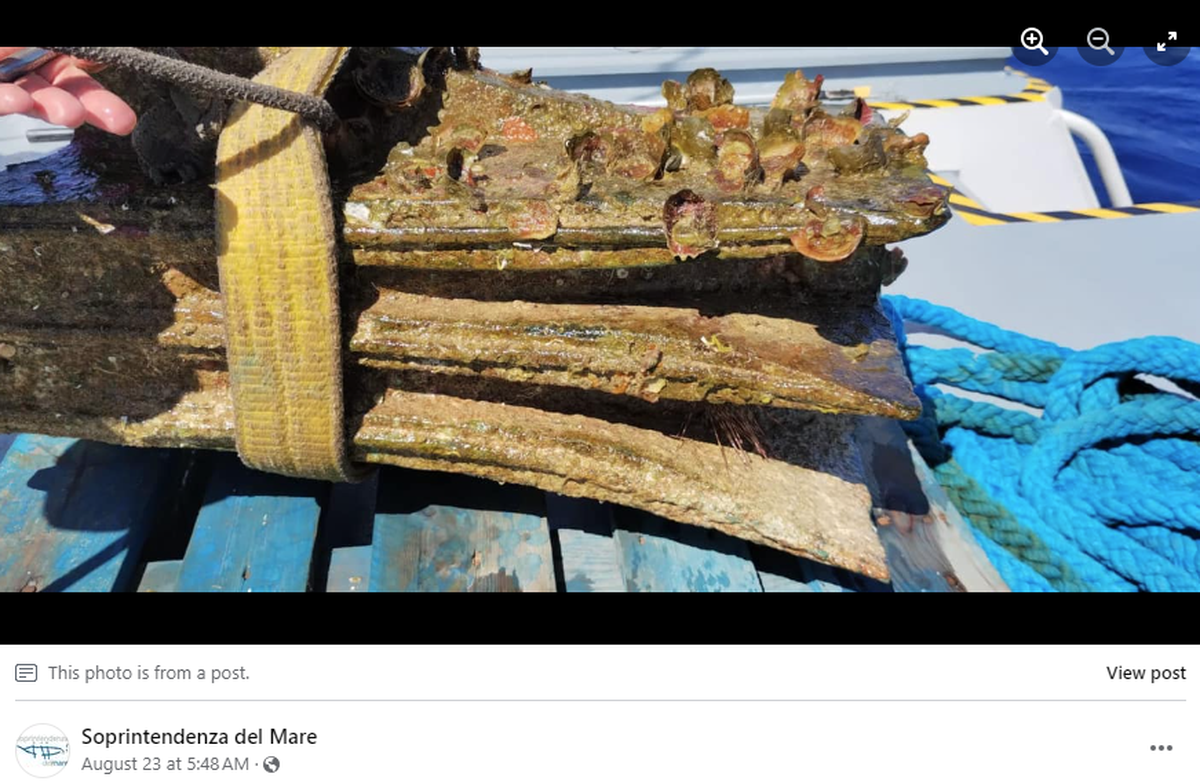
Archaeologists identified the artifact as the rostrum of a ship, the piece attached to a ship’s bow that was used as a battering ram against enemy vessels, according to the post.
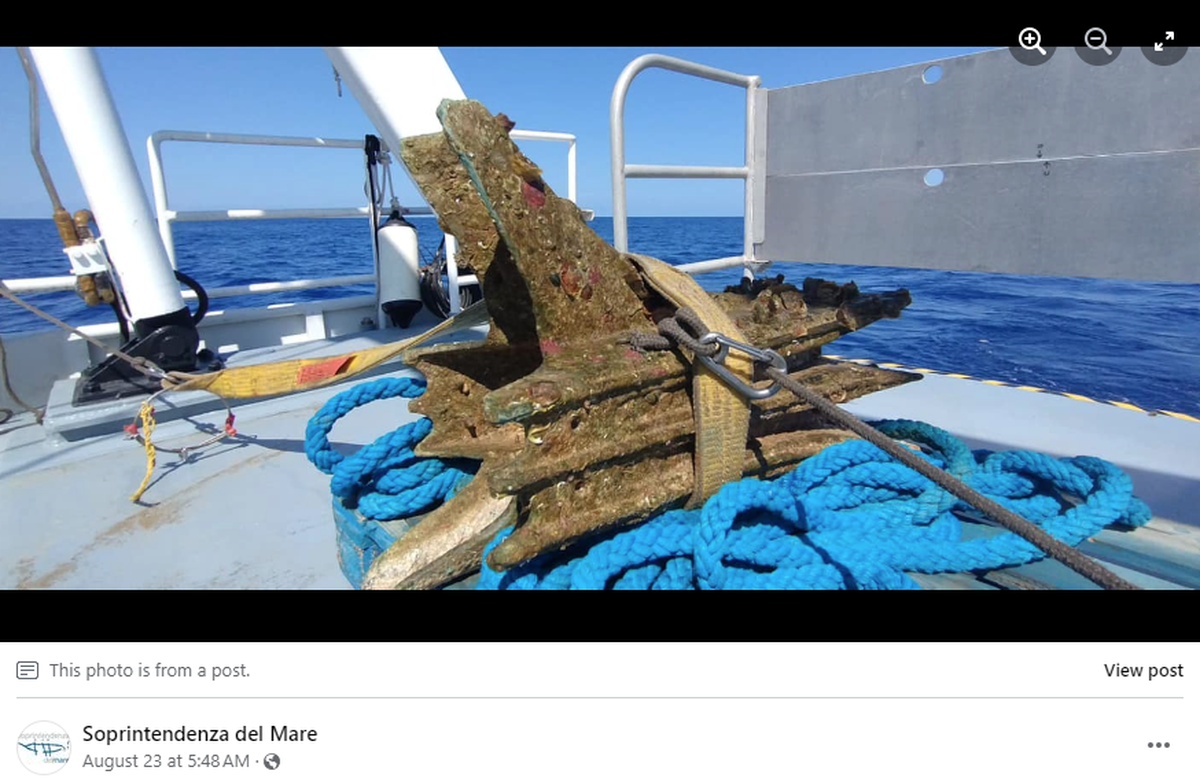
Officials said the piece has a decorative relief image of a Roman helmet and three feathers, but the rest of the design is obscured by the sea creatures that are now attached to the bronze surface.
The Superintendence described the ram as a deadly weapon of destruction that was used to not only hit but sink ships in the Mediterranean, according to the post.
The artifact has been transferred to a laboratory where it will be cleaned and examined further, officials said.
The First Punic War was fought around Sicily and its barrier islands, including on the western coast, and involved large ocean fleets, according to “Trinacria, ‘An Island Outside Time’.”
“Warships sailed when traveling long distances, but were propelled by oars in battle. Vessels could reach high speeds in short bursts, which turned the ships into human-driven projectiles,” the authors said. “Naval tactics in the third century B.C. consisted of ship-to-ship boarding action and direct ramming. Naval rams were designed to pierce an enemy’s hull … Due to the force of these collisions/impacts, warships were carefully fitted with bronze rams so as to protect their bows as well as deliver fatal blows to the enemy.”
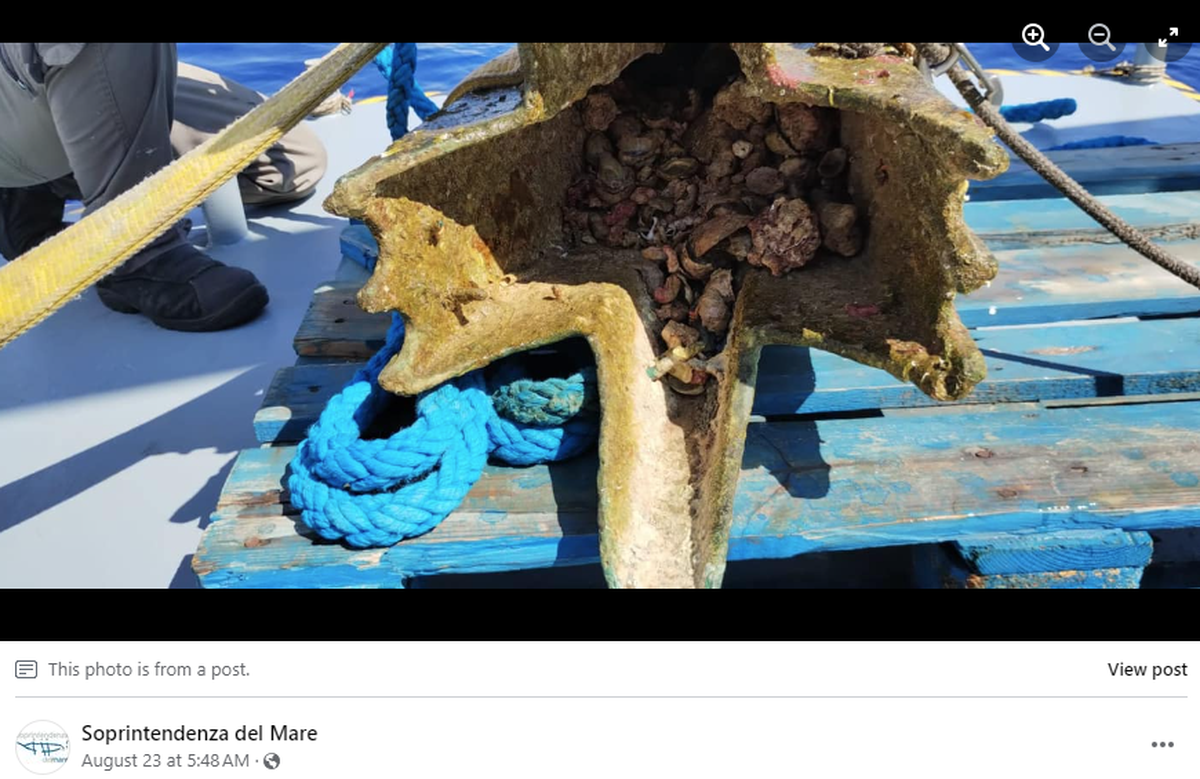
The ram was found between the islands of Levanzo and Favignana, off Sicily’s west coast.
Facebook Translate and Google Translate were used to translate the Facebook post from the Superintendence of the Sea.
This story was originally published August 29, 2024 at 11:51 AM with the headline "2,300-year-old battering ram — used in Roman battle — found off coast of Sicily. See it."